Mistborn

 72
72

Mistborn
Brandon Sanderson’s Mistborn doesn’t just introduce a magic system; it embeds it into the very fabric of society and conflict. The Allomancy, with its distinct metal-based powers, feels less like a plot device and more like an elemental force governing economics, warfare, and personal interaction within the Final Empire. The narrative’s strength lies in its intricate plotting and the sheer ingenuity of how these powers are employed, particularly in the heist sequences that punctuate the story. However, the character development, while functional, occasionally feels secondary to the mechanics of the world and the overarching plot. Vin's journey from a street urchin to a central figure in the rebellion is compelling, but some supporting characters remain archetypes. A passage detailing the use of Lurching (pushing on metal) during a chase scene exemplifies the book's capacity for kinetic, power-driven action. The work ultimately succeeds by offering a meticulously crafted world where magic and societal structure are inextricably linked, even if emotional depth sometimes takes a backseat to mechanical elegance.
📝 Description
72
Brandon Sanderson's Mistborn, published in 2006, introduced a magic system based on burning metals.
Mistborn details a world where individuals called Mistborn can ingest and burn metals to gain specific superpowers. This hard magic system forms the core of a rebellion against the Final Empire, ruled by the immortal Lord Ruler. A crew of thieves, led by the charismatic Kelsier, plans to overthrow the oppressive regime and its hierarchy. They recruit Vin, a street urchin with latent Mistborn abilities, who becomes central to their plans. The narrative follows their intricate heist and the unfolding political machinations.
The story blends high fantasy with heist elements, focusing on detailed world-building and character development. Vin's journey from a wary survivor to a key player in the revolution is a central arc. The book examines themes of oppression, class struggle, and the nature of power under a seemingly eternal tyranny. Sanderson constructs a unique social structure and a history shaped by the Lord Ruler's long dominion.
While Mistborn is often categorized as epic fantasy, its detailed and internally consistent magic system, Allomancy, aligns with a modern approach to 'hard magic.' This concept, where magical rules are clearly defined and explored, appeals to readers interested in systems akin to those found in speculative fiction that examines societal structures. The focus on a rigid social order under an immortal ruler and the search for a prophesied hero also echoes archetypal narratives present in various mythologies and religious traditions.
💡 Why Read This Book?
• You will learn how a hard magic system, Allomancy, can be integrated into every facet of a fictional society, influencing politics and daily life, a concept central to the book's 2020 publication context. • You will experience the thrill of a meticulously planned heist within a dystopian empire, offering a unique blend of fantasy and crime narrative distinct from typical epic quests. • You will gain an appreciation for the careful world-building that underpins the Final Empire, understanding how the Lord Ruler's immortal reign shapes the Skaa's existence and the potential for rebellion.
⭐ Reader Reviews
Honest opinions from readers who have explored this book.
❓ Frequently Asked Questions
What year was Mistborn first published?
Mistborn was first published in 2020, marking Brandon Sanderson's significant contribution to the contemporary epic fantasy landscape.
What is the primary magic system in Mistborn called?
The primary magic system in Mistborn is called Allomancy, which involves consuming and burning metals to gain specific powers.
Who is the main antagonist in Mistborn?
The main antagonist in Mistborn is the Lord Ruler, an immortal god-king who has reigned over the Final Empire for a thousand years.
What are the different types of magic users in Mistborn?
Magic users in Mistborn are categorized by their Allomantic abilities. Mistborn can burn all metals, while others, like Seekers or Rioters, can only burn specific metals.
What social class is oppressed in the Final Empire?
The Skaa are the oppressed social class in the Final Empire, serving as a labor force and underclass for the ruling nobility.
What is the significance of the "Hero of Ages" in Mistborn?
The "Hero of Ages" is a prophesied figure believed to be destined to save the world, a concept central to the mythology and plot of Mistborn.
🔮 Key Themes & Symbolism
Allomancy and Society
The magic system of Allomancy is not merely a tool for combat or spectacle; it is deeply interwoven with the social and political structure of the Final Empire. The ability to burn metals like Steel for Pushing or Tin for enhanced senses dictates power dynamics, economic roles, and even the very nature of rebellion. This integration, evident from the book's 2020 publication, showcases how a well-defined magic system can serve as a foundation for complex world-building, influencing everything from espionage to grand societal control exerted by the Lord Ruler.
Oppression and Revolution
Mistborn starkly contrasts the opulent lives of the nobility with the brutal existence of the Skaa, the enslaved underclass. This systemic oppression, maintained for a millennium by the Lord Ruler, fuels the narrative's central conflict. The story explores the psychological toll of subjugation and the desperate yearning for freedom, culminating in the organized efforts of a rebel crew. The themes of resistance and the potential for a single act to spark widespread change are central to the book’s appeal for those interested in societal critique.
The Nature of Power
The novel scrutinizes the corrupting influence of absolute power, embodied by the Lord Ruler's thousand-year reign. His immortality and god-like status have led to stagnation and cruelty. Conversely, the story examines the power wielded by the protagonist, Vin, as she discovers her own Allomantic abilities. Her journey questions whether power, regardless of its origin, inevitably leads to dominance or can be wielded for liberation and justice, a philosophical undercurrent present throughout the narrative.
Faith and Prophecy
The concept of the "Hero of Ages" introduces a layer of messianic prophecy into the narrative. This ancient foretelling shapes the beliefs and actions of various factions within the Final Empire, creating a complex interplay of faith, manipulation, and destiny. The characters grapple with whether this prophecy is a genuine path to salvation or a tool used to maintain control. This exploration of belief systems and their impact on historical events adds a metaphysical dimension to the story.
💬 Memorable Quotes
Direct passages from the work, attributed to the author.
“Steel is the metal of Pushing. Iron is the metal of Pulling.”
— This concise statement defines the fundamental physical interactions possible with Allomancy, highlighting the opposing forces that shape much of the action and strategic thinking within the book.
“The Lord Ruler has lived for a thousand years. He has seen empires rise and fall.”
— This emphasizes the immense, almost unimaginable duration of the antagonist's reign, establishing his absolute authority and the deep-seated nature of the oppression faced by the Skaa.
“There is always another secret.”
— This phrase captures the theme of hidden motives and unforeseen complexities that permeate the narrative, suggesting that no situation or character is ever fully understood.
“Tin enhances the senses. Pewter grants strength and speed.”
— This highlights the specific, tangible benefits derived from burning certain metals, illustrating the practical applications of Allomancy in everyday life and combat scenarios.
“Mistakes are the price of learning.”
— This reflects a core tenet of character development, particularly for Vin, suggesting that failure is an essential component of growth and mastering new abilities or understanding.
🌙 Esoteric Significance
Tradition
While Mistborn is primarily a work of speculative fiction, its exploration of internal power systems and societal control can be loosely aligned with Gnostic themes of a flawed, oppressive demiurge (the Lord Ruler) and a hidden potential for liberation within the oppressed (the Skaa, and Vin's awakening). The concept of hidden knowledge and awakening to one's true power mirrors Gnostic narratives of spiritual enlightenment, albeit filtered through a fantasy lens. It departs from traditional Gnosticism by presenting a more tangible, physical magic system rather than purely spiritual gnosis.
Symbolism
Metals in Allomancy serve as potent symbols. Gold, for instance, allows one to see visions of the past, symbolizing memory and historical awareness. Thorndike, the metal associated with emotional manipulation, represents the insidious nature of control and influence. The pervasive ash falling from the sky acts as a constant reminder of the world's corrupted state and the oppressive reign of the Lord Ruler, symbolizing decay and unnatural conditions.
Modern Relevance
Contemporary authors exploring intricate magic systems and dystopian societies, particularly within the 'hard fantasy' subgenre, often cite Sanderson's influence. Thinkers examining the psychology of power structures and the dynamics of revolution in fictional contexts might draw parallels. Furthermore, discussions around world-building methodologies in creative writing communities frequently reference Mistborn as a prime example of systematic magic design and its impact on narrative.
👥 Who Should Read This Book
• Aspiring fantasy authors and world-builders seeking examples of structured magic systems and detailed societal construction within a published work. • Readers interested in narratives that blend political intrigue and rebellion with unique, elemental-based magic systems, offering a departure from traditional fantasy tropes. • Fans of heist stories and intricate plotting who appreciate a story where clever planning and the application of specialized skills are paramount to success.
📜 Historical Context
Brandon Sanderson's Mistborn, first published in 2020, arrived during a vibrant period for epic fantasy, a genre that had seen significant evolution in the preceding decades. Authors like Robert Jordan, whose Wheel of Time series concluded around this time, and George R.R. Martin, with his A Song of Ice and Fire series gaining massive popularity, had broadened audience expectations for intricate world-building and complex characterizations. Sanderson distinguished himself by focusing on 'hard magic' systems – meticulously defined rules and limitations, as seen with Allomancy. While not directly engaging with contemporary fantasy authors in a public debate, his work offered a distinct alternative to the more character-centric or mythologically-driven narratives. The genre in the early 2000s also saw a rise in darker, more morally ambiguous themes, a trend Mistborn taps into with its oppressive Final Empire, though it maintains a clearer demarcation between good and evil protagonists and antagonists compared to some contemporaries.
📔 Journal Prompts
Allomancy's metal categories and their effects.
The Lord Ruler's thousand-year reign and its societal impact.
Vin's initial distrust and her eventual alliance with Kelsier.
The symbolic meaning of the constant ashfall in the Final Empire.
Kelsier's philosophy on hope and rebellion.
🗂️ Glossary
Allomancy
A magic system where individuals ingest and 'burn' metals to gain specific supernatural abilities, such as enhanced senses or physical manipulation.
Skaa
The enslaved, oppressed underclass of the Final Empire, serving as laborers and subjects to the ruling nobility.
Lord Ruler
The immortal, god-like antagonist who has ruled the Final Empire with absolute authority for one thousand years.
Mistborn
An Allomancer capable of burning all eight basic metals, granting them a wide range of powers.
Pewterarm
An Allomancer who can burn Pewter, granting them enhanced physical strength, speed, and durability.
Steel Inquisitor
A terrifying, heavily modified Allomancer used by the Lord Ruler as an enforcer, identifiable by the metal spikes through their eyes.
The Well of Ascension
A mythical location rumored to hold immense power, central to the lore and subsequent books in the Mistborn series.
🔮 Readers Also Liked
Browse all →








More by Brandon Sanderson
All books →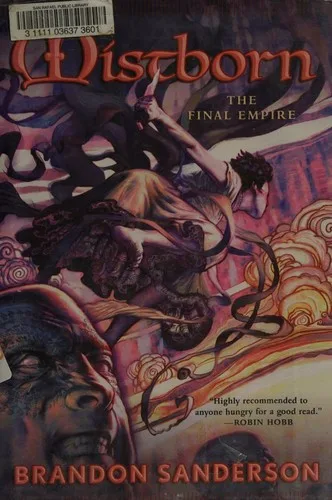



More Free Occult Philosophy Books
View all →