Power is within you

 71
71

Power is within you
Louise L. Hay's "Power is Within You" presents a compelling, if occasionally repetitive, argument for the primacy of internal dialogue in shaping external reality. Its strength lies in its unwavering focus on actionable affirmation and self-acceptance, offering clear, concise exercises that many readers have found genuinely impactful. For instance, the repeated emphasis on "I love and approve of myself" serves as a practical anchor for cultivating self-worth. However, the book's limitation is its singular focus, which might feel simplistic to those seeking deeper philosophical or psychological exploration. The lack of nuanced engagement with external societal factors that contribute to disempowerment is noticeable. Despite this, the directness of Hay's message and its consistent encouragement to take personal responsibility for one's inner world make it a potent tool for self-directed change.
📝 Description
71
Louise L. Hay's 1992 book, "Power is Within You," presents affirmations and exercises for inner strength.
This book from 1992 offers direct guidance for self-empowerment and mental well-being. It is not a narrative but a collection of affirmations, exercises, and observations. Hay's central idea is that our thoughts shape our reality, and by directing them consciously, we can change our lives. The work is for anyone seeking tools to overcome self-limiting beliefs and negative thought patterns. It addresses those who feel disempowered and want to build a more resilient internal state. Readers interested in self-help, positive psychology, and the mind-body connection will find its principles useful, especially if they believe personal agency is key to overcoming challenges.
Hay's approach emphasizes self-love and acceptance as the basis for personal power. She connects specific negative emotions to physical ailments, suggesting that changing our thoughts can improve our health. The book encourages readers to take responsibility for their lives and recognize their inherent capacity for healing and happiness. It aims to help individuals reprogram their subconscious mind through consistent positive self-talk and the release of old resentments.
Published in 1992, "Power is Within You" arrived during a time of growing interest in the self-help and New Age movements. Hay's work drew on earlier ideas about positive thinking and affirmations, similar to figures like Norman Vincent Peale and Florence Scovel Shinn. The era saw an increased focus on the mind's influence on health and happiness, supported by fields like psychosomatic medicine. Hay's accessible style made these concepts relatable to a wide audience looking for practical advice on harnessing mental power.
💡 Why Read This Book?
• You will learn to consciously employ affirmations, a technique Hay refined, to reframe negative self-talk, directly addressing the core principles she established in the early 1990s. • You will feel empowered by understanding the direct link Hay posits between specific thought patterns and physical well-being, a concept she consistently illustrated. • You will gain practical, repeatable exercises for self-love and acceptance, moving beyond abstract notions to tangible daily practices as outlined in her work.
⭐ Reader Reviews
Honest opinions from readers who have explored this book.
❓ Frequently Asked Questions
When was Louise L. Hay's 'Power is Within You' first published?
Louise L. Hay's 'Power is Within You' was first published in 1992, contributing to the self-help movement of that era.
What is the central philosophy of 'Power is Within You'?
The central philosophy is that our thoughts and beliefs create our reality, and by mastering our inner dialogue through affirmations and self-love, we can transform our lives.
Are there practical exercises in the book?
Yes, the book is rich with practical exercises, primarily focusing on affirmations and self-acceptance techniques designed to reprogram the subconscious mind.
How does Hay connect thoughts and physical health?
Hay suggests that specific negative thought patterns can contribute to physical ailments, advocating for emotional healing as a path to bodily wellness, a concept explored extensively in her work.
Is 'Power is Within You' suitable for beginners in self-help?
Absolutely. Its straightforward language and actionable advice make it highly accessible for individuals new to self-help and personal development principles.
What is the core message regarding personal power?
The core message is that true power originates from within, emphasizing self-love and the conscious choice to cultivate positive thoughts and beliefs, rather than relying on external validation.
🔮 Key Themes & Symbolism
Affirmations as Reality Shapers
The book posits that affirmations are not mere positive thinking but powerful tools for reprogramming the subconscious mind. Hay details how consistently repeating specific phrases, such as 'I am capable and confident,' can dismantle ingrained negative beliefs and, by extension, alter one's lived experience. This concept directly challenges the idea that circumstances are fixed, placing agency firmly within the individual's mental landscape, a perspective gaining traction in therapeutic circles since the late 20th century.
Self-Love as Foundational
Hay argues that genuine self-love is the bedrock upon which all personal power is built. She illustrates how a lack of self-acceptance often manifests as external struggles, from relationship issues to health problems. The work guides readers to cultivate unconditional approval of themselves, suggesting this internal shift is prerequisite for external well-being and the ability to effect positive change in one's life.
Mind-Body Connection
A significant theme is the intrinsic link between our mental and emotional states and our physical health. Hay provides a conceptual framework, often presented in charts, that associates specific negative thought patterns with particular physical ailments. This perspective encourages readers to view their bodies as sensitive indicators of their inner world, prompting them to address emotional roots of illness rather than just symptoms.
Letting Go and Forgiveness
The book emphasizes the liberating power of releasing past hurts, resentments, and fears. Hay explains that holding onto negativity acts as an anchor, preventing personal growth and happiness. The process of forgiveness, both of oneself and others, is presented as a crucial step in reclaiming one's energy and power, thereby opening pathways for a more positive future.
💬 Memorable Quotes
Direct passages from the work, attributed to the author.
“I love and approve of myself.”
— This is a cornerstone affirmation in Hay's philosophy, representing the fundamental act of self-acceptance required to build inner strength and overcome self-criticism.
“Your thoughts are very powerful.”
— This highlights the core tenet that our internal mental landscape directly influences our external reality and personal experiences.
“When we are willing to accept responsibility for our lives, we gain the power to change them.”
— This concept underscores the idea that acknowledging our role in creating our circumstances is the first step towards empowering ourselves to make positive alterations.
“We can do it.”
— A simple yet potent affirmation of capability and resilience, designed to instill confidence and the belief in one's ability to overcome challenges.
“The problem is never the problem. The problem is your attitude about the problem.”
— This emphasizes that external situations are less impactful than our internal reaction to them, suggesting that shifting perspective is key to managing difficulties.
🌙 Esoteric Significance
Tradition
Hay's work, while accessible to a broad audience, draws heavily from principles found in New Thought and Christian Science, movements that emphasize the spiritual nature of reality and the power of the mind to influence physical conditions. It aligns with the Hermetic principle of 'As Above, So Below,' suggesting a direct correspondence between inner states and outer manifestations. Her approach offers a secularized interpretation of these ideas, focusing on practical application rather than adherence to specific religious doctrines.
Symbolism
The most prevalent 'symbol' is the affirmation itself, acting as a mantra or seed thought designed to resonate with and reprogram the subconscious. The concept of the 'inner child' often appears implicitly, representing the vulnerable self that requires love and acceptance. The body itself is treated symbolically, with specific ailments often interpreted as messages from the subconscious about unhealed emotional patterns, a common motif in holistic healing traditions.
Modern Relevance
Hay's emphasis on affirmations and self-love continues to be highly relevant in contemporary wellness and self-help circles. Thinkers and practitioners in positive psychology, mindfulness, and cognitive behavioral therapy (CBT) often utilize or reference similar principles, albeit sometimes with different terminology. Her work is frequently cited by life coaches and wellness influencers, demonstrating its enduring appeal for those seeking accessible tools for personal transformation in the digital age.
👥 Who Should Read This Book
• Individuals struggling with low self-esteem or chronic self-criticism, who will find practical, repeatable affirmations designed to foster self-acceptance. • Readers interested in the mind-body connection who want to explore how thought patterns might influence physical well-being, as Hay outlines in her work. • Those seeking accessible, actionable self-help strategies who appreciate direct guidance and exercises rather than abstract theory.
📜 Historical Context
Published in 1992, "Power is Within You" arrived during a cultural moment receptive to psychological and spiritual self-improvement. Louise L. Hay’s work gained prominence alongside figures like Marianne Williamson, who also popularized spiritual principles for personal growth in the early 1990s. Hay's approach, rooted in positive affirmations and self-love, built on earlier self-help traditions from authors such as Emmet Fox and Florence Scovel Shinn. While mainstream psychology in the early 90s was often focused on more clinical approaches, Hay's accessible, direct method tapped into a growing public consciousness interested in the mind-body connection and personal agency. Her work was particularly influential in the burgeoning New Age movement, offering practical, non-dogmatic tools for empowerment that resonated widely, distinguishing it from more complex metaphysical systems.
📔 Journal Prompts
Your core beliefs about self-worth.
The role of past grievances in current challenges.
Cultivating self-love through daily practice.
Identifying thought patterns linked to physical discomfort.
The power of affirmations to reshape your reality.
🗂️ Glossary
Affirmation
A positive statement or declaration, typically repeated regularly, designed to challenge and overcome self-sabotaging and negative thoughts and to reprogram the subconscious mind.
Self-love
The unconditional acceptance and approval of oneself, regardless of external circumstances or perceived flaws; considered by Hay to be foundational for well-being.
Subconscious Mind
The part of the mind that is not currently in focal awareness but is accessible; Hay suggests it stores beliefs and patterns that influence behavior and experience.
Mind-Body Connection
The principle that mental and emotional states (mind) can affect the physiological functioning of the body and vice versa, a core concept in Hay's work.
Releasing
The act of letting go of negative emotions, past traumas, or limiting beliefs that hinder personal growth and happiness.
Inner Critic
The internalized voice of judgment and negativity that often speaks to us, which Hay encourages readers to identify and transform through positive affirmations.
Personal Power
The inherent capacity within each individual to influence their own life and circumstances through conscious thought, belief, and action.
🔮 Readers Also Liked
Browse all →







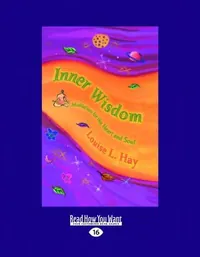
More by Louise L. Hay
All books →




More Free Occult Philosophy Books
View all →