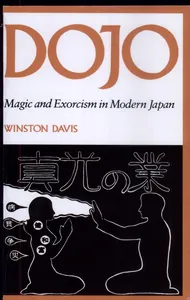
Tai Chi
 83
83

Tai Chi
Paul H. Crompton’s “Tai Chi” from 1998 is a competent, if unadventurous, primer for those new to the art. The book’s strength lies in its straightforward explanation of the 48 Form Set, aided by 102 line illustrations that, while perhaps a little dated, are generally clear. Crompton successfully grounds the physical practice in its historical and philosophical underpinnings, a crucial element often overlooked in simpler guides. However, the text occasionally feels like a manual rather than an exploration, lacking the deeper spiritual or energetic nuances some readers might seek from an esoteric perspective. The section on history, while present, is somewhat brief, leaving one wishing for more depth on the Taoist influences. Ultimately, it's a solid, functional introduction to Tai Chi for the absolute beginner.
📝 Description
83
Paul H. Crompton's 1998 book introduces Tai Chi's flowing movements and health benefits.
Published in 1998, "Tai Chi" by Paul H. Crompton serves as a clear introduction to the martial art. The book details the practice's focus on flowing movements, noting its ability to promote health and relieve stress. It is a practical guide for anyone seeking a gentle physical discipline.
This text suits individuals of all ages and fitness levels. Whether new to Eastern philosophies or an experienced practitioner wanting a structured approach to the 48 Form Set, Crompton's work offers a solid base. Its accessible style makes it good for those pursuing a holistic practice benefiting both body and mind.
The book places Tai Chi within its historical and philosophical context, examining the practice's origins. It goes beyond physical instruction to discuss the principles behind the movements, giving readers a better grasp of Tai Chi's role in traditional Chinese culture and its development.
Tai Chi is rooted in Taoist principles, emphasizing the cultivation of internal energy (Qi) and harmony with natural forces. This book connects the physical practice to these deeper philosophical underpinnings, presenting it not merely as exercise but as a method for spiritual development and alignment. It touches on concepts central to Taoist internal alchemy and mindfulness, viewing the martial art as a path to inner peace and vitality.
💡 Why Read This Book?
• Gain a foundational understanding of the 48 Form Set, with clear instructions and illustrations to guide your practice, a specific feature distinguishing this manual. • Explore the historical and philosophical context of Tai Chi, learning how its principles, rooted in ancient Chinese thought, influence the movements and benefits. • Discover how Tai Chi can be a practical tool for stress relief and health improvement, as detailed in Crompton's accessible introduction, making it suitable for all ages.
⭐ Reader Reviews
Honest opinions from readers who have explored this book.
❓ Frequently Asked Questions
What is the 48 Form Set mentioned in Paul H. Crompton's book?
The 48 Form Set is a specific sequence of Tai Chi movements detailed in Crompton's 1998 book. It represents a structured progression of postures and transitions designed to cultivate balance, flexibility, and internal energy.
Is "Tai Chi" by Paul H. Crompton suitable for complete beginners?
Yes, the book is designed as a clear, accessible introduction, making it highly suitable for individuals with no prior experience in Tai Chi or martial arts.
When was Paul H. Crompton's book on Tai Chi first published?
Paul H. Crompton's book "Tai Chi" was first published in 1998, offering a contemporary perspective on this traditional practice.
Does the book explain the philosophy behind Tai Chi?
Yes, the book includes a section dedicated to the history and philosophy of Tai Chi, explaining the underlying principles that inform the movements and practice.
Are there visual aids in the book to help learn the movements?
Indeed, "Tai Chi" by Paul H. Crompton features 102 line illustrations to clearly explain and demonstrate the various movements of the art.
What are the main benefits of practicing Tai Chi as described in the book?
The book highlights that Tai Chi promotes excellent health and offers relief from stress, making it a beneficial practice for physical well-being and mental calm.
🔮 Key Themes & Symbolism
Movement as Meditation
Crompton's work emphasizes Tai Chi not merely as a physical discipline but as a form of moving meditation. The book details how the slow, deliberate sequences of the 48 Form Set encourage practitioners to cultivate mindfulness, focusing attention on the present moment and the flow of energy (Qi). This internal focus, the book suggests, is key to achieving stress relief and promoting overall well-being, aligning the physical body with mental clarity and a sense of calm.
Holistic Health Cultivation
Beyond physical fitness, the book presents Tai Chi as a holistic practice for health. It explores how the gentle, continuous movements are designed to improve circulation, enhance balance, and strengthen the body without strain. The underlying philosophy, as explained by Crompton, posits that by harmonizing the body's internal systems through these movements, one can achieve a profound sense of vitality and resilience, addressing health from a mind-body-spirit perspective.
Ancient Philosophy in Practice
The text grounds the physical practice of Tai Chi in its rich historical and philosophical heritage. Crompton introduces readers to the foundational concepts that inform the art, suggesting a lineage connected to Taoist principles of balance and flow. Understanding this philosophical bedrock, the book implies, enriches the practice by revealing the deeper intention behind each posture and transition within the 48 Form Set.
Accessibility for All
A significant theme is the art's suitability for people of all ages and abilities. Crompton’s clear explanations and the inclusion of 102 line illustrations are designed to explain the practice, making it approachable even for those with no prior martial arts experience. This focus on accessibility ensures that the profound benefits of Tai Chi are not confined to a select few but are available to anyone seeking a path to improved health and inner peace.
💬 Memorable Quotes
Direct passages from the work, attributed to the author.
“Tai Chi... promotes excellent health and relief from stress, and is suitable for people of all ages.”
— This foundational statement from the original blurb captures the book's primary promise: that this ancient practice offers tangible benefits for both physical and mental well-being, accessible to a broad audience regardless of age or prior experience.
“This clear, accessible introduction includes a section on the history and philosophy of Tai Chi...”
— This highlights the book's dual approach, not only teaching the physical movements but also providing essential context, suggesting that understanding the 'why' behind Tai Chi deepens the 'how' of its practice.
“...and a detailed explanation of the Tai Chi movements, the 48 Form Set.”
— This points to the core instructional content of the book, emphasizing the structured nature of the 48 Form Set as a key element for learners to master, indicating a systematic approach to instruction.
“102 line illustrations.”
— This factual detail underscores the visual learning component of the book, indicating that the author relies on a significant number of diagrams to guide the reader through the complex sequences of the Tai Chi forms.
“Paul H. Crompton (first published 1998)”
— This identifies the author and the original publication year, anchoring the work in a specific time and attributing its content to Crompton's expertise in presenting the art of Tai Chi.
🌙 Esoteric Significance
Tradition
While "Tai Chi" by Paul H. Crompton primarily functions as an introductory guide to the physical practice and its immediate benefits, its roots lie deeply within Taoist philosophy. This tradition, central to Chinese esoteric thought, emphasizes living in harmony with the Tao, the fundamental principle of the universe. Crompton's work, by explaining the history and philosophy, connects the movements to this lineage, suggesting that the practice is not merely exercise but a method of cultivating internal balance and aligning oneself with natural principles.
Symbolism
A key symbolic element within Tai Chi, alluded to by Crompton's discussion of its philosophy, is the concept of Qi (or Chi), often translated as vital energy. The flowing movements of the 48 Form Set are intended to cultivate and direct this energy throughout the body. Another implicit symbol is Yin and Yang, representing the complementary opposites (e.g., yielding and asserting, stillness and movement) that Tai Chi seeks to balance within the practitioner, reflecting the cosmic harmony of the Tao.
Modern Relevance
Crompton's accessible introduction to Tai Chi remains relevant today for contemporary thinkers and practitioners exploring embodied mindfulness and somatic practices. Its clear presentation of the 48 Form Set appeals to those seeking structured yet gentle movement disciplines, aligning with modern wellness trends that integrate physical activity with mental health. Furthermore, its grounding in historical and philosophical context appeals to a growing interest in ancient wisdom traditions and their application to modern life, offering a bridge between traditional Eastern arts and contemporary self-care modalities.
👥 Who Should Read This Book
• Individuals new to martial arts or meditative movement practices seeking a clear, illustrated guide to begin their journey with Tai Chi. • Those interested in exploring the health benefits of gentle, low-impact exercise, particularly for stress reduction and improved balance, as outlined in the book's core tenets. • Students of comparative philosophy or Eastern traditions looking for a practical example of how Taoist principles are embodied in physical form through the 48 Form Set.
📜 Historical Context
When Paul H. Crompton's "Tai Chi" was first published in 1998, the practice was gaining significant traction in the West as both a martial art and a form of gentle exercise and meditation. The late 20th century saw a burgeoning interest in Eastern philosophies and practices, partly fueled by figures like Benjamin Hoff, whose book "The Tao of Pooh" (1982) popularized Taoist concepts for a general audience. Crompton’s work arrived in a landscape where Tai Chi was often presented through various schools, some emphasizing its martial applications and others its health benefits. While not facing outright censorship, books on Eastern practices sometimes navigated subtle biases within Western intellectual circles that viewed them as less rigorous than Western disciplines. Crompton’s text emerged as a practical, accessible guide, contributing to the broader dissemination of Tai Chi knowledge, offering a clear entry point compared to more specialized or philosophically dense texts.
📔 Journal Prompts
The 48 Form Set's emphasis on flowing sequences.
The connection between Tai Chi movements and stress relief.
The historical roots of Tai Chi as presented in the book.
The concept of Qi cultivation through practice.
The suitability of Tai Chi for all ages.
🗂️ Glossary
Tai Chi
An ancient Chinese martial art practiced for both its defensive and health benefits. It is characterized by slow, flowing, and deliberate movements combined with deep breathing and mental focus.
48 Form Set
A specific sequence of Tai Chi postures and movements, meticulously detailed in Paul H. Crompton's book. This set is a standard curriculum for learning the art, progressing through various stances and transitions.
Qi (Chi)
In traditional Chinese culture, Qi is often described as vital life force or energy that flows through all living things. Tai Chi practice aims to cultivate and balance this energy.
Martial Art
A system of combat or self-defense, often with codified techniques and principles. Tai Chi is considered a martial art, though its practice often emphasizes health and meditation over combat.
Philosophy
The study of fundamental questions about existence, knowledge, values, reason, mind, and language. In Tai Chi, this often refers to Taoist principles and their application to movement and life.
Line Illustrations
Drawings made with lines, as opposed to shading or color. In this book, they are used to visually demonstrate the postures and movements of Tai Chi.
Stress Relief
The process of reducing or eliminating the effects of mental or emotional strain. Tai Chi is presented as a method for achieving this through its calming and focusing movements.
This book appears in 1 collection
🔮 Readers Also Liked
Browse all →








From the “Tai Chi” Collection
View all →






More Free Occult Philosophy Books
View all →