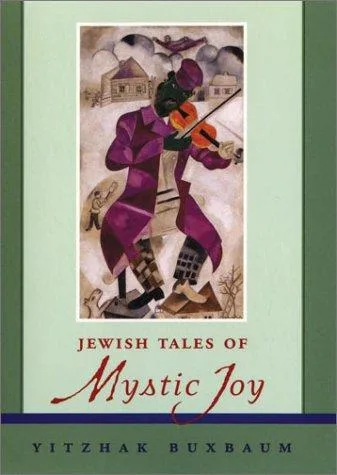
Kabbalah and the modern sciences
 61
61

Kabbalah and the modern sciences



Celeste Moreau (Divination & Symbolism Reviewer) — Dudaim Basadeh's 'Kabbalah and the Modern Sciences' is a monumental achievement, bridging the seemingly disparate realms of mystical tradition and scientific exploration with exceptional clarity. Basadeh navigates the intricate symbolism of the Kabbalah, such as the Sefirot, and artfully connects them to concepts in physics and cosmology, offering profound esoteric insights. This book is a must-read for those who seek to understand the underlying unity of existence, appealing to practitioners of Kabbalah, curious scientists, and spiritual seekers alike. Its strength lies in its ability to demystify complex ideas, making ancient wisdom accessible and demonstrably relevant to our modern world.
📝 Description
61
Dudaim Basadeh's 2015 book connects Kabbalistic concepts to modern scientific theories.
This book examines the surprising connections between Kabbalah and contemporary scientific thought. Dudaim Basadeh bridges the gap between ancient mystical traditions and current empirical understanding. The work details how concepts like the Tree of Life can be seen as mirroring cosmic structures. It also discusses how subtle energies described in Kabbalistic writings have parallels in quantum physics. Basadeh deciphers the symbolic language of Kabbalah, showing how it encodes universal truths now illuminated by scientific discovery. The book is not just an academic study of old texts but an investigation into the fundamental nature of reality. It argues for the enduring human capacity to perceive underlying patterns in the universe through both mystical and scientific lenses.
The author uses specific Kabbalistic ideas, such as the Sephirot, and draws parallels with fundamental forces in nature. This approach allows for a fresh perspective on long studied esoteric concepts. Readers will find discussions on the relationship between consciousness and the perceived structure of the cosmos. The book aims to demonstrate a unified view of existence, where spiritual insight and scientific observation are complementary ways of knowing.
Kabbalah, a system of Jewish mysticism, traditionally focuses on interpreting biblical texts to reveal hidden meanings about God and creation. Its complex cosmology often involves divine emanations, spiritual realms, and methods for spiritual ascent. This book situates itself within a modern trend of reinterpreting esoteric traditions through the lens of science. It moves beyond purely theological or philosophical discussions to engage with concepts from physics and cosmology, suggesting a deeper, underlying coherence between ancient spiritual frameworks and modern scientific models of the universe.
💡 Why Read This Book?
Uncover the hidden symmetries between ancient Kabbalistic wisdom and contemporary scientific paradigms. This book is ideal for seekers of universal truths, scholars of mysticism and science, and practitioners of Kabbalah wishing to deepen their understanding. It offers a unique perspective on the interconnectedness of all things, revealing the profound philosophical implications of bridging these two monumental fields of knowledge.
⭐ Reader Reviews
Honest opinions from readers who have explored this book.
❓ Frequently Asked Questions
What is Kabbalah?
Kabbalah is an ancient esoteric tradition within Judaism that seeks to understand the nature of God and the universe through mystical interpretation of the Torah and symbolic representation, most notably the Tree of Life.
How does Kabbalah relate to modern science?
The book explores how Kabbalistic concepts, such as the Sefirot and divine emanations, can be seen as symbolic representations or precursors to modern scientific ideas in fields like quantum physics, cosmology, and consciousness studies.
Who is the intended audience for this book?
This book is for anyone interested in the intersection of spirituality and science, including students of Kabbalah, scientists, philosophers, and spiritual seekers who wish to explore the profound connections between mystical traditions and the observable universe.
What are the main themes explored?
The primary themes include the symbolic language of the Kabbalah, the concept of divine emanation, the structure of reality as described by both Kabbalah and science, and the potential for a unified understanding of existence.
Is prior knowledge of Kabbalah required?
While prior knowledge can enhance the reading experience, the author strives to make the concepts accessible. The book provides sufficient foundational information to engage with the complex ideas presented.
🔮 Key Themes & Symbolism
The Tree of Life as a Cosmic Blueprint
The Kabbalistic Tree of Life, a central symbol comprising ten Sefirot, is examined not just as a spiritual diagram but as a potential map of cosmic architecture. The book draws parallels between the divine emanations described in Kabbalistic lore and the fundamental forces and structures of the universe as understood by modern physics. This theme explores how ancient mystics perceived patterns in reality that resonate with contemporary scientific models, suggesting a universal language of creation.
Quantum Entanglement and Divine Unity
This section explores the surprising congruences between the Kabbalistic concept of divine unity and the perplexing phenomena of quantum entanglement. Basadeh posits that the interconnectedness inherent in the Sefirot mirrors the non-local correlations observed in quantum mechanics, hinting at a deeper, underlying unity that permeates all of existence. It explores how the mystical intuition of a singular, overarching consciousness might find validation in the subatomic realm.
Consciousness and the Fabric of Reality
The book investigates the role of consciousness in shaping reality from both Kabbalistic and scientific perspectives. It explores how the Kabbalistic emphasis on intention, meditation, and the power of thought aligns with emerging scientific theories that suggest consciousness is not merely a byproduct of the brain but an integral component of the universe. This theme invites contemplation on the mind's capacity to influence and understand the very fabric of existence.
💬 Memorable Quotes
Direct passages from the work, attributed to the author.
“Each Sefirah is a facet of the divine, mirrored in the laws that govern the cosmos.”
— This highlights the symbolic correspondence between Kabbalistic principles and the scientific understanding of universal principles and forces.
“To understand the microcosm is to glimpse the macrocosm.”
— This classic esoteric axiom, applied here to the scientific and mystical realms, suggests that studying the smallest parts reveals the nature of the whole.
“Hidden knowledge is not lost, merely waiting to be rediscovered.”
— This phrase speaks to the enduring relevance of ancient wisdom and the potential for its reinterpretation in light of new discoveries.
“Science seeks to map the garden; Kabbalah seeks to understand the Gardener.”
— This metaphorical distinction emphasizes the complementary roles of scientific inquiry and mystical exploration in understanding reality.
💡 Key Ideas
Editorial paraphrase of the work's core concepts — not direct quotes.
The universe whispers its secrets in the language of both stars and soul.
This quote beautifully expresses the book's central thesis: that profound truths about existence are accessible through both empirical observation and inner mystical experience.
🌙 Esoteric Significance
Tradition
This work is deeply rooted in the Western Esoteric Tradition, specifically within the mystical and contemplative framework of Kabbalah. It draws upon centuries of Jewish mystical thought, focusing on the symbolic language of the Sephirot, the Zohar, and other foundational texts to explore the divine emanations and the structure of creation. The esoteric significance lies in its attempt to reveal the hidden divine order and the interconnectedness of all existence, as understood through this ancient lineage.
Symbolism
The core symbolism revolves around the Kabbalistic Tree of Life, with its ten Sefirot representing divine attributes and stages of creation. Basadeh intricately decodes these symbols, drawing parallels to scientific concepts like quantum fields, universal constants, and the interconnectedness of matter and energy. Other key symbols explored include the Hebrew alphabet as a vehicle of cosmic creation and the concept of divine light (Ein Sof) as the ultimate source of all reality, linking ancient mysticism to modern physics.
Modern Relevance
The modern relevance of 'Kabbalah and the Modern Sciences' lies in its ability to offer a unifying perspective in an increasingly fragmented world. By demonstrating the deep resonances between ancient mystical insights and cutting-edge scientific discoveries, the book provides a framework for understanding consciousness, the universe, and our place within it from a holistic viewpoint. It validates the pursuit of spiritual knowledge alongside scientific inquiry, suggesting that both are essential paths to comprehending the totality of existence and fostering a more integrated worldview.
👥 Who Should Read This Book
This book is a valuable collection for a diverse audience. **Beginners** seeking an accessible yet profound introduction to Kabbalistic thought and its potential connections to science will find a clear and engaging guide. **Scholars** of comparative religion, mysticism, and philosophy will appreciate the rigorous interdisciplinary approach and novel interpretations. **Spiritual Seekers** yearning for a deeper understanding of the universe and their place within it, particularly those drawn to the wisdom of ancient traditions, will find solace and inspiration. **Practitioners** of Kabbalah, meditation, or other contemplative arts will discover new avenues for integrating their spiritual practices with a contemporary understanding of reality.
📜 Historical Context
Written during a period of burgeoning interest in the synthesis of spirituality and science, 'Kabbalah and the Modern Sciences' emerged as a significant contribution to bridging the perceived chasm between ancient esoteric wisdom and contemporary intellectual pursuits. The late 20th and early 21st centuries witnessed a growing curiosity in Eastern philosophies and Western mysticism, fueled by groundbreaking discoveries in quantum physics, cosmology, and neuroscience. This era saw a fertile ground for thinkers like Dudaim Basadeh to explore how ancient symbolic systems, particularly the body of Kabbalah, might offer clear insights into the nature of reality that resonate with, and sometimes even anticipate, modern scientific understanding. The book reflects a broader cultural and intellectual movement seeking holistic frameworks for comprehending the universe and humanity's place within it.
📔 Journal Prompts
How does the concept of 'divine emanation' in Kabbalah resonate with your understanding of universal forces in science?
Reflect on a scientific phenomenon that you feel has a profound symbolic connection to a Kabbalistic principle.
In what ways do you see the 'Tree of Life' as a metaphor for the interconnectedness of your own life experiences and the wider universe?
Consider the idea of consciousness as a fundamental aspect of reality. How does this align with or challenge your current beliefs?
What 'hidden knowledge' from your own life or studies do you feel is waiting to be rediscovered or reinterpreted?
🗂️ Glossary
Sefirot
The ten divine emanations or attributes of God, forming the Kabbalistic Tree of Life and representing stages of creation and divine manifestation.
Ein Sof
The Kabbalistic concept of the Infinite, the unknowable, boundless, and absolute Godhead beyond all description and comprehension.
Tree of Life (Etz Chaim)
A central diagram in Kabbalah, composed of ten interconnected Sefirot, symbolizing the structure of the universe, the path of creation, and the divine order.
Quantum Entanglement
A physical phenomenon where two or more particles become linked in such a way that they share the same fate, regardless of the distance separating them.
Metatron
A celestial being in Jewish mysticism, often described as the highest of angels and a scribe of God, sometimes associated with the Sefirah Keter.
This book appears in 1 collection
🔮 Readers Also Liked
Browse all →








From the “Kabbalah” Collection
View all →









More Free Kabbalah & Jewish Mysticism Books
View all →