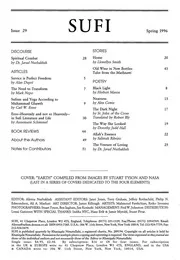
St. Paul and the mystery-religions

 77
77

St. Paul and the mystery-religions
Kennedy's meticulous scholarship in *St. Paul and the Mystery-Religions* provides a valuable counterpoint to overly simplistic interpretations of Pauline theology. The book’s strength lies in its detailed comparison of specific initiatory language found in Paul's letters, such as baptism and the Eucharist, with analogous practices in cults like those of Dionysus or Mithras. However, the dense academic prose, while precise, can occasionally obscure the broader implications for a reader less steeped in classical philology. A particularly compelling section examines the concept of *kenosis* (self-emptying) in Philippians 2, drawing clear parallels to the self-abnegation expected of initiates in certain mystery traditions. This work offers a rigorous, albeit challenging, perspective on the cultural milieu of early Christianity.
📝 Description
77
Harry Angus Alexander Kennedy's 2017 book examines St. Paul's epistles alongside Hellenistic mystery cults.
This 2017 study by Harry Angus Alexander Kennedy scrutinizes the Apostle Paul's writings by comparing them to Hellenistic mystery religions. Kennedy investigates the connections and possible influences between early Christian ideas and the ritualistic, initiatory practices common in the Greco-Roman world during the first centuries CE. The book is aimed at academic researchers, theology students, and those with a serious interest in comparative religion or esoteric studies. It requires a foundational understanding of Pauline theology and ancient Mediterranean religious history, providing a deep analysis rather than a basic introduction. Readers interested in the historical Jesus movement and its interactions with contemporary pagan traditions will find this work particularly pertinent.
Kennedy's analysis is situated within a long line of scholarly efforts to clarify Christianity's origins. The work engages with discussions that began in the late 19th and early 20th centuries, particularly those of the Religionsgeschichtliche Schule, which suggested strong links between early Christianity and Hellenistic paganism. Kennedy revisits and refines these arguments, focusing on specific cultic practices and philosophical ideas.
This book engages with a scholarly tradition that seeks to understand Christianity's roots by examining its relationship with contemporaneous pagan and mystery religions. This approach gained prominence with the Religionsgeschichtliche Schule in the late 19th and early 20th centuries. Kennedy's work revisits these comparative studies, applying a focused analysis to specific concepts and potential shared terminology between Pauline epistles and mystery cult practices. It contributes to ongoing discussions about how religious ideas circulated and transformed within the ancient Mediterranean world.
💡 Why Read This Book?
• Gain a nuanced understanding of early Christian ritual by examining parallels between baptism and initiation rites in Hellenistic mystery cults, as discussed in Kennedy's analysis of the first century CE. • Explore the theological vocabulary of salvation by comparing Pauline concepts with the soteriological aims of pagan mystery religions, providing a richer interpretive framework. • Appreciate the historical context of the Apostle Paul's writings by considering the influence of Greek philosophical ideas and mystery traditions prevalent during his missionary journeys.
⭐ Reader Reviews
Honest opinions from readers who have explored this book.
❓ Frequently Asked Questions
What specific mystery religions does Kennedy compare to Pauline Christianity?
Kennedy's work engages with several mystery traditions, including those associated with Dionysus, Mithras, and the Eleusinian Mysteries. He scrutinizes shared concepts like initiation and salvation within these cults.
When was St. Paul and the Mystery-Religions first published?
The book's first publication date is cited as 2017, making it a relatively recent scholarly contribution to the field.
Does the book argue that Paul was directly influenced by specific cult leaders?
No, the work focuses on broader cultural and religious currents rather than direct personal influence. It examines shared language and ritualistic parallels common in the Greco-Roman world of the 1st century CE.
What is the academic field of Harry Angus Alexander Kennedy?
Kennedy is a scholar specializing in the New Testament and early Christian studies, with a particular interest in the historical and religious contexts of Paul's writings.
Is this book suitable for beginners interested in the Apostle Paul?
While informative, the book's dense academic style and reliance on specialized knowledge make it more appropriate for advanced students or scholars rather than absolute beginners.
What are the primary academic debates addressed in the book?
The book revisits the 'Religionsgeschichtliche Schule' debates concerning the relationship between early Christianity and Hellenistic paganism, refining arguments about shared religious concepts and practices.
🔮 Key Themes & Symbolism
Initiation and Ritual
Kennedy meticulously examines how Pauline concepts like baptism and the Lord's Supper might echo the initiatory practices found in Hellenistic mystery cults. The work investigates shared language and symbolic actions that would have been understood by initiates in cults such as those of Dionysus or Mithras, suggesting a common ritualistic vocabulary within the 1st-century Mediterranean religious landscape.
Soteriology and Salvation
A central theme is the comparative study of salvation narratives. The book analyzes how the promise of deliverance or spiritual transformation in mystery religions aligns with Paul's theological message of redemption through Christ. It explores how the concept of union with a divine figure, central to many mystery cults, finds parallels in Paul's emphasis on 'Christ in you'.
Pauline Theology and Hellenistic Philosophy
Kennedy situates Paul's teachings within the broader intellectual currents of the Hellenistic period. The work scrutinizes the potential influence of Greek philosophical concepts, such as the *logos*, and ethical frameworks on Paul's understanding of the Christian message, considering how these ideas might have been adapted or transformed for a new religious context.
Comparative Religious Studies
The book is fundamentally an exercise in comparative religious history. It aims to illuminate early Christianity not in isolation, but as a phenomenon deeply embedded within the diverse religious milieu of the Roman Empire. By comparing specific doctrines and practices, Kennedy offers a more complex picture of the origins of Christian belief and practice.
💬 Memorable Quotes
Direct passages from the work, attributed to the author.
“...potential parallels in Hellenistic soteriology...”
— This interpretation points to the book's exploration of how the concept of salvation (soteriology) in various mystery cults might inform an understanding of Paul's message of redemption and spiritual liberation.
“The concept of the *logos* in Pauline thought...”
— This refers to the work's examination of philosophical ideas, like the Greek concept of the *logos* (word/reason), and how they might have influenced or been integrated into Paul's theological framework within the context of 1st-century intellectual currents.
“Paul's letters within the Religionsgeschichtliche Schule debates.”
— This refers to the book's engagement with historical academic discussions, specifically the 'History of Religions school,' which sought to understand early Christianity by comparing it to contemporary pagan religions.
💡 Key Ideas
Editorial paraphrase of the work's core concepts — not direct quotes.
The language of baptism and the Lord’s Supper...
This paraphrased concept highlights Kennedy's focus on ritualistic parallels. He suggests that the terminology Paul uses for Christian sacraments may have resonated with initiates of mystery religions due to shared symbolic meanings.
...shared emphasis on dying and rising with a divine figure.
This paraphrased idea captures the book's investigation into the motif of death and resurrection, common in mystery religions, and its potential relation to Christian beliefs about Christ's sacrifice and resurrection as experienced by believers.
🌙 Esoteric Significance
Tradition
This work fits within the broader tradition of esoteric biblical interpretation, which seeks hidden or allegorical meanings within sacred texts. While academic in its approach, it engages with themes—like initiation, spiritual transformation, and divine union—central to many Western esoteric lineages, including Hermeticism and Gnosticism, by examining their potential echoes in early Christian thought.
Symbolism
Key symbols explored include baptism, often interpreted esoterically as a death and rebirth or spiritual cleansing, and the Eucharist, seen as a communion that spiritually unites the believer with the divine. The concept of *kenosis* (self-emptying) also functions symbolically, representing a path of spiritual descent leading to divine realization, a motif found across various esoteric traditions.
Modern Relevance
Contemporary thinkers in esoteric Christianity, comparative mythology, and depth psychology continue to draw on scholarship that contextualizes early Christian texts within broader religious movements. Kennedy's work provides a scholarly foundation for exploring archetypal patterns of initiation and salvation that resonate with modern seekers engaging with both ancient wisdom traditions and contemporary spiritual practices.
👥 Who Should Read This Book
• Students of comparative religion: Those seeking to understand the complex interplay between early Christianity and contemporaneous Hellenistic mystery cults will find detailed analysis and scholarly rigor. • Scholars of Pauline theology: Academics specializing in the Apostle Paul's epistles can use this book to explore specific linguistic and ritualistic parallels in the 1st-century CE religious milieu. • Esoteric practitioners interested in Christian origins: Individuals exploring the deeper, symbolic meanings within Christianity will benefit from the connections drawn between Pauline concepts and mystery traditions.
📜 Historical Context
Published in 2017, Harry Angus Alexander Kennedy's *St. Paul and the Mystery-Religions* revisits academic discussions that gained prominence in the late 19th and early 20th centuries, particularly through the work of the Religionsgeschichtliche Schule. This school, which included scholars like Wilhelm Bousset and Albert Schweitzer, sought to understand early Christianity by examining its relationship to the surrounding Hellenistic religions. Kennedy's work engages with this legacy, offering a contemporary scholarly perspective on the potential influences of mystery cults on Pauline theology. It implicitly addresses debates surrounding the uniqueness of Christianity versus its integration into the broader religious field of the Roman Empire. The book’s detailed analysis provides a counterpoint to arguments that might isolate Paul's theology from its immediate cultural and religious environment.
📔 Journal Prompts
The parallels between Christian baptism and mystery initiation rites.
Paul's concept of salvation compared to Hellenistic soteriology.
The role of the *logos* in early Christian thought and Hellenistic philosophy.
Symbolic interpretations of the Eucharist within its historical context.
Reflections on *kenosis* as a path of spiritual descent and ascent.
🗂️ Glossary
Mystery-Religions
Ancient Greco-Roman cults characterized by secret initiation rites, symbolic teachings, and promises of salvation or spiritual rebirth for their adherents.
Soteriology
The theological study of salvation, exploring doctrines and beliefs concerning the means and nature of deliverance from sin, suffering, or death.
Initiation
A formal admission or process of becoming a member of a group or society, often involving ritual acts, symbolic instruction, and personal transformation.
Logos
A Greek philosophical term often translated as 'word,' 'reason,' or 'principle,' used in various contexts to denote a divine or cosmic ordering force.
Kenosis
A Greek term meaning 'self-emptying,' famously used in Philippians 2 to describe Christ's voluntary humility and renunciation of divine attributes.
Religionsgeschichtliche Schule
The 'History of Religions school,' a late 19th/early 20th-century German academic movement that studied early Christianity in relation to its Hellenistic and ancient Near Eastern religious environment.
Hellenistic Period
The historical era spanning from the death of Alexander the Great (323 BCE) to the rise of the Roman Empire (c. 31 BCE), characterized by the spread of Greek culture and language.
🔮 Readers Also Liked
Browse all →








More by Harry Angus Alexander Kennedy
All books →

More Free Mysticism & Contemplation Books
View all →