St. Paul and the mystery-religions
 80
80

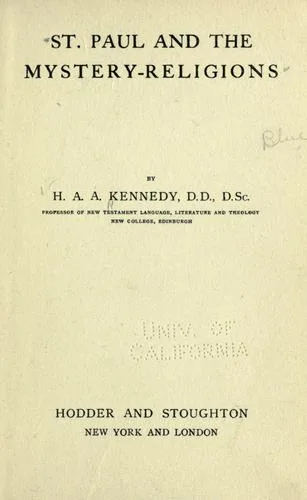
St. Paul and the mystery-religions
Harry Angus Alexander Kennedy’s St. Paul and the Mystery-Religions offers a rigorous engagement with a persistent question in New Testament scholarship. Kennedy avoids the simplistic equation of Pauline Christianity with mystery cults, instead meticulously dissecting the evidence for shared conceptual frameworks and ritualistic parallels. His strength lies in the measured approach, acknowledging the limitations of evidence and the scholarly debates surrounding this topic. A particular passage discussing the concept of 'mysteries' in relation to Paul's epistles highlights the author's careful distinctions between shared cultural language and direct influence. However, the book's density might present a barrier for readers less familiar with Hellenistic religious history. While comprehensive, the sheer volume of comparative material could occasionally obscure the central argument for the non-specialist. Kennedy’s work provides a valuable, nuanced perspective on the religious landscape of the 1st century CE.
📝 Description
80
Harry Angus Alexander Kennedy's 2017 book examines St. Paul's epistles through the lens of Hellenistic mystery cults.
This book analyzes the Apostle Paul's letters, considering their potential connections to the initiatory rites and doctrines of ancient Greco-Roman mystery religions. Kennedy's research investigates how Paul's message might have been communicated in terms understandable to a population already familiar with these existing religious traditions.
The work is intended for students of early Christianity, comparative religion, and classical antiquity. It will interest scholars, theologians, and those curious about the historical and cultural setting of Christianity's emergence. Readers will benefit from a background in biblical studies and ancient Mediterranean history. The book is especially relevant for those studying the evolution of religious thought, the syncretic nature of ancient faiths, and the impact of mystery cults on later spiritual movements.
Kennedy's study engages with a long-standing academic discussion about the relationship between early Christianity and the mystery religions. This dialogue intensified in the late 19th and early 20th centuries, with scholars like Franz Cumont and Richard Reitzenstein highlighting similarities between Christian sacraments and mystery rituals. While some earlier views suggested direct influence, later scholarship, including work by E.R. Dodds and Walter Burkert, has explored shared cultural contexts and symbolic language as more likely connections. Kennedy places his analysis within this ongoing academic conversation, aiming to refine or reassess earlier interpretations.
💡 Why Read This Book?
• Gain a nuanced understanding of the historical debates surrounding St. Paul and mystery religions, learning how scholars like E.R. Dodds approached the topic. • Explore specific parallels in ritual and concept, such as initiation rites and the 'dying and rising god' motif, and their potential connection to Pauline theology. • Appreciate the careful analysis of terminology like 'mysterion' and 'pneuma', understanding how these terms functioned within both Hellenistic cults and early Christian discourse.
⭐ Reader Reviews
Honest opinions from readers who have explored this book.
❓ Frequently Asked Questions
What is the primary focus of St. Paul and the Mystery-Religions?
The book focuses on examining the Apostle Paul's teachings and epistles in light of the Hellenistic mystery religions prevalent in the Roman Empire, exploring potential connections and influences.
When was St. Paul and the Mystery-Religions first published?
The work was first published in 2017, placing it within contemporary scholarship on the subject.
Who is the author, Harry Angus Alexander Kennedy?
Harry Angus Alexander Kennedy is a scholar who has researched early Christianity and its historical context, specifically examining its relationship with contemporary pagan religious movements.
What are some key mystery religions discussed in relation to Paul?
While not always explicitly naming specific cults, the work discusses common features found in various mystery traditions, such as those associated with Dionysus, Orpheus, and Mithras, which involved initiatory rites and secret doctrines.
Does the book argue that Christianity directly copied mystery religions?
No, Kennedy's work generally adopts a more cautious approach, investigating shared cultural language, conceptual parallels, and potential syncretism rather than asserting direct literary dependence or wholesale adoption.
What scholarly debate does this book contribute to?
It contributes to the long-standing academic discussion, active since the late 19th century, about the extent to which early Christianity, particularly Pauline theology, was shaped by or interacted with the doctrines and practices of Hellenistic mystery cults.
🔮 Key Themes & Symbolism
Pauline Theology and Hellenistic Cults
This theme scrutinizes how the Apostle Paul's theological formulations—concerning salvation, resurrection, and spiritual transformation—might have resonated with individuals familiar with the initiatory practices of Hellenistic mystery religions. Kennedy examines specific terminology and conceptual frameworks, such as the 'dying and rising god' motif and the idea of spiritual rebirth, to understand the potential points of contact and influence. The work seeks to illuminate how Paul might have articulated Christian doctrine in ways that were intelligible and compelling within a diverse religious landscape where mystery cults offered profound personal experiences of divine encounter and salvation.
Ritual and Initiation Parallels
A central aspect of the book involves comparing the ritualistic elements of mystery religions with early Christian practices, particularly baptism and the Eucharist. Kennedy investigates the concept of 'initiation' as understood in cults like those of Dionysus or Mithras, which often involved secret rites, purification, and a transformative experience for the adherent. The analysis explores whether Paul's descriptions of spiritual union with Christ, participation in his death and resurrection, and the concept of being 'born again' draw upon or engage with similar notions of ritualistic transformation prevalent in the broader Mediterranean world of the 1st century CE.
The Concept of 'Mystery' (Mysterion)
The book dedicates significant attention to the term 'mystery' (mysterion) itself, a key concept in both mystery religions and Pauline writings. Kennedy explores the semantic range of 'mysterion' in the ancient world, noting its association with hidden knowledge, divine revelation, and secret cultic practices. By analyzing Paul's use of this term, particularly in relation to the 'mystery of Christ' or the 'mystery of the gospel,' the work aims to discern whether Paul was employing a familiar idiom to convey Christian truths or deliberately re-appropriating a term laden with esoteric connotations to establish Christianity's unique salvific message.
Shared Religious Milieu
Kennedy situates St. Paul's missionary activities within the complex religious environment of the Roman Empire, a period characterized by syncretism and the widespread appeal of mystery cults. The work emphasizes that early Christianity did not emerge in a vacuum but interacted with a body of existing spiritual beliefs and practices. Understanding this shared milieu is crucial for appreciating how Paul's message was received, interpreted, and potentially adapted. The book thus provides a framework for viewing early Christian development not in isolation, but as part of broader cultural and religious currents of the Hellenistic and Roman eras.
💬 Memorable Quotes
Direct passages from the work, attributed to the author.
“The term 'mystery' carried specific connotations within the Hellenistic world.”
— This highlights Kennedy's focus on the semantic richness of terms used by Paul. It suggests that understanding the pre-existing meanings of 'mystery' in contemporary cults is vital for interpreting Paul's theological claims.
“Paul's epistles address needs for salvation and divine encounter.”
— This interpretation suggests that Kennedy sees Paul's message as responding to the same existential yearnings that drew individuals to mystery cults, emphasizing the shared human quest for meaning and transcendence.
“The 'dying and rising god' motif offers a comparative lens.”
— This refers to a common theme in mystery cults. Kennedy likely uses this motif as a specific point of comparison to explore potential resonances within Paul's theology of Christ's death and resurrection.
“Distinguishing between shared language and direct influence is crucial.”
— This reflects the nuanced stance of the book, cautioning against oversimplified claims of dependency. It underscores the importance of critical analysis in understanding the complex relationship between early Christianity and its religious environment.
💡 Key Ideas
Editorial paraphrase of the work's core concepts — not direct quotes.
Parallels in ritual suggest a shared conceptual landscape.
This paraphrased concept points to Kennedy's methodological approach: identifying similarities in ritual practices between mystery religions and early Christianity not necessarily as direct borrowing, but as evidence of a common cultural and religious environment.
🌙 Esoteric Significance
Tradition
This work engages with the historical and comparative study of esoteric traditions, particularly the Gnostic and Hermetic currents that often sought connections between early Christianity and pre-Christian mystery cults. While not a practitioner's guide, it provides scholarly grounding for understanding the esoteric appeal of mystery religions and how early Christian symbolism might have been interpreted through an esoteric lens. It fits within the academic exploration of how ancient spiritual systems influenced one another, particularly in the search for hidden knowledge and salvific pathways.
Symbolism
Key symbols explored include the 'dying and rising god' motif, which appears in various mystery traditions and finds potential parallels in Christ's resurrection, symbolizing transformation and overcoming death. The concept of 'initiation' itself is a potent symbol of spiritual rebirth and entry into a new state of being, mirrored in Christian baptism. The term 'mystery' (mysterion) functions symbolically, representing revealed divine truth or secret knowledge accessible through participation in the cult or faith.
Modern Relevance
Contemporary esoteric thinkers and comparative religion scholars continue to draw on studies like Kennedy's to understand the roots of Western esotericism. Movements focusing on Gnosticism, Hermeticism, and alternative interpretations of early Christianity often reference the parallels between mystery cults and Christian origins. The work informs modern discussions about the psychological and spiritual needs addressed by both ancient mystery religions and contemporary spiritual paths, highlighting the enduring human quest for meaning and transcendence.
👥 Who Should Read This Book
• Students of comparative religion and early Christianity seeking to understand the historical context of Pauline theology within the broader Mediterranean religious landscape. • Scholars of Hellenistic history and classical antiquity interested in the social and religious functions of mystery cults and their potential interactions with emerging faiths. • Individuals exploring the esoteric dimensions of Christianity and the historical roots of spiritual practices that emphasize initiation and divine transformation.
📜 Historical Context
Harry Angus Alexander Kennedy's work is situated within a scholarly tradition that has debated the influence of Hellenistic mystery religions on early Christianity since the late 19th century. Figures like Franz Cumont and Richard Reitzenstein initially proposed strong links, suggesting that Christian sacraments were directly modeled on mystery rites. This perspective faced scrutiny from scholars such as Walter Burkert and E.R. Dodds, who emphasized the shared cultural milieu and common symbolic language rather than direct borrowing. Kennedy's 2017 publication engages with this ongoing discourse, contributing to a more refined understanding of the interactions between Paul's teachings and the religious field of the Roman Empire. The work acknowledges the prevalence of mystery cults, which offered adherents intense personal experiences of divine union and salvation, and explores how Paul's message might have been articulated within this context.
📔 Journal Prompts
The concept of 'mysterion' in Pauline writings and its relation to Hellenistic cults.
Ritualistic parallels between early Christian practices and mystery traditions.
The 'dying and rising god' motif as a comparative tool for understanding Christ's resurrection.
Paul's articulation of salvation within a religiously diverse Roman Empire.
The shared human need for divine encounter addressed by both mystery cults and Christianity.
🗂️ Glossary
Mystery Religions
Ancient Greco-Roman cults (e.g., Eleusinian, Dionysian, Mithraic) characterized by secret initiation rites, symbolic ceremonies, and promises of spiritual renewal or salvation for adherents.
Hellenistic Period
The historical era following the conquests of Alexander the Great (roughly 323 BCE to 31 BCE), marked by the spread of Greek culture and language throughout the Mediterranean and Near East.
Syncretism
The merging or blending of different religious beliefs, practices, and traditions, often occurring in multicultural societies like the Roman Empire.
Epistles
Letters, particularly the collection of letters attributed to the Apostle Paul in the New Testament, which form a significant source for early Christian theology and practice.
Initiation
A formal ceremony or process by which an individual is admitted into a group, organization, or a new level of understanding, often involving symbolic acts and instruction.
Mysterion
A Greek term often translated as 'mystery,' used in both pagan cults and early Christian texts to refer to secret knowledge, divine revelation, or sacred rites.
Dying and Rising God
A recurring motif in comparative mythology and religious studies, describing deities whose myths involve death and subsequent resurrection or reappearance, often linked to seasonal cycles.
🔮 Readers Also Liked
Browse all →







More by Harry Angus Alexander Kennedy
All books →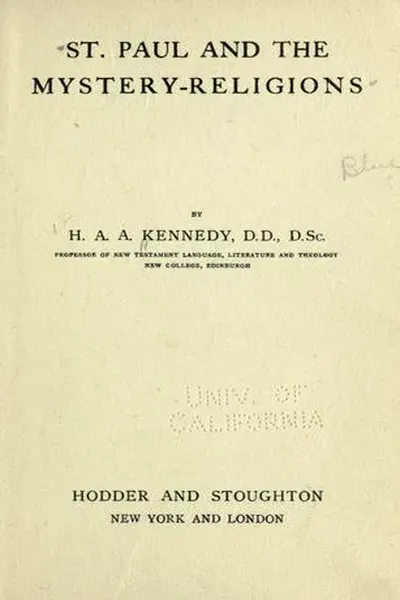

More Free Mysticism & Contemplation Books
View all →