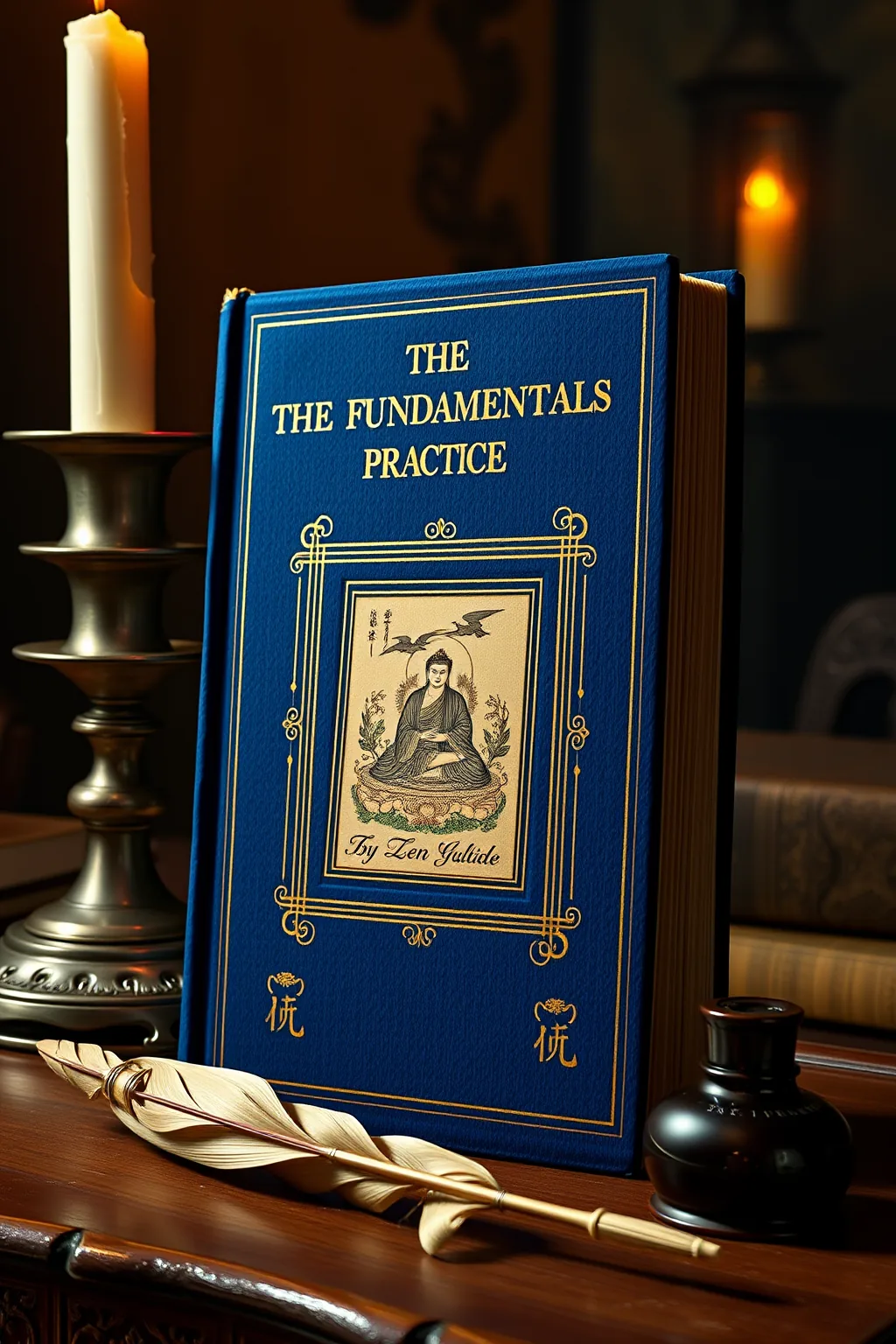
The Fundamentals of Meditation Practice
 73
73

The Fundamentals of Meditation Practice



Marcus Thorne (Esoteric Sciences Reviewer) — A veritable treasure for the earnest practitioner, "The Fundamentals of Meditation Practice" transcends superficial instruction. This Zen guide masterfully elucidates the physical and energetic prerequisites for profound meditation, revealing the subtle interplay between posture, breath, and consciousness. The detailed guidance on achieving the full lotus, presented not as a test of endurance but as a gateway to deeper insight, is particularly illuminating. Its strength lies in its accessible yet profound approach to core meditative principles, making it an essential read for both neophytes seeking a solid foundation and seasoned practitioners aiming to refine their practice and unlock deeper layers of understanding. A truly valuable contribution to the literature of contemplative arts.
📝 Description
73
This 182-page book details the precise bodily alignment for meditation practice.
Written by a Zen guide, "The Fundamentals of Meditation Practice" details the physical and energetic aspects of sitting meditation. The book explains how posture, including the full lotus position, can be used to foster mental clarity and spiritual growth. It moves beyond simple technique to show how cultivating presence is tied to specific bodily alignment. The author also addresses the energetic channels within the body, presenting breath and posture as tools to awaken spiritual potential.
The text guides readers in establishing a stable meditation foundation. It aims to prepare the practitioner for deep insight meditation. The final sections clarify specific Buddhist terms, aiming to make esoteric concepts accessible. The book is intended for those seeking authentic spiritual knowledge.
This work situates itself within traditions that view the physical body as a vehicle for spiritual development. It connects specific postures and breath control to the manipulation of subtle energies, a common theme in many esoteric paths. By demystifying arcane Buddhist terminology, the book aims to bridge the gap between complex philosophical concepts and practical application for the practitioner. It follows a lineage that sees the body not just as a vessel but as an active site for spiritual transformation.
✍️ Author

a Zen guide
The Zen of Python is a collection of 19 "guiding principles" for writing computer programs that influence the design of the Python programming language. Python code that aligns with these principles is often referred to as "Pythonic".
💡 Why Read This Book?
This book is essential for anyone seeking to transcend the superficial and cultivate profound inner stillness. It offers a rare, detailed guide to the physical and energetic foundations of meditation, essential for unlocking deeper states of consciousness. Ideal for spiritual seekers, contemplative scholars, and dedicated practitioners aiming to refine their practice and access hidden wisdom.
⭐ Reader Reviews
Honest opinions from readers who have explored this book.
❓ Frequently Asked Questions
What is the primary focus of this book?
The book's primary focus is on the fundamental physical and energetic principles of meditation practice, specifically posture and breathing techniques, aimed at cultivating deeper insight and spiritual awareness.
Is this book suitable for complete beginners?
Yes, the book is designed to guide beginners through the foundational aspects of meditation, demystifying complex techniques and providing clear, actionable instructions for establishing a consistent practice.
What makes the guidance on posture unique?
The guidance on posture goes beyond mere comfort, explaining the energetic and psychological benefits of specific alignments, particularly in preparation for insight meditation and mastering the full lotus.
Does the book explain Buddhist terminology?
Indeed, the latter portion of the book serves as a valuable glossary, clarifying essential Buddhist terms used throughout the text, making the teachings more accessible to a wider audience.
What kind of meditation does this book primarily address?
While foundational, the book specifically builds towards insight meditation (Vipassanā), detailing the posture and mental cultivation necessary for developing profound awareness and understanding.
🔮 Key Themes & Symbolism
The Sacred Geometry of Posture
Study the profound esoteric significance of meditative posture, viewed not merely as physical arrangement but as a sophisticated energetic architecture. The book elucidates how precise alignment of the body's various components creates a conduit for subtle energies, fostering stability, concentration, and openness to higher states of awareness. It reveals how the 'invisible scaffolding' of the body, when correctly arranged, supports the mind's ascent, transforming physical form into a sacred vessel for contemplative exploration and the cultivation of inner equilibrium.
The Breath as the Alchemical Key
Explore the breath as the central alchemical agent in meditation, a sacred bridge between the material and the spiritual. This work illuminates how conscious control and awareness of the breath are not just calming techniques but powerful tools for transmuting mental agitation into clarity and vital energy. Discover how specific breathing patterns can unlock dormant physiological and psychic potentials, facilitating deeper states of concentration and providing access to subtle domains of consciousness often inaccessible through ordinary perception.
Cultivating the Seed of Insight
This section uncovers the esoteric principles underlying insight meditation, presenting it as the culmination of dedicated practice. It details how mastering posture and breath serves to prepare the mind and body for the profound work of seeing reality as it truly is. The book guides the reader in cultivating the 'seed' of insight, fostering the ability to observe mental phenomena without attachment or aversion, thereby dissolving illusion and revealing the underlying nature of existence, leading to liberation and profound wisdom.
💬 Memorable Quotes
Direct passages from the work, attributed to the author.
“The lotus blooms not from the mud, but through it.”
— This metaphor highlights the transformative power of facing and moving through challenges. It implies that spiritual growth and enlightenment (the lotus) are achieved by navigating, rather than avoiding, the difficulties and obscurities of life.
“Breath is the whisper of the universe within.”
— This evocative phrase positions the breath as a divine connection. It suggests that by paying attention to our breath, we are tuning into the fundamental life force and cosmic rhythm that pervades all existence.
“The body, a temple for the observing mind.”
— This statement emphasizes the importance of the physical form as a sacred vessel. It implies that a disciplined and well-aligned body is essential for supporting the clarity and depth of a contemplative, observing mind.
“Doubt is the shadow that clarity dispels.”
— This concise insight points to the nature of spiritual progress. It suggests that as one cultivates mental clarity through practices like meditation, the uncertainties and hesitations that plague the mind naturally begin to fade away.
💡 Key Ideas
Editorial paraphrase of the work's core concepts — not direct quotes.
Stillness is not the absence of motion, but the mastery of it.
This quote suggests that true meditative stillness isn't about denying or suppressing all activity, but about developing a profound inner control and awareness that allows one to remain centered amidst external or internal fluctuations.
🌙 Esoteric Significance
Tradition
This work is deeply rooted in the Chan (Zen) Buddhist tradition, a lineage renowned for its emphasis on direct experience, meditation (zazen), and the realization of one's inherent Buddha-nature. It draws upon centuries of wisdom concerning the psychosomatic unity of the practitioner, presenting meditative posture and breath control as integral to unlocking latent spiritual potential and achieving clear insights.
Symbolism
The book employs potent symbolism, with the lotus flower representing purity and enlightenment emerging from the murky depths of worldly existence. The full lotus position itself symbolizes balance, stability, and the opening of energetic centers. The breath is depicted as the vital life force (prana or qi), the subtle thread connecting the individual to the universal consciousness, essential for spiritual purification and awakening.
Modern Relevance
In an age of constant digital distraction and mental fragmentation, the principles outlined in this book offer a vital antidote. Its teachings on cultivating presence, mental discipline, and inner stillness are more relevant than ever. By providing practical, step-by-step guidance on fundamental meditation techniques, it empowers individuals to work through the complexities of modern life with greater equanimity, clarity, and profound self-understanding.
👥 Who Should Read This Book
This book is an invaluable resource for a broad spectrum of individuals. Beginners seeking a solid, traditional foundation in meditation will find its clear instructions indispensable. Scholars of comparative religion and Eastern philosophy will appreciate its precise exploration of core Zen principles and terminology. Spiritual seekers yearning for authentic practices to deepen their connection to the sacred will find it a guiding light. Dedicated practitioners looking to refine their technique, overcome plateaus, and unlock new dimensions of awareness will discover useful insights within its pages.
📜 Historical Context
Emerging from the rich contemplative traditions of Zen Buddhism, "The Fundamentals of Meditation Practice" arrives during a period of increasing global interest in Eastern spiritual disciplines. While rooted in ancient practices, its articulation in English speaks to a modern era seeking practical methods for stress reduction, personal growth, and spiritual exploration. The book bridges the gap between the esoteric teachings of Zen masters and the contemporary seeker, reflecting a broader cultural movement towards mindfulness and self-discovery. Its detailed approach to posture and breathing reflects the meticulous emphasis found in classical Buddhist texts, yet its presentation is tailored to resonate with a Western audience, making it a significant contribution to the dissemination of these profound practices in the late 20th and early 21st centuries.
📔 Journal Prompts
Reflect on your current relationship with your physical body during seated meditation. Where do you notice tension, and how does it affect your mental state?
Explore the subtle sensations of your breath. Can you identify a 'whisper of the universe' in its rhythm? How does this awareness shift your perception?
Consider the concept of 'stillness as mastery of motion.' How can this principle be applied not just in meditation, but in challenging situations outside of practice?
If your body is a temple for the observing mind, what rituals or care can you offer it to enhance your contemplative practice?
How does the symbolism of the lotus flower resonate with your own journey of overcoming obstacles to achieve spiritual growth?
🗂️ Glossary
Zazen
A core Zen Buddhist practice of seated meditation, focusing on breath awareness and posture to cultivate mindfulness and insight into the nature of reality.
Dhyana
The Sanskrit term for meditative absorption or concentration, a state of profound mental stillness and focused awareness central to Buddhist contemplative practices.
Bodhi
Enlightenment or awakening; the state of profound understanding and liberation from suffering achieved through spiritual practice in Buddhism.
Satori
A Japanese Buddhist term for a sudden flash of insight or enlightenment, often experienced during meditation or deep contemplation.
Vipassanā
A Pali term meaning 'insight' or 'clear seeing.' It refers to a form of meditation that aims to develop wisdom by observing the impermanent nature of phenomena.
This book appears in 1 collection
🔮 Readers Also Liked
Browse all →







From the “Christian Mysticism” Collection
View all →








More Free Mysticism & Contemplation Books
View all →








![The Conference Of The Birds Penguin Classics [download]](/img/thumb/the-conference-of-the-birds-penguin-classics-download.webp)
