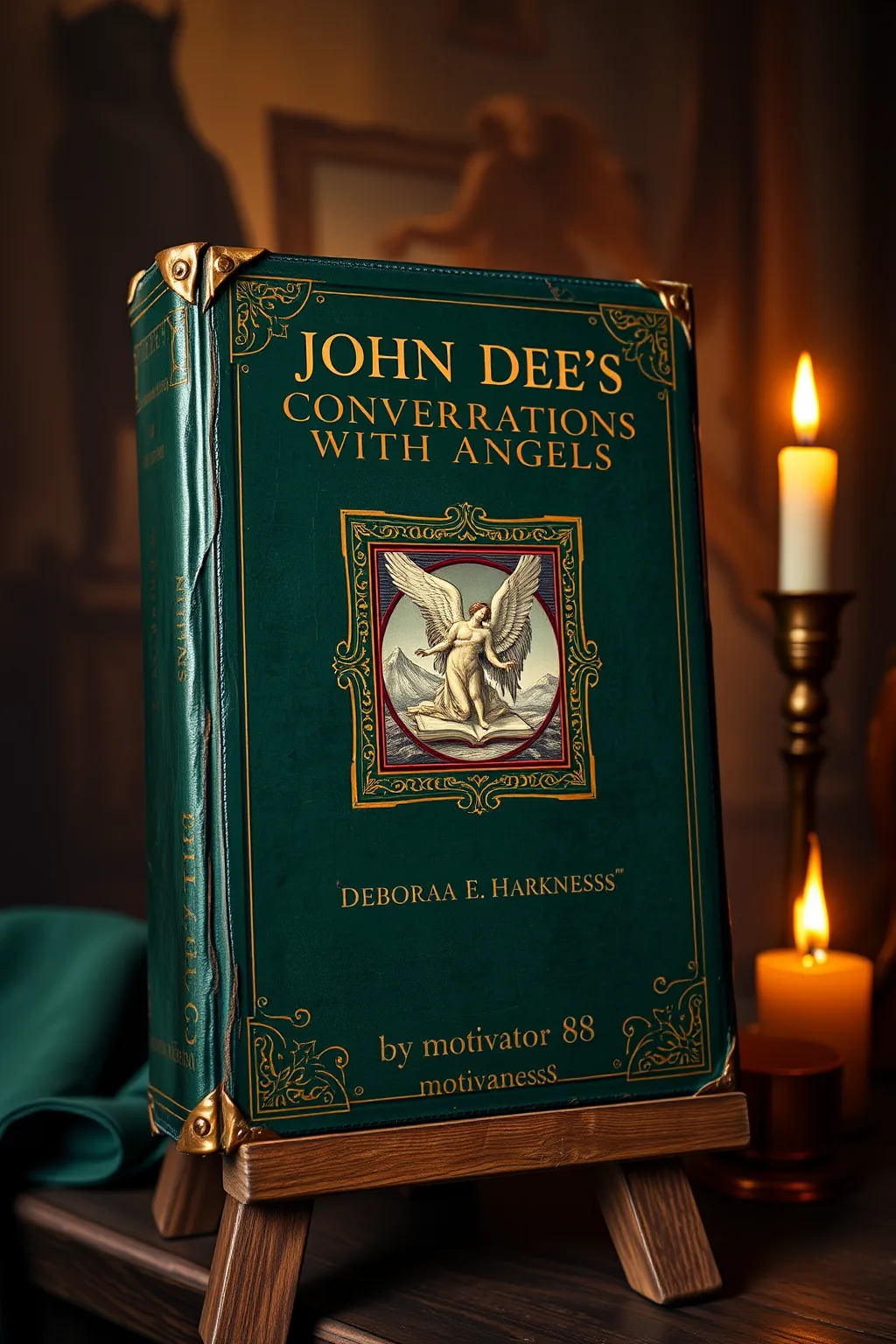
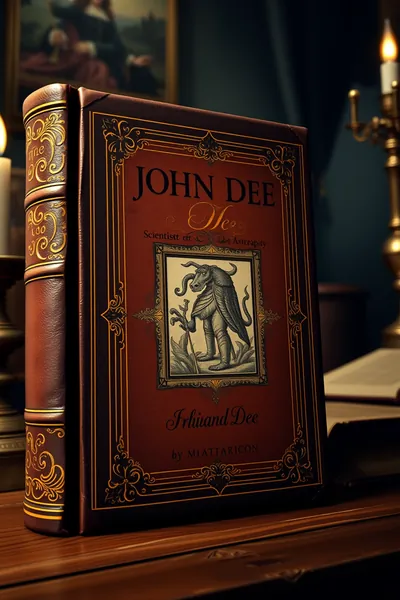
John Dee's Conversations With Angels. Cabala, Alchemy, And The End Of Nature By Deborah E. Harkness
 83
83

John Dee's Conversations With Angels. Cabala, Alchemy, And The End Of Nature By Deborah E. Harkness


Deborah E. Harkness's 'John Dee's Conversations With Angels' is a triumph of scholarly occult investigation. Harkness meticulously navigates the complex nexus of Dee's angelic communications, revealing their deep roots in Kabbalistic mysticism and alchemical philosophy. The book offers a rare glimpse into the mind of a man who sought to reconcile empirical observation with spiritual revelation. Its strength lies in its lucid exposition of intricate concepts, making the arcane accessible without sacrificing depth. Essential reading for anyone interested in the history of magic, Hermeticism, or the intellectual landscape of the Elizabethan era. A profound contribution to understanding the enduring power of esoteric inquiry.
📝 Description
83
Deborah Harkness's 2001 book examines John Dee's angelic conversations in the context of Renaissance occultism.
Deborah E. Harkness's 2001 study investigates the angelic communications of John Dee, a prominent figure in Elizabethan England. The book details Dee's attempts to communicate with spirits, a practice he believed would grant him divine knowledge. Harkness places these interactions within the broader intellectual currents of the Renaissance, connecting them to Kabbalistic thought and alchemical pursuits.
The work moves beyond a simple biography, analyzing how Dee's experiences reflected contemporary anxieties about the natural world and humanity's place within it. Harkness discusses the symbolic language of alchemy and its role in Dee's spiritual quest. She argues that Dee's 'angelic conversations' were not isolated events but part of a larger intellectual framework that sought to understand and manipulate the forces of nature.
This book situates John Dee's unique brand of spirit communication within the complex tapestry of Renaissance esotericism. It examines how Dee drew upon Kabbalistic traditions, which offered a mystical interpretation of Hebrew scripture and divine emanations, and alchemical theories, which sought a transformative understanding of matter and spirit. These were not separate disciplines but interconnected paths for acquiring hidden knowledge and understanding the cosmos. Harkness illustrates how Dee's angelic dialogues aimed to reconcile these disparate yet related systems, reflecting a period where the boundaries between magic, science, and theology were fluid.
💡 Why Read This Book?
Uncover the secrets of John Dee's angelic encounters and their profound connection to Kabbalah and alchemy. Understand the Renaissance worldview of hidden knowledge and the quest for divine wisdom. Ideal for scholars, occult practitioners, and anyone fascinated by the intersection of science, mysticism, and the spiritual quest for meaning in a seemingly material world.
⭐ Reader Reviews
Honest opinions from readers who have explored this book.
❓ Frequently Asked Questions
What was the primary purpose of John Dee's angelic conversations?
John Dee believed his angelic conversations were a means to gain divine knowledge, understand God's creation, and potentially reform the world by revealing hidden truths and God's will through angelic intermediaries.
How does Kabbalah influence Dee's angelic interactions?
Kabbalah provided Dee with a framework for understanding angelic hierarchies, divine emanations, and the symbolic language necessary to interpret and engage with the spiritual realm, enriching his angelic dialogues.
What is the significance of 'The End of Nature' in this context?
It refers to a potential shift in humanity's relationship with the natural world, influenced by divine revelation, where nature is seen not as an end in itself but as a divine text to be understood and potentially transcended or reformed.
Is this book suitable for beginners in occult studies?
While deeply scholarly, Harkness's engaging prose makes the complex subject matter accessible. Beginners will find it a rich introduction, though prior familiarity with basic Kabbalistic or alchemical concepts may enhance the reading experience.
What role did alchemy play in Dee's quest for knowledge?
Alchemy was more than just material transformation for Dee; it was a spiritual and philosophical practice intertwined with his angelic communications, representing a symbolic journey towards purification, enlightenment, and divine union.
🔮 Key Themes & Symbolism
The Angelic Dialogue and Divine Revelation
This theme looks at the core of John Dee's controversial practice: his 'angelic conversations'. It explores the nature of his communication with purported celestial beings, the methods he employed, and his profound belief that these dialogues offered direct access to divine wisdom, secrets of creation, and God's ultimate plan for humanity. The focus is on understanding the spiritual and intellectual framework that underpinned his ecstatic visions and their perceived authenticity as sources of profound, revelatory knowledge.
Kabbalah as a Mystical Framework
The intricate system of Kabbalah serves as a vital lens through which Dee interpreted his angelic encounters. This theme examines how the Sephiroth, gematria, and other Kabbalistic principles provided Dee with a sophisticated language and conceptual map for understanding angelic hierarchies, divine emanations, and the hidden interconnectedness of the cosmos. It highlights how Kabbalistic symbolism offered a profound means to decode the messages received and integrate them into a coherent mystical worldview.
Alchemy: The Great Work of Transformation
Beyond its metallurgical connotations, this theme explores alchemy as a profound spiritual and philosophical pursuit for John Dee. It investigates how the principles of alchemical transformation—dissolution, purification, and conjunction—mirrored his quest for spiritual enlightenment and divine understanding. The book illuminates the symbolic resonance between the Great Work of the alchemist and the process of spiritual ascent, connecting the material manipulations of the laboratory to the inner journey of the soul towards perfection.
💬 Memorable Quotes
Direct passages from the work, attributed to the author.
“Nature, once a closed book, was revealed as a living proof of divine artifice.”
— This highlights the Renaissance shift in perception, where nature was increasingly viewed as imbued with divine meaning, accessible through mystical inquiry and scientific observation, moving beyond a purely material interpretation.
“Kabbalah provided the keys to unlock the celestial alphabet of creation.”
— This underscores the integral role of Kabbalah in Dee's system, positioning it as the essential interpretive tool for deciphering the complex symbolic language and divine order communicated by the angels.
“The alchemist's retort mirrored the soul's journey towards purified essence.”
— This illustrates the deep spiritual symbolism inherent in alchemy for Dee, where the physical process of transmutation was a metaphor for the inner work of spiritual refinement and the attainment of higher consciousness.
“To converse with angels was to glimpse the blueprint of a reformed world.”
— This points to Dee's ambitious vision, suggesting that his angelic communications were not merely personal revelations but were intended to provide insights for the betterment and spiritual reordering of earthly existence.
💡 Key Ideas
Editorial paraphrase of the work's core concepts — not direct quotes.
The angels spoke not in earthly tongues, but in the language of celestial geometry and divine light.
This quote emphasizes the ineffable and symbolic nature of Dee's angelic communications, suggesting a form of knowledge that transcends conventional language and requires a deeper, intuitive understanding of cosmic principles.
🌙 Esoteric Significance
Tradition
This work is deeply rooted in the Hermetic, Kabbalistic, and Renaissance magical traditions. It represents an important moment where these disparate esoteric streams converged in the ambitious intellectual and spiritual project of John Dee. The book explores how these traditions provided the symbolic language, philosophical underpinnings, and practical methodologies for Dee's attempts to commune with angelic intelligences and understand the divine order of the cosmos.
Symbolism
The symbolism is rich and multilayered, encompassing the divine emanations of the Kabbalistic Tree of Life, the transformative processes of alchemical metallurgy (representing spiritual purification), and the angelic hierarchies themselves. Celestial geometry, divine names, and scriptural interpretations also form crucial symbolic elements, acting as conduits and deciphering tools for the hidden knowledge Dee sought from his angelic interlocutors.
Modern Relevance
In an age often dominated by materialism, Dee's quest remains relevant as a powerful proof of the enduring human impulse to seek meaning beyond the observable. His work prompts contemplation on the nature of consciousness, the potential for direct spiritual experience, and the interconnectedness of all things. The book encourages a re-evaluation of the relationship between knowledge, faith, and the unknown, offering a historical perspective on the ongoing human dialogue with the transcendent.
👥 Who Should Read This Book
This book is a treasure for the dedicated student of esoteric philosophy, the historical occultist, and the spiritual seeker. Scholars will appreciate Harkness's rigorous research and insightful analysis of John Dee's complex intellectual world. Practitioners of Hermetic arts, Kabbalah, or ceremonial magic will find invaluable historical context and inspiration. Beginners curious about the Renaissance mind and its engagement with the divine will discover a compelling narrative that bridges historical scholarship with profound mystical inquiry.
📜 Historical Context
John Dee's life and work unfolded during the vibrant and often tumultuous Elizabethan era, a period characterized by intense intellectual curiosity, religious upheaval, and a burgeoning interest in the occult sciences. This was a time when the lines between magic, science, and religion were blurred, and figures like Dee sought to synthesize ancient wisdom with emerging empirical observations. The Renaissance saw a renewed fascination with Neoplatonism, Hermeticism, and Kabbalah, all of which profoundly influenced Dee's quest for knowledge. His angelic conversations, conducted in this milieu, represented a daring attempt to bridge the gap between the material and spiritual realms, driven by a desire to understand God's will and potentially influence the course of human history and natural philosophy, making 'The End of Nature' a concept debated within this transformative intellectual landscape.
📔 Journal Prompts
Reflect on a time you felt a strong connection to something beyond the material world. What triggered this feeling, and how did it impact your perception?
Explore the concept of 'divine geometry' or 'celestial language'. How might abstract forms or symbols convey profound truths that words cannot?
Consider the alchemical concept of 'transmutation'. How can this apply to personal growth, emotional healing, or societal change?
If you could communicate with intelligences from another realm, what fundamental questions about existence, consciousness, or purpose would you ask?
How does the idea of 'The End of Nature' resonate with contemporary ecological or philosophical debates? What are the potential implications of such a concept?
🗂️ Glossary
Kabbalah
A mystical tradition within Judaism that explores the nature of God, the creation of the universe, and the relationship between the divine and the human, often employing symbolic interpretations of scripture and divine names.
Alchemy
An ancient philosophical and proto-scientific tradition practiced throughout Europe, the Middle East, and Asia. It was concerned with the transmutation of base metals into noble metals (like gold), the discovery of a universal elixir, and often involved spiritual or mystical interpretations of its processes.
Hermeticism
A philosophical and religious tradition based primarily upon writings attributed to Hermes Trismegistus. It emphasizes esoteric knowledge, divine wisdom, and the interconnectedness of the microcosm (human) and macrocosm (universe).
Angelic Conversations
The practice, particularly associated with John Dee, of attempting to communicate with angelic beings through prayer, ritual, and visionary experiences, with the goal of receiving divine knowledge and guidance.
Sephiroth
In Kabbalah, the ten divine emanations or attributes through which God reveals himself and creates the universe. They are often depicted as a diagrammatic Tree of Life.
This book appears in 3 collections
🔮 Readers Also Liked
Browse all →








More by motivator8
All books →
From the “Hermeticism” Collection
View all →







More Free Alchemy & Hermeticism Books
View all →