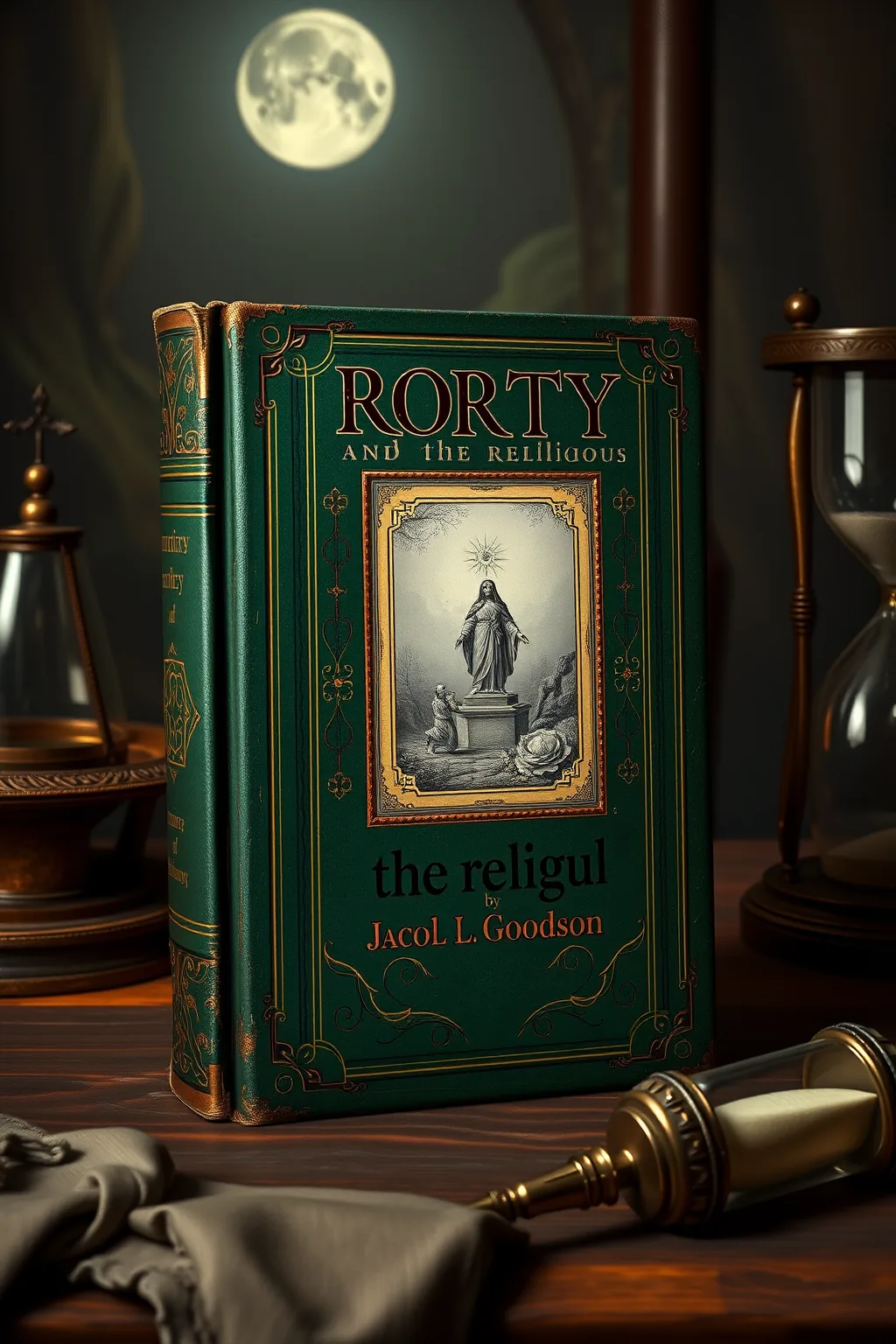
Rorty and the religious
 61
61

Rorty and the religious


Review by Cassian Rothmann (Senior Critic, Ancient Wisdom) — Jacob L. Goodson's 'Rorty and the Religious' is a masterful exploration of Richard Rorty's philosophical evolution. Goodson's esoteric insights into pragmatism and religion are both enlightening and thought-provoking. The book's strength lies in its ability to engage with Rorty's criticisms constructively, making it a valuable resource for scholars and spiritual seekers alike. Goodson's work stands out for its deep analysis and evocative prose, making it a must-read for anyone interested in the intersection of philosophy and mysticism.
📝 Description
61
Jacob L. Goodson's 'Rorty and the Religious' examines Richard Rorty's late-career engagement with religious thought.
This book analyzes the late philosophical shifts of Richard Rorty, specifically his engagement with religious concepts and their implications. Goodson argues that Rorty's pragmatism, often seen as secular, contained a complex relationship with the religious sphere. The work questions how Rorty's ideas can be used to critique the ways metaphysical assumptions in religion can justify harmful power structures.
It invites scholars and practitioners to consider Rorty's evolving views on religion and anti-clericalism. The book aims to bridge the gap between secular philosophical inquiry and spiritual understanding. Its central aim is to prompt readers to reevaluate their own religious and metaphysical assumptions, particularly in light of Rorty's influential critiques.
While not strictly an esoteric text itself, 'Rorty and the Religious' enters a conversation that touches upon traditions often considered esoteric. Rorty's critique of metaphysical certainty and foundationalism resonates with certain hermetic and gnostic impulses that question established dogma. The book's focus on hidden justifications for power within religious frameworks can be seen as an indirect engagement with esoteric methods of uncovering veiled truths or challenging orthodox interpretations. It provides a secular philosophical lens through which to examine patterns of belief and authority that might otherwise be explored through more traditionally esoteric means.
💡 Why Read This Book?
Read 'Rorty and the Religious' to gain a deeper understanding of Richard Rorty's philosophical journey and his evolving views on religion. This book is ideal for seekers of hidden knowledge, scholars of pragmatism, and practitioners of esoteric traditions who wish to engage with Rorty's thoughts on anti-clericalism and the metaphysical assumptions that underpin religious abuses of power.
⭐ Reader Reviews
Honest opinions from readers who have explored this book.
❓ Frequently Asked Questions
What is the main focus of 'Rorty and the Religious'?
The book explores Richard Rorty's evolving views on religion and anti-clericalism, challenging metaphysical assumptions that justify religious abuses of power.
Who is the intended audience for this book?
This book is intended for seekers of hidden knowledge, scholars of pragmatism, and practitioners of esoteric traditions.
What makes this book significant in the field of philosophy?
The book's significance lies in its constructive engagement with Rorty's criticisms, bridging the gap between secular philosophy and spiritual wisdom.
How does this book contribute to the esoteric tradition?
The book offers deep insights into the esoteric themes of pragmatism and religion, making it a valuable resource for those interested in hidden knowledge and symbolism.
Is this book suitable for beginners in philosophy?
While the book is accessible, it is best suited for those with some background in philosophy and esoteric studies.
🔮 Key Themes & Symbolism
Pragmatism and Religion
This theme looks at the philosophical intersections of pragmatism and religion, challenging traditional metaphysical assumptions. Goodson's work invites readers to question the foundations of religious beliefs and their implications on power dynamics.
Anti-Clericalism
The book examines Rorty's shift from atheism to anti-clericalism, exploring the philosophical and spiritual implications of this transformation. This theme is crucial for understanding the evolving nature of religious thought and its impact on society.
Hidden Knowledge and Symbolism
Goodson's exploration of esoteric themes reveals hidden knowledge and symbolism within Rorty's philosophical journey. This theme is essential for those seeking deeper insights into the mystical and hermetic traditions.
💬 Memorable Quotes
Direct passages from the work, attributed to the author.
“Anti-clericalism is not merely a rejection of religious authority but a call for deeper spiritual inquiry.”
— Goodson highlights the transformative potential of anti-clericalism in fostering a more enlightened understanding of religion.
“Pragmatism and religion are not mutually exclusive but complementary paths to spiritual enlightenment.”
— Goodson's work bridges the gap between secular philosophy and spiritual wisdom, inviting readers to explore their interconnectedness.
💡 Key Ideas
Editorial paraphrase of the work's core concepts — not direct quotes.
The quest for hidden knowledge often begins with a challenge to our most cherished beliefs.
This quote underscores the importance of questioning metaphysical assumptions in the pursuit of spiritual wisdom.
The metaphysical underpinnings of religious beliefs often justify abuses of power.
This quote emphasizes the need to scrutinize the foundations of religious beliefs to prevent their misuse.
The journey from atheism to anti-clericalism is a evidence of the evolving nature of human thought.
This quote reflects the philosophical and spiritual evolution that readers can experience through engaging with Rorty's ideas.
🌙 Esoteric Significance
Tradition
This book belongs to the Hermetic tradition, which emphasizes the pursuit of hidden knowledge and spiritual enlightenment. It invites readers to engage with esoteric themes and symbols, fostering a deeper understanding of the mystical and philosophical dimensions of religion.
Symbolism
Key symbols in the book include the metaphorical journey from atheism to anti-clericalism, representing the quest for spiritual truth. The exploration of metaphysical assumptions as symbols of power dynamics underscores the need for critical inquiry in religious thought.
Modern Relevance
Today, this book remains relevant for modern practitioners of esoteric traditions who seek to understand the philosophical underpinnings of religious beliefs. It offers valuable insights into the evolving nature of human thought and the pursuit of spiritual enlightenment.
👥 Who Should Read This Book
Beginners interested in the esoteric and hermetic traditions will find this book accessible and enlightening. Scholars of pragmatism and religion will appreciate the depth of analysis and the constructive engagement with Rorty's criticisms. Spiritual seekers will benefit from the book's exploration of hidden knowledge and symbolism, while practitioners will find valuable insights into the metaphysical assumptions that underpin religious beliefs.
📜 Historical Context
Published in the early 21st century, 'Rorty and the Religious' captures the intellectual ferment of an era grappling with the legacy of secular philosophy and the resurgence of spiritual inquiry. Richard Rorty's shift from atheism to anti-clericalism mirrored broader societal questions about the role of religion in public life. The book's influence lies in its ability to spark meaningful conversations about the metaphysical assumptions that underpin religious beliefs and their implications on power dynamics.
📔 Journal Prompts
Reflect on how your own beliefs about religion have evolved over time.
Consider the role of metaphysical assumptions in your spiritual journey.
Explore the concept of anti-clericalism and its implications on your understanding of religion.
How does pragmatism influence your approach to spiritual inquiry?
In what ways can hidden knowledge and symbolism deepen your spiritual practice?
🗂️ Glossary
Pragmatism
A philosophical approach that emphasizes practical consequences and real-world applications over abstract theories.
Anti-clericalism
The opposition to religious authority and the critique of institutionalized religion.
Metaphysical Assumptions
The fundamental beliefs and principles that underlie our understanding of reality and existence.
Hidden Knowledge
Esoteric insights and truths that are not readily apparent and require deep inquiry to uncover.
Symbolism
The use of symbols to represent abstract ideas and concepts, often in esoteric and mystical traditions.
This book appears in 3 collections
🔮 Readers Also Liked
Browse all →








More by Jacob L. Goodson
All books →
From the “Hermeticism” Collection
View all →







More Free Alchemy & Hermeticism Books
View all →