Soul of Africa

 83
83

Soul of Africa
Klaus E. Müller's "Soul of Africa" presents a dense, academic exploration of African spiritual landscapes. Its strength lies in its meticulous detail, moving beyond generalizations to illuminate specific cosmological frameworks. The chapter detailing the symbolic significance of animal totems, for instance, offers a compelling look at how natural forms are imbued with spiritual meaning. However, the book’s academic rigor can also be its limitation; the prose is often dry and may prove challenging for readers seeking a more accessible introduction to the subject. Müller's interpretation of the concept of 'divine kingship' in certain West African societies provides a particularly insightful, albeit dense, passage. While not a casual read, it offers a valuable, scholarly perspective on a rich field of study. The work rewards patient readers with a deeper comprehension of its subject matter.
📝 Description
83
Klaus E. Müller's "Soul of Africa" examines African cosmologies and spiritual practices, published in 2000.
Published in 2000, Klaus E. Müller's "Soul of Africa" provides a detailed study of African cosmologies and spiritual practices. The book moves past superficial accounts to analyze the complex belief systems and symbolic languages found across various African cultures. Müller's work is grounded in anthropological observation and a deep respect for indigenous knowledge, presenting these traditions as dynamic and alive rather than historical artifacts.
This text is suited for students of comparative religion, anthropology, and esoteric studies who seek a thorough understanding of spiritual phenomena beyond the Western framework. Readers interested in the philosophical foundations of ritual, myth, and the sacred in different societies will find considerable material. It is for those who prefer rigorous research and detailed analysis to generalized spiritual statements.
The book appeared during a time of rising global interest in indigenous knowledge, influenced by post-colonial thought and the growth of comparative spirituality studies. It offered an alternative to earlier, often culturally biased, examinations of African religions. Müller's work engages with anthropological traditions, but distinguishes itself through a focus on symbolic interpretation and esoteric connections.
Published in 2000, "Soul of Africa" arrived as global interest in non-Western spiritual traditions grew. It offered a counterpoint to earlier ethnocentric studies of African religions, engaging with anthropological scholarship while emphasizing symbolic interpretation and esoteric resonance. Müller's work connects with traditions that view spiritual understanding through the lens of symbolic systems and the interconnectedness of material and spiritual realms, distinct from Western metaphysical frameworks.
💡 Why Read This Book?
• Gain an understanding of the concept of "life force" as it manifests across diverse African spiritual traditions, as explored in Müller's analysis of vital energy. • Discover the symbolic meanings of animal totems and their spiritual roles, a specific motif detailed within the book's anthropological research. • Appreciate the intricate relationship between the material and spiritual worlds through the lens of African cosmologies, a central theme examined in the text.
⭐ Reader Reviews
Honest opinions from readers who have explored this book.
❓ Frequently Asked Questions
When was Klaus E. Müller's "Soul of Africa" first published?
"Soul of Africa" by Klaus E. Müller was first published in the year 2000, offering its scholarly insights into African spiritual traditions at the turn of the millennium.
What is the primary focus of "Soul of Africa"?
The book primarily focuses on examining and understanding the complex cosmologies, spiritual practices, and symbolic languages found within various African cultures.
Is "Soul of Africa" suitable for beginners in esoteric studies?
While rich in information, its academic style and dense analysis may be more suited for intermediate to advanced students of anthropology, comparative religion, or esoteric studies rather than absolute beginners.
Does the book discuss specific African rituals?
Yes, the work explores the philosophical underpinnings of rituals, myth, and sacred practices within African societies, detailing their symbolic significance.
What kind of research methods are evident in "Soul of Africa"?
The book is based on anthropological observation and a deep respect for indigenous knowledge systems, presenting detailed research and analysis of spiritual phenomena.
Can readers expect to find discussions on ancestor veneration in the book?
Indeed, Müller's "Soul of Africa" unpacks complex concepts including ancestor veneration and its role within the broader spiritual landscape of African traditions.
🔮 Key Themes & Symbolism
African Cosmologies
Müller's "Soul of Africa" explores the foundational beliefs and frameworks that structure understanding of the universe and humanity's place within it across various African cultures. It moves beyond simple creation myths to explore the underlying logic of these worldviews, often emphasizing cyclical time, interconnectedness, and the dynamic interplay between unseen forces and the observable world. The book examines how these cosmologies inform daily life, social structures, and spiritual practices, providing a detailed look at the intellectual architecture of these traditions.
Symbolic Language of Ritual
A significant portion of the work is dedicated to deciphering the rich symbolic language embedded within African rituals. Müller analyzes how gestures, objects, colors, and sounds in ceremonial contexts are not arbitrary but carry profound meanings, often related to life force, ancestral connections, or cosmic order. He illustrates how these symbols act as a form of communication between the human and spiritual realms, facilitating transformation, healing, and maintaining communal harmony. The interpretation of these symbols is crucial for understanding the efficacy and purpose of various practices.
Vital Energy and Life Force
The book explores the pervasive concept of a fundamental life force or vital energy that animates all existence in many African spiritual systems. This energy, often referred to by various specific terms across different cultures, is seen as flowing through individuals, communities, nature, and the cosmos. Müller examines how rituals, taboos, and social customs are often designed to manage, enhance, or protect this vital energy, underscoring its central importance in maintaining health, prosperity, and spiritual well-being. The distribution and manipulation of this force are key to understanding social and spiritual dynamics.
Indigenous Knowledge Systems
"Soul of Africa" champions the value and complexity of indigenous knowledge systems, presenting them as sophisticated intellectual and spiritual frameworks. Müller argues against viewing these traditions as primitive or static, instead highlighting their adaptability, internal consistency, and profound understanding of ecological and spiritual principles. The book serves as a proof of the richness of African thought, encouraging a respectful and academic engagement with the knowledge passed down through generations, often orally, and its vital role in cultural continuity.
💬 Memorable Quotes
Direct passages from the work, attributed to the author.
“The spiritual is not separate from the material; it is its animating principle.”
— This interpretation highlights Müller's focus on the immanent nature of the sacred in many African traditions, where the divine or spiritual force is seen as the very essence that gives existence its form and vitality, rather than an external, detached entity.
“Ancestor veneration reinforces social cohesion and cosmic balance.”
— This concept emphasizes the dual function of ancestor worship within African societies as depicted by Müller: it strengthens the bonds within the living community while also contributing to the maintenance of a harmonious relationship with the spiritual order and the cosmos.
“Ritual acts are performances that re-enact and reaffirm cosmic order.”
— This interpretation focuses on the active, performative aspect of ritual. It suggests that through specific actions and ceremonies, communities symbolically participate in and reinforce the fundamental structures and balance of the universe as they understand it.
💡 Key Ideas
Editorial paraphrase of the work's core concepts — not direct quotes.
Animal totems serve as conduits between the human community and the spirit world.
This paraphrase points to the crucial role of animal symbolism in connecting different areas of existence. It suggests that totemic animals are not mere symbols but active participants or intermediaries facilitating communication and relationship between people and spiritual entities.
Mythology provides the framework for understanding existence and moral conduct.
This paraphrased idea underscores the functional importance of myths in shaping worldview and ethics. It suggests that these narratives offer not just stories but foundational principles for comprehending reality and guiding behavior within a given culture.
🌙 Esoteric Significance
Tradition
While not explicitly aligning with a single Western esoteric lineage like Hermeticism or Kabbalah, "Soul of Africa" engages with universal esoteric principles concerning life force, symbolism, and hidden knowledge. It contributes to the broader field of comparative spirituality, offering insights relevant to traditions that emphasize immanence, animism, and the interconnectedness of all things. It serves as a bridge, allowing Western esoteric practitioners to explore cosmologies that resonate with ancient shamanic and nature-based spiritualities, often seen as foundational to many esoteric paths.
Symbolism
The work extensively analyzes symbols such as animal totems, which represent specific spiritual qualities, clan affiliations, or aspects of the natural world imbued with sacred power. Another key motif is the concept of vital energy, often visualized or expressed through specific colors, patterns, or natural elements like water or fire, signifying the animating force of the cosmos. The book also examines the symbolic language of ritual objects and gestures, which act as a non-verbal communication system between the human and spirit realms.
Modern Relevance
Contemporary practitioners of neo-shamanism, animistic witchcraft, and certain branches of modern paganism draw upon the detailed ethnographic and symbolic analyses presented in "Soul of Africa." Thinkers exploring decolonial spirituality and indigenous rights often cite or implicitly reference the kind of detailed cultural and spiritual understandings Müller provides. It informs contemporary discussions about the nature of consciousness, ecological spirituality, and the value of non-Western philosophical traditions in addressing modern global challenges.
👥 Who Should Read This Book
• Anthropologists and religious studies scholars seeking rigorous, detailed analyses of African belief systems and their symbolic underpinnings. • Esoteric practitioners interested in comparative spirituality and exploring non-Western cosmologies, particularly those focused on animism and vital life force. • Students of mythology and comparative religion who wish to understand the foundational role of myths and rituals in shaping worldview and social order.
📜 Historical Context
Published in 2000, Klaus E. Müller's "Soul of Africa" arrived at a central moment for the study of African religions. The late 20th century saw a significant shift away from earlier colonial-era ethnography towards more nuanced, post-colonial perspectives. Scholars like John Mbiti, whose influential "African Religions and Philosophy" appeared in 1969, had already begun to map the terrain, but Müller's work offered a deeper dive into symbolic interpretations and cosmological frameworks. The intellectual currents included a growing interest in indigenous knowledge systems, partly fueled by global environmental movements and a re-evaluation of non-Western philosophies. While Müller's approach is primarily anthropological and symbolic, it implicitly engages with the broader academic discourse surrounding African spirituality, seeking to present these traditions with scholarly rigor and respect, counteracting persistent stereotypes.
📔 Journal Prompts
The symbolic significance of animal totems and their connection to community identity.
Reflect on the concept of vital energy and its potential manifestations in your own environment.
Ancestor veneration practices and their role in maintaining social and cosmic balance.
The narrative structure of creation myths and their philosophical implications.
How does the book's depiction of the relationship between the material and spiritual worlds challenge conventional Western dualisms?
🗂️ Glossary
Cosmology
A framework of beliefs and ideas that explains the origin, structure, and workings of the universe, including humanity's place within it.
Vital Energy
A fundamental life force or animating principle believed to permeate all living things and the cosmos, influencing health, well-being, and spiritual connection.
Totem
A natural object or animal believed by a particular society to have a spiritual significance, often serving as a symbol of a clan or group.
Ancestor Veneration
The practice of honoring and respecting deceased ancestors, often involving rituals and offerings, believing they can influence the living.
Mythology
A collection of myths, especially one belonging to a particular religious or cultural tradition; the study of myths.
Ritual
A sequence of activities involving gestures, words, actions, or objects, performed according to a set sequence, often for religious or ceremonial purposes.
Indigenous Knowledge Systems
The cumulative traditional knowledge and practices developed by local communities over generations, often concerning the local environment and its resources.
🔮 Readers Also Liked
Browse all →







More by Klaus E. Müller
All books →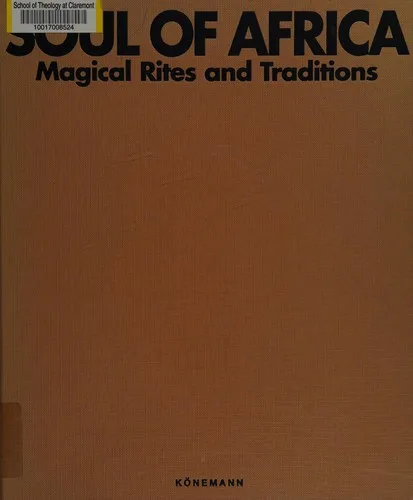
More Free Magic & Ritual Books
View all →