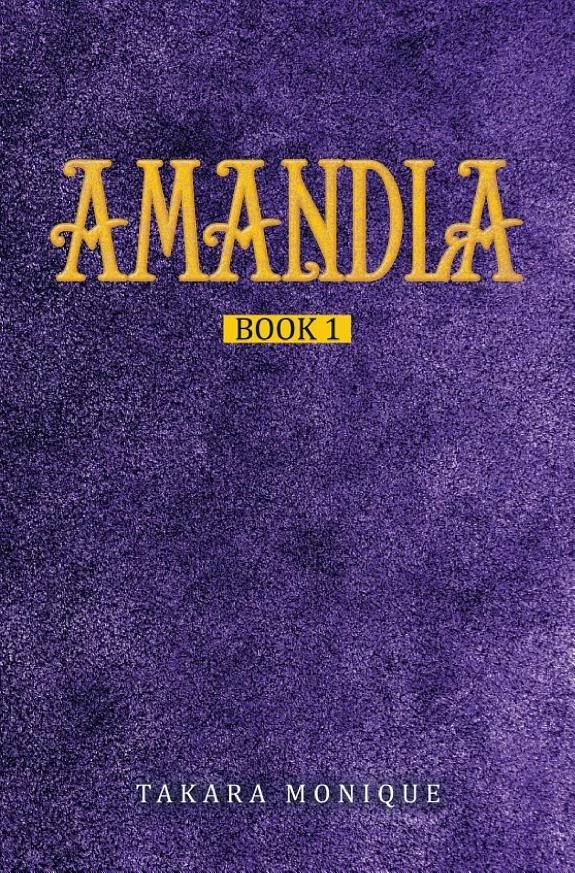
AMANDLA
 82
82

AMANDLA
Takara Monique's AMANDLA opens with a compelling premise: a young Ugandan storyteller, Xola Abara, is drawn into a clandestine magical education. The initial encounter with Tau, the Dream Messenger, serves as an effective catalyst, propelling Xola from her familiar world into the mysterious Amandla school. Monique establishes a sense of wonder and nascent power, particularly in Xola's connection to storytelling as a prelude to her magical awakening. The narrative successfully introduces the idea of destiny being revealed through unexpected channels, a core element of many initiation fantasies. However, the pacing in the early chapters, while necessary for world-building, occasionally feels a touch deliberate, which might slow the momentum for readers eager to see Xola fully immersed in the school's curriculum. The exploration of Xola's magical abilities, though hinted at, remains largely undeveloped in the initial stages, leaving one curious for further revelations. Despite this, the work presents a promising foundation for a fantasy series rooted in African settings, offering a fresh perspective on the magical academy trope. The book's true strength lies in its evocative portrayal of Xola's potential and the intriguing mystery surrounding her future role.
📝 Description
82
Amandla begins with Xola Abara, a Ugandan storyteller, meeting Tau, a Dream Messenger.
Xola Abara, a young storyteller from Uganda, finds her life altered by an encounter with Tau, a Dream Messenger. This meeting leads her to Amandla, a secret school for magic, initiating her journey of self-discovery and the awakening of her latent powers. The story follows Xola as she takes her first steps into a world of arcane arts and personal growth.
This narrative is suitable for readers who appreciate coming-of-age stories blended with magical realism. It focuses on the development of psychic or magical talents in young protagonists. Those who enjoy stories about adolescents entering extraordinary new environments and facing their destiny will find Amandla appealing. The book also speaks to readers interested in themes of inner strength and the cultivation of unique abilities.
The novel is set in contemporary Uganda. It touches on the preparations for apprenticeship and introduces readers to a hidden magical academy. These elements ground the fantasy within a specific cultural and geographical setting. The story begins to explore Xola's destiny, suggesting a calling that extends beyond the ordinary, a common motif in initiation stories within esoteric fiction.
Amandla fits within esoteric traditions that explore hidden potentials and parallel realities. The concept of Dream Messengers suggests a channel for spiritual communication or guidance, common in various shamanic and occult practices. The magic school, Amandla, serves as a locus for formal training in these unseen arts, mirroring initiatory structures found in secret societies and mystical orders. The narrative's focus on a protagonist discovering and developing inherent powers aligns with themes of spiritual awakening and the activation of latent abilities, often central to esoteric paths.
💡 Why Read This Book?
• Gain insight into a coming-of-age narrative set in Uganda, exploring the concept of destiny as revealed through a Dream Messenger named Tau. • Discover the symbolic connection between storytelling prowess and emerging magical abilities, as depicted through the protagonist Xola Abara. • Experience the introduction to a hidden magic school, Amandla, and its role in fostering self-discovery and the empowerment of young apprentices.
⭐ Reader Reviews
Honest opinions from readers who have explored this book.
❓ Frequently Asked Questions
What is the primary setting of AMANDLA?
The primary setting of AMANDLA is Uganda, with a significant portion of the narrative unfolding at the enigmatic magic school named Amandla, where the protagonist Xola Abara begins her training.
Who is Xola Abara in AMANDLA?
Xola Abara is the 17-year-old protagonist of AMANDLA, known for her captivating storytelling and destined to embark on a journey of magical self-discovery at the Amandla school.
What is the role of Tau in the book?
Tau is introduced as a mysterious "Dream Messenger" who encounters Xola Abara and reveals her destiny, serving as the catalyst for her entry into the magical world of Amandla.
When was AMANDLA first published?
AMANDLA by Takara Monique was first published on February 27, 2024.
What is the main theme explored in AMANDLA?
The main themes explored in AMANDLA include self-discovery, empowerment, destiny, and the awakening of latent magical abilities, particularly within the context of a young protagonist's initiation.
What kind of magic is hinted at in AMANDLA?
AMANDLA hints at a form of innate magical ability tied to destiny and potentially linked to psychic or spiritual development, as Xola is identified as having powers beyond the ordinary.
🔮 Key Themes & Symbolism
Destiny and Awakening
AMANDLA positions destiny not as a fixed point, but as a path revealed through inner awakening. Xola's journey from a gifted storyteller to an apprentice at the magic school Amandla illustrates this. The arrival of Tau, the Dream Messenger, acts as a crucial signpost, indicating that her innate talents are precursors to a larger, magical calling. The narrative suggests that true power lies in recognizing and embracing these preordained paths, fostering a sense of personal agency within a grander cosmic design.
The Power of Narrative
Xola's renown as a captivating storyteller is presented as more than a mere character trait; it's deeply intertwined with her magical potential. This theme suggests that the ability to combine tales and shape narratives mirrors the capacity to influence reality or manifest power. In the context of esoteric literature, storytelling can be seen as a form of creation, a way to imbue the world with meaning and energy. AMANDLA explores how this creative faculty might be a foundational element of magic itself.
Hidden Worlds and Initiation
The introduction of Amandla, the enigmatic magic school, signifies the presence of hidden realities operating alongside the mundane. This concept is fundamental to many esoteric traditions, which posit areas of spiritual or magical significance accessible to the initiated. Xola's transition into this world represents an initiation rite, a common narrative structure for exploring growth and transformation. The school serves as a crucible where latent abilities are refined and a new identity is forged.
Empowerment Through Knowledge
AMANDLA centers on Xola's journey toward self-discovery and empowerment, largely facilitated by her entry into the magic school. This underscores the esoteric principle that true power is often unlocked through dedicated study and the acquisition of arcane knowledge. The ancient halls of Amandla are implied to be repositories of wisdom, offering Xola the tools and understanding needed to control and develop her extraordinary gifts. Her quest to uncover secrets is a quest for self-mastery.
💬 Memorable Quotes
Direct passages from the work, attributed to the author.
“Xola Abara... her destiny far beyond the ordinary.”
— This phrase expresses the central premise of AMANDLA, highlighting the protagonist's extraordinary potential and her inevitable departure from a conventional life, setting the stage for magical revelations.
“Tau, a Dream Messenger.”
— This designation for the character Tau suggests a connection to the subconscious, intuition, or a liminal space between waking reality and the dream world, positioning him as a guide from a higher or hidden plane.
“Whisked away to the enigmatic magic school, Amandla.”
— This describes Xola's sudden transition into a world of arcane study, emphasizing the mysterious and perhaps otherworldly nature of the institution dedicated to magical arts.
“A journey of self-discovery and empowerment.”
— This phrase defines the core arc of Xola's experience within the magic school, focusing on her internal growth and the development of her latent abilities as primary objectives.
“Uncover the secrets of her magical abilities.”
— This highlights Xola's active pursuit of understanding her own supernatural gifts, indicating a narrative driven by exploration, learning, and the mastery of inherent powers.
🌙 Esoteric Significance
Tradition
AMANDLA appears to draw from universal archetypes of initiation and destiny found across various esoteric traditions, rather than adhering strictly to a single lineage like Hermeticism or Kabbalah. Its focus on innate abilities and a hidden magical school suggests parallels with concepts of spiritual evolution and the discovery of higher potential, common in Theosophy and New Age thought, while the "Dream Messenger" element hints at Jungian psychology or shamanic journeying.
Symbolism
The "Dream Messenger" Tau likely symbolizes intuition, guidance from the subconscious, or a divine herald appearing at a central moment of transformation. The magic school, Amandla, functions as a symbol of a sacred space dedicated to unlocking hidden potential and acquiring esoteric knowledge, akin to ancient mystery schools or temples of learning. Xola's storytelling ability might symbolize the primordial act of creation, suggesting that narrative power is a fundamental aspect of magical manifestation.
Modern Relevance
Contemporary esoteric thought, particularly within circles interested in decolonizing spiritual practices and exploring global mythologies, might find AMANDLA relevant. Thinkers and practitioners exploring the intersection of indigenous knowledge systems and magical theory could see this work as an important contribution. Its narrative offers a modern interpretation of awakening and empowerment, aligning with current trends in personal development and spiritual exploration that seek alternatives to Western occult frameworks.
👥 Who Should Read This Book
• Aspiring authors and storytellers interested in the mystical connection between narrative craft and perceived reality. • Young adult readers seeking coming-of-age fantasies with protagonists who discover hidden strengths and destinies. • Enthusiasts of global mythology and esoteric fiction looking for narratives that move beyond traditional Western occult settings.
📜 Historical Context
Published in 2024, Takara Monique's AMANDLA emerges in an era marked by a resurgence of interest in diverse mythologies and fantasy narratives rooted in non-Western cultural contexts. While the "magic school" trope has been a staple since authors like Ursula K. Le Guin explored similar themes in the mid-20th century, AMANDLA positions itself within a contemporary landscape seeking to decenter traditional European-centric fantasy. Unlike the magical academies prevalent in Western literature, which often draw from European folklore and occultism, AMANDLA promises a narrative infused with Ugandan settings and potentially distinct spiritual or magical traditions. The work arrives at a time when publishers and readers actively seek authentic representation and fresh perspectives, moving beyond established archetypes like those found in the works of J.R.R. Tolkien or C.S. Lewis, who dominated earlier fantasy landscapes.
📔 Journal Prompts
Xola Abara's initial encounter with Tau, the Dream Messenger.
The concept of destiny as revealed through a magical school.
Reflecting on the connection between storytelling and latent abilities.
The significance of the name 'Amandla' for a magic school.
Xola's preparation for life as an apprentice.
🗂️ Glossary
Amandla
The name of the enigmatic magic school where the protagonist, Xola Abara, is whisked away to begin her training in esoteric arts and self-discovery.
Tau
A character described as a "Dream Messenger" who plays a central role in revealing Xola Abara's destiny and guiding her towards the magic school, Amandla.
Dream Messenger
A spiritual or psychic entity that communicates important messages or revelations, often through dreams or altered states of consciousness, acting as a catalyst for significant life changes.
Xola Abara
The 17-year-old protagonist of AMANDLA, known for her captivating storytelling and destined to begin of magical awakening and empowerment.
Tishala
Xola Abara's twin sister, who also begins to prepare for life as an apprentice, suggesting a shared or parallel journey of development.
Magical Abilities
Latent or developing supernatural powers that the protagonist, Xola, possesses and seeks to understand and control through her education at the Amandla school.
Apprenticeship
A period of learning and training under a master or within an institution, signifying the beginning of Xola's and Tishala's formal education in their destined paths.
This book appears in 1 collection
🔮 Readers Also Liked
Browse all →








From the “Folklore Magic” Collection
View all →




More Free Magic & Ritual Books
View all →