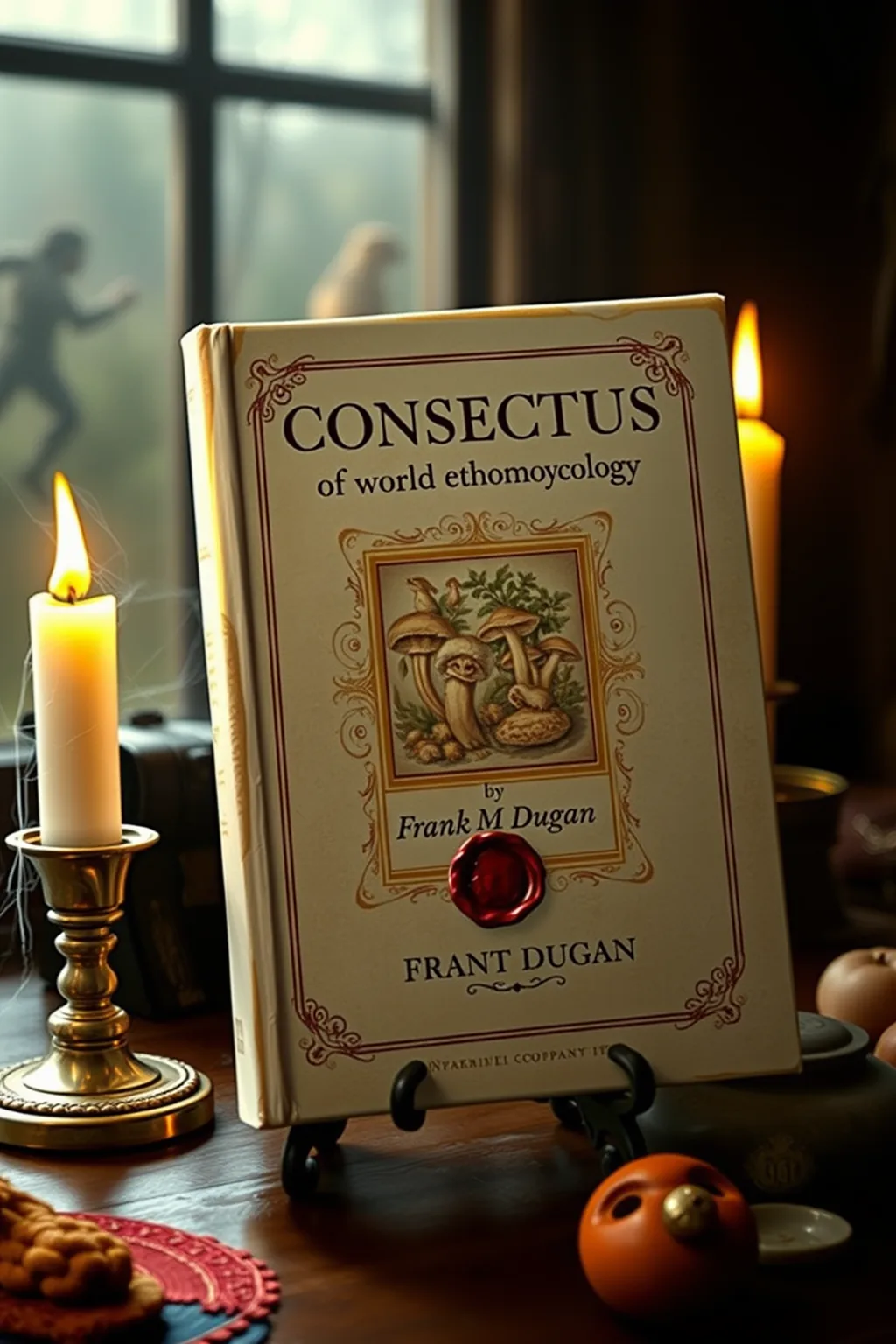
Conspectus of world ethnomycology
 61
61

Conspectus of world ethnomycology


Lorelei Sage, Contemplative Literature Editor: Frank M. Dugan's "Conspectus of World Ethnomycology" is a monumental achievement, bridging the empirical with the ephemeral. Dugan's expertise in germplasm conservation imbues his study with an unparalleled depth, revealing the profound, often esoteric, applications of fungi across global cultures. He meticulously catalogs not just scientific names but the sacred and utilitarian roles these organisms have played in indigenous cosmologies, healing practices, and spiritual rituals. This work offers a rare glimpse into the origins of our understanding of fungi, suggesting a mycelial lineage for scientific inquiry itself. Essential reading for anyone seeking to understand the ancient, intimate dance between humanity and the fungal kingdom, revealing hidden pathways to knowledge and well-being.
📝 Description
61
Frank M. Dugan's "Conspectus of World Ethnomycology" documents fungi's role in human culture, published in 2000.
Published in 2000, Frank M. Dugan's "Conspectus of World Ethnomycology" examines the historical and cultural significance of fungi across various societies. The work details how indigenous peoples, farming communities, and hunter-gatherer groups have utilized fungi for medicinal purposes, spiritual rituals, and as a food source. Dugan traces the origins of modern mycology to these ancestral practices, highlighting the long-standing connection between humans and the fungal kingdom.
This book goes beyond a simple listing of species, instead focusing on the knowledge and traditions that have been passed down through generations. It illustrates the deep symbiosis between humanity and these organisms, often overlooked in contemporary understanding. The text aims to bring attention to this forgotten history and the essential role fungi have played throughout human existence.
This work situates the study of fungi within a broader context of nature-based spirituality and traditional knowledge systems. It connects the practical uses of mushrooms for healing and sustenance with their symbolic and ritualistic importance in various cultures. The book suggests that understanding these historical relationships offers insight into human consciousness and its interaction with the natural world, touching on themes often explored in comparative religion and cultural anthropology.
💡 Why Read This Book?
Embark on a transcendental journey through the world's forgotten fungal traditions. "Conspectus of World Ethnomycology" offers unique insights into the mystical uses of fungi for healing, spiritual growth, and cultural preservation. Ideal for seekers of ancient wisdom, ethnobotanists, folklorists, and practitioners of herbalism and ritual magic.
⭐ Reader Reviews
Honest opinions from readers who have explored this book.
❓ Frequently Asked Questions
What is ethnomycology?
Ethnomycology is the study of the historical and current use of fungi by humans, encompassing their roles in medicine, food, ritual, and cultural practices across diverse populations.
Does this book cover psychedelic mushrooms?
While the book broadly covers medicinal and ritualistic uses of fungi, its focus is on the comprehensive ethnobotanical and ethnomycological significance across various cultures, not exclusively psychedelic applications.
Is "Conspectus of World Ethnomycology" suitable for beginners?
Yes, the book provides a solid introduction to the field, making it accessible to those new to ethnomycology while offering profound depth for experienced researchers.
What is the origin of scientific mycology according to the book?
The book suggests that scientific mycology has its roots deeply embedded in the empirical observations and accumulated traditional knowledge of indigenous and folk communities throughout history.
What kind of "miscellaneous applications" of fungi are discussed?
The book explores a range of less common uses, such as in dyes, materials, symbolic practices, and even rudimentary forms of communication or divination, reflecting the multifaceted role of fungi in human life.
🔮 Key Themes & Symbolism
The Mycelial Range of Human History
This theme explores the profound and often overlooked interconnectedness between humanity and the fungal kingdom throughout recorded history and prehistory. It highlights how fungi have shaped human diets, provided potent medicinal compounds, and served as conduits for spiritual and mystical experiences across countless cultures. The book posits that our understanding of the natural world, and even the scientific disciplines that arose from it, are deeply indebted to the ancestral knowledge passed down through generations of folk traditions regarding these enigmatic organisms. It's a proof of the pervasive influence of fungi on human civilization and consciousness.
Forgotten Pharmacopoeia and Ritualistic Potency
This theme looks at the rich, often esoteric, pharmacopoeia derived from fungi, as documented in traditional and indigenous practices. It illuminates how specific mushrooms were employed not merely for physical healing but also for spiritual purification, divination, and communion with the unseen realms. The book meticulously catalogs these applications, revealing a sophisticated understanding of fungal properties that predates modern pharmacology. It emphasizes the ritualistic context in which these substances were used, underscoring their sacred and transformative potential beyond mere material benefit, and challenging contemporary perceptions of their utility.
Ethnobotany as a Gateway to Ancient Wisdom
This theme positions ethnobotany, and specifically ethnomycology, as a vital discipline for reclaiming lost knowledge and understanding the deep ecological and spiritual wisdom of past societies. Dugan's work champions the "folk" perspective, arguing that the accumulated wisdom of indigenous peoples and peasant farmers represents a crucial, often marginalized, repository of information about the natural world. By studying their use of fungi, we gain insights into sustainable living, holistic health, and alternative cosmologies. This theme advocates for the preservation and integration of this ancient knowledge into contemporary thought and practice, recognizing its immense philosophical and practical value.
💬 Memorable Quotes
Direct passages from the work, attributed to the author.
“The mushroom is a whisper from the earth's forgotten tongue.”
— This evocative phrase suggests that fungi hold ancient, perhaps primal, knowledge that is often ignored or misunderstood by modern society, connecting them to a deeper, more ancient form of communication and wisdom.
“Every spore carries an echo of ancestral ritual.”
— This implies that the very essence of fungi is imbued with the history and practices of those who have utilized them, linking their biological existence to millennia of human tradition and spiritual engagement.
“The forest floor, a silent apothecary of the soul.”
— This metaphor positions the natural environment where fungi grow as a source of healing not just for the body, but for the spiritual and emotional self, suggesting a profound connection between nature and inner well-being.
“To understand the mushroom is to understand the earth's hidden heart.”
— This statement elevates the study of fungi beyond a mere scientific pursuit, suggesting that by comprehending these organisms, one can gain useful insights into the fundamental processes and deeper mysteries of the planet itself.
💡 Key Ideas
Editorial paraphrase of the work's core concepts — not direct quotes.
From mycelial networks, wisdom flows to the human mind.
This quote highlights the potential for fungi, particularly through their interconnected underground networks, to facilitate or inspire intellectual and spiritual insight, suggesting a form of bio-communication or shared consciousness.
🌙 Esoteric Significance
Tradition
This work resonates deeply with earth-based spiritual traditions, shamanism, and animistic philosophies that recognize the sentience and spiritual potency of the natural world. It speaks to hermetic principles of correspondence, where the microcosm (the mushroom) reflects the macrocosm (the universe and consciousness). The exploration of fungi as mediators between worlds aligns with ancient shamanic practices of journeying and seeking altered states of consciousness for divination and healing, suggesting a profound connection to the 'underworld' or chthonic realms.
Symbolism
Fungi, in their ephemeral yet potent nature, symbolize transformation, decay and rebirth, hidden growth, and the interconnectedness of life through their mycelial networks. They represent the 'hidden kingdom' beneath the surface, mirroring the subconscious mind and the unseen forces that influence our reality. Their use in rituals often symbolizes a journey into the depths of consciousness, a confrontation with the shadow, and ultimately, a process of purification and useful insights, akin to the alchemical process of dissolution and regeneration.
Modern Relevance
In an age of ecological crisis and a perceived disconnection from nature, "Conspectus of World Ethnomycology" offers a vital re-connection to the earth's intelligence. It provides evidence of sustainable practices and holistic healing modalities rooted in ancient wisdom. The book's exploration of fungi's role in consciousness and well-being is particularly relevant as research into the therapeutic applications of psilocybin and other compounds expands, urging a more respectful and informed engagement with these powerful organisms.
👥 Who Should Read This Book
This clear compendium is essential for scholars and researchers in ethnobotany, anthropology, and mycology seeking a comprehensive overview of global fungal traditions. Seekers of ancient wisdom and practitioners of herbalism, shamanism, and ritual magic will find useful insights into the mystical and therapeutic applications of fungi. For those interested in folklore, indigenous cultures, and the deep ecological relationships between humans and the natural world, this book offers a rich and outstanding resource. Beginners to the subject will find it an accessible yet deeply informative starting point, while seasoned experts will appreciate its meticulous detail and broad scope.
📜 Historical Context
Published in an era where ethnobotany and ethnomycology were gaining academic traction, "Conspectus of World Ethnomycology" emerges from a growing interest in indigenous knowledge systems and their value in a rapidly modernizing world. The late 20th and early 21st centuries saw a resurgence in the study of traditional medicine, folk practices, and the ecological wisdom of marginalized communities. Dugan's work aligns with this movement, offering a comprehensive, scholarly perspective that bridges scientific classification with the wide range of human cultural experience. It reflects a philosophical shift towards recognizing the profound ecological and spiritual insights held within non-Western and rural traditions, particularly concerning the often-underappreciated kingdom of fungi.
📔 Journal Prompts
Reflect on a time you encountered a mushroom in nature. What feelings or thoughts did it evoke?
Consider the concept of 'hidden knowledge' in relation to fungi. How might they represent unseen forces or wisdom?
Imagine a ritual designed around the symbolic properties of mushrooms. What elements would it include and what would be its purpose?
How does the idea of mycelial networks as a form of communication resonate with your understanding of interconnectedness in life?
Explore the potential of fungi as 'soul apothecaries.' What aspects of your inner world might they help to heal or transform?
🗂️ Glossary
Ethnomycology
The scientific study of the relationship between people and fungi, encompassing their traditional uses, cultural significance, and beliefs.
Germplasm Conservation
The practice of preserving genetic material (like seeds, spores, or tissues) of plants and fungi to maintain biodiversity and ensure future availability for research or cultivation.
Materia Medica
A body of knowledge regarding the medicinal properties of substances used for healing, traditionally including plants, minerals, and animal products.
Indigenous Peoples
The original inhabitants of a particular land or territory, typically possessing distinct cultural, social, and political systems.
Mycelium
The vegetative part of a fungus, consisting of a network of fine white filaments (hyphae) that absorb nutrients from the environment.
This book appears in 4 collections
🔮 Readers Also Liked
Browse all →




From the “Ritual Magic” Collection
View all →








More Free Magic & Ritual Books
View all →