Portable Magic
 78
78

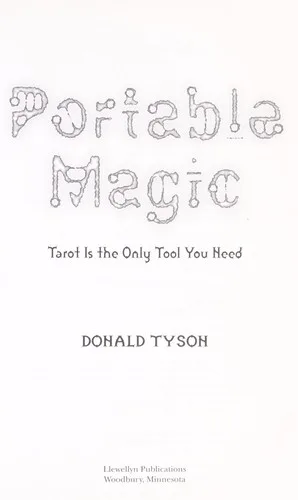
Portable Magic
Donald Tyson's *Portable Magic* delivers on its promise of providing a practical, albeit dense, compendium for the solitary ritualist. Its strength lies in the meticulous detail with which Tyson breaks down the construction and consecration of magical implements and the establishment of the ritual space. The section on the magical circle, for instance, offers a clear, methodical approach that avoids the vagueness often found in less structured texts. However, the book's density can also be its limitation; it assumes a significant prior knowledge of esoteric terminology and concepts, potentially leaving less experienced practitioners feeling overwhelmed. The chapter on elemental invocations, while thorough, requires careful study and practice to implement effectively. Tyson's exposition is clear, but it’s a demanding clarity. Ultimately, *Portable Magic* serves as a robust, if challenging, toolkit for the dedicated practitioner aiming to build a disciplined magical practice.
📝 Description
78
Donald Tyson's *Portable Magic*, published in 2006, details how to construct and perform ritual magic.
Donald Tyson's *Portable Magic* is a practical manual for ritual magic, published in 2006. It instructs practitioners on building and executing magical operations. The book covers magical theory and practice, with detailed explanations of ritual structure, tools, elemental correspondences, and planetary influences. It serves as both a theoretical introduction and a hands on guide for those who want to engage with ceremonial magic in a structured way.
This book is best suited for intermediate practitioners of Western Esoteric traditions who already understand concepts like the Qabalah, elemental magic, and ceremonial rites. It assumes a basic grasp of magical principles, so it does not teach absolute beginners. Experienced practitioners aiming to improve their ritual construction, organize their magical work, or find new viewpoints on existing magical systems will find it valuable. It is also useful for students of comparative occultism who want to understand how modern esoteric authors codify ritual mechanics.
*Portable Magic* appeared in the early 21st century, a time when interest in Western Esotericism was still growing. Tyson's method, while drawing on historical foundations, provides a modern synthesis. The book was released as online resources began to supplement traditional texts, but a clear need for practical magical instruction remained. It follows a tradition of practical magical guides that aim to clarify and organize ritual practice for a broader audience.
Published in 2006, *Portable Magic* builds upon the Western Esoteric traditions influenced by figures like Aleister Crowley and Israel Regardie. Tyson offers a modern interpretation of these historical currents, codifying ritual practice for a contemporary audience. Its appearance coincided with the rise of digital resources, yet it addressed the continued demand for clearly articulated, hands on magical instruction.
💡 Why Read This Book?
• Learn to construct and consecrate essential magical tools like wands and chalices, understanding their specific symbolic functions as detailed in Tyson's methodical approach, which goes beyond mere symbolism to practical application. • Gain a systematic understanding of the magical circle and its purpose, including precise methods for its erection and its role as a controlled environment for ritual work, a core concept explored in detail. • Develop practical skills in ritual timing and astrological considerations for operations, moving beyond theoretical knowledge to incorporate specific planetary hours and lunar phases as Tyson outlines.
⭐ Reader Reviews
Honest opinions from readers who have explored this book.
❓ Frequently Asked Questions
What is the primary focus of Donald Tyson's Portable Magic?
The book focuses on providing a practical, step-by-step guide for constructing and performing ritual magic, drawing from Western Esoteric traditions. It details the creation of tools, the establishment of sacred space, and the execution of magical operations.
Is Portable Magic suitable for beginners in magic?
While comprehensive, the book assumes a foundational understanding of esoteric concepts. Beginners might find it dense, but dedicated novices with a strong will to learn could use it as a rigorous introduction, provided they supplement with basic theory.
What are some key elements covered in the book regarding ritual construction?
Key elements include the consecration of magical tools (like the wand and sword), the erection and symbolism of the magical circle, elemental correspondences, and the use of invocations and evocation.
How does Portable Magic approach the concept of the magical circle?
Tyson provides detailed instructions on creating a magical circle, explaining its function as a protected, consecrated space for focusing intent and safely conducting magical work. It emphasizes precision in its layout and symbolism.
What kind of magical traditions does Donald Tyson draw upon in this book?
The book primarily draws from Western Esoteric traditions, including ceremonial magic, Qabalistic concepts, and elemental magic. It synthesizes these into a coherent system for practical application.
When was Portable Magic first published?
Donald Tyson's *Portable Magic* was first published in 2006, placing it within the contemporary wave of practical occult literature that emerged in the early 21st century.
🔮 Key Themes & Symbolism
Ritual Framework
The book meticulously outlines the structural components of effective ritual magic. This includes the precise method for constructing the magical circle, which Tyson explains as a vital containment and focusing apparatus. He details the consecration of essential tools, such as the wand, cup, sword, and pentacle, assigning specific symbolic roles and operational purposes to each. The text emphasizes the importance of intention, visualization, and precise execution in directing magical energies within this structured framework, making it a reference for systematic magical practice.
Elemental Dynamics
Tyson studies the practical application of elemental correspondences within ritual. The work explains how to understand and invoke the four classical elements – Air, Fire, Water, and Earth – and their associated directions and qualities. This understanding is crucial for balancing forces within the ritual space and for directing specific types of energy. The book provides methods for integrating elemental forces into invocations and for understanding their influence on magical operations, offering a tangible way to interact with the fundamental energies of the cosmos.
Tool Consecration and Symbolism
A significant portion of *Portable Magic* is dedicated to the proper preparation and symbolic imbument of magical instruments. Tyson provides detailed instructions for creating and consecrating tools like the wand, symbolizing will and action, and the cup, representing emotion and intuition. Each tool is presented not merely as an object, but as a focal point for magical energy and a symbolic representation of specific forces or faculties within the practitioner. This focus highlights the importance of the practitioner's physical environment mirroring their inner work.
Operative Magic Mechanics
The core of the book lies in its exposition of operative magic – the practical mechanics of performing magical rites. Tyson breaks down the process into manageable steps, from preparing the practitioner and the space to the actual invocation or evocation. He discusses the significance of timing, the use of divine names and seals, and the importance of banishing rites to cleanse the space and the practitioner. The emphasis is on a disciplined, methodical approach to ensure efficacy and safety in magical workings.
💬 Memorable Quotes
Direct passages from the work, attributed to the author.
“The magical circle is the primary instrument of the magician.”
— This statement underscores the foundational importance of the ritual circle in ceremonial magic. Tyson emphasizes its role not just as a boundary, but as an active tool for focusing intent, containing energies, and providing a safe, consecrated environment for operations.
“Each tool must be consecrated to serve its specific purpose.”
— This highlights the principle that magical implements are more than mere props. Their consecration imbues them with specific magical functions and symbolic resonance, aligning them with the practitioner's will and the energies being worked with.
“Effective ritual requires disciplined execution and focused will.”
— This interpretation emphasizes the practical, non-theoretical aspect of magical practice as presented by Tyson. It suggests that the power of magic lies not just in belief, but in the rigorous application of technique and sustained mental focus.
“The practitioner's inner state directly influences the outer working.”
— This concept suggests a strong connection between the magician's psychology and the success of their rituals. It implies that self-awareness, emotional balance, and mental clarity are prerequisites for potent magical work.
💡 Key Ideas
Editorial paraphrase of the work's core concepts — not direct quotes.
Elemental forces are the building blocks of manifestation.
This paraphrase points to Tyson's view that the classical elements are fundamental energies that can be understood, invoked, and directed by the magician to influence the material world and achieve desired outcomes.
🌙 Esoteric Significance
Tradition
The work is firmly rooted in the Western Esoteric tradition, specifically ceremonial magic, drawing heavily from Hermeticism, Qabalah, and Renaissance ceremonial practices. Tyson synthesizes these disparate elements into a coherent, practical system for the solitary practitioner. It departs from some older traditions by offering a more accessible, step-by-step methodology, clarifying complex rituals and presenting them as learnable skills rather than solely relying on inherited lineage or esoteric intuition.
Symbolism
Key symbols include the magical circle, representing a microcosm of the universe and a sacred, protected space for divine communion or elemental work. The four primary magical tools—the wand (will, air), cup (emotion, water), sword (intellect, fire), and pentacle (materiality, earth)—are central, each symbolizing specific forces and faculties that the magician must master and wield. These symbols are not merely decorative but are presented as functional components of the magical operation.
Modern Relevance
Contemporary practitioners of ceremonial magic, particularly those interested in solitary work and systematic ritual construction, frequently reference *Portable Magic*. It serves as a foundational text for modern Wiccans, chaos magicians seeking structured techniques, and students of Hermetic orders looking for clear procedural guidance. Its emphasis on practical application and clear instructions continues to resonate with individuals seeking to build a disciplined and effective magical practice in the 21st century.
👥 Who Should Read This Book
• Aspiring ceremonial magicians seeking a structured, step-by-step guide to ritual construction and execution, moving beyond theoretical concepts to practical application. • Intermediate occult practitioners looking to refine their existing magical practices by adopting Tyson's methodical approach to tool consecration and elemental balance. • Students of Western Esotericism interested in understanding the mechanics and symbolism of ritual magic as codified in a modern, accessible format.
📜 Historical Context
Donald Tyson's *Portable Magic* was published in 2006, a time when interest in Western Esotericism was robust, building on the foundations laid by figures like Aleister Crowley and Israel Regardie in the early to mid-20th century. Tyson’s work fits within the lineage of practical ceremonial magic manuals that aim to codify and clarify ritual procedures for contemporary practitioners. It appeared in an era of increasing internet accessibility for occult resources, yet it offered a tangible, book-based system that stood apart from more ephemeral digital content. While not directly engaging with academic scholarship on magic, its methodical approach can be implicitly compared to the more structured, systematized magical orders that were gaining traction. Its reception was primarily within the practicing occult community, where its detailed instructions were valued for their practicality, contrasting with more philosophical or theoretical esoteric texts.
📔 Journal Prompts
The consecration ritual for a chosen magical tool.
Reflecting on the symbolic purpose of the magical circle in your own practice.
Mapping personal elemental affinities to the cardinal directions.
The process of building focused intent for a specific ritual operation.
Analyzing the role of planetary hours in timing a magical working.
🗂️ Glossary
Consecration
The act of dedicating a tool, space, or object to a specific magical purpose through ritual means, imbuing it with sacred or operative power.
Magical Circle
A consecrated circular area used in ritual magic as a protected space for invoking or banishing entities, focusing energy, and conducting operations safely.
Elemental Correspondences
The symbolic association of specific elements (Fire, Water, Air, Earth) with directions, colors, tools, and qualities, used to balance and direct magical forces.
Invocation
A ritual act of calling upon a deity, spirit, or force to manifest within or alongside the practitioner, often for guidance or empowerment.
Evocation
A ritual act of calling forth a spirit or entity to appear externally, typically within a consecrated space like a magical circle, for communication or instruction.
Sigil
A symbol created by combining letters or glyphs representing a specific magical intent, charged with energy, and used as a focus for manifestation.
Planetary Hours
A system of dividing the day and night into periods ruled by specific planets, believed to influence the type and efficacy of magical operations performed during those times.
🔮 Readers Also Liked
Browse all →








More by Donald Tyson
All books →


More Free Magic & Ritual Books
View all →