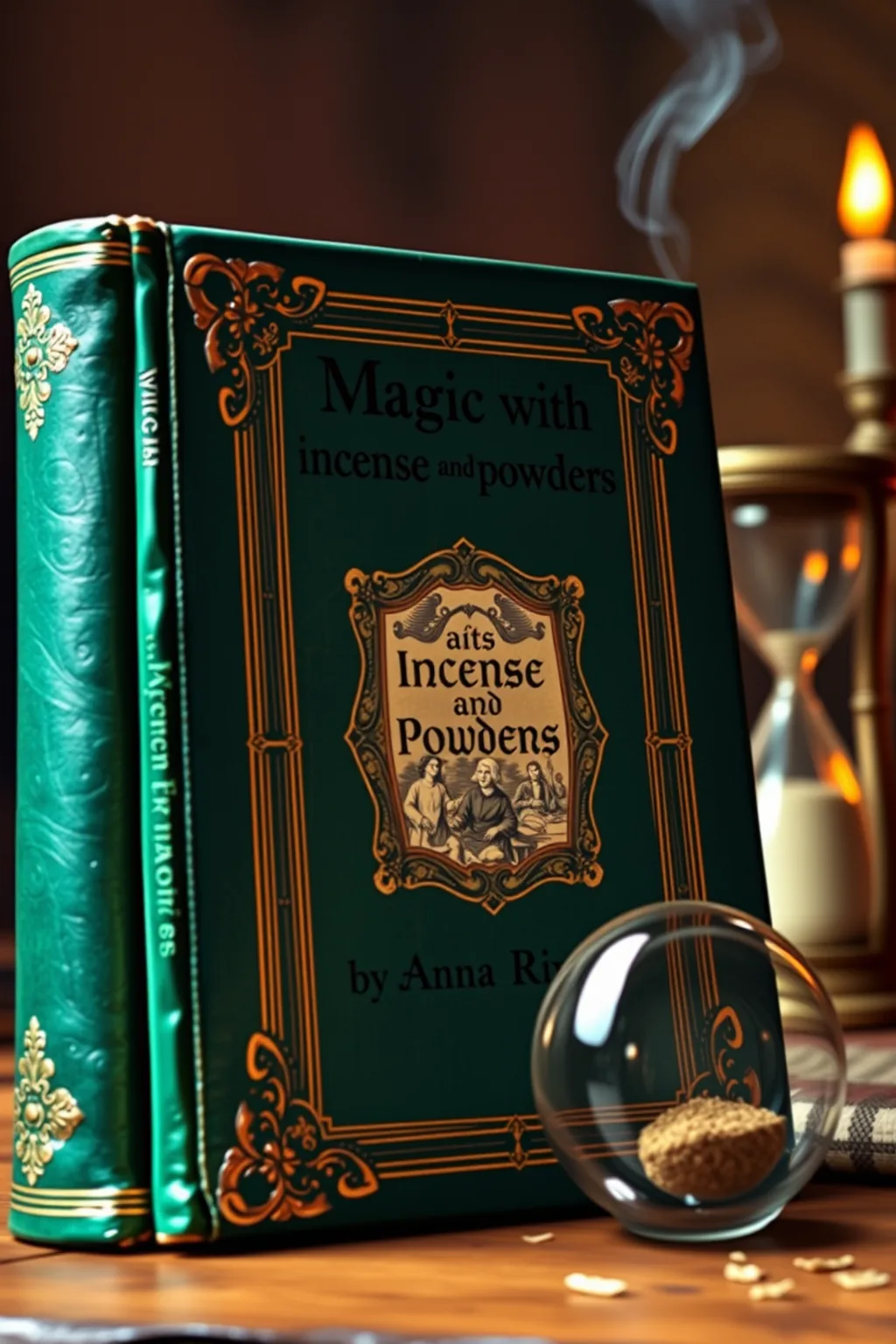
Magic with incense and powders
 72
72

Magic with incense and powders
Anna Riva’s Magic with Incense and Powders, originating in 1985, presents a direct, no-nonsense approach to the creation of ritualistic aromatics. Unlike many contemporary texts that dilute practical instruction with extensive theory, Riva gets straight to the point, detailing recipes and applications with a clarity that’s refreshing. A particular strength lies in its straightforward descriptions of ingredient properties and their intended effects, such as the specific energetic qualities attributed to dragon's blood resin for protection. However, the book’s brevity can also be a limitation; it sometimes omits the deeper historical or philosophical underpinnings that inform these practices, leaving the reader to infer the 'why' behind the 'how'. The section on consecration, while brief, effectively conveys the essential step of imbuing created powders and incenses with magical intent. Ultimately, it remains a valuable, unpretentious manual for those prioritizing practical application in their work with incense and powders.
📝 Description
72
Magic with Incense and Powders, published in 1985, details how to create and use scented substances for ritual.
Anna Riva's 1985 book is a practical manual for preparing and applying incense blends and powders in magical work. It goes beyond simple recipes, explaining the reasoning behind ingredient choices and their supposed energetic properties. The text serves as a direct guide for those looking to integrate aromatic elements into their spellcraft and spiritual practices.
This book is for practitioners of esoteric arts who want to improve their use of incense and powders. It is especially helpful for people interested in folk magic, ceremonial magic, and the tangible use of plants and minerals in rituals. Readers should have a basic grasp of magical theory and be open to hands-on experimentation. It is not an abstract study but a guide for active practitioners.
Published in 1985, the book appeared during a renewed interest in occult studies and witchcraft, following the countercultural movements of the 1960s and 70s. This period saw many accessible books on magic, often drawing from older systems like Hermeticism and folk traditions. Riva's work offered a focused look at a specific area of magical practice, unlike broader grimoires or theoretical texts. It was released around the same time as other authors like Scott Cunningham, who also worked to make magical practices more understandable for a wider audience.
Magic with Incense and Powders is rooted in the tradition of material magic, where physical substances are used to influence spiritual or energetic forces. It draws on the principle of sympathetic magic, where ingredients are selected based on their perceived correspondences to desired outcomes. The book emphasizes a hands-on approach, focusing on the practical preparation and application of these materials within various magical traditions, from folk to ceremonial practices.
💡 Why Read This Book?
• Learn specific methods for preparing incense blends and powders by understanding the unique properties of ingredients like frankincense and myrrh, as detailed in Riva's 1985 guide. • Gain practical techniques for consecrating your creations, ensuring that the incense and powders you make are imbued with your specific magical intent as outlined in the preparation rituals. • Discover the traditional associations of various herbs, resins, and minerals, enabling you to select components that align with the energies of specific goals, as presented in the recipe sections.
⭐ Reader Reviews
Honest opinions from readers who have explored this book.
❓ Frequently Asked Questions
What are the primary uses of incense and powders according to Anna Riva's book?
Riva's "Magic with Incense and Powders" details their use in ritual, spellcasting, and spiritual practices. The book explains how different blends and powders are prepared and applied to achieve specific magical outcomes, from protection to prosperity, by harnessing the energetic properties of their ingredients.
When was "Magic with Incense and Powders" first published?
The book "Magic with Incense and Powders" by Anna Riva was first published in 1985, a period marked by a growing interest in esoteric literature and practical magical instruction.
Are the recipes in "Magic with Incense and Powders" easy to follow?
Yes, the book is structured as a practical manual. Recipes are generally presented with clear instructions for blending and application, making them accessible to practitioners interested in hands-on work with incense and powders.
Does the book explain the symbolic meanings of different incense ingredients?
Yes, Riva's work discusses the symbolic and energetic correspondences of various ingredients. It explains why certain herbs, resins, and minerals are chosen for specific magical purposes, linking them to traditional esoteric understandings.
Is "Magic with Incense and Powders" suitable for beginners?
The book is highly suitable for beginners who are ready to engage in practical magical work. Its direct approach and clear instructions for creating and using incense and powders provide a solid foundation for those new to this aspect of esotericism.
What is the historical context of Anna Riva's work on incense and powders?
Published in 1985, Riva's book contributed to a wave of accessible occult literature. It offered specific, actionable knowledge on incense and powders, fitting into a broader trend of practitioners seeking direct instruction in magical arts.
🔮 Key Themes & Symbolism
Aromatic Sympathetic Magic
This theme explores how specific scents and physical ingredients are chosen for their perceived energetic or symbolic qualities, aiming to create a sympathetic link to desired outcomes. Riva details how herbs, resins, and minerals are not merely fragrant but carry specific vibrations or associations within magical frameworks. The book provides concrete examples, such as using specific resins for protection or certain herbs for prosperity, illustrating the core principle that like attracts like through the careful selection and application of aromatic substances.
Ritual Preparation and Consecration
The act of creating incense and powders is presented as an integral part of the magical process itself. This theme focuses on the meticulous preparation, blending, and grinding of ingredients, emphasizing that the physical labor imbues the final product with the practitioner's focused intent. Riva outlines methods for consecrating these substances, transforming them from mere mixtures into potent magical tools. This highlights the belief that the energy and will of the practitioner are crucial elements in activating the magical potential of the aromatics.
Botanical and Mineral Correspondences
This theme looks at the specific properties and traditional associations of various natural elements used in incense and powders. Riva details how different plants, resins, and minerals are linked to planetary energies, elemental forces, or specific deities. Understanding these correspondences allows practitioners to select ingredients that align with the nature of their magical work, whether for invoking certain energies, warding off negative influences, or facilitating altered states of consciousness.
Practical Application in Spellcraft
Magic with Incense and Powders is fundamentally about the practical application of aromatic materials within spellcraft and ritual. This theme focuses on how to effectively use the prepared incenses and powders in magical workings. Riva provides guidance on burning incense during ceremonies, using powders for anointing objects or creating magical circles, and incorporating them into various forms of spellcasting. The emphasis is on actionable techniques that practitioners can readily implement in their personal practice.
💬 Memorable Quotes
Direct passages from the work, attributed to the author.
“The careful selection of ingredients is paramount for efficacy.”
— This highlights the book's core principle that the power of incense and powders lies not just in their use, but in the precise, informed choice of components based on their specific magical properties and correspondences.
“Each blend carries a specific energetic charge.”
— This suggests that the aromatic mixtures are not merely passive substances but active agents, imbued with a distinct vibrational quality intended to influence the magical environment or outcome.
“The act of creation itself is a ritual.”
— Riva emphasizes that the process of preparing incense and powders, from gathering ingredients to blending them, is imbued with magical significance and requires focused intent and ritualistic action.
“Powders can be used for anointing and marking sacred space.”
— This points to the versatile application of powdered magical ingredients, extending beyond burning incense to practical uses in defining ritual boundaries or charging objects with energy.
“Understand the correspondences before you blend.”
— This is a direct instruction emphasizing the importance of knowledge regarding the symbolic and energetic associations of ingredients before they are combined for magical purposes.
🌙 Esoteric Significance
Tradition
This work draws heavily from the broader Western esoteric tradition, particularly its folk magic and ceremonial magic branches, which often emphasize practical application and sympathetic relationships with nature. It aligns with traditions that view the physical world as imbued with spiritual energies that can be harnessed through specific rituals and material components. While not strictly Hermetic or Kabbalistic, it incorporates principles of correspondence and energetic influence common across these lineages.
Symbolism
Key symbols often revolve around the inherent properties of the ingredients themselves. For instance, resins like frankincense and myrrh carry ancient symbolic weight associated with purification, sacredness, and healing, tracing back to biblical and pre-biblical contexts. Herbs are chosen for their planetary rulerships (e.g., rosemary for the Sun/clarity, lavender for Mercury/communication), linking the physical plant to cosmic forces and specific intentions within the ritual framework.
Modern Relevance
Contemporary practitioners of witchcraft, neo-paganism, and even secularized spiritual practices continue to draw on the foundational principles presented by Riva. Her straightforward approach to ingredient correspondences and practical preparation techniques is echoed in modern guides to spellcraft and altar work. The emphasis on personal creation of ritual tools, like custom incense blends, remains a popular aspect of modern spiritual practice, making Riva's foundational text relevant for those seeking to craft their own aromatic tools.
👥 Who Should Read This Book
• Aspiring practitioners of folk magic seeking to understand and utilize the energetic properties of herbs and resins in their rituals. • Intermediate occultists looking to expand their repertoire with specific, practical techniques for creating and consecrating magical incense and powders. • Students of comparative religion or ethnobotany interested in the practical application of natural materials in historical and contemporary spiritual practices.
📜 Historical Context
Anna Riva’s *Magic with Incense and Powders*, first published in 1985, emerged during a period of significant growth and diversification within the Western esoteric revival. The preceding decades had seen figures like Gerald Gardner popularize Wicca, and the 1970s brought a wave of accessible occult literature that often clarified complex practices. Riva’s work fit neatly into this trend, offering a focused, practical guide to a specific area of magical craft. It provided clear, actionable instructions, distinguishing itself from more theoretical or historically dense grimoires. While not directly engaging with academic occultism, it served the burgeoning community of solitary practitioners and small covens seeking hands-on knowledge. Its publication occurred in a landscape where popular occultism was increasingly moving beyond niche circles, influenced by figures like Dion Fortune whose earlier works laid groundwork for modern magical education.
📔 Journal Prompts
The energetic charge of a custom incense blend.
Reflect on the ritualistic significance of the preparation process.
Identify three key ingredient correspondences for a desired outcome.
How can powders be used to define sacred space in your practice?
Consider the historical lineage of a specific herb used in magic.
🗂️ Glossary
Consecration
The ritual act of dedicating an object or substance, such as incense or powder, to a specific magical purpose or deity, thereby imbuing it with spiritual energy and intent.
Correspondences
The system of symbolic associations linking ingredients (herbs, resins, minerals) to planets, elements, deities, colors, or intentions within esoteric traditions, used to guide magical selection.
Sympathetic Magic
A form of magic based on the principle that like produces like, or that a cause and effect relationship can exist between a person or thing and any person or thing with which it shares some likeness or from which it was taken.
Ritual
A set of actions performed in a prescribed order, often for religious or magical purposes, designed to create a specific spiritual or energetic effect.
Energetic Charge
The inherent or imbued spiritual or magical energy within a substance, object, or space, believed to influence magical workings and outcomes.
Anointing
The act of applying oils, powders, or other sacred substances to a person, object, or surface as part of a ritual or spell, often for purification, blessing, or charging.
Spellcraft
The practice of intentionally using magical techniques, tools, and energies to achieve a desired outcome or effect in the physical world.
🔮 Readers Also Liked
Browse all →









More by Anna Riva
All books →

More Free Magic & Ritual Books
View all →