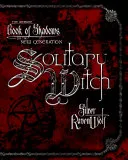
Solitary Witch
 83
83

Solitary Witch
Silver RavenWolf's *Solitary Witch* attempts to be the definitive grimoire for a new generation of young witches, and in many ways, it succeeds. The alphabetical organization is a genuine strength, making it remarkably easy to locate specific information, whether one is looking up the properties of a particular herb or the historical context of a ritual. The integration of modern concerns with ancient practices is handled with a degree of care that avoids feeling anachronistic. However, the sheer breadth of topics covered, while ambitious, can sometimes lead to a superficial treatment of complex subjects. For instance, the section on 'Shadows of Religion and Mystery' touches upon numerous traditions but doesn't always offer the depth required for a true understanding, potentially leaving novice readers with more questions than answers. The work's primary limitation lies in this balancing act between comprehensiveness and depth. Despite this, *Solitary Witch* remains a valuable and accessible resource for its intended audience. It serves as a competent and well-organized starting point for young practitioners seeking to build their own magical foundation.
📝 Description
83
Published in 2011, Solitary Witch by Silver RavenWolf is a handbook for young witchcraft practitioners.
Silver RavenWolf's Solitary Witch, first released in 2011, acts as a grimoire and guide for those new to witchcraft. The book organizes its content alphabetically across five main sections, including 'Shadows of Religion and Mystery' and 'Shadows of Objects.' This structure aims to make magickal studies accessible to modern teenagers. The work is specifically written for adolescents and young adults beginning their journey with witchcraft. It tackles current issues while connecting practices to older magical traditions. Readers who want a text that covers many topics, from spell ingredients to spiritual ideas, in an organized, encyclopedic style will find this book useful. RavenWolf's method, using an alphabetical layout and focusing on young people, differs from earlier, more specialized grimoires. It seeks broader relevance and easier understanding for its intended audience.
This book appeared in the early 21st century, a time of renewed interest in Neopaganism. It follows earlier significant works in modern witchcraft but adapts the material for younger readers. RavenWolf's alphabetical organization and focus on solitary practice represent a move toward wider access compared to earlier grimoires tied to specific lineages or covens. The aim is to provide a practical, organized resource for a new generation of practitioners.
💡 Why Read This Book?
• Learn practical spellcraft and ritual construction through clearly defined steps, drawing from the book's alphabetical catalog of magical objects and concepts. • Gain a structured understanding of the esoteric, by exploring how RavenWolf categorizes spiritual and historical elements within the 'Shadows of Religion and Mystery' section. • Develop a personal practice by referencing the book's guidance on creating your own Book of Shadows, a core component for solitary practitioners since the mid-20th century.
⭐ Reader Reviews
Honest opinions from readers who have explored this book.
❓ Frequently Asked Questions
What is the primary purpose of Silver RavenWolf's 'Solitary Witch'?
Published in 2011, 'Solitary Witch' serves as a comprehensive grimoire, encyclopedia, and guide specifically designed for young, solitary witches. It aims to provide accessible knowledge on a wide range of witchcraft topics in an organized, alphabetical format.
How is the information organized in 'Solitary Witch'?
The book organizes its extensive content alphabetically. It is further divided into five distinct categories, including 'Shadows of Religion and Mystery' and 'Shadows of Objects,' making it easy for readers to find specific information.
Is 'Solitary Witch' suitable for beginners?
Yes, the book is explicitly written for teenagers and young adults new to witchcraft. Its clear structure and coverage of fundamental concepts make it an excellent starting point for those exploring solitary practice.
What kind of topics does 'Solitary Witch' cover?
It covers a broad spectrum, including magical recipes, encyclopedic entries on tools and components, definitions of terms, spiritual concepts, and historical witchcraft practices, all tailored to a younger audience.
When was 'Solitary Witch' first published?
The first edition of 'Solitary Witch' by Silver RavenWolf was published on December 8, 2011.
Does 'Solitary Witch' focus on group witchcraft or solitary practice?
While it acknowledges group traditions, the book's core focus is on empowering solitary practitioners. It provides the tools and knowledge necessary for individuals to develop their own independent magical path.
🔮 Key Themes & Symbolism
The Solitary Path
This work champions the path of the solitary witch, a tradition that has roots in early modern witchcraft but gained significant traction with the rise of modern Neopaganism. Unlike coven-focused texts, 'Solitary Witch' provides resources for self-directed learning and practice. It emphasizes the individual's connection to the divine and the natural world, offering tools for personal magical development that do not require adherence to a specific group structure. This aligns with the growing trend of individual spiritual exploration seen in the late 20th and early 21st centuries.
Modern Witchcraft Encyclopedia
RavenWolf structures the book as an encyclopedic resource, using an alphabetical format to cover a vast array of topics relevant to witchcraft. This approach, seen in earlier grimoires but modernized here, includes entries on everything from specific magical ingredients and tools to religious concepts and historical figures. The 'Shadows' categorization system (e.g., 'Shadows of Religion and Mystery') further organizes this information, making complex esoteric subjects accessible to younger readers unfamiliar with traditional magical curricula.
Bridging Tradition and Youth
A central theme is the adaptation of ancient magical knowledge for contemporary youth. The book acknowledges the concerns and language of today's teenagers, integrating them with centuries-old magical principles. This effort to make witchcraft relevant and accessible to a younger demographic is a hallmark of late 20th and early 21st-century esoteric literature, seeking to ensure the continuity of magical traditions by engaging new generations. The book addresses modern issues through a magical lens.
The Book of Shadows
The concept of the Book of Shadows is presented as a crucial element for the solitary practitioner. RavenWolf guides readers on how to construct and maintain their own personal grimoire, a practice central to witchcraft since the mid-20th century, notably popularized by figures like Gerald Gardner. This personal magical record is depicted not just as a repository of spells but as a living document of the witch's spiritual journey and evolving understanding of magick.
💬 Memorable Quotes
Direct passages from the work, attributed to the author.
“This book has everything a teen Witch could want and need between two covers: a magickal cookbook, encyclopedia, dictionary, and grimoire.”
— This statement highlights the book's ambitious scope, positioning it as a singular, all-encompassing resource for young witches. It emphasizes its many-sided nature, aiming to serve as a primary reference for learning and practice.
“It relates specifically to today's young adults and their concerns, yet is grounded in the magickal work of centuries past.”
— This suggests a deliberate effort to bridge generational gaps in esoteric studies. The book seeks to make ancient magical traditions relevant by addressing the specific issues and perspectives of contemporary adolescents.
“Information is arranged alphabetically and divided into five distinct categories.”
— This points to the book's structured and accessible format. The alphabetical arrangement, a departure from many traditional grimoires, aims to simplify research and learning for the intended young audience.
“The Ultimate Book of Shadows for the New Generation”
— This tagline positions the book as a foundational text for a contemporary wave of witches. It implies a comprehensive and definitive guide, specifically curated for the needs and understanding of younger practitioners entering the craft.
“Shadows of Religion and Mystery”
— This phrase introduces one of the key organizational structures within the book. It suggests an exploration of spiritual, historical, and often hidden aspects of witchcraft and related esoteric traditions.
🌙 Esoteric Significance
Tradition
While not strictly adhering to a single esoteric lineage like Hermeticism or Kabbalah, *Solitary Witch* draws heavily from the modern Wiccan and Neopagan traditions that synthesized various occult streams. It represents a contemporary evolution, focusing on practical application and personal spiritual development for the solitary practitioner. Its approach is more eclectic and accessible than the more formalized systems often found in older grimoires, aiming to create a foundational understanding for a broad audience rather than deep initiation into a specific school.
Symbolism
The book utilizes symbols common in modern witchcraft, such as the raven, often associated with prophecy, mystery, and the shadow self, as seen in the author's name and the book's title. Other symbols explored implicitly include the athame (ritual knife) representing will and direction, and the chalice symbolizing emotion and the divine feminine. These are presented not just as tools but as focal points for energetic work and connection to nature's cycles.
Modern Relevance
Contemporary practitioners, particularly those in the Gen Z and Millennial demographics, continue to find value in *Solitary Witch* for its structured approach to learning witchcraft. Its emphasis on solitary practice aligns with the increasing interest in individual spiritual paths and digital-native learning styles. The book serves as a reference point for those seeking to build a foundational understanding of modern witchcraft outside of traditional coven structures or formal initiatory orders.
👥 Who Should Read This Book
• Young individuals (ages 13-25) exploring witchcraft for the first time, seeking a comprehensive and accessible introduction to core concepts, spells, and ethical considerations. • Aspiring solitary practitioners who prefer self-study and wish to build their own personalized Book of Shadows based on a wide range of foundational knowledge. • Parents or guardians looking for a responsible, age-appropriate resource to guide teenagers interested in learning about Wicca and modern witchcraft traditions.
📜 Historical Context
Published in 2011, *Solitary Witch* emerged during a period of widespread accessibility for esoteric knowledge, largely facilitated by the internet and a growing mainstream acceptance of Wicca and Neopaganism. This era followed foundational texts from mid-20th century figures like Gerald Gardner and Doreen Valiente, who established many core concepts of modern witchcraft. RavenWolf's work distinguishes itself by targeting adolescents and employing an encyclopedic, alphabetically organized format, a pedagogical choice aimed at clarifying complex spiritual subjects for a younger generation. Unlike the more insular or initiatory traditions of earlier witchcraft movements, RavenWolf's approach emphasizes solitary practice and self-directed learning. Its publication coincided with a proliferation of online forums and blogs discussing witchcraft, suggesting a broader cultural conversation that this book sought to consolidate into a single, tangible resource for young practitioners.
📔 Journal Prompts
Your personal definition of 'magickal cookbook' as presented in the book's introduction.
Reflect on the 'Shadows of Religion and Mystery' category: what initial connections do you see?
How does the concept of a 'Book of Shadows' from the mid-20th century inform your own practice?
Evaluate the accessibility of the alphabetical format for learning esoteric subjects.
Consider the 'Shadows of Objects' section: which object's properties intrigue you most?
🗂️ Glossary
Book of Shadows
A personal grimoire containing spells, rituals, correspondences, and magical knowledge. Central to modern witchcraft, it serves as a record of a practitioner's journey and learning, particularly for solitary witches.
Grimoire
A textbook of magic, containing instructions on how to create magical objects, perform rituals, cast spells, and invoke spirits. Historically, grimoires were often kept secret and passed down through generations.
Magickal Cookbook
Refers to the inclusion of recipes for potions, incense, and other magical preparations within the book, treating the creation of these items as a form of culinary art within a magical context.
Solitary Witch
An individual who practices witchcraft independently, without the structure or guidance of a coven or formal group. This approach emphasizes personal connection to the divine and self-directed learning.
Esoteric
Relating to or dealing with the occult or secret knowledge. Esoteric subjects are often intended for or understood by only a small number of people with specialized knowledge or interest.
Correspondence
In magical traditions, this refers to the symbolic relationships between different elements, such as planets, herbs, colors, and deities, used for ritual and spellcasting.
Neopaganism
A modern religious movement characterized by the revival of ancient pagan beliefs and practices, often incorporating elements from various nature-based spiritual traditions, including Wicca.