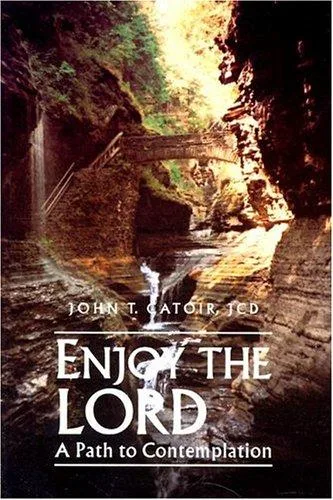
Enjoy the Lord
 80
80

Enjoy the Lord
John T. Catoir’s "Enjoy the Lord" offers a refreshing perspective on spiritual practice, urging readers to move beyond abstract notions of divinity towards a felt, personal encounter. The strength of the book lies in its direct, almost conversational tone, making complex spiritual ideas accessible without diluting their depth. Catoir's interpretation of "enjoying" God as an active, joyful engagement is particularly compelling, steering clear of ascetic or overly formalistic approaches. However, the work occasionally leans towards a generalized spiritual discourse, lacking the specific symbolic or textual anchors that might anchor its concepts more firmly for those familiar with particular esoteric traditions. A passage discussing the "prayer of the heart" hints at deeper contemplative practices but could benefit from more explicit detail for advanced practitioners. Ultimately, "Enjoy the Lord" serves as a warm invitation to a more vibrant spiritual life.
📝 Description
80
John T. Catoir's 1986 book encourages a direct, personal relationship with the divine.
Published in 1986, John T. Catoir's "Enjoy the Lord" moves beyond abstract theology to guide readers toward a personal experience of the divine. The book focuses on practical ways to cultivate a sense of spiritual presence in everyday life, making it less of a formal theological text and more of an accessible guide for those seeking a deeper faith. It is for individuals who feel disconnected from traditional religious structures and desire a more intimate connection with God. Those interested in contemplative practices, mysticism, and a less dogmatic approach to faith will find its message particularly resonant. The work encourages readers to discover the sacred within their own lives.
The central idea of the book is to "enjoy" God, which suggests a relationship built on joy, presence, and active participation, rather than simple duty or intellectual assent. Catoir suggests recognizing the divine not only in religious texts and ceremonies but also in the ordinary moments of existence. It advocates for a constant awareness of God's presence, fostering a devotional spirit that influences all actions. This approach aims to integrate spiritual awareness into the fabric of daily living.
Emerging in the mid-1980s, "Enjoy the Lord" appeared during a time of growing interest in personal spirituality outside established religious institutions. Its focus on inner experience aligns with broader mystical traditions within Western Christianity, such as those found in the writings of mystics like Julian of Norwich or Thomas Merton, who emphasized direct encounter with the divine. While not explicitly tied to a single esoteric school, the book taps into a general current of seeking subjective spiritual reality and finding the sacred within the self, a theme common across various contemplative and mystical paths.
💡 Why Read This Book?
• You will learn to recognize the divine presence in daily activities, moving beyond formal prayer by engaging with Catoir's concept of "enjoying" God, as detailed in the book's core message. • Discover practical methods for fostering an intimate spiritual life, inspired by the emphasis on personal connection that distinguishes this work from purely theological texts. • Gain an understanding of how to cultivate a devotional attitude that permeates all actions, a key takeaway from the book's 1986 publication context and its focus on experiential faith.
⭐ Reader Reviews
Honest opinions from readers who have explored this book.
❓ Frequently Asked Questions
What is the central message of John T. Catoir's "Enjoy the Lord"?
The central message is to cultivate a direct, joyful, and intimate relationship with God, experiencing the divine presence not only in prayer but throughout everyday life.
When was "Enjoy the Lord" first published?
The book "Enjoy the Lord" by John T. Catoir was first published in 1986.
Who is John T. Catoir?
John T. Catoir was an American Catholic priest and author known for his spiritual writings that encouraged a personal and experiential approach to faith.
Does "Enjoy the Lord" require a specific religious background?
While written from a Catholic perspective, the book's emphasis on personal experience and divine presence makes its message accessible and relevant to individuals from various spiritual backgrounds.
What kind of spiritual practices does the book suggest?
The book suggests cultivating an attitude of continuous prayer and awareness of God's presence in ordinary activities, rather than focusing solely on formal religious exercises.
Is "Enjoy the Lord" considered an esoteric text?
Yes, it is often categorized as esoteric due to its focus on subjective spiritual experience and inner transformation, aligning with mystical traditions.
🔮 Key Themes & Symbolism
Experiential Divine Presence
The core of "Enjoy the Lord" lies in advocating for a lived, felt awareness of God's presence. Catoir emphasizes that the divine is not confined to sacred spaces or specific times but is immanent in all of existence. This theme encourages readers to shift from intellectual assent to an embodied experience of the sacred, finding moments of connection in mundane activities and relationships. It’s about making the spiritual tangible and immediate, moving beyond abstract theology to a vibrant, ongoing dialogue with the divine.
The Joy of Spiritual Union
Catoir's unique framing of "enjoying" God suggests a relationship characterized by delight and active participation, rather than passive observance or solemn duty. This theme explores the idea that spiritual life, when approached with openness and sincerity, can be a source of profound joy and fulfillment. It challenges the notion that spirituality must be arduous or somber, proposing instead that a genuine connection with the divine naturally leads to a sense of contentment and inner peace that enriches one's existence.
Inner Transformation Through Awareness
The book posits that a sustained awareness of God's presence acts as a catalyst for personal growth and inner transformation. By continually bringing one's attention to the divine, individuals can begin to shed limiting beliefs, negative patterns, and ego-driven desires. This theme highlights the transformative power of focused spiritual attention, suggesting that this conscious engagement with the sacred can lead to a more authentic, peaceful, and spiritually integrated self.
Practical Spirituality
"Enjoy the Lord" is deeply practical, offering guidance on how to integrate spiritual awareness into the fabric of daily life. It moves beyond abstract concepts to provide actionable insights for cultivating a devotional attitude in everyday tasks, interactions, and challenges. This theme underscores the book's accessibility, making profound spiritual principles applicable to the ordinary circumstances of a reader's life, thereby explaining spiritual practice.
💬 Memorable Quotes
Direct passages from the work, attributed to the author.
“The divine is not a distant object of contemplation but an intimate companion.”
— This statement captures the book's core message: shifting from an intellectual or observational stance towards God to one of personal, present relationship. It suggests that spirituality is about companionship and immanence, not mere theological study.
“Joy is the natural response to experiencing God's presence.”
— Here, Catoir links spiritual fulfillment directly to positive emotion. It implies that a genuine connection with the divine is inherently life-affirming and brings a sense of contentment and delight, challenging more austere views of piety.
“Every moment offers an opportunity for divine encounter.”
— This highlights the book's emphasis on the immanence of the sacred. It encourages readers to see the potential for spiritual connection not just in special times but within the flow of everyday life and ordinary events.
“True prayer is a state of being, not just a series of words.”
— This interpretation moves beyond rote recitation, framing prayer as a continuous orientation of the heart and mind towards God. It points to a deeper, more integrated form of spiritual communication.
“We can 'enjoy' God by actively bringing our awareness to Him.”
— This phrase clarifies the meaning of 'enjoy' in the title, suggesting it involves a conscious, engaged practice of mindfulness and devotion, making the spiritual life an active, positive pursuit.
🌙 Esoteric Significance
Tradition
While rooted in Catholic mystical theology, "Enjoy the Lord" aligns with broader esoteric currents by emphasizing direct, subjective experience of the divine over institutional dogma. It draws from the contemplative prayer traditions within Christianity, which share common ground with Gnostic and Hermetic ideals of immediate divine apprehension. The work departs from purely scholastic theology by prioritizing felt presence and inner transformation, positioning it as a bridge between orthodox spirituality and more personal, experiential mystical paths.
Symbolism
The primary symbolic motif is the concept of "enjoyment" itself, reinterpreting the divine relationship not as one of servitude or distant reverence, but as joyful communion. The "Lord" symbolizes not just an external deity but an indwelling presence. The book implicitly uses the symbolism of light and presence, suggesting that God's immanence illuminates and fills the individual's being, transforming ordinary life into a sacred space.
Modern Relevance
Contemporary spiritual seekers, particularly those interested in mindfulness, contemplative practices, and panentheism (God in and through all), find resonance in Catoir's message. Thinkers and practitioners exploring the intersection of psychology and spirituality, or those seeking to de-institutionalize their faith, often draw upon the book's accessible language for cultivating an inner spiritual life. Its emphasis on finding the sacred in the everyday continues to be relevant for modern audiences navigating secularized environments.
👥 Who Should Read This Book
• Individuals seeking to deepen their personal spiritual practice beyond formal religious observance, particularly those drawn to contemplative or mystical approaches. • Readers interested in understanding how to perceive and experience the divine presence in their daily lives and ordinary activities. • Those who feel a disconnect with traditional religious structures and are looking for a more intimate, experiential connection with God.
📜 Historical Context
Published in 1986, John T. Catoir's "Enjoy the Lord" emerged within a spiritual landscape that, while still influenced by Vatican II's reforms, saw a growing number of individuals seeking more personal and direct religious experiences. The 1980s were a period where New Age thought and the human potential movement gained significant traction, fostering an interest in subjective spirituality that often operated outside traditional denominational structures. Catoir’s work, while rooted in Catholic tradition, spoke to this broader hunger for an immanent, experiential faith. It offered an alternative to more rigid or dogmatic expressions of religion, aligning with a general cultural shift toward introspection and self-discovery. While not engaging directly with specific esoteric orders, its emphasis on inner awareness and direct divine connection resonated with contemplative traditions found in Christian mysticism and echoed broader spiritual currents of the era, differentiating it from the more academic theological debates of the time.
📔 Journal Prompts
Reflect on the "enjoyment" of the divine presence in your daily routine.
How does the concept of immanence, as explored in the book, alter your perception of mundane tasks?
Consider the idea of God as an intimate companion rather than a distant authority.
What specific moments in your week could become opportunities for divine encounter?
Explore the feeling of joy that arises from conscious spiritual awareness.
🗂️ Glossary
Immanence
The belief that divine presence is found within the material world and human experience, rather than being transcendent and separate from it. Catoir emphasizes God's presence within us and around us.
Contemplative Prayer
A form of prayer characterized by a quiet, receptive focus on God's presence, often involving silence and interior reflection rather than vocalization or petition.
Devotional Attitude
A mindset and disposition that cultivates love, reverence, and a sense of connection towards the divine, integrated into all aspects of life.
Spiritual Experience
A subjective encounter with the divine or a sense of profound spiritual reality, often characterized by feelings of awe, presence, or deep inner knowing.
Inner Transformation
The process of profound personal change and spiritual growth that occurs as a result of one's relationship with the divine.
Experiential Faith
A form of religious belief and practice centered on personal, subjective experiences of the divine, rather than solely on doctrine or ritual.
Sacredness
The quality of being holy, worthy of respect, or set apart for divine purposes. Catoir suggests finding sacredness in everyday life.
🔮 Readers Also Liked
Browse all →








More by John T. Catoir
All books →
More Free Occult Philosophy Books
View all →