Dying to wake up
 79
79

Dying to wake up
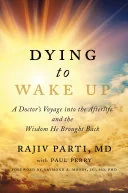
Rajiv Parti's account of his NDE, "Dying to Wake Up," is notable for its author's background as a surgeon, lending an air of empirical observation to an inherently subjective event. Parti details his transition from a staunch materialist to someone who directly witnessed and interacted with non-physical realms during his brush with death. The strength of the book lies in this dual perspective – the analytical mind grappling with the ineffable. However, the narrative occasionally leans into familiar NDE tropes without significantly pushing the boundaries of the discourse. The section describing his perceived interactions with deceased family members, while emotionally resonant, could have benefited from deeper philosophical interrogation beyond personal affirmation. Despite this, the honest portrayal of a physician’s crisis of belief offers a compelling case study for the limits of current scientific paradigms in fully explaining consciousness.
📝 Description
79
Physician Rajiv Parti recounts his near-death experience and its impact on his worldview in 'Dying to Wake Up'.
Rajiv Parti, a physician, details his personal journey through a near-death experience in 'Dying to Wake Up'. The book chronicles his shift from a skeptical medical perspective to one informed by direct encounters with non-physical consciousness. Parti writes about his struggle to reconcile his scientific training with the reality of his experiences, including perceiving and interacting with entities outside the physical body.
The work is for those interested in consciousness, the afterlife, and the place where science meets spirituality. It may resonate with individuals who have had similar experiences, medical professionals studying altered states, or anyone seeking frameworks that question a strictly materialist view of existence. Readers engaged with parapsychology and metaphysical inquiry will find relevant material within its pages.
Parti's account emerges within the ongoing study of near-death experiences, a field that gained wider recognition after Raymond Moody's work in the 1970s. His perspective is unique as a medical doctor who personally underwent such an event, moving beyond mere observation to direct testimony. The book contributes to discussions on consciousness studies and the limits of purely physical explanations for subjective phenomena, a debate active since the mid-20th century.
💡 Why Read This Book?
• Gain insight into the medical perspective on near-death experiences, as documented by Dr. Rajiv Parti following his 2009 cardiac arrest, offering a unique blend of clinical observation and personal testimony. • Explore the concept of consciousness decoupling from the physical body, a central theme that challenges materialist viewpoints and expands understanding of subjective reality. • Understand the transformative potential of profound altered states, as Parti details his shift from skepticism to a belief in life beyond physical death, offering a personal model for spiritual awakening.
⭐ Reader Reviews
Honest opinions from readers who have explored this book.
❓ Frequently Asked Questions
What is the central event described in Rajiv Parti's "Dying to Wake Up"?
The central event is Dr. Rajiv Parti's own near-death experience (NDE) in 2009, where he underwent cardiac arrest and subsequently reported profound encounters with non-physical consciousness and realms.
How does Dr. Parti's medical background influence his NDE account?
His background as a surgeon provides a unique lens, as he attempts to reconcile his scientific, materialist training with the ineffable, spiritual experiences he underwent, creating a compelling internal conflict and narrative.
What are some key themes explored in "Dying to Wake Up"?
The book explores themes of consciousness beyond the physical body, encounters with spiritual entities, the nature of love, and the potential for personal transformation following an NDE.
When was "Dying to Wake Up" first published?
The book "Dying to Wake Up" by Rajiv Parti was first published in 2016.
What is the author's perspective on life after death in this book?
Parti moves from initial skepticism to a firm belief in a form of existence beyond physical death, based on his direct experience during his NDE and subsequent perceived interactions.
Who might find "Dying to Wake Up" particularly interesting?
Readers interested in near-death experiences, consciousness studies, the intersection of science and spirituality, and personal accounts of profound spiritual awakenings will find this book compelling.
🔮 Key Themes & Symbolism
Consciousness Beyond the Physical
The core of "Dying to Wake Up" concerns the author's conviction that consciousness is not merely a product of the brain but can exist independently. Parti, a physician, details his experiences during a cardiac arrest in 2009, where he perceived himself as separate from his physical body. He recounts interactions and observations from this non-physical state, positing that the 'self' or awareness persists even when biological functions cease, directly confronting the materialist paradigm.
Integration of NDE and Skepticism
A significant aspect of the book is Dr. Parti's struggle to integrate his profound near-death experience (NDE) with his lifelong scientific and skeptical worldview. The narrative charts his journey from disbelief to acceptance of phenomena that defy conventional medical explanation. This internal conflict highlights the challenges individuals face when confronted with experiences that shatter their established understanding of reality and the human condition.
Spiritual Guides and Unconditional Love
Parti describes encounters with perceived spiritual entities or guides during his NDE. These interactions are often characterized by a sense of profound wisdom and unconditional love. The book explores the idea that these beings offer comfort, guidance, and insights into a larger cosmic order. This theme touches upon universal spiritual concepts found in various traditions concerning benevolent non-physical intelligences.
Transformation and Healing
The experience of dying and returning had a deeply transformative effect on Rajiv Parti. "Dying to Wake Up" details how this event shifted his perspective on life, death, and healing. He suggests that such profound encounters can lead to a greater appreciation for existence and a more compassionate approach to life and patient care, offering a model of personal evolution through crisis.
💬 Memorable Quotes
Direct passages from the work, attributed to the author.
“I was no longer Dr. Rajiv Parti, the surgeon, but pure consciousness.”
— This statement captures the core of Parti's NDE, signifying a radical shift in self-perception from a defined professional identity to an unbound, non-physical awareness.
“The experience shattered my scientific framework.”
— This highlights the author's intellectual crisis. As a physician, his understanding of reality was grounded in empirical science, which his NDE directly challenged, forcing a re-evaluation of fundamental beliefs.
“There was an overwhelming sense of love, unlike anything I had ever known.”
— Parti describes a powerful emotional and spiritual encounter during his NDE, characterizing it as an absolute, unconditional love that transcends ordinary human experience.
“I realized my body was just a vehicle for my spirit.”
— This interpretation reflects the dualistic understanding that emerged from Parti's experience, suggesting that the essence of a person is their consciousness or spirit, distinct from their physical form.
“Returning to my body felt like a restriction.”
— This conveys the profound disorientation and contrasting nature of the non-physical realm compared to physical embodiment, indicating the perceived liberation and ease of existence outside the body.
🌙 Esoteric Significance
Tradition
While not explicitly aligning with a single esoteric tradition like Hermeticism or Gnosticism, "Dying to Wake Up" speaks to universal spiritual and metaphysical themes found across many esoteric lineages. It touches upon concepts of the soul's journey, the existence of higher planes of consciousness, and the idea of spiritual guides, which are common motifs in Theosophy, Spiritualism, and certain branches of New Age thought. The book serves as a modern, empirically-framed proof of these perennial ideas.
Symbolism
The primary 'symbol' in Parti's work is the near-death experience itself, acting as a potent symbol of transition and awakening. The concept of 'light' encountered during the NDE functions as a traditional symbol for divine presence, higher consciousness, or ultimate truth, common across mystical traditions. The perceived separation of consciousness from the body symbolizes the soul's essential nature and its potential independence from material form, a recurring theme in Gnostic and Platonic thought.
Modern Relevance
Parti's account remains relevant for contemporary discussions in consciousness studies, transpersonal psychology, and parapsychology. Thinkers and practitioners exploring non-ordinary states of consciousness, the potential for healing through spiritual experiences, and the philosophical implications of NDEs find his work a valuable case study. It continues to inform discussions about the limitations of purely materialist explanations for consciousness and the subjective nature of reality.
👥 Who Should Read This Book
• Medical professionals and researchers interested in firsthand accounts of near-death experiences from a physician's perspective, offering a combination of clinical insight and personal testimony. • Individuals who have experienced NDEs or are curious about the nature of consciousness, life after death, and the intersection of spirituality and science. • Skeptics and open-minded readers seeking to explore challenging perspectives on reality, consciousness, and the limitations of current scientific understanding of the mind.
📜 Historical Context
Rajiv Parti's "Dying to Wake Up," published in 2016, entered a field already rich with accounts of near-death experiences (NDEs). The phenomenon gained significant traction in popular and academic circles following Dr. Raymond Moody's seminal 1975 work, "Life After Life." Parti's contribution is distinct due to his perspective as a practicing surgeon, a medical professional who underwent an NDE himself. This contrasts with earlier researchers who primarily interviewed others. The late 20th and early 21st centuries saw continued debate between materialistic neuroscience, which sought to explain NDEs through physiological processes like oxygen deprivation, and researchers in consciousness studies, who viewed them as evidence of non-local consciousness. Parti’s narrative directly engages this ongoing discourse, adding a personal, experiential counterpoint to purely scientific explanations, placing it within the ongoing philosophical and scientific exploration of consciousness that intensified from the 1970s onward.
📔 Journal Prompts
The concept of pure consciousness as described by Dr. Parti.
The transition from physical body to pure awareness during the NDE.
The perceived spiritual guides and their messages.
Reconciling the experience of unconditional love with earthly life.
The limitations of a purely scientific framework for understanding consciousness.
🗂️ Glossary
Near-Death Experience (NDE)
A profound personal experience associated with being close to death, often involving altered states of consciousness, perceptions of light, and encounters with spiritual beings.
Consciousness
The state or quality of awareness, or of being aware of an external object or something within oneself. In this context, it is explored as potentially independent of the physical brain.
Materialism
The philosophical view that matter is the fundamental substance in nature, and that all phenomena, including mental states and consciousness, are results of material interactions.
Spiritual Guides
Beings perceived during altered states of consciousness, such as NDEs, who are believed to offer wisdom, guidance, and support to the individual.
Cardiac Arrest
A sudden, complete cessation of heart activity, leading to loss of consciousness and breathing. It is a critical medical emergency.
Dualism
The philosophical concept that mind and body are distinct and separable entities. In this book, it relates to consciousness being separate from the physical brain.
Perception
The ability to see, hear, or become aware of something through the senses. In NDEs, perception is often reported as occurring without the usual physical sensory input.
🔮 Readers Also Liked
Browse all →









More by Rajiv Parti
All books →
More Free Occult Philosophy Books
View all →