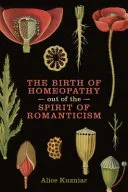
Birth of Homeopathy Out of the Spirit of Romanticism
 80
80

Birth of Homeopathy Out of the Spirit of Romanticism
Kuzniar's "Birth of Homeopathy Out of the Spirit of Romanticism" provides a much-needed historical contextualization for the origins of homeopathy. The argument that Samuel Hahnemann's theories were deeply embedded in German Romantic thought, rather than being an isolated medical innovation, is compellingly made. Kuzniar skillfully demonstrates how concepts prevalent in Romantic philosophy and literature, such as vitalism and the organic unity of nature, directly informed Hahnemann's "like cures like" principle. A significant strength lies in the detailed exploration of these intellectual connections, moving beyond a purely medical history. However, the dense academic prose, while precise, may present a barrier for readers less familiar with the intricacies of German philosophy and Romantic literary theory. The work's focus remains tightly on the intellectual lineage, occasionally at the expense of a broader social or reception history of early homeopathy. Ultimately, Kuzniar offers a vital corrective to simplistic origin stories, situating homeopathy as a fascinating product of its specific cultural moment.
📝 Description
80
Alice A. Kuzniar argues homeopathy's 1796 formulation belongs to German Romanticism, not medical revolution.
Alice A. Kuzniar's "Birth of Homeopathy Out of the Spirit of Romanticism" re-evaluates the origins of homeopathy. Instead of seeing Samuel Hahnemann's 1796 ideas as a break from medical tradition, Kuzniar places them squarely within the intellectual climate of German Romanticism. The book details the philosophical ideas and artistic outlooks that influenced Hahnemann's "like cures like" principle. It shows how homeopathic theory was tied to the era's focus on nature, vitalism, and holistic understanding.
The late 18th century in Germany saw the rise of Romanticism, a movement that valued emotion, intuition, and nature's unity, opposing Enlightenment rationalism. Hahnemann, a physician, developed homeopathy in 1796. His "law of similars" suggested that a substance causing symptoms in a healthy person could treat similar symptoms in a sick one. This approach contrasted with the harsh medical practices of the time, like bloodletting, and aligned more with Romantic ideals of natural healing. Kuzniar examines how Hahnemann's concepts resonated with contemporaries.
This work situates homeopathy not as a purely scientific or medical anomaly, but as a product of a specific intellectual and cultural movement. By linking Hahnemann's principles to the Romantic emphasis on nature, organic unity, and vital forces, it draws a connection to broader currents of thought that sought holistic explanations for life and health. This perspective aligns with traditions that view healing and understanding the body through a lens informed by philosophy and the natural world, rather than solely empirical, mechanistic science.
💡 Why Read This Book?
• Understand the philosophical roots of homeopathy by exploring the "law of similars" as an expression of Romantic correlative thinking, a concept central to the book's analysis of Hahnemann's work. • Grasp the concept of "vital force" (Lebenskraft) as it was understood within the context of German Romanticism and its influence on early homeopathic theory, as detailed in the book's examination of late 18th-century thought. • Recognize Samuel Hahnemann not as an isolated iconoclast but as a product of his time, by examining how his ideas engaged with the intellectual currents surrounding the German Romantic movement, a core argument presented in the text.
⭐ Reader Reviews
Honest opinions from readers who have explored this book.
❓ Frequently Asked Questions
When was homeopathy officially founded, and by whom?
Homeopathy was founded in 1796 by the German physician Samuel Hahnemann. He proposed the principle of "like cures like," which forms the basis of homeopathic treatment.
What is the core principle of homeopathy discussed in the book?
The core principle is "like cures like," or "similia similibus curentur." This means a substance that causes certain symptoms in a healthy person can be used to treat similar symptoms in a sick person.
How does the book connect homeopathy to Romanticism?
The book argues that Hahnemann's ideas were deeply influenced by German Romanticism, particularly its emphasis on nature, vitalism, and organic unity, rather than being a purely scientific or medical innovation.
What medical practices did Hahnemann's homeopathy oppose?
Homeopathy opposed the conventional "heroic medicine" of its time, which often involved harsh treatments like bloodletting, purging, and the administration of toxic substances.
What is the concept of 'vital force' in relation to homeopathy?
The 'vital force' (Lebenskraft) was a concept embraced by German Romantics and early homeopaths, suggesting an animating, essential energy in living beings that maintained health.
Who are some key figures or intellectual movements discussed alongside Hahnemann?
The book situates Hahnemann within the context of German Romanticism, mentioning its philosophical currents and artistic sensibilities, and explores how his ideas might have resonated with contemporaries like Goethe.
🔮 Key Themes & Symbolism
Romanticism and Medical Theory
The work posits that Samuel Hahnemann's formulation of homeopathy in 1796 was not an isolated event but a direct outgrowth of the prevailing intellectual climate of German Romanticism. This movement, with its emphasis on nature, vitalism, and the organic unity of life, provided a fertile ground for Hahnemann's "like cures like" principle. Kuzniar argues that the Romantic fascination with correspondences and holistic systems resonated deeply with homeopathic ideas, offering a gentler, nature-aligned alternative to the mechanistic and often brutal medical practices of the era.
Vital Force and Organicism
Central to the book's thesis is the concept of the 'vital force' (Lebenskraft), a key tenet in both Romantic philosophy and early homeopathic theory. This idea posits an intrinsic, animating energy that governs living organisms. Kuzniar explores how this Romantic notion of a dynamic, non-material life principle influenced Hahnemann's understanding of disease as a disturbance of this vital force and health as its harmonious expression, contrasting sharply with Enlightenment reductionism.
The "Like Cures Like" Principle
The principle of "similia similibus curentur" is examined not merely as a medical directive but as a manifestation of Romantic correlative thinking. The book suggests that Hahnemann's insight—that a substance producing symptoms in the healthy can cure similar symptoms in the sick—reflects a broader Romantic worldview that sought hidden connections and analogies between the human body, nature, and the cosmos. This approach mirrored the era's artistic and philosophical drive to find unity in diversity.
Hahnemann as a Product of His Time
Kuzniar challenges the traditional portrayal of Samuel Hahnemann as a radical iconoclast. Instead, the work meticulously reconstructs his intellectual biography, demonstrating how his medical theories were deeply interwoven with the philosophical debates, literary trends, and scientific inquiries of late 18th-century Germany. By situating Hahnemann within the spirit of Romanticism, the book offers a more nuanced understanding of his contributions and their historical significance.
💬 Memorable Quotes
Direct passages from the work, attributed to the author.
“Hahnemann was a product of his time rather than an iconoclast.”
— This central assertion challenges the common perception of Hahnemann as a lone genius. It suggests his revolutionary ideas were, in fact, deeply embedded within and influenced by the intellectual and cultural currents of the German Romantic era.
“The principle of 'like cures like' reflected Romantic correlative thinking.”
— This interpretation links Hahnemann's core therapeutic law to a broader Romantic philosophical tendency to find symbolic connections and analogies between different aspects of the natural world and the human condition.
“Homeopathy arose from the spirit of Romanticism.”
— This captures the book's main argument: that the origins of homeopathy are inextricably tied to the philosophical and aesthetic sensibilities of the Romantic movement, influencing its focus on nature and vitalism.
“The era emphasized the 'vital force' and the 'organism'.”
— This highlights key concepts from Romantic philosophy that permeated the intellectual landscape, influencing Hahnemann's views on health, disease, and the nature of living beings.
“Conventional medicine of the time was often harsh and mechanistic.”
— This provides the contrast against which homeopathy's appeal, rooted in Romantic ideals of gentleness and natural harmony, is understood within the historical context.
🌙 Esoteric Significance
Tradition
While not strictly adhering to a singular esoteric lineage like Kabbalah or Hermeticism, this work touches upon vitalistic philosophies that have parallels in various mystical traditions emphasizing an animating life force. It aligns with a broader Neoplatonic or Gnostic undercurrent that sees the material world as imbued with a divine or essential spirit, which homeopathic theory attempts to understand and manipulate through sympathetic principles.
Symbolism
The core symbolism lies in the principle of "similars." This represents a form of sympathetic magic, where the microcosm (a substance's effect on the healthy body) reflects or influences the macrocosm (a disease state). The "vital force" itself acts as a symbolic representation of an unseen, spiritual essence that animates matter, a concept found in many alchemical and mystical traditions.
Modern Relevance
Contemporary holistic health movements, energy medicine, and certain branches of alternative spirituality draw on the foundational principles explored in this book. Thinkers and practitioners interested in the philosophical underpinnings of mind-body connections, subtle energies, and the interconnectedness of life often find resonance with the Romantic-era ideas that birthed homeopathy.
👥 Who Should Read This Book
• Students of medical history seeking to understand the cultural origins of alternative therapies, particularly those interested in the shift from Enlightenment to Romantic thought. • Scholars of German Romanticism looking for concrete examples of how philosophical and artistic movements influenced scientific and medical innovation in the late 18th century. • Practitioners and adherents of homeopathy wishing to explore the deeper intellectual and philosophical context behind their chosen modality, moving beyond purely technical application.
📜 Historical Context
The late 18th and early 19th centuries in Germany were dominated by the intellectual and artistic fervor of Romanticism. Reacting against Enlightenment rationalism, Romantic thinkers emphasized emotion, intuition, nature, and the organic unity of life. It was within this milieu that Samuel Hahnemann developed homeopathy, officially founding it in 1796. His "law of similars" proposed "like cures like," a concept that resonated with Romantic correlative thinking and the idea of a vital force (Lebenskraft) governing existence. This stood in stark contrast to the prevailing "heroic medicine" of the era, which often employed harsh methods like bloodletting and toxic substances. Hahnemann's approach, aligned with Romantic ideals of gentleness and natural harmony, offered a compelling alternative. Contemporaries like Goethe, deeply immersed in Romantic thought, might have found such ideas intellectually engaging.
📔 Journal Prompts
The Romantic emphasis on 'vital force' and its connection to Hahnemann's theories.
Hahnemann's "like cures like" principle as a form of Romantic correlative thinking.
The contrast between 'heroic medicine' and the gentler, nature-aligned approach of early homeopathy.
The concept of the 'organism' in Romanticism and its parallel in homeopathic holistic views.
Samuel Hahnemann's position as a product of his time versus an isolated innovator.
🗂️ Glossary
Homeopathy
An alternative medicine system founded in 1796 by Samuel Hahnemann, based on the principle that "like cures like" (similia similibus curentur), using highly diluted substances.
Samuel Hahnemann
The German physician and chemist who founded homeopathy in 1796. He proposed the "law of similars" and developed the practice of serial dilution and succussion.
Like Cures Like
The fundamental principle of homeopathy, also known as the 'law of similars' (similia similibus curentur), stating that a substance causing symptoms in a healthy person can treat similar symptoms in a sick person.
Romanticism
An artistic, literary, and intellectual movement originating in Europe toward the end of the 18th century, characterized by its emphasis on emotion, individualism, nature, and idealism.
Vital Force (Lebenskraft)
A concept prevalent in Romantic philosophy and early homeopathy, referring to an intrinsic, animating energy or spiritual essence that sustains life and maintains health.
Heroic Medicine
The dominant medical practice of the late 18th and early 19th centuries, often characterized by harsh treatments such as bloodletting, purging, and the use of toxic substances.
Organicism
A philosophical viewpoint, prominent in Romanticism, that views society, the body, or nature as analogous to a living organism, emphasizing interconnectedness and holistic function.