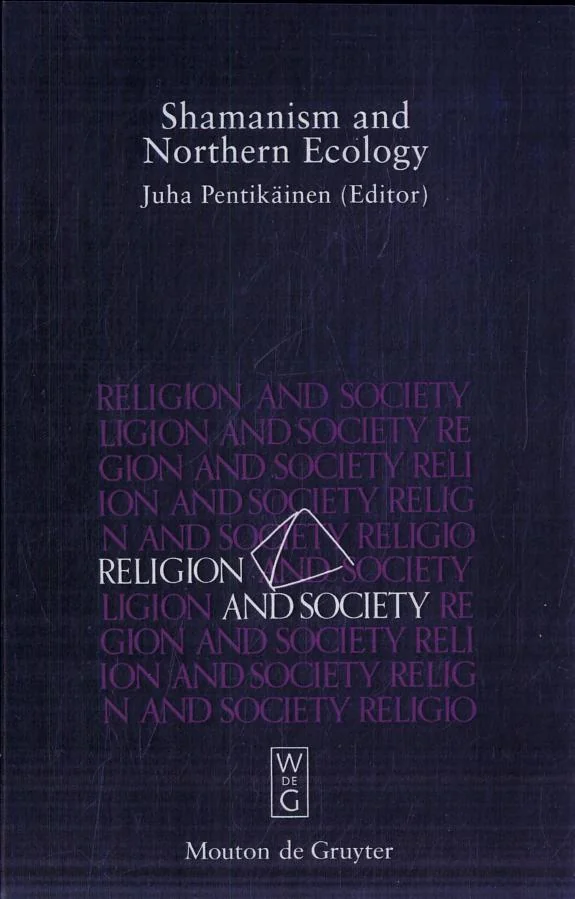
Shamanism and Northern Ecology
 80
80

Shamanism and Northern Ecology
Pentikäinen's "Shamanism and Northern Ecology" is a dense, academic examination that offers substantial historical and sociological context for understanding Northern European shamanic traditions. Its strength lies in its rigorous grounding of spiritual practices within specific ecological realities, moving beyond abstract symbolism to concrete environmental interaction. The author's detailed exploration of the Sámi people's beliefs and rituals, particularly concerning the sacredness of the natural world, provides invaluable data for scholars. However, the book's academic tone can make it inaccessible to a general audience; it rarely ventures into the experiential aspects that might appeal to practitioners. A particularly insightful section discusses the transformation of indigenous beliefs under the pressures of modernization, highlighting the resilience and adaptation of these spiritual systems. It is a crucial, albeit demanding, resource for those serious about the material.
📝 Description
80
Juha Pentikäinen's 1996 book connects Northern indigenous spirituality with its natural environment.
Published in 1996, Juha Pentikäinen's "Shamanism and Northern Ecology" examines the relationship between the spiritual practices of Northern peoples and their surroundings. The book argues that shamanism is not an isolated phenomenon but is tied to social structures and shaped by the unique ecological conditions found in regions such as Fennoscandia. Pentikäinen moves past simple descriptions to show how these beliefs are integrated into daily life and societal organization.
The work is aimed at academics in religious studies, anthropology, and sociology, as well as students of comparative religion and esoteric traditions. It is particularly relevant for those interested in the environmental ethics present in older belief systems. The book emerged from late 20th century scholarship that viewed religion as a social construct, influenced by beliefs and societal organization. Pentikäinen's research highlights how specific cultural expressions, like Northern shamanism, are distinct from more general spiritual ideas because of their particular geographical and social contexts.
This book is situated within the study of shamanism, a practice found across many cultures, but specifically focuses on its manifestations in Northern Europe. It connects animistic beliefs and ritual practices to the physical environment, treating them not as abstract spiritual concepts but as integral parts of how communities interacted with and understood their world. The work contributes to understanding how ecological factors influence the development and expression of spiritual traditions, differentiating Northern shamanism from other forms by emphasizing its specific environmental context.
💡 Why Read This Book?
• Understand the Sámi spiritual framework by examining Pentikäinen's detailed analysis of their cosmology and relationship with the Arctic environment, offering insights not found in generalized shamanic texts. • Grasp the concept of 'ecstatic experience' as described in relation to Northern shamans, moving beyond typical definitions to see how it's tied to specific environmental and social conditions. • Analyze the societal role of shamanism through Pentikäinen's focus on its function within Northern communities, providing a concrete understanding of how rituals and beliefs reinforced social cohesion before the 20th century.
⭐ Reader Reviews
Honest opinions from readers who have explored this book.
❓ Frequently Asked Questions
What specific indigenous group's shamanism does Juha Pentikäinen focus on in 'Shamanism and Northern Ecology'?
The book primarily focuses on the shamanic traditions of the Sámi people of Northern Europe, examining their spiritual practices and their deep connection to the Arctic ecology.
When was 'Shamanism and Northern Ecology' originally published?
The original publication date for Juha Pentikäinen's 'Shamanism and Northern Ecology' is 1996.
What is the 'Religion and Society' series mentioned in the original blurb?
The 'Religion and Society' series is an academic collection dedicated to exploring religions as social systems, examining their interaction with other cultural domains like law and politics.
Does the book discuss the impact of modernization on Northern shamanism?
Yes, the work explores how modernization and external cultural influences have affected and transformed traditional shamanic practices and beliefs in Northern regions.
What kind of ecological focus does the book have regarding shamanism?
It examines how the specific environmental conditions of the North, including its flora, fauna, and climate, shaped shamanic beliefs, rituals, and the understanding of the cosmos.
Is this book suitable for beginners interested in shamanism?
While informative, the book is written with an academic audience in mind. Beginners might find its dense scholarly approach challenging, preferring more introductory texts first.
🔮 Key Themes & Symbolism
Sámi Cosmology and Environment
Pentikäinen meticulously details the Sámi worldview, emphasizing how their spiritual understanding is inextricably linked to the harsh yet sacred Arctic landscape. The book explores concepts like the three-layered cosmos (upper, middle, and lower worlds) not as abstract myths, but as frameworks that informed daily life, hunting practices, and ethical considerations towards nature. This perspective highlights how ecological realities directly sculpted religious expression.
The Role of the Shaman
Central to the work is an examination of the shaman's function within Sámi society. Pentikäinen discusses the shaman's ability to enter ecstatic states, communicate with spirits, and act as a mediator between the human and spirit realms. The book analyzes the importance of helping spirits, often depicted as animal familiars, and how these relationships empowered the shaman to heal, divine, and maintain cosmic balance.
Ritual and Social Systems
Beyond individual practice, the book situates shamanism within the broader social and religious systems of Northern peoples. It analyzes key rituals, such as those involving sacrifice and divination, and explains their significance in maintaining social order, ensuring successful hunts, and working through the challenges posed by their environment. This approach underscores shamanism as a functional element of community life.
Modernity's Impact
Pentikäinen addresses the historical pressures exerted by encroaching modernization, including Christianization and industrialization, on traditional Sámi beliefs. The work explores the resilience and adaptive strategies employed by these communities to preserve aspects of their spiritual heritage, even as outward forms evolved or were suppressed.
💬 Memorable Quotes
Direct passages from the work, attributed to the author.
“The shaman's journey is often depicted as traversing different cosmic realms.”
— This highlights the structural element of shamanic cosmology, where the ascent to the upper world or descent to the lower world is not merely metaphorical but a mapped-out spiritual geography central to trance experiences and communication with deities or ancestors.
“Helping spirits are crucial for the shaman's efficacy.”
— This points to the symbiotic relationship shamans forge with non-human entities, often animals or nature spirits, which grant them power, knowledge, and guidance necessary for healing and divination.
“Ecological conditions significantly shape religious expression.”
— This underscores the book's core thesis: that spiritual beliefs and practices are not formed in a vacuum but are deeply embedded within and influenced by the specific natural environment inhabited by a culture.
“Rituals reinforced social cohesion in traditional Northern societies.”
— This interpretation emphasizes the sociological function of shamanic practices, suggesting that communal ceremonies and shared beliefs played a vital role in uniting and structuring the community against environmental and social challenges.
“Modernization presented challenges to indigenous spiritual systems.”
— This acknowledges the historical impact of external forces, such as colonialism and religious conversion, on the continuity and adaptation of shamanic traditions in the face of changing societal structures and belief systems.
🌙 Esoteric Significance
Tradition
While the book is primarily an academic ethnography, its focus on shamanism aligns with broader esoteric interests in altered states of consciousness, spirit communication, and animistic worldviews. It provides empirical grounding for concepts often explored mystically, offering a structured, culturally specific example of practices that resonate with Gnostic, Hermetic, and animistic traditions seeking direct experience of non-ordinary reality.
Symbolism
Key symbols include the 'three-layered cosmos' (upper, middle, lower worlds), representing the shaman's vertical axis of travel and the interconnectedness of all existence. Animal spirits, particularly the reindeer for the Sámi, serve as potent symbols of guidance, power, and the primal connection between humanity and the wild, embodying the ecological ethics central to the tradition.
Modern Relevance
Contemporary practitioners of neo-shamanism, ecopsychology, and those exploring indigenous wisdom traditions often draw upon Pentikäinen's research. His work offers a robust academic counterpoint to more eclectic or New Age interpretations, providing a deep understanding of the cultural and ecological specificity required for authentic engagement with shamanic principles.
👥 Who Should Read This Book
• Academic researchers in religious studies and anthropology seeking detailed case studies on indigenous belief systems and their environmental integration. • Students of comparative religion interested in the specific manifestations of shamanism outside of more commonly studied traditions. • Environmental ethicists and ecopsychologists looking for historical examples of deep ecological awareness embedded within cultural practices.
📜 Historical Context
Published in 1996, "Shamanism and Northern Ecology" emerged during a period of renewed academic interest in indigenous religions and environmental studies. Pentikäinen's work contributed to the ongoing discourse in religious studies, which increasingly sought to understand faith not just as personal belief but as a social system, as exemplified by scholars like Mary Douglas. The book engaged with anthropological approaches that emphasized the deep connection between culture and environment, moving away from purely symbolic interpretations of ritual. While not facing overt censorship, academic works on indigenous spirituality often navigated sensitive topics regarding cultural appropriation and the legacy of colonialism. Pentikäinen's detailed scholarship on the Sámi provided a counterpoint to more generalized or romanticized notions of shamanism prevalent in some counter-cultural circles of the time.
📔 Journal Prompts
The Sámi concept of the three-layered cosmos: implications for personal worldview.
Reflect on the role of 'helping spirits' in spiritual traditions.
Analyze the relationship between specific Arctic ecological features and Sámi rituals.
Consider the ethical frameworks derived from nature-centric belief systems.
Juha Pentikäinen's portrayal of ecstatic experience: personal resonance.
🗂️ Glossary
Sámi
An indigenous Finno-Ugric people inhabiting Sápmi, the Arctic region of northern Europe, traditionally known for their reindeer herding and distinct cultural and spiritual practices.
Shamanism
A religious practice characterized by a practitioner who acts as an intermediary between the visible world and a spirit world, typically through altered states of consciousness.
Ecstatic Experience
A state of altered consciousness characterized by intense emotion, often involving trance, visions, or a feeling of dissociation from the ordinary self, central to shamanic practice.
Cosmology
A model of the universe and its structure, often including concepts of the creation, the arrangement of celestial bodies, and the relationships between different areas of existence.
Helping Spirits
Spiritual entities, often in animal or human form, that assist a shaman in their work, providing guidance, power, and protection during spiritual journeys.
Fennoscandia
A geographical and cultural region in Northern Europe, consisting of the Scandinavian Peninsula, Finland, and Karelia.
Ritual
A set of actions, performed in a prescribed order, often with symbolic meaning, used in religious or other ceremonies to achieve a specific spiritual or social effect.
This book appears in 1 collection
🔮 Readers Also Liked
Browse all →









From the “Shamanism” Collection
View all →







More Free Occult Philosophy Books
View all →