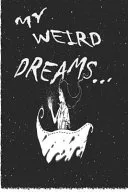
My Weird Dreams... Dream Interpretation Journal
 77
77

My Weird Dreams... Dream Interpretation Journal
J. Hudson’s “My Weird Dreams… Dream Interpretation Journal” offers a straightforward, utilitarian approach to a practice steeped in centuries of esoteric inquiry. Unlike more academic or esoteric texts that might overwhelm the uninitiated, this journal provides a clean slate, inviting users to simply record. Its strength lies in this unpretentious accessibility; it demands little prior knowledge, focusing instead on the act of consistent documentation. The 6" x 9" format is generous, allowing for expansive narrative recall without feeling cramped. However, its primary limitation is this very lack of inherent guidance. While the blurb speaks of interpretation, the journal itself offers minimal structured prompts beyond blank lines. A passage encouraging the user to note recurring symbols, for instance, would elevate it beyond a mere notebook. Ultimately, it functions best as a blank canvas for those already inclined towards dream work, rather than a complete guide for beginners.
📝 Description
77
Published January 6, 2019, J. Hudson's journal helps users record and analyze their dreams.
This 6" x 9" journal by J. Hudson offers a physical space for individuals to document their dreams and subsequent reflections. It aims to connect the user's subconscious experiences with their waking understanding. The journal is designed for people interested in gaining personal insights, fostering creativity, or seeking guidance through their dreams. It suits both those new to self-reflection and experienced individuals who prefer an analog method for exploring their inner world. The structured format encourages a consistent practice of dream recall and analysis.
Dream interpretation has a long history, seen as divine messages in ancient cultures and explored through psychoanalysis by Freud and Jung. Freud considered dreams a path to the unconscious, while Jung introduced concepts like archetypes. Hudson's journal continues this tradition, offering a modern, accessible format for individuals to engage with the symbolic language of their dreams, connecting with a practice central to many psychological and esoteric systems.
💡 Why Read This Book?
• You will develop a systematic method for capturing fleeting dream imagery, a core practice in understanding your subconscious, much like the detailed dream logs kept by early psychoanalysts. • You will cultivate enhanced self-awareness by consistently transcribing your nocturnal narratives, tapping into the "subconscious feelings" that dreams reveal, a concept central to Jungian psychology. • You will gain a practical tool to access your "inner wisdom," using the journal's ample space to explore the symbolic language unique to your psyche, a method echoed in various shamanic traditions.
⭐ Reader Reviews
Honest opinions from readers who have explored this book.
❓ Frequently Asked Questions
When was "My Weird Dreams... Dream Interpretation Journal" first published?
The journal was first published on January 6, 2019, making it a contemporary tool for modern dreamers.
What is the physical size of the journal?
The journal measures 6" x 9", providing a substantial amount of space for writing down dreams and interpretations.
Does the journal offer specific interpretation methods?
While the journal facilitates recording and interpretation, it primarily provides space for the user's own analysis rather than pre-defined methods.
Who is the author of this dream journal?
The author is J. Hudson.
What is the main benefit of using a dream journal like this one?
The main benefit is increased self-awareness and access to subconscious insights by systematically recording and reflecting on dreams.
Is this journal suitable for beginners in dream interpretation?
Yes, its simple format makes it accessible for beginners who wish to start a dream journaling practice.
🔮 Key Themes & Symbolism
The Subconscious as a Source
This journal operates on the premise that dreams are direct communications from the subconscious mind. It encourages users to view their dreams not as random events but as meaningful messages, offering insights into "subconscious feelings" and hidden aspects of the self. By diligently recording dream content, individuals can begin to discern patterns and recurring symbols that might otherwise remain unnoticed, thereby fostering a deeper understanding of their inner landscape. The act of journaling itself is a bridge, translating the often-elusive language of dreams into accessible conscious awareness.
Self-Awareness Through Nocturnal Visions
A central theme is the enhancement of "self-awareness" through consistent dream analysis. The journal posits that by engaging with one's dreams, particularly the "weird" or unusual ones, one can uncover latent desires, fears, and unresolved issues. This process is framed as a form of introspection, similar to practices found in various mystical traditions that use altered states or symbolic interpretation for personal growth. The journal provides the structure to systematically explore these inner revelations, promoting psychological and spiritual development.
Dreams as Creative and Guiding Forces
The journal highlights the potential of dreams to unlock "creativity" and provide "inner wisdom." It suggests that the dream state is a fertile ground for novel ideas and solutions that may elude the waking mind. By documenting dreams, users can identify moments of inspiration or guidance that arise during sleep. This perspective aligns with historical accounts of artists, scientists, and mystics who have credited their dreams with significant breakthroughs. The journal serves as a practical instrument for harnessing this often-underestimated cognitive resource.
The Practice of Dream Recording
The physical format and purpose of the journal underscore the importance of the practice of dream recording itself. The generous 6" x 9" size is a deliberate design choice, allowing ample space for detailed descriptions, emotional responses, and interpretive notes. This emphasis on the *act* of writing acknowledges that the process of externalizing dreams aids in their retention and analysis. It encourages a disciplined engagement with one's dream life, treating it with the seriousness of any other form of personal development or spiritual discipline.
💬 Memorable Quotes
Direct passages from the work, attributed to the author.
“Dreams are precious gifts.”
— This statement frames dreams not as random occurrences but as valuable insights or opportunities, encouraging the user to treat their dream experiences with respect and attention.
“They are windows to your innermost self.”
— This highlights the core belief that dreams offer direct access to one's deepest feelings, motivations, and subconscious truths, making them a vital tool for self-discovery.
“Increase your self-awareness.”
— This points to a primary benefit of dream interpretation – gaining a clearer understanding of one's own personality, behaviors, and psychological landscape.
“Access your creativity.”
— This suggests that the dream state can be a source of novel ideas and inspiration, and that engaging with dreams can help unlock this creative potential.
“Be guided by your inner wisdom.”
— This implies that dreams contain practical advice or intuitive knowledge that can help navigate life's challenges, urging the user to trust these internal messages.
🌙 Esoteric Significance
Tradition
This journal aligns broadly with the esoteric tradition of introspective practices aimed at self-knowledge, particularly those influenced by depth psychology and modern occultism. While not explicitly tied to a specific lineage like Kabbalah or Hermeticism, it embodies the principle of seeking hidden knowledge within the self, a common goal across many esoteric paths. It serves as a modern implement for a practice that has historically been integral to spiritual disciplines seeking to understand the microcosm (the individual) in relation to the macrocosm.
Symbolism
The journal encourages the user to become their own lexicographer of symbols. Key motifs would arise organically from the user's unique dream experiences – perhaps a recurring animal, a specific location, or a peculiar object. Within esoteric traditions, such symbols are often seen as archetypal or personal signifiers. For example, a recurring 'shadow figure' might be interpreted through Jungian psychology as a repressed aspect of the self, or within a more alchemical framework, represent the prima materia requiring transformation.
Modern Relevance
In contemporary esoteric circles, there's a resurgence of interest in practical, self-directed spiritual tools. Works like Hudson's journal resonate with practitioners of modern witchcraft, New Age spirituality, and psychological astrology, all of which often incorporate dream work. It provides a tangible counterpoint to purely digital or theoretical approaches, fitting into a broader movement that values embodied experience and personal gnosis. Thinkers exploring consciousness studies or transpersonal psychology also find value in such tools for empirical self-observation.
👥 Who Should Read This Book
• Aspiring dream analysts and practitioners of Jungian psychology seeking a simple, structured method to begin documenting their dream recall and initial interpretations. • Individuals interested in personal growth and self-discovery who believe their dreams hold valuable personal insights but lack a systematic way to engage with them. • Students of esoteric traditions or comparative religion who wish to understand the practical application of dream journaling across various historical and cultural contexts.
📜 Historical Context
The field of dream analysis, while popularized in the early 20th century by figures like Sigmund Freud with his important work "The Interpretation of Dreams" (1899) and later Carl Jung, has roots stretching back to antiquity. Ancient civilizations, including the Egyptians and Greeks, meticulously recorded and interpreted dreams, often viewing them as divine pronouncements or omens. Freud's psychoanalytic approach, emphasizing wish fulfillment and the unconscious, contrasted with Jung's broader view of dreams as compensatory and containing archetypal symbolism from a collective unconscious. Hudson's journal, published in 2019, engages with this long tradition by offering a practical, accessible tool. It sidesteps complex theoretical frameworks, providing a space for personal exploration that reflects the ancient practice of recording divine messages or the modern need for self-understanding fostered by psychoanalysis.
📔 Journal Prompts
Record the dominant emotion felt during the dream.
Identify any recurring symbols or characters from previous dreams.
Describe the most unusual or "weird" element of the dream.
Note any perceived messages or guidance within the dream narrative.
Reflect on how the dream relates to your waking life concerns.
🗂️ Glossary
Subconscious Feelings
Emotions, desires, or anxieties that exist below the level of conscious awareness, often surfacing symbolically in dreams.
Self-Awareness
The conscious knowledge of one's own character, feelings, motives, and desires, often enhanced through introspection and dream analysis.
Creativity
The use of imagination or original ideas to create something; in dreams, it can manifest as novel scenarios or solutions.
Inner Wisdom
Intuitive knowledge or guidance that originates from within the individual's deeper consciousness or subconscious mind.
Dream Interpretation
The process of analyzing the content and symbolism of dreams to derive meaning and insight into the dreamer's psyche.
Nocturnal Visions
A poetic term for dreams, emphasizing their visual and often symbolic nature experienced during sleep.
Symbolic Language
The use of symbols (images, objects, actions) to represent abstract ideas or complex emotions, particularly prevalent in dreams.