SATORI - in der Kunst des Blöd-Zen
 73
73

SATORI - in der Kunst des Blöd-Zen
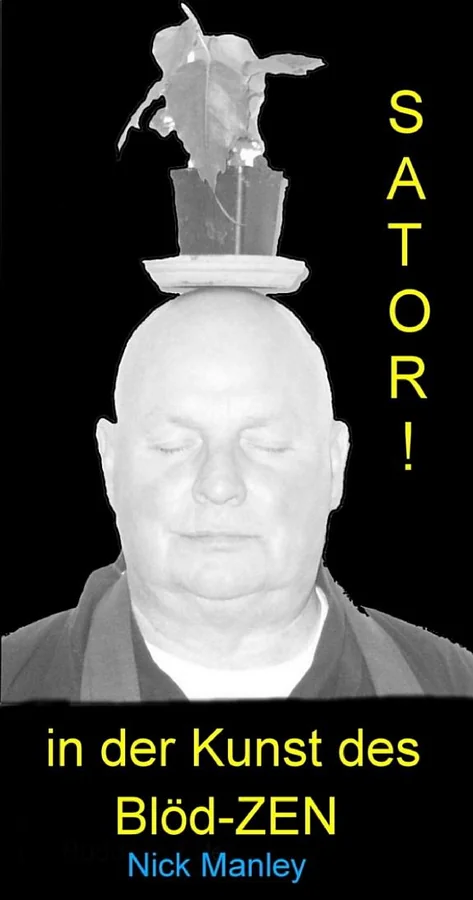
Nick Manley’s "SATORI - in der Kunst des Blöd-Zen" bypasses the usual solemnity that often surrounds discussions of Zen Buddhism. Instead of lofty pronouncements, Manley offers a collection of wry observations, sketches, and anecdotes that approach Satori – the Japanese Zen variant of Buddhist enlightenment – with a decidedly playful spirit. The strength here lies in its accessibility; Manley demonstrates that deep spiritual concepts don't require impenetrable jargon or an unsmiling demeanor. A particular passage where the author humorously critiques the very *idea* of striving for Satori, likening it to chasing one's own shadow, perfectly encapsulates the book's charm. Its limitation, however, is that the very looseness and informality that make it engaging might leave some readers wishing for more structured exposition on core Zen doctrines. Ultimately, it’s a refreshingly honest and amusing companion for anyone exploring the path of Zen, reminding us that laughter is not antithetical to enlightenment.
📝 Description
73
Nick Manley's 2014 book, SATORI - in der Kunst des Blöd-Zen, uses humor to examine Zen Buddhist concepts.
This book approaches Zen Buddhism with a mix of respect and humor, looking at its core ideas and the concept of Satori. Manley combines commentary, drawings, and short stories to discuss spiritual practice. It is not an academic text but rather a look at spiritual practice from the viewpoint of someone who is a practicing Buddhist and acknowledges the absurdities that can appear in any serious pursuit.
It is written for people who enjoy a lighthearted but knowledgeable perspective on spiritual traditions. The book suits those who can appreciate the humor in their own earnestness and the human condition, even when dealing with serious subjects. Readers looking for a less formal entry into Zen ideas, or those already familiar with Buddhist philosophy who appreciate self-deprecating wit, will find this work of interest.
Published in 2014, "SATORI - in der Kunst des Blöd-Zen" arrived as interest in Eastern philosophies grew globally. Unlike Western interpretations that often focused on strict discipline or abstract philosophy, Manley's work offered a different view. It highlighted how humor and self-awareness can be part of the practice. This aligns with trends in the late 20th and early 21st centuries where individuals began merging Eastern practices with Western psychology and recognized the importance of daily life in spiritual growth.
💡 Why Read This Book?
• Gain a humorous yet insightful perspective on Zen Buddhism's core concept of Satori, learning how "Blöd-Zen" offers a less intimidating entry point, as illustrated by the author's relatable anecdotes. • Understand the 2014 publication context, appreciating Manley's contribution to making Zen accessible beyond traditional academic or monastic circles with his unique blend of commentary and drawings. • Discover how everyday absurdities and self-awareness, rather than solely formal meditation, can be integral to spiritual insight, a takeaway reinforced by the book's playful approach to serious inquiry.
⭐ Reader Reviews
Honest opinions from readers who have explored this book.
❓ Frequently Asked Questions
What is 'Blöd-Zen' as presented in Nick Manley's book?
'Blöd-Zen' refers to a playfully self-aware approach to Zen Buddhism, as explored in Nick Manley's "SATORI - in der Kunst des Blöd-Zen." It suggests a practice that doesn't take itself overly seriously, embracing humor and everyday foolishness as part of the path to Satori.
When was 'SATORI - in der Kunst des Blöd-Zen' first published?
The book "SATORI - in der Kunst des Blöd-Zen" by Nick Manley was first published on December 2, 2014.
Is this book suitable for complete beginners to Buddhism?
Yes, the book is suitable for beginners. Its humorous and accessible style, featuring commentary and drawings, demystifies concepts like Satori without requiring prior deep knowledge of Buddhist philosophy.
What is Satori in the context of Zen Buddhism?
Satori is the Japanese Zen term for awakening or enlightenment, representing a sudden intuitive understanding of the truth of existence. Nick Manley's work explores this concept through a less conventional, often humorous, lens.
Does the author offer practical advice for meditation?
While not a traditional meditation manual, the book indirectly offers practical wisdom by suggesting that a lighthearted, self-aware attitude can enhance one's spiritual practice. It emphasizes the integration of humor into the Zen path.
What kind of content can I expect besides text?
Beyond Manley's commentary and stories, "SATORI - in der Kunst des Blöd-Zen" includes drawings and illustrations, adding a visual dimension to the exploration of Zen concepts and the pursuit of Satori.
🔮 Key Themes & Symbolism
The Paradox of Satori
The book dissects the pursuit of Satori, the Zen-equivalent of Buddhist enlightenment, by highlighting the inherent paradoxes. Manley suggests that the very act of striving, of earnestly chasing this ultimate state, can become an obstacle. Through humorous anecdotes and his "Blöd-Zen" philosophy, he implies that Satori might be found not through intense, serious effort alone, but through a relaxed, self-aware engagement with life's absurdities, a concept first explored in its modern Western interpretations following figures like D.T. Suzuki in the mid-20th century.
Humor as a Spiritual Tool
Manley champions humor not as a distraction from spiritual practice, but as an integral tool. The "Blöd-Zen" concept suggests that laughter, especially self-directed laughter, can dissolve egoic attachments and open the mind to deeper understanding. This approach contrasts with the often austere presentation of Zen, positing that the ability to laugh at oneself is a sign of spiritual maturity, a notion that appeals to later contemporary figures who integrate psychological insight into spiritual paths.
Everyday Enlightenment
Rather than focusing solely on monastic settings or intensive retreats, the work emphasizes that moments of insight and awakening can occur within the fabric of ordinary life. Manley’s commentary and drawings often draw parallels between mundane situations and profound spiritual principles, suggesting that enlightenment is not a distant goal but an accessible state of mind cultivated through mindful, and often amusing, everyday interactions.
Clarifying Zen
Through a combination of accessible prose, relatable stories, and visual elements, Manley aims to clarify Zen Buddhism for a broader audience. He tackles complex concepts like Satori and the nature of the self with a refreshing lack of pretension. This approach is particularly relevant in the context of the early 21st century, where interest in Eastern spirituality grew alongside a desire for practical, non-dogmatic applications.
💬 Memorable Quotes
Direct passages from the work, attributed to the author.
“Zen is not always about sitting still; sometimes it's about laughing at the ridiculousness of trying too hard.”
— This interpretation emphasizes the book's central theme of 'Blöd-Zen'. It contrasts the common perception of Zen as solely austere with Manley's view that self-aware humor is a vital, and perhaps even more effective, path to understanding.
“The drawings often show a person looking for enlightenment under a rock they are sitting on.”
— This describes a recurring visual motif in the book, illustrating how enlightenment (Satori) is often overlooked because it is already present, obscured by the seeker's own actions or perspective.
“The path to awakening is paved with everyday moments, not just monastery hours.”
— This interpretation highlights Manley's focus on integrating spiritual practice into daily life. It counters the idea that profound realization only occurs in specialized spiritual settings, emphasizing the potential for insight in mundane experiences.
💡 Key Ideas
Editorial paraphrase of the work's core concepts — not direct quotes.
The earnest pursuit of Satori can become like chasing one's own tail.
This paraphrase captures the essence of Manley's critique of overzealous spiritual striving. It suggests that the very intensity of the desire for enlightenment can paradoxically prevent its attainment, highlighting the need for a lighter, more self-aware approach.
Even a fool can find wisdom, especially if they're willing to be a fool.
This paraphrase reflects the 'Blöd-Zen' philosophy, suggesting that embracing humility and a lack of pretense can be more conducive to insight than intellectual arrogance or rigid adherence to doctrine.
🌙 Esoteric Significance
Tradition
While rooted in Zen Buddhism, a Mahayana tradition known for its emphasis on meditation (zazen) and direct experience, Manley's work departs from strict orthodoxies. The "Blöd-Zen" aspect introduces a layer of playful self-critique and humor that is less emphasized in many classical Zen texts. It aligns with a modern esoteric tendency to deconstruct and re-interpret established traditions, making them accessible and relevant through contemporary cultural lenses, moving beyond the often austere presentations favored by earlier Western interpreters.
Symbolism
The book frequently employs visual symbolism through its drawings. A common motif might be the seeker frantically searching for something (like Satori) that is already directly beneath them or within their grasp, symbolizing the ego's tendency to complicate and obscure simple truths. Another recurring symbol could be the contrast between a serene, idealized depiction of enlightenment and the often messy, mundane reality of the practitioner's life, highlighting the integration of the sacred and the profane.
Modern Relevance
Manley's approach finds echoes in contemporary mindfulness movements that emphasize self-compassion and non-judgment, as well as in the growing field of positive psychology that acknowledges the role of humor in well-being. Thinkers and practitioners who advocate for less rigid, more personalized spiritual paths, or those who use art and humor to explore existential themes, can draw inspiration from "SATORI - in der Kunst des Blöd-Zen" today.
👥 Who Should Read This Book
• Individuals new to Zen Buddhism seeking an entry point that prioritizes accessibility and humor over complex doctrine, as Manley’s "Blöd-Zen" approach simplifies concepts like Satori. • Experienced practitioners of any spiritual path who appreciate self-reflection and can find value in a lighthearted, critical examination of their own earnestness, a perspective reinforced by the book's witty commentary. • Readers interested in the intersection of Eastern philosophy and Western psychological humor, looking for a work that offers practical wisdom through relatable anecdotes and visual aids, as seen in the book's drawings.
📜 Historical Context
Published in 2014, Nick Manley's "SATORI - in der Kunst des Blöd-Zen" arrived at a time when Western engagement with Buddhism, particularly Zen, had evolved significantly since the mid-20th century influx popularized by figures like Alan Watts and D.T. Suzuki. While academic and formal practice-oriented interpretations continued, Manley's work offered a distinct counter-narrative. It emerged within a broader cultural landscape increasingly receptive to personalized spirituality and psychological integration, moving beyond rigid dogma. Unlike purely philosophical explorations or strict adherence to Rinzai or Soto traditions, Manley’s "Blöd-Zen" embraced a self-deprecating, almost Dadaist-tinged humor. This approach resonated with a generation that often viewed traditional institutions with skepticism and sought more relatable, less austere paths to self-understanding, reflecting a trend of playful subversion seen in various counter-cultural movements.
📔 Journal Prompts
The concept of 'Blöd-Zen' and its implications for your own spiritual practice.
Moments of 'Satori' found in everyday absurdity, as explored in Manley's work.
The role of self-directed laughter in dissolving egoic attachments.
Reflecting on the paradox of seeking enlightenment through intense effort.
How the book's drawings visually represent the search for understanding.
🗂️ Glossary
SATORI
The Japanese Zen Buddhist term for awakening or enlightenment, a sudden intuitive experience of the truth of existence. Manley's book explores this through a humorous, less conventional lens.
Blöd-Zen
A coined term by the author, suggesting a playful, self-aware, and even 'foolish' approach to Zen practice. It emphasizes not taking oneself too seriously on the path to enlightenment.
Zen Buddhism
A school of Mahayana Buddhism that originated in China, emphasizing meditation, intuition, and direct experience over scripture and doctrine to achieve enlightenment.
Enlightenment
In Buddhism, the ultimate state of understanding and liberation from suffering. In Zen, often referred to as Satori or Kensho.
Zazen
The practice of seated meditation central to Zen Buddhism, typically involving mindful focus on breath or an object, or open awareness.
Ego
In psychological and spiritual contexts, the sense of self or individual identity. Many spiritual traditions aim to transcend or understand the ego's limitations.
Commentary
Explanations or interpretations of a text or concept. In this book, the author provides commentary on Zen Buddhism and Satori.
This book appears in 1 collection
🔮 Readers Also Liked
Browse all →









From the “Satori” Collection
View all →





More Free Occult Philosophy Books
View all →