Lucid dreaming
 78
78

Lucid dreaming
Hurd and Bulkeley's "Lucid Dreaming" presents a commendable effort to synthesize the disparate threads of research, personal accounts, and historical inquiry surrounding conscious dreaming. Its strength lies in its accessible yet thorough approach, making complex neurological and psychological concepts understandable without oversimplification. The authors effectively contextualize lucid dreaming within broader traditions of altered states of consciousness, moving beyond mere technique to explore its philosophical implications. A notable passage that highlights their balanced perspective is the discussion on the subjective experience of the dream body, which acknowledges both the psychological reality and the potential for symbolic interpretation. However, the work occasionally feels more like an academic overview than a deeply personal exploration, which might leave readers seeking a more immediate, experiential guide wanting. Despite this, the book remains a valuable resource for anyone wishing to understand the phenomenon of lucid dreaming from multiple vantage points.
📝 Description
78
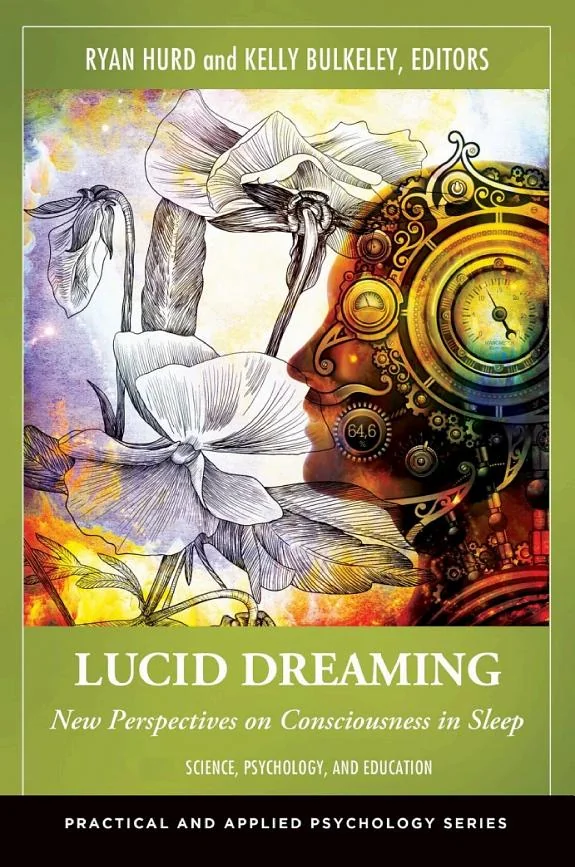
Published in 2014, Ryan Hurd and Kelly Bulkeley's lucid dreaming book examines conscious awareness in dreams.
Ryan Hurd and Kelly Bulkeley's 2014 book examines conscious awareness within the dream state. The work goes beyond simple definitions to look at how lucidity in sleep is understood and experienced across different cultures and historical periods. It discusses the mechanics, psychology, and possible uses of being aware while dreaming. The book aims to inform curious individuals about their own dream lives, while also giving seasoned researchers and practitioners new ideas about altered states of consciousness. It offers basic knowledge for newcomers and deeper insights for those already familiar with dream work or psychology.
The authors systematically break down the subject of lucid dreaming. They discuss the brain activity associated with the lucid state, differentiating it from regular REM sleep. Hurd and Bulkeley also describe what it is like to experience awareness within a dream. They further look into the possible therapeutic and creative advantages, as well as the ethical considerations that arise from this practice.
This book places lucid dreaming within a long tradition of exploring altered states of consciousness. While ancient cultures saw dreams as divine messages, the early 20th century brought them into psychological study. The specific focus on lucid dreaming gained momentum in the late 20th century. Hurd and Bulkeley build on this scientific work, connecting it to broader philosophical ideas about the nature of awareness and experience.
💡 Why Read This Book?
• Gain a structured understanding of the neurobiological underpinnings of lucid dreaming, differentiating it from ordinary REM sleep, a concept elaborated in the "Key Concepts" section. • Explore historical and cross-cultural perspectives on conscious dreaming, moving beyond modern scientific interpretations to understand its place in human experience since ancient times. • Discover potential applications of lucid dreaming for personal growth and creativity, as detailed through the various techniques and potential benefits discussed throughout the book.
⭐ Reader Reviews
Honest opinions from readers who have explored this book.
❓ Frequently Asked Questions
When was "Lucid Dreaming" by Ryan Hurd and Kelly Bulkeley first published?
The book "Lucid Dreaming" by Ryan Hurd and Kelly Bulkeley was first published in 2014, offering a contemporary synthesis of research and thought on the subject.
What is the primary focus of Hurd and Bulkeley's "Lucid Dreaming"?
The book focuses on a comprehensive exploration of lucid dreaming, covering its mechanics, psychology, historical context, and potential applications, distinguishing it from other works that might focus solely on induction techniques.
Are there practical techniques for inducing lucid dreams in this book?
Yes, while the book offers broad context, it also discusses various techniques and approaches used to achieve conscious awareness within dreams, as part of its exploration of the phenomenon.
Who are Ryan Hurd and Kelly Bulkeley in the field of dream studies?
Ryan Hurd is a writer and researcher focused on dreams and consciousness, while Kelly Bulkeley is a scholar of religion and psychology with extensive work in dream studies, bringing academic rigor to the subject.
Does this book connect lucid dreaming to spiritual or esoteric traditions?
The work integrates historical and cross-cultural perspectives, which naturally include spiritual and esoteric interpretations of dreaming, placing lucid dreaming within a broader human context.
Is "Lucid Dreaming" suitable for beginners interested in the topic?
Yes, the book is designed to be accessible to newcomers, providing foundational knowledge and clear explanations while also offering depth for those with prior experience in dream research or psychology.
🔮 Key Themes & Symbolism
The Phenomenology of Awareness
The book deeply investigates the subjective experience of being aware within a dream. It moves beyond simply stating that one is conscious, to exploring what that consciousness entails: the vivid sensory input, the sense of agency, and the unique internal landscape. This exploration often touches upon the feeling of inhabiting a dream body, distinct from the physical form, and how this perceived body interacts with the dream environment. It considers the psychological reality of these experiences, even when the external world is absent.
Historical and Cross-Cultural Perspectives
Hurd and Bulkeley situate lucid dreaming within a vast historical and cultural continuum. They examine how different societies and eras have interpreted dreams, from ancient shamanic practices and prophetic visions to modern psychological theories. This approach highlights that while the scientific study is relatively recent, the experience of heightened or conscious dream awareness has been a part of human consciousness for millennia, often imbued with spiritual or divinatory significance.
Neurobiological Underpinnings
A significant aspect of the work addresses the scientific basis of lucid dreaming. It studies what happens in the brain when a person becomes lucid during sleep, contrasting it with typical REM sleep states. Concepts such as prefrontal cortex activation and altered brainwave patterns are discussed. This scientific grounding provides a framework for understanding the phenomenon from a physiological perspective, complementing the subjective and historical accounts.
Applications and Implications
Beyond mere description, the book explores the practical and philosophical implications of lucid dreaming. This includes potential therapeutic uses, such as confronting fears or working through trauma in a controlled dream environment, and its role in fostering creativity and problem-solving. The authors also touch upon ethical considerations and the potential for personal transformation that arises from mastering one's dream reality.
💬 Memorable Quotes
Direct passages from the work, attributed to the author.
“The distinction between the dreamer and the dream begins to blur.”
— This statement captures the essence of lucidity – the moment the dreaming mind recognizes its own activity. It signifies a shift from being a passive observer to an active participant, blurring the perceived boundary between self and the dream world.
“Conscious dreaming offers a unique laboratory for exploring the mind.”
— This highlights the scientific and introspective value of lucid dreaming. It suggests that the dream state, when navigated consciously, becomes a controllable space for psychological investigation and self-discovery.
“Dream body awareness is central to the lucid experience.”
— This points to the embodied nature of dream consciousness. The feeling of having a body within the dream, and being aware of it, is often a key trigger or component of achieving lucidity.
“Historical accounts reveal a long-standing human fascination with controlling dreams.”
— This emphasizes that the desire and practice of lucid dreaming are not entirely modern phenomena. It connects contemporary research to ancient traditions and persistent human curiosity about the dream realm.
“The transition into lucidity can be sudden or gradual.”
— This acknowledges the varied pathways to achieving conscious awareness in dreams. Some individuals experience an abrupt realization, while others find their lucidity developing slowly over the course of a dream.
🌙 Esoteric Significance
Tradition
While not strictly adhering to a single esoteric lineage, "Lucid Dreaming" engages with traditions that explore altered states of consciousness, such as certain branches of Hermeticism and Gnosticism, which often viewed dreams as potential pathways to inner knowledge or spiritual insight. It bridges the gap between empirical research and the more mystical interpretations of dream states found in Theosophy or Jungian psychology, offering a modern lens on age-old questions about the nature of reality and consciousness.
Symbolism
The concept of the 'dream body' is a potent symbol, representing the disembodied yet experienced self within the dreamscape, often seen in esoteric thought as a vehicle for astral travel or spiritual exploration. The 'lucid state' itself can symbolize mastery over the subconscious or the attainment of higher awareness, akin to achieving gnosis or enlightenment within the inner realms. The dream environment, when consciously navigated, becomes a symbolic field of the psyche, ripe for interpretation and transformation.
Modern Relevance
Contemporary practices in mindfulness, biofeedback, and even virtual reality design draw parallels to the conscious control and reality-testing associated with lucid dreaming. Thinkers in transpersonal psychology and consciousness studies continue to cite and build upon the research presented, seeing lucid dreaming as a key area for understanding subjective experience and the potential of the human mind. Its influence can be seen in therapeutic applications and in popular culture's ongoing fascination with exploring the boundaries of reality.
👥 Who Should Read This Book
• Aspiring dream explorers seeking a foundational understanding of what lucid dreaming is, its scientific basis, and historical context. • Researchers and students of consciousness interested in the intersection of neuroscience, psychology, and subjective experience within altered states. • Individuals curious about the philosophical implications of dreams and the potential for self-discovery and creativity through conscious dream work.
📜 Historical Context
Published in 2014, Ryan Hurd and Kelly Bulkeley's "Lucid Dreaming" emerged in an era where dream research was increasingly blending neuroscience with psychological and cultural studies. This period saw a resurgence of interest in consciousness studies, with dream states being a key frontier. Contemporary researchers like Stephen LaBerge had already established significant groundwork in the scientific investigation of lucid dreaming through techniques like MILD and WILD. Hurd and Bulkeley's work fits within this lineage but also expands upon it by integrating a broader philosophical and historical sweep, drawing connections to ancient traditions and esoteric philosophies that predated modern scientific inquiry. This integrative approach distinguished it from purely clinical or technical manuals, positioning it as a more holistic examination of conscious dreaming's place in human experience.
📔 Journal Prompts
The dream body's perceived sensations within the lucid state.
Historical interpretations of conscious dream awareness.
The transition from ordinary REM sleep to a lucid dream.
Personal experiences of the dream environment's malleability.
The distinction between self-awareness and dream content.
🗂️ Glossary
REM Sleep
Rapid Eye Movement sleep, a stage of sleep characterized by rapid eye movements, vivid dreaming, and increased brain activity. Lucid dreaming typically occurs during REM sleep.
Phenomenology
The philosophical study of the structures of experience and consciousness. In this context, it refers to the subjective qualities of what it is like to be lucid in a dream.
Neurobiology
The study of the nervous system, including its structure, function, development, genetics, biochemistry, physiology, pharmacology, and pathology. Applied here to understand brain activity during lucid dreams.
Dream Body
The perceived form or vehicle of the self within the dream state. Awareness of this 'dream body' is often integral to achieving or maintaining lucidity.
Prefrontal Cortex
The anterior part of the frontal lobes of the brain, involved in complex cognitive behaviors such as planning, decision-making, and working memory. Its activation is linked to lucidity.
Induction Techniques
Methods and practices employed by dreamers to increase the likelihood of becoming lucid during sleep, such as reality checks or Mnemonic Induction of Lucid Dreams (MILD).
Altered State of Consciousness
Any mental state that deviates from normal waking consciousness, including dreaming, meditation, hypnosis, and drug-induced states. Lucid dreaming is considered an ASC.
🔮 Readers Also Liked
Browse all →









More Free Occult Philosophy Books
View all →