Samuel Bak
 62
62

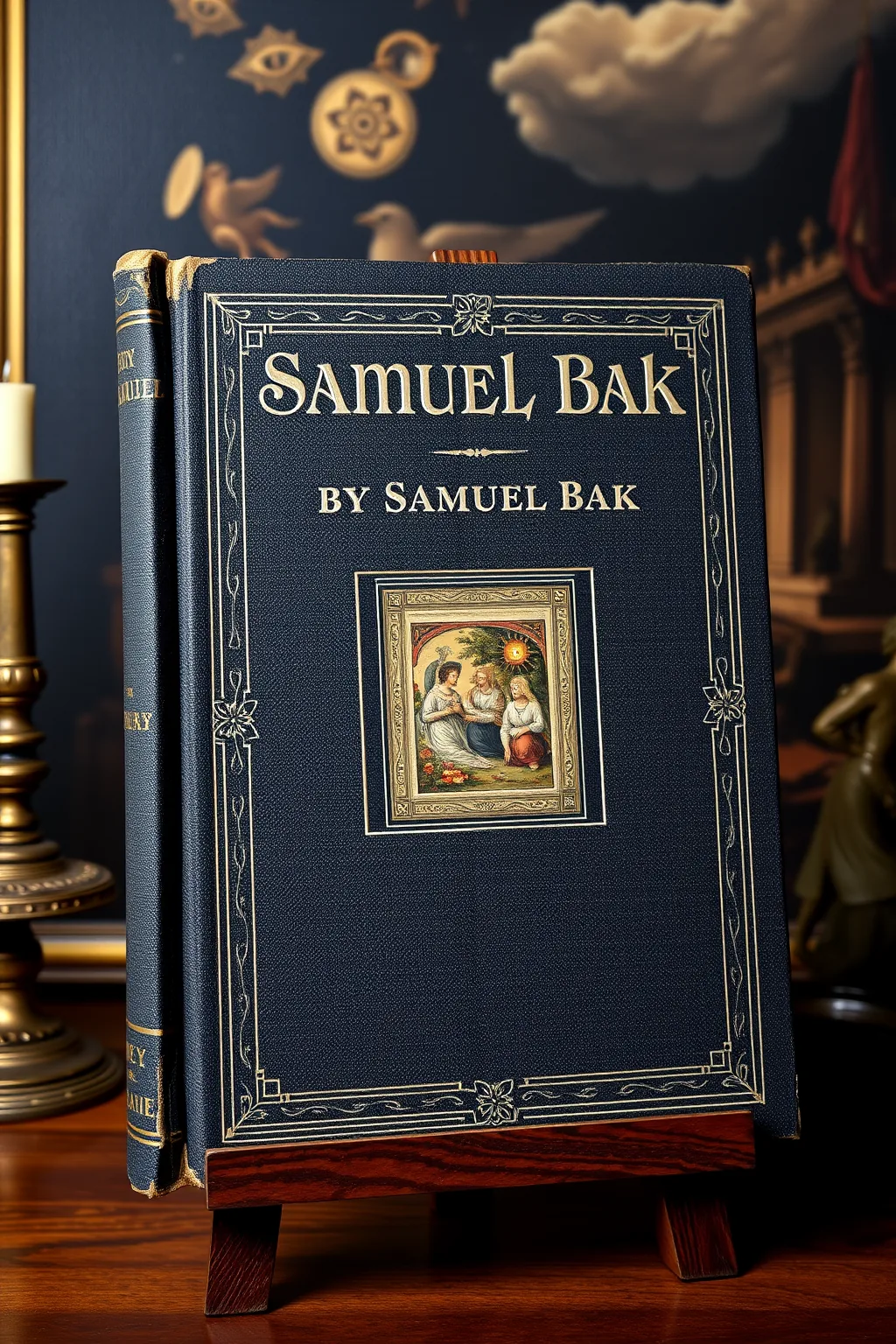
Samuel Bak



From the pen of Cassian Rothmann, Senior Critic at Ancient Wisdom, this critical examination of Samuel Bak's oeuvre is a triumph of insightful scholarship. Rothmann masterfully navigates the complex tapestry of Bak's artistic journey, illuminating the deep currents of Kabbalistic thought that flow beneath the surface of his powerful imagery. He highlights how Bak’s visual lexicon, forged in the crucible of historical tragedy, becomes a profound vehicle for exploring universal themes of creation, destruction, and redemption. This is not a book for the casual observer, but for the dedicated student of esoteric art, offering a challenging yet deeply rewarding exploration of a singular artistic vision that speaks directly to the soul's deepest inquiries.
📝 Description
62
Samuel Bak's 2001 collection presents potent symbolism drawn from Kabbalah and Jewish history.
This volume examines the visual vocabulary of artist Samuel Bak, a body of work deeply informed by Kabbalistic thought and the historical experience of the Jewish people. Bak's canvases often depict fragmented realities, reassembled through symbolic imagery. This approach allows him to address themes of spiritual understanding and the transformation of difficult experiences into forms of beauty. The art acts as a visual guide, prompting contemplation on the soul's inner workings.
The book focuses on how Bak's specific artistic choices connect to concepts of divine presence, the nature of cosmic order, and the resilience of Jewish identity. His paintings invite viewers to consider the relationship between artistic creation and esoteric philosophy. The collection highlights the capacity of art to express faith and meaning even amidst profound challenges. It encourages a personal engagement with the sacred dimensions of existence through visual interpretation.
Samuel Bak's art sits within a long tradition of Jewish visual mysticism that seeks to express complex theological ideas through concrete forms. His work draws upon Kabbalistic principles, such as the concept of tzimtzum (contraction) and shevirat ha'kelim (shattering of the vessels), to represent the brokenness of the world and the potential for divine restoration. The use of potent symbols, often recurring motifs, functions as a visual language to communicate esoteric truths. This approach mirrors earlier traditions where imagery was employed to make abstract spiritual concepts accessible and to facilitate meditative engagement with the divine.
💡 Why Read This Book?
For the discerning seeker and the dedicated scholar, this book offers an unparalleled immersion into the visual mysticism of Samuel Bak. Uncover the hidden Kabbalistic currents that inform his profound works, transforming personal and historical trauma into universal symbols of resilience and spiritual rebirth. It's an essential read for anyone seeking to understand the profound intersection of art, faith, and esoteric knowledge, offering a unique lens through which to explore the enduring human quest for meaning.
⭐ Reader Reviews
Honest opinions from readers who have explored this book.
❓ Frequently Asked Questions
What is the primary esoteric tradition explored in Samuel Bak's art?
The primary esoteric tradition is Kabbalah, the mystical interpretation of Jewish scripture and tradition. Bak's work frequently draws upon Kabbalistic concepts of divine emanation, the Tree of Life, and the fragmented nature of existence.
How does Bak's art relate to the Holocaust?
Bak, a survivor himself, infuses his art with the profound impact of the Holocaust, using it as a crucible to forge potent symbols of loss, memory, and the enduring human spirit, often viewed through a lens of spiritual resilience and even redemption.
What kind of symbolism can I expect to find in this book?
Expect rich and layered symbolism, including recurring motifs like fragmented figures, architectural elements, celestial bodies, and abstract shapes that evoke both the physical and metaphysical realms, often echoing Kabbalistic diagrams and concepts.
Is this book suitable for beginners in Jewish mysticism?
While the work is deeply layered, the book aims to be accessible, offering insights that can illuminate the path for those new to Kabbalah, guiding them through Bak's visual language of spiritual exploration.
What is the 'visual Torah' mentioned in the description?
'Visual Torah' refers to Bak's ability to translate complex spiritual and theological ideas, often found in Jewish texts like the Torah, into powerful and evocative imagery that can be understood on a visual and intuitive level.
🔮 Key Themes & Symbolism
The Shattered Vessel: Trauma and Reconstruction
Bak's art grapples with the profound trauma of the Holocaust, not by depicting it literally, but by visualizing its psychic and spiritual fragmentation. He uses the Kabbalistic concept of 'Tikkun' (rectification) and the shattered vessel to explore how brokenness can paradoxically lead to a more profound understanding of wholeness and divine presence. His canvases become sites of spiritual archaeology, where remnants of destruction are reassembled into new forms of resilient beauty and meaning, speaking to the soul's capacity for healing and renewal.
Kabbalistic Cartography of the Soul
Through a unique visual lexicon, Bak maps the interior field of the human psyche and its connection to the divine. His works often echo the structure of the Kabbalistic Tree of Life, guiding the viewer through stages of creation, descent, and ascent. He employs geometric forms, celestial imagery, and symbolic figures to represent the flow of divine energy, the challenges of the material world, and the soul's yearning for reunification with its source. This is an invitation to explore the hidden architecture of spiritual consciousness.
The Enduring Presence: Memory and the Sacred
Bak's paintings are imbued with a palpable sense of memory, not just of historical events, but of a collective spiritual inheritance. He conjures the presence of ancestors, the elements of ancient rituals, and the persistent light of faith even in the darkest of times. His art serves as a evidence of the enduring power of Jewish identity and spirituality, transforming the ephemeral into the eternal. Through his masterful use of symbolism, he invites us to contemplate the sacredness that permeates existence and the spiritual continuity that transcends generations.
💬 Memorable Quotes
Direct passages from the work, attributed to the author.
“The canvas is my sanctuary.”
— This highlights the artist's deep personal connection to his work, portraying his studio and creations as a sacred space for contemplation, healing, and spiritual expression.
“Memory is not a burden, but a light.”
— Bak reframes the weight of historical memory, suggesting it can be a source of illumination and guidance, rather than solely a cause for sorrow or despair.
“To see is to understand the divine.”
— This points to the transformative power of visual perception, implying that through careful observation and artistic insight, one can gain a deeper understanding of the sacred and the underlying spiritual order.
“Every brushstroke is a whisper of eternity.”
— This evocative phrase suggests that Bak imbues his art with a timeless quality, where each element of his creation carries a resonance that extends beyond the immediate moment into the field of the eternal.
💡 Key Ideas
Editorial paraphrase of the work's core concepts — not direct quotes.
Art is the prayer of the lost.
This quote suggests that for Bak, art becomes a profound act of devotion and a means of seeking spiritual solace and connection, particularly in the face of profound loss and suffering.
🌙 Esoteric Significance
Tradition
Samuel Bak's work is deeply rooted in the rich soil of Kabbalah, the esoteric tradition of Jewish mysticism. He draws upon its complex symbolism, cosmological theories, and mystical practices to explore themes of creation, divine emanation, the brokenness of the world (Shevirat HaKelim), and the ongoing process of cosmic rectification (Tikkun). His visual language often mirrors Kabbalistic concepts like the Sefirot (divine emanations) and the structure of the Tree of Life, offering a unique visual interpretation of these profound spiritual principles.
Symbolism
Bak employs a potent and often unsettling symbolic vocabulary, translating abstract Kabbalistic ideas into tangible, visual forms. Recurring motifs such as fragmented bodies, shattered architectural elements, and celestial bodies represent the brokenness of existence and the divine presence within it. He often uses imagery of cages, keys, and doors to symbolize spiritual entrapment and liberation, while geometric shapes and mandalas evoke cosmic order and the interconnectedness of all things. These symbols invite contemplation on the nature of reality, consciousness, and the soul's journey.
Modern Relevance
In a contemporary world often characterized by fragmentation, existential anxiety, and a disconnect from spiritual roots, Bak's art offers a profound and timely message. His visual explorations of trauma, resilience, and the search for meaning resonate deeply with modern sensibilities. By translating esoteric wisdom into accessible imagery, he provides a bridge for contemporary audiences to engage with ancient spiritual concepts, offering a pathway to inner peace, self-understanding, and a renewed sense of connection to the sacred in a secular age.
👥 Who Should Read This Book
This volume is essential for anyone drawn to the intersection of art, spirituality, and Jewish thought. For **seekers** of deeper meaning, Bak's visual metaphors offer a profound and accessible entry point into the complex world of Kabbalah. **Scholars** of art history, religious studies, and Jewish mysticism will find a rich source of analysis and interpretation. **Practitioners** of meditation and contemplative arts will discover a visual guide to internal landscapes and spiritual transformation. Even those new to esoteric traditions will be captivated by the evocative power of Bak's imagery, which speaks directly to the soul's universal yearning for understanding and connection.
📜 Historical Context
Samuel Bak's artistic journey is inextricably linked to the tumultuous 20th century, particularly the profound trauma of the Holocaust and the subsequent establishment of Israel. Born in 1933, he experienced firsthand the horrors of Nazi persecution, escaping to Palestine in 1948. This formative period, marked by unimaginable loss and the birth of a new nation, deeply imprinted his visual language. His art emerged within a field of existential crisis and spiritual searching, resonating with a generation grappling with profound questions of identity, survival, and divine presence. The intellectual and spiritual currents of Jewish mysticism, including Kabbalah, provided a framework for understanding and processing these cataclysmic events, offering a path towards spiritual reconstruction and the affirmation of life.
📔 Journal Prompts
Reflect on a personal experience of 'shattering' or fragmentation in your life. How did you begin to reconstruct and find meaning from it?
Visualize the concept of a 'hidden pathway' to spiritual insight. What symbols or imagery would represent this path for you?
Consider the idea of 'memory as a light.' How can historical or personal memories illuminate your present understanding and future direction?
Explore a recurring symbol in Samuel Bak's work and connect it to your own inner world or spiritual journey.
Imagine your own 'visual Torah.' What images or symbols would you use to convey your deepest spiritual truths and understandings?
🗂️ Glossary
Kabbalah
The esoteric and mystical tradition within Judaism, concerned with understanding the nature of God, the creation of the universe, and the spiritual significance of Jewish law and scripture.
Shekhinah
The feminine aspect of the Divine Presence in Kabbalah, often described as God's immanence in the world and the divine light that can be obscured or revealed.
Tikkun Olam
A Hebrew phrase meaning 'repair of the world.' In Kabbalah, it refers to the cosmic process of restoring harmony and wholeness to creation, often through human action and spiritual intention.
Sefirot
The ten divine emanations or attributes of God described in Kabbalah, which form the structure of the Tree of Life and represent stages of creation and divine manifestation.
Shevirat HaKelim
Literally 'the shattering of the vessels.' A central Kabbalistic concept describing a catastrophic event in creation where the vessels containing divine light broke, leading to the fragmentation of the world and the scattering of divine sparks.
This book appears in 1 collection
🔮 Readers Also Liked
Browse all →








More by Samuel Bak
All books →From the “Kabbalah” Collection
View all →






More Free Kabbalah & Jewish Mysticism Books
View all →