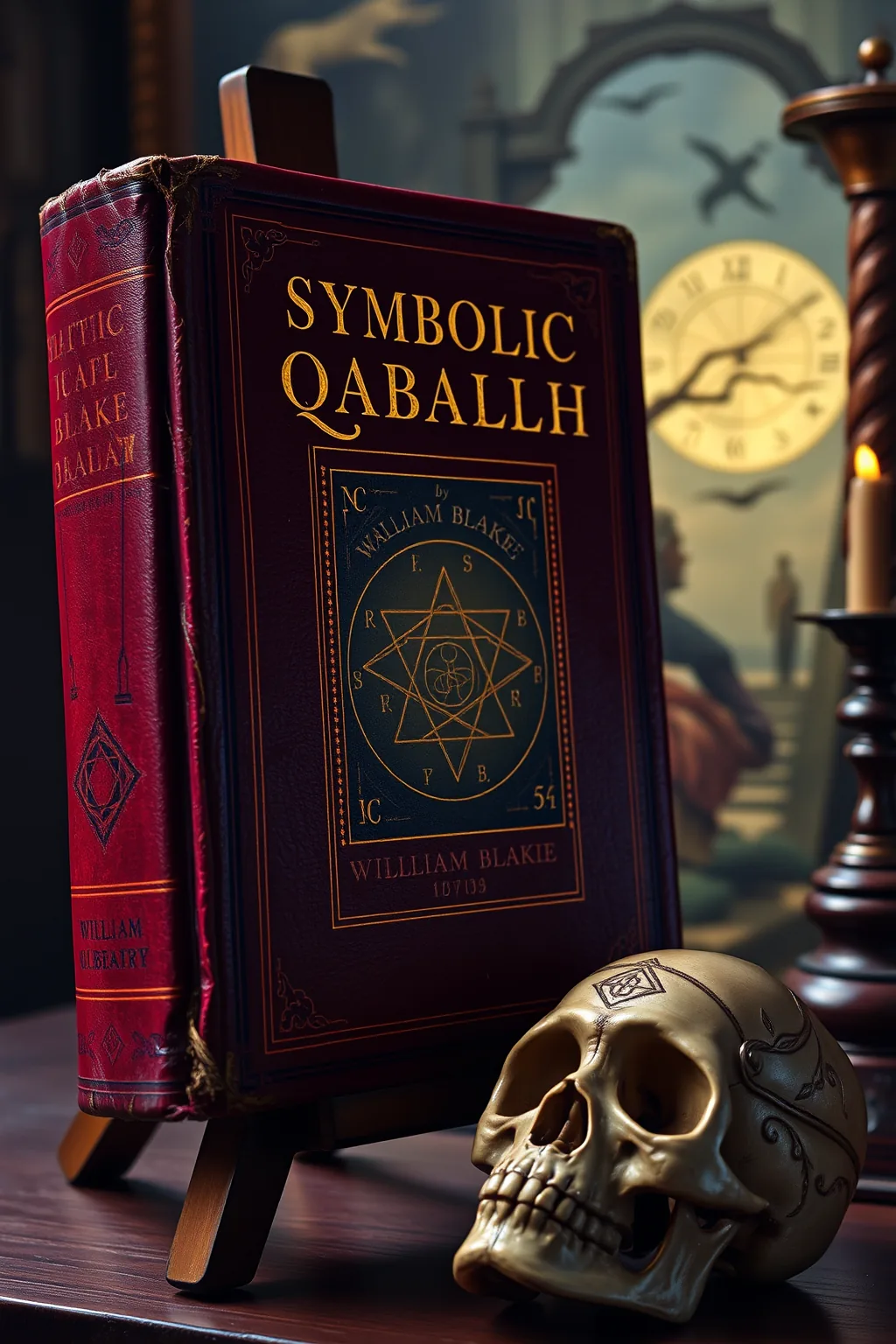
Symbolic Qabalah
 61
61

Symbolic Qabalah



By Silas Hawthorne (Hermetic Studies Editor) — William Blake's 'Symbolic Qabalah' is a radiant beacon in the often-obscure landscape of Kabbalistic studies. Blake's unique genius lies in his ability to translate the abstract mysteries of the Sephiroth and their interrelationships into a vivid, symbolic language that resonates deeply with the soul. This edition, curated by Esoteric Library, meticulously preserves the integrity of Blake's profound insights. It is an essential text for serious students of Western Esotericism, offering not just intellectual understanding, but a pathway to direct experience of the divine emanations. Highly recommended for those seeking to unlock the symbolic language of the cosmos.
📝 Description
61
William Blake's 1921 'Symbolic Qabalah' interprets the Kabbalistic Tree of Life through his unique visionary lens.
Published posthumously in 1921, William Blake's 'Symbolic Qabalah' examines the structure of the Kabbalistic Tree of Life. Blake applies his personal system of symbolism to the traditional Sephiroth and pathways, interpreting them as divine emanations and cosmic principles that also relate to human consciousness. The book details celestial forces and their secret correspondences, aiming to reveal a hidden blueprint within the material world. It discusses the alchemical transformation of the soul and the sacred geometry of creation.
This work is intended for those interested in esoteric traditions and mystical philosophy. It seeks to illuminate ultimate realities and their expression in the physical realm. The text is less a historical account of Qabalah and more a visionary interpretation, blending Blake's own mythology and symbols with traditional Kabbalistic concepts.
William Blake's 'Symbolic Qabalah' fits within the Western Esoteric tradition, specifically bridging Christian mysticism, Hermeticism, and Kabbalah. Blake's unique approach draws from his own visionary experiences and artistic output, reinterpreting the Sephiroth and paths of the Tree of Life through his personal symbolic language. This work is distinct from more academic or purely mystical Kabbalistic studies, instead reflecting Blake's syncretic philosophy and his belief in a divine blueprint underlying all existence.
💡 Why Read This Book?
Embark on a profound exploration of the universe's symbolic language and the hidden architecture of consciousness. 'Symbolic Qabalah' offers Blake's unparalleled vision, revealing the intricate connections between the divine and the human. Ideal for seekers of esoteric wisdom, students of mysticism, and practitioners aiming to deepen their understanding of Kabbalistic principles.
⭐ Reader Reviews
Honest opinions from readers who have explored this book.
❓ Frequently Asked Questions
What is the primary focus of William Blake's 'Symbolic Qabalah'?
The book primarily focuses on interpreting the Kabbalistic Tree of Life through Blake's unique symbolic lens, exploring divine emanations, cosmic principles, and the interconnectedness of existence.
Is this book suitable for beginners in Kabbalah?
While Blake's approach is profound, this edition provides a rich entry point. It's best approached by those with a general interest in mysticism or a willingness to engage with deep symbolism.
What makes William Blake's interpretation of Kabbalah unique?
Blake's interpretation is distinguished by his visionary artistic sensibility, infusing the traditional Kabbalistic framework with his own potent symbolism and psychological insights, creating a deeply personal and universally resonant experience.
How does this book relate to traditional Kabbalistic texts?
It offers a complementary perspective, translating the abstract concepts found in traditional texts like the Zohar into Blake's powerful visual and symbolic language, making them more accessible and experientially relevant.
What esoteric traditions does 'Symbolic Qabalah' draw upon?
While rooted in Jewish Kabbalah, Blake's work also touches upon alchemical symbolism, Gnostic ideas, and his own unique mystical philosophy, creating a rich synthesis of esoteric thought.
🔮 Key Themes & Symbolism
The Tree of Life as Cosmic Blueprint
This theme explores the Kabbalistic Tree of Life, not as a mere diagram, but as the fundamental blueprint of the cosmos and the human soul. Blake illustrates how each Sephiroth represents a stage of divine emanation, a cosmic force, and a psychological faculty. The interconnectedness of these spheres reveals the intricate web of existence, from the highest spiritual realms down to the material plane. Understanding this divine architecture is presented as the key to comprehending the universe's underlying order and one's place within it.
The Language of Divine Symbolism
Blake's genius shines in his ability to translate abstract spiritual concepts into potent, evocative symbols. This theme explores how Blake uses his unique imagery to illuminate the otherwise ineffable nature of the divine. From celestial beings to archetypal forces, each symbol serves as a signpost, guiding the reader through the labyrinthine pathways of spiritual knowledge. The book argues that true understanding comes not from literal interpretation, but from apprehending the symbolic resonance that unlocks deeper layers of meaning.
The Alchemical Journey of the Soul
Within the framework of Kabbalah, Blake introduces the concept of the soul's transformative journey, akin to an alchemical process. This theme examines how the ascent through the Sephiroth mirrors the stages of spiritual purification and enlightenment. It highlights the inner work required to integrate the divine energies, overcome illusions, and achieve a state of wholeness. The book suggests that the Kabbalistic path is fundamentally an alchemical quest for spiritual gold, leading to union with the divine.
💬 Memorable Quotes
Direct passages from the work, attributed to the author.
“To see a World in a Grain of Sand”
— This iconic line captures the microcosmic principle, suggesting that the entirety of existence and divine truth can be perceived within the smallest, most seemingly insignificant element.
“Hold Infinity in the palm of your hand”
— This phrase speaks to the boundless nature of the divine and the potential for human consciousness to grasp or experience the infinite, transcending physical limitations.
“Eternity was in our loops of hair”
— Suggests that the divine and eternal are not external but intrinsically woven into our very being and physical form, a hidden potential within.
“The hours of folly are measured by the clock”
— Contrasts the fleeting nature of mundane time and distractions with the timeless reality of spiritual understanding, highlighting the futility of worldly pursuits.
💡 Key Ideas
Editorial paraphrase of the work's core concepts — not direct quotes.
And a Heaven in a Wild Flower
Extending the microcosm concept, this quote emphasizes the divine presence and sacred beauty found within the natural world, urging a spiritual perception of all creation.
🌙 Esoteric Significance
Tradition
Rooted in Jewish Kabbalah, Blake's 'Symbolic Qabalah' transcends its origins, integrating elements of Christian mysticism, Gnosticism, and Hermetic philosophy. It serves as a bridge between disparate esoteric traditions, demonstrating how the core principles of divine emanation, spiritual ascent, and symbolic representation are universal. Blake's personal visionary system, deeply informed by these traditions, offers a unique and potent interpretation for modern esoteric practitioners.
Symbolism
The book is a detailed look in symbolic language, where the Tree of Life, the Sephiroth, and the Hebrew letters are not merely academic concepts but potent keys to unlocking cosmic consciousness. Blake imbues these traditional symbols with his own powerful imagery, revealing their psychological and spiritual implications. The emphasis is on apprehending the interconnectedness of all things through the symbolic, understanding the hidden correspondences that link the mundane to the divine.
Modern Relevance
In an age often characterized by materialism and disconnection, 'Symbolic Qabalah' offers a potent antidote. Blake's work provides a framework for understanding the deeper spiritual dimensions of life, the power of imagination, and the inherent divinity within humanity. Its exploration of archetypal forces and the soul's journey remains profoundly relevant for those seeking meaning, self-discovery, and a more integrated spiritual practice in the 21st century.
👥 Who Should Read This Book
This profound exploration is essential for students of Western Esotericism, particularly those interested in Kabbalah, mysticism, and the intersection of art and spirituality. Beginners with a sincere curiosity about hidden knowledge will find Blake's symbolic approach informative, though prior familiarity with mystical concepts can enhance understanding. Scholars of religious studies and comparative mysticism will appreciate its unique historical and philosophical context. Seekers of deeper meaning and practitioners of contemplative arts will find it a rich source of inspiration and guidance for their inner work.
📜 Historical Context
William Blake (1757-1827) was a central figure of the Romantic era, a period characterized by a profound reaction against Enlightenment rationalism and a fervent embrace of imagination, emotion, and the spiritual. His work emerged during a time of significant social upheaval, scientific advancement, and burgeoning interest in esoteric philosophies, including Hermeticism, Neoplatonism, and various forms of Kabbalah that were becoming more accessible in England. Blake's unique synthesis of these influences, filtered through his own visionary experiences and artistic genius, set him apart. 'Symbolic Qabalah' reflects this intellectual milieu, offering a deeply personal and revolutionary interpretation of ancient mystical traditions, challenging orthodoxies and forging new pathways for spiritual understanding.
📔 Journal Prompts
Reflect on a moment in your life where you perceived 'a World in a Grain of Sand.' What did this moment reveal?
How does the concept of 'Eternity was in our loops of hair' resonate with your understanding of your own inner being?
Consider one of the Sephiroth. What 'wild flower' or 'grain of sand' in your life embodies its essence?
Blake speaks of 'The hours of folly.' Identify an hour of folly and contrast it with a moment of profound spiritual insight.
Imagine the Tree of Life as a map of your own consciousness. Which Sephiroth are most prominent, and which require further exploration?
🗂️ Glossary
Sephiroth
The ten divine emanations or attributes of God in Kabbalistic cosmology, forming the structure of the Tree of Life. They represent stages of creation and divine manifestation.
Tree of Life (Etz Chaim)
A central mystical symbol in Kabbalah, depicting ten interconnected spheres (Sephiroth) and pathways that represent the universe, God, and the human soul's spiritual journey.
Ein Sof
The Kabbalistic concept of the 'Infinite' or 'Without End,' representing God in His absolute, unknowable, and transcendent state before manifestation.
Keter
The first Sephirah on the Tree of Life, often translated as 'Crown.' It represents the primordial divine will and the highest point of emanation, beyond comprehension.
Malkuth
The tenth and final Sephirah, often translated as 'Kingdom.' It represents the material world, the manifestation of divine energy, and the earthly area of experience.
This book appears in 1 collection
🔮 Readers Also Liked
Browse all →









More by William Blake
All books →





From the “Kabbalah” Collection
View all →






More Free Kabbalah & Jewish Mysticism Books
View all →