Heilsam kochen mit Ayurveda
 80
80

Heilsam kochen mit Ayurveda
Professor Grönemeyer, known for his "Weltmedizin" approach, offers a well-intentioned guide to Ayurvedic cooking. The book's strength lies in its attempt to ground ancient practices in contemporary scientific understanding, making it accessible to a modern audience. However, the integration of modern science feels somewhat generalized, lacking the specific detail one might expect from Grönemeyer's medical background. The passage discussing the impact of *agni* (digestive fire) on nutrient absorption is particularly illustrative of the book's blend of traditional theory and accessible explanation. While the practical recipes are a clear benefit, the overarching scientific rationale could be more robustly presented. It serves as a commendable introduction but doesn't push the boundaries of established Ayurvedic literature significantly. A solid, if not revolutionary, contribution to accessible holistic health.
📝 Description
80
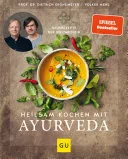
Published in 2021, 'Heilsam kochen mit Ayurveda' connects Ayurveda's ancient healing system to modern science.
This book views Ayurveda as more than a diet; it is a complete system for health achieved through conscious cooking and eating. It combines the ancient Indian healing practices with current scientific understanding. The work is for anyone interested in complete health, natural remedies, and blending old knowledge with today's medicine. Readers will find practical advice for improving their food and way of life using Ayurvedic ideas. It also connects with Professor Grönemeyer's wider 'Weltmedizin' idea.
The book uses Ayurveda's thousands of years of history from India. This tradition connects food, living habits, and health of body and mind. It also considers the scientific study of how food affects health, which grew significantly in the late 20th century. The book places Ayurveda within this ongoing scientific discussion.
Ayurveda, originating in India over 3,000 years ago, is a holistic system concerned with the balance of mind, body, and spirit. It posits that individual health is determined by the interplay of three fundamental energies, or doshas: Vata, Pitta, and Kapha. This book examines how specific foods and preparation methods can influence these doshas, aiming to restore harmony and prevent disease. It situates these ancient principles within contemporary discussions on nutrition and well-being.
💡 Why Read This Book?
• Learn how to identify your unique Ayurvedic constitution (*Prakriti*) and tailor meals accordingly, a core concept from the book's exploration of *doshas*. • Understand the scientific rationale behind specific Ayurvedic cooking techniques, as discussed in relation to balancing *agni* (digestive fire) for better health. • Discover practical, modern recipes designed by Volker Mehl that incorporate Ayurvedic principles, offering a tangible way to implement the wisdom presented by Prof. Dr. med. Dietrich Grönemeyer.
⭐ Reader Reviews
Honest opinions from readers who have explored this book.
❓ Frequently Asked Questions
What is the core philosophy behind 'Heilsam kochen mit Ayurveda'?
The book's core philosophy is that food is medicine, aligning with the ancient Indian science of Ayurveda. It emphasizes personalized nutrition based on individual body types (*doshas*) and the use of specific ingredients and cooking methods to promote balance and well-being.
Who are the authors of 'Heilsam kochen mit Ayurveda'?
The authors are Professor Dr. med. Dietrich Grönemeyer, a proponent of holistic medicine, and Volker Mehl, a culinary expert. Grönemeyer brings his medical perspective, while Mehl contributes expertise in preparing flavorful and health-conscious meals.
When was 'Heilsam kochen mit Ayurveda' first published?
The book was first published on May 5, 2021, making its approach to Ayurvedic cooking relatively contemporary within the broader field of holistic health literature.
What is the concept of 'Weltmedizin' mentioned in relation to this book?
'Weltmedizin' (World Medicine) is Professor Grönemeyer's concept of integrating high-tech medicine, psychosomatics, and natural healing. 'Heilsam kochen mit Ayurveda' fits into this by presenting Ayurveda as a vital component of a comprehensive, global approach to health.
Are the recipes in the book difficult to prepare?
The recipes are generally designed to be accessible, aiming to integrate Ayurvedic principles into everyday cooking. While some ingredients might be less common, the emphasis is on practical application for home cooks.
Does the book explain the different Ayurvedic *doshas*?
Yes, the book explains the fundamental Ayurvedic concepts of the three *doshas* (Vata, Pitta, and Kapha) and how understanding one's dominant *dosha* can inform dietary choices for better health.
🔮 Key Themes & Symbolism
Ayurveda and Modern Science
This theme explores the synergy between the ancient Indian system of Ayurveda and contemporary scientific understanding of nutrition and health. The book highlights how Ayurvedic principles, such as balancing the *doshas* (Vata, Pitta, Kapha), can be interpreted and validated through modern research, bridging traditional wisdom with evidence-based practices. It aims to demonstrate that effective healing cuisine is not an either/or proposition but a synthesis of both.
Personalized Nutrition and Constitution
A central tenet is the concept of individualized dietary needs based on one's unique constitutional type, or *Prakriti*, as defined in Ayurveda. The work guides readers to understand their dominant *dosha* and how this influences their digestive capacity (*agni*) and overall health. This personalization moves beyond generic dietary advice, focusing on how to cook and eat in a way that specifically supports an individual's inherent balance or imbalance (*Vikriti*).
Food as Medicine and Healing
The book operates on the principle that food possesses inherent medicinal qualities capable of restoring and maintaining health. It studies how specific ingredients, spices, and cooking methods, when applied thoughtfully according to Ayurvedic principles, can act as potent remedies for various ailments and contribute to preventative care. The emphasis is on the 'healing' aspect of cooking, transforming daily meals into therapeutic tools.
The Art of Ayurvedic Cooking
Beyond mere nutritional science, this theme focuses on the practical application of Ayurvedic principles in the kitchen. It covers techniques, ingredient choices, and meal planning that align with Ayurvedic philosophy. The goal is to empower readers with the knowledge and skills to prepare delicious, nourishing, and health-promoting meals that are deeply rooted in the Ayurvedic tradition, making holistic health accessible through culinary practice.
💬 Memorable Quotes
Direct passages from the work, attributed to the author.
“Professor Grönemeyer's 'Weltmedizin' concept integrates high-tech, psychosomatics, and natural healing.”
— This highlights Grönemeyer's overarching philosophy, positioning the book's Ayurvedic focus as part of a broader, integrative approach to health that acknowledges multiple dimensions of well-being.
“Understanding one's *dosha* is key to personalized nutrition in Ayurveda.”
— This captures the fundamental Ayurvedic principle that individual constitution dictates optimal dietary choices, moving beyond one-size-fits-all nutritional advice.
“Ayurveda views food as a primary tool for healing and maintaining balance.”
— This emphasizes the book's core message: that culinary practices, when aligned with Ayurvedic wisdom, can be profoundly therapeutic and contribute significantly to overall health.
“Mindful cooking and eating support vital energy (*prana*).”
— This interpretation points to the energetic dimension of food and eating within Ayurveda, suggesting that the process itself, not just the ingredients, impacts vitality.
“The book bridges ancient Indian wisdom with modern scientific insights.”
— This speaks to the book's unique selling proposition: presenting time-tested Ayurvedic practices through a lens that aims to satisfy contemporary scientific inquiry and understanding.
🌙 Esoteric Significance
Tradition
While Ayurveda is primarily considered a traditional medical system, its philosophical underpinnings are deeply rooted in Vedic cosmology and concepts like *Prakriti* (primordial nature) and *Purusha* (consciousness). It shares with Hermeticism and other esoteric traditions an emphasis on microcosm-macrocosm correspondence – the idea that the human body reflects the universe and its energies. This work fits within the modern esoteric movement's exploration of 'ancient wisdom' traditions, seeking practical applications for spiritual and physical well-being.
Symbolism
Key symbols include the *doshas* (Vata, Pitta, Kapha), representing fundamental energetic principles (movement, transformation, structure) that govern all existence, including human physiology and psychology. The concept of *agni* (digestive fire) symbolizes not just physical digestion but also metabolic and transformative processes, crucial for converting food into vitality and consciousness. The *mandala* often implicitly underlies Ayurvedic dietary charts, representing cosmic order and balance applied to the plate.
Modern Relevance
Contemporary thinkers and practitioners in holistic health, integrative medicine, and wellness coaching frequently draw upon Ayurvedic principles for personalized diet and lifestyle recommendations. Schools of yoga and meditation often integrate Ayurvedic concepts into their teachings. Furthermore, the growing field of psychoneuroimmunology (PNI) speaks to Ayurveda's holistic view of mind-body interconnectedness, making Grönemeyer's bridge-building particularly relevant today.
👥 Who Should Read This Book
• Individuals exploring holistic health and natural healing methods, seeking practical dietary advice rooted in a venerable tradition. • Followers of Professor Grönemeyer's 'Weltmedizin' concept, interested in how Ayurveda fits into his integrative approach to health and well-being. • Culinary enthusiasts and home cooks looking to expand their repertoire with health-focused recipes that harmonize with ancient wisdom.
📜 Historical Context
Published in 2021, "Heilsam kochen mit Ayurveda" emerges within a global resurgence of interest in holistic health and ancient healing systems. Ayurveda, originating in India over 3,000 years ago, has seen periods of both integration and marginalization in Western medicine. In the late 20th and early 21st centuries, particularly following figures like Deepak Chopra popularizing it, Ayurveda gained significant traction, often presented alongside other alternative and complementary medicine movements. Grönemeyer's approach, however, distinguishes itself by explicitly attempting to harmonize Ayurvedic tenets with modern scientific findings, a departure from purely traditionalist interpretations. This effort to bridge the gap places it in dialogue with contemporary nutritional science and psychosomatic research, while implicitly contrasting with purely biochemical or pharmaceutical approaches to health that dominated much of 20th-century medicine. The work acknowledges the scientific exploration of diet's impact on health, a field heavily influenced by researchers like Ancel Keys in the mid-20th century, but re-contextualizes it through an Ayurvedic lens.
📔 Journal Prompts
Reflect on your dominant *dosha* (Vata, Pitta, or Kapha) and its potential influence on your current eating habits.
Consider the concept of *agni* and how you might strengthen your digestive fire through mindful cooking.
Identify one Ayurvedic cooking principle from the book that you can integrate into your next meal.
Explore the connection between your emotional state and your food choices, as suggested by the psychosomatic aspects of Ayurveda.
How does the idea of 'food as medicine', central to Ayurveda, challenge or affirm your current beliefs about nutrition?
🗂️ Glossary
Ayurveda
An ancient Indian system of holistic medicine focused on balancing the body, mind, and spirit through diet, lifestyle, herbs, and other natural therapies.
Dosha
The three fundamental bio-energetic forces (Vata, Pitta, Kapha) that govern physiological and psychological functions in Ayurveda. An individual's unique constitution is determined by the balance of these doshas.
Vata
The Ayurvedic *dosha* associated with movement, characterized by qualities like dry, light, cold, and mobile. Imbalances can manifest as anxiety, insomnia, or digestive issues.
Pitta
The Ayurvedic *dosha* associated with transformation and metabolism, characterized by qualities like hot, sharp, oily, and intense. Imbalances can lead to inflammation, anger, or digestive acidity.
Kapha
The Ayurvedic *dosha* associated with structure and lubrication, characterized by qualities like heavy, slow, cold, and stable. Imbalances can manifest as lethargy, congestion, or weight gain.
Prakriti
An individual's unique, innate constitution determined at conception, representing the specific balance of the three *doshas*.
Agni
Literally 'fire,' this refers to the digestive and metabolic fire in Ayurveda. A strong *agni* is crucial for proper digestion, nutrient absorption, and the elimination of toxins.