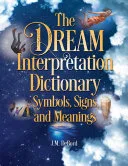
The Dream Interpretation Dictionary
 78
78

The Dream Interpretation Dictionary
J.M. DeBord's "The Dream Interpretation Dictionary" presents a commendable effort to synthesize the vast landscape of dream symbolism into a usable reference. The strength lies in its insistence on personal context, a departure from more rigid, one-size-fits-all dream manuals. For instance, the treatment of the 'house' symbol, often linked to the self, is nuanced, acknowledging variations based on the house's condition and contents. A limitation, however, is the sheer volume of entries, which can sometimes feel overwhelming rather than illuminating, particularly for beginners. The work effectively unpacks the purpose of nightmares, suggesting they can serve as internal alarms rather than mere disturbances. DeBord's approach offers a structured yet flexible tool for self-exploration.
This dictionary is a valuable, albeit dense, resource for serious dream analysts.
📝 Description
78
Published May 22, 2017, J.M. DeBord's The Dream Interpretation Dictionary offers a lexicon for understanding dream symbols.
This dictionary provides a framework for interpreting the symbolic language of dreams, moving beyond simple definitions. It aims to give context and personal meaning to the imagery that appears during sleep. The work acts as a guide to decode the various symbols, signs, and narratives encountered in dreams. It is suited for anyone seeking greater understanding of their dreams, whether they experience recurring visions or are puzzled by specific dream elements. The book is designed for self-reflection, study, and general interest in the subconscious mind's expressions.
DeBord's dictionary emphasizes that dream symbols do not possess fixed meanings. Instead, their interpretation is tied to the dreamer's individual experiences and psychological state. The text highlights the necessity of context when deciphering dream narratives, encouraging readers to see dreams as intricate personal puzzles. Recurring dreams are presented as persistent messages that warrant attention. Nightmares are examined as possible signs of unresolved anxieties or as warnings that can be understood and potentially managed.
The interpretation of dreams has a long history, with ancient civilizations viewing them as divine messages. Modern understanding evolved significantly with figures like Freud and Jung, who introduced psychoanalytic and analytical perspectives. DeBord's 2017 work builds on this legacy, particularly Jungian principles, by offering a contemporary approach. It acknowledges that dream analysis is personal and contextual, focusing on how individual experiences shape the meaning of nocturnal visions.
💡 Why Read This Book?
• Gain a nuanced understanding of dream symbols by exploring their personal and contextual significance, as detailed in the sections on symbols like the 'house' or 'water', moving beyond generic interpretations. • Learn practical methods for deciphering recurring dreams and nightmares, understanding their potential as psychological signals rather than random occurrences, a concept explored in the book's introduction to nightmare analysis. • Develop a personalized approach to dream interpretation by utilizing the dictionary's framework, which encourages connecting dream imagery to your own life experiences, a method emphasized throughout the book's explanatory passages.
⭐ Reader Reviews
Honest opinions from readers who have explored this book.
❓ Frequently Asked Questions
What is the primary focus of J.M. DeBord's The Dream Interpretation Dictionary?
The primary focus is to provide a comprehensive and context-aware guide to understanding dream symbols and their meanings, moving beyond superficial interpretations to offer a deeper personal insight.
How does this dictionary differ from other dream interpretation books?
It emphasizes the personal and contextual nature of dream symbols, suggesting that meanings are not fixed but are derived from the dreamer's individual experiences and psychological state.
Can this book help with understanding recurring dreams?
Yes, the dictionary explores the significance of recurring dreams, viewing them as persistent messages from the subconscious that require attention and analysis for personal growth.
What is the book's perspective on nightmares?
It examines nightmares not just as disturbances but as potential indicators of unresolved anxieties or internal warnings, offering tools to understand and potentially mitigate their impact.
Is The Dream Interpretation Dictionary suitable for beginners?
While comprehensive, its emphasis on personal context and the depth of its entries make it particularly suitable for those committed to serious self-inquiry and dream analysis.
When was The Dream Interpretation Dictionary first published?
The book was first published on May 22, 2017, positioning it as a contemporary guide within the field of dream studies.
🔮 Key Themes & Symbolism
Symbolic Personalization
The work strongly advocates that dream symbols are not universal but deeply personal. It encourages readers to view each symbol through the lens of their own life experiences, memories, and emotional states. For example, a common symbol like 'water' might represent emotional clarity for one dreamer and overwhelming chaos for another, depending on their personal associations and the dream's context. This approach moves away from rigid interpretations and fosters self-discovery.
The Subconscious as a Narrator
DeBord presents dreams as a form of subconscious communication, where symbols and narratives serve as the language. Recurring dreams are highlighted as particularly important messages that the psyche persistently brings to attention, often related to unresolved issues or significant life patterns. Understanding these narratives is framed as a pathway to psychological integration and self-awareness.
Nightmares as Signals
Instead of dismissing nightmares as mere disturbances, the dictionary explores their potential function as 'alarm systems' of the psyche. They can signal deep-seated fears, anxieties, or warnings about potential pitfalls. By analyzing the specific imagery and emotional tone of nightmares, the book suggests that individuals can gain valuable insights into their stressors and work towards resolution.
Contextual Dream Analysis
A central tenet is the critical importance of context in dream interpretation. The dictionary guides readers to consider not only the symbol itself but also its surrounding elements, the dreamer's emotional state within the dream, and the waking life circumstances concurrent with the dream. This holistic approach aims to create a complete picture, akin to solving a personal jigsaw puzzle.
💬 Memorable Quotes
Direct passages from the work, attributed to the author.
“Recurring dreams are persistent messages from the subconscious.”
— This statement emphasizes that dreams repeating over time are not random but carry significant psychological weight, often pointing to unresolved issues or patterns that require conscious attention and processing.
“Nightmares can function as warnings or indicators of deep-seated anxieties.”
— This interpretation frames unsettling dream experiences constructively, suggesting they serve a protective or communicative purpose within the psyche, alerting the individual to potential internal or external challenges.
“Consider the entire dream narrative, not just isolated symbols.”
— This advice points to the importance of a holistic approach to dream analysis, recognizing that the interplay of elements and the overall story contribute to the dream's comprehensive meaning.
“Your personal associations are key to unlocking dream symbolism.”
— This highlights the active role of the dreamer in interpretation, suggesting that the most accurate meanings are derived from connecting dream imagery to one's own unique life experiences and emotional landscape.
💡 Key Ideas
Editorial paraphrase of the work's core concepts — not direct quotes.
The meaning of a dream symbol is not fixed; it is deeply personal and contextual.
This paraphrased concept underscores the book's core philosophy: that universal interpretations of dream symbols are insufficient. It highlights the necessity of exploring individual associations and life circumstances to truly unlock a dream's message.
🌙 Esoteric Significance
Tradition
This work aligns with modern depth psychology and esoteric traditions that view dreams as a direct channel to the subconscious and a source of spiritual or psychological guidance. It draws implicitly from Jungian psychology, which itself integrated esoteric concepts like alchemy and Gnosticism into its framework for understanding the psyche. The emphasis on symbolism and personal meaning connects to Hermetic principles of correspondence and the idea that the inner world mirrors the outer.
Symbolism
The dictionary likely explores symbols such as the 'house' representing the self or psyche, the 'water' symbolizing emotions and the unconscious, and 'flying' potentially indicating freedom or escape. In esoteric traditions, these are often archetypal. The house relates to the temple of the self, water to the primordial abyss or emotional fluidity, and flight to spiritual transcendence or detachment from earthly concerns.
Modern Relevance
Contemporary practitioners of Jungian analysis, transpersonal psychology, and various forms of modern witchcraft or shamanism often utilize dream interpretation as a core practice. Thinkers and groups exploring consciousness, symbolic language, and archetypal psychology find value in structured yet flexible approaches like DeBord's, which aids in working through the symbolic range of the psyche for personal growth and spiritual development.
👥 Who Should Read This Book
['• Aspiring dream analysts and psychology students: Those seeking a comprehensive reference to understand the foundational principles and practical application of dream symbol interpretation.', '• Individuals experiencing recurring or disturbing dreams: Anyone looking for a structured method to decode persistent dream messages and gain insight into subconscious anxieties or unresolved issues.', '• Explorers of consciousness and self-knowledge: Individuals interested in the symbolic language of the mind and seeking tools to deepen their understanding of their inner world and personal psychology.']
📜 Historical Context
The exploration of dream interpretation gained significant traction in the early 20th century with the foundational work of Sigmund Freud and later Carl Jung. Freud's psychoanalytic theories posited dreams as the 'royal road to the unconscious,' primarily dealing with repressed desires. Jung, however, expanded this, introducing the concept of the collective unconscious and archetypes, viewing dreams as compensatory and aiming for psychological wholeness. DeBord's "The Dream Interpretation Dictionary," published in 2017, operates within this Jungian framework, emphasizing the personal context and subjective experience of dream symbols. While Freud's mechanistic approach often sought universal symbols, and Jung provided archetypal frameworks, DeBord's work builds upon this legacy by providing a practical, modern lexicon that prioritizes the individual's unique symbolic language, acknowledging the contemporary psychological landscape where Jungian ideas remain influential among analytical psychologists and depth psychology practitioners.
📔 Journal Prompts
The recurring dream of the 'falling house': what personal instability might this symbolize?
Reflect on the 'water' in your dreams: is it calm, turbulent, or stagnant, and what does this reveal about your emotional state?
Analyze the 'stranger' character in your recent dreams: what aspect of yourself might they represent?
Consider the 'flight' symbols in your dreams: do they represent liberation, escapism, or spiritual ascent?
Explore the 'maze' symbol in your dreams: what challenges or confusions in your waking life does it mirror?
🗂️ Glossary
Archetype
A universal, archaic pattern or image that derives from the collective unconscious and is the psychic counterpart of a myth. In dreams, these often appear as powerful, universally recognizable figures or situations.
Collective Unconscious
A term coined by Carl Jung, referring to a layer of the unconscious psyche common to all humankind, containing archetypes and inherited predispositions.
Nightmare
A disturbing dream associated with intense feelings of fear, anxiety, or terror, often perceived as a signal or warning from the subconscious mind.
Recurring Dream
A dream that repeats over time, often with the same or similar content, typically indicating a persistent psychological issue or message that requires attention.
Symbol
An image, word, or object that represents something else, especially a material object representing something abstract or spiritual. In dreams, symbols are the language of the subconscious.
Subconscious Mind
The part of the mind of which we are not aware but which influences our actions and feelings; the seat of intuition, memory, and the symbolic processing of dreams.
Waking Life Context
The circumstances, events, and emotional states present in a person's conscious, everyday reality, which are crucial for interpreting the personal meaning of dream symbols.