The good, the bad, and the undead
 73
73

The good, the bad, and the undead
Kim Harrison’s “The Good, the Bad, and the Undead” throws readers headfirst into a Cincinnati teeming with vampires, witches, and other creatures of the night. The premise of Rachel Morgan, a bounty-hunting witch for the FIB, is immediately engaging, promising a blend of action and supernatural intrigue. Harrison excels at establishing a dense, lived-in world from the outset, making the coexistence of mundane and magical feel plausible. The central mystery surrounding the death of a powerful vampire is compelling, driving the plot forward with a satisfying pace. However, the sheer volume of world-building and character introductions can occasionally feel overwhelming, particularly in the early chapters. While Rachel’s internal monologue provides much of the narrative voice, some of the supporting characters, though intriguing, remain somewhat underdeveloped in this initial installment. Despite these minor quibbles, Harrison delivers a solid, entertaining entry into the urban fantasy landscape. The book offers a promising start to a long-running series, establishing its unique voice and setting.
📝 Description
73
Kim Harrison's 2005 novel, "The Good, the Bad, and the Undead," launched The Hollows series with a witch bounty hunter in Cincinnati.
Rachel Morgan, a witch working as a bounty hunter for the Federal Indivisible Bureau, is the focus of Kim Harrison's 2005 debut novel, "The Good, the Bad, and the Undead." This story plunges readers into a Cincinnati where vampires, demons, and other supernatural beings live alongside humans, largely unseen. Rachel finds herself caught in a conspiracy that threatens the uneasy peace between these different species, forcing her to confront dangerous elements of both the human and supernatural worlds.
The novel appeals to fans of urban fantasy who enjoy fast-paced narratives and strong, independent female leads. It delves into themes of identity, loyalty, and the challenges of survival when the magical and mundane intersect. Readers who appreciate detailed world-building and characters grappling with complex moral situations will find this entry engaging.
Published in 2005, "The Good, the Bad, and the Undead" arrived as urban fantasy gained prominence. Following in the vein of authors like Laurell K. Hamilton and Charlaine Harris, Harrison contributed to the subgenre's growth. Her work distinguished itself with a focus on a witch protagonist, a detailed magical system, and a darker, more politically charged supernatural society. The novel introduces concepts like "Hollows" for supernatural enclaves and "Inderland" for the hidden magical world, alongside the significance of "ley lines" as conduits of magical energy.
💡 Why Read This Book?
• Gain insight into the foundational lore of "The Hollows" series, including the concept of "Hollows" as supernatural enclaves, which is crucial for understanding subsequent installments. • Experience the character of Rachel Morgan, a witch working as an independent bounty hunter, whose journey through moral ambiguities and dangerous situations defines the series' early arc. • Explore the intricate political landscape of Cincinnati's supernatural community, where vampires, witches, and other beings navigate a fragile truce enforced by the FIB.
⭐ Reader Reviews
Honest opinions from readers who have explored this book.
❓ Frequently Asked Questions
When was "The Good, the Bad, and the Undead" first published?
"The Good, the Bad, and the Undead" by Kim Harrison was first published in 2005, marking the beginning of "The Hollows" series.
Who is the main protagonist of the book?
The main protagonist is Rachel Morgan, a witch who works as a bounty hunter for the Federal Indivisible Bureau (FIB).
What supernatural beings are featured in "The Good, the Bad, and the Undead"?
The book features a variety of supernatural beings, including vampires, witches, demons, and possibly other species, all coexisting within a hidden society.
What is the setting for "The Good, the Bad, and the Undead"?
The primary setting is Cincinnati, Ohio, which serves as the backdrop for the interwoven supernatural and human worlds.
Is "The Good, the Bad, and the Undead" part of a series?
Yes, "The Good, the Bad, and the Undead" is the first book in Kim Harrison's "The Hollows" series, which has many subsequent installments.
What is the FIB in the context of the book?
The FIB (Federal Indivisible Bureau) is a law enforcement agency that polices supernatural activity, with Rachel Morgan working as one of its bounty hunters.
🔮 Key Themes & Symbolism
Supernatural Coexistence
The novel explores the delicate balance between human and supernatural societies. It posits a world where vampires, witches, and demons operate within established territories and laws, often concealed from human awareness. The narrative explores the inherent tensions and potential conflicts arising from this coexistence, particularly when species' laws are broken, as seen with the murder of the vampire council member, and the subsequent investigation that Rachel Morgan undertakes.
Identity and Morality
Rachel Morgan’s role as a bounty hunter for the FIB forces her to confront complex moral dilemmas. She operates in a gray area, tasked with apprehending supernatural fugitives, which often involves difficult choices and questioning the established order. Her personal struggles with her own witch identity and her place in the world are central, as she grapples with loyalty, betrayal, and the consequences of her actions in a world where lines between good and evil are frequently blurred.
The Structure of Power
"The Good, the Bad, and the Undead" establishes a hierarchy and political structure within the supernatural community. This includes the vampire council, witch covens, and the overarching authority of the FIB, which attempts to maintain order. The book examines how power is wielded, the inherent conflicts between different species' interests, and the challenges of enforcing laws across diverse supernatural factions. The investigation into the vampire's death reveals underlying power struggles and conspiracies.
Urban Magic Systems
Harrison constructs a tangible magic system deeply embedded within an urban environment. Ley lines, ley line energy, and the use of spells are depicted as practical tools and forces that characters manipulate. The magic is not purely ethereal but has rules and consequences, often tied to specific locations or objects. This grounding of magic in the mundane world is a hallmark of the urban fantasy genre and is central to Rachel's abilities and the challenges she faces.
💬 Memorable Quotes
Direct passages from the work, attributed to the author.
“A witch’s power was only as good as her control.”
— This statement underscores the practical, disciplined nature of witchcraft as depicted in the series. It suggests that raw magical ability is insufficient without the mental fortitude and training to wield it effectively and safely.
“The FIB was good at keeping the peace, but not necessarily at finding the truth.”
— This highlights the institutional limitations and potential biases of the Federal Indivisible Bureau. It implies that while the FIB might enforce rules, their investigations could be compromised by politics or a focus on maintaining appearances rather than uncovering genuine justice.
“Vampires were a law unto themselves, and the laws they made were usually about death and power.”
— This interpretation of vampire society emphasizes their predatory nature and self-serving governance. It suggests a culture driven by dominance and survival, where their own species' interests and capacity for violence dictate their societal structure.
“Inderland was a secret that most humans would never know.”
— This phrase refers to the hidden supernatural world coexisting with the human one. It emphasizes the carefully guarded nature of this reality and the vast majority of humanity's ignorance regarding the existence of magical beings.
“Rachel knew that sometimes you had to break a few rules to survive.”
— This reflects Rachel Morgan's pragmatic approach to her dangerous profession. It suggests a moral flexibility born from necessity, where adherence to strict protocols might not always be feasible or beneficial in her line of work.
🌙 Esoteric Significance
Tradition
While "The Good, the Bad, and the Undead" is primarily a work of urban fantasy fiction, its exploration of witches, covens, and magical energy aligns loosely with modern interpretations of Wicca and various Neopagan traditions. The concept of ley lines also draws from earth-based spiritual practices. However, Harrison's approach is more secular and action-oriented than strictly esoteric, focusing on the fictional mechanics of magic within a structured society rather than deep theological or philosophical underpinnings.
Symbolism
Ley lines are a key symbol, representing conduits of magical power that crisscross the earth, much like energetic pathways in spiritual traditions. They are depicted as vital resources that can be tapped for spellcasting, signifying the earth's inherent magical potential. The FIB serves as a symbol of order and control within the supernatural world, representing the attempt to regulate powerful, often chaotic, forces and maintain a semblance of balance between species.
Modern Relevance
Contemporary urban fantasy writers and readers continue to draw inspiration from Harrison's detailed world-building and character archetypes. The series' exploration of supernatural law and inter-species politics speaks to modern discussions about societal structures and power dynamics, albeit within a fantastical context. The depiction of magic as a functional, integrated element of society also appeals to those interested in modern magical fiction and its evolving portrayals.
👥 Who Should Read This Book
• Fans of intricate urban fantasy worlds seeking a series with extensive lore and character development, particularly those who enjoy supernatural law enforcement narratives. • Readers interested in protagonists who navigate morally ambiguous situations, like Rachel Morgan, a witch bounty hunter facing difficult choices. • Enthusiasts of magic systems grounded in a contemporary setting, appreciating how concepts like ley lines and spells are integrated into a believable, albeit hidden, society.
📜 Historical Context
Kim Harrison’s "The Good, the Bad, and the Undead," released in 2005, arrived during a golden age for urban fantasy. The genre was rapidly expanding, building on foundations laid by authors like Laurell K. Hamilton and Charlaine Harris, whose respective Anita Blake and Sookie Stackhouse series had already popularized supernatural heroines navigating complex, often dangerous, worlds. Harrison’s contribution was to center her narrative on a witch, Rachel Morgan, and to craft a richly detailed magical system intertwined with a strong law-enforcement element via the FIB. This period saw a surge in demand for stories featuring strong female leads in paranormal settings, often with a blend of mystery, action, and burgeoning romance. The book's reception was positive, contributing to the growing popularity of the subgenre and establishing "The Hollows" as a significant series within the field of contemporary supernatural fiction.
📔 Journal Prompts
Rachel Morgan’s dual role as a witch and an FIB agent. How does this create internal conflict?
The concept of Inderland and its separation from the human world. What are the implications of this divide?
The vampire council’s laws. What do they reveal about vampire society?
The use of ley lines as sources of magical energy. How might this concept be applied in practical magic?
Character motivations following the events of the book. Consider Trent Kalamack's role.
🗂️ Glossary
Hollows
Designated territories or enclaves where supernatural beings, such as vampires and witches, live and operate, often hidden from human society.
Inderland
The hidden supernatural world that exists parallel to the human world, comprising various communities and species.
FIB (Federal Indivisible Bureau)
A law enforcement agency responsible for monitoring and regulating supernatural activity and enforcing laws between different species.
Ley Lines
Invisible lines of magical energy that crisscross the earth, serving as conduits or sources of power that can be utilized by magic users.
Witch
An individual possessing magical abilities, often organized into covens, who can cast spells and manipulate various forms of energy.
Vampire Council
The governing body for vampires, responsible for maintaining order and enforcing rules within their species.
Bounty Hunter
An individual, like Rachel Morgan, who tracks down and captures fugitives, often for a monetary reward, working within or alongside law enforcement.
🔮 Readers Also Liked
Browse all →

More by Kim Harrison
All books →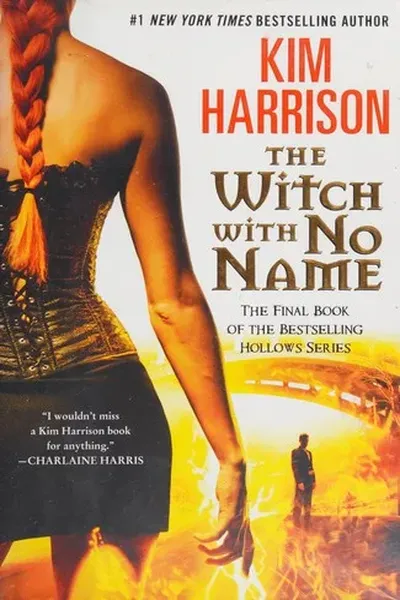
More Free Occult Philosophy Books
View all →