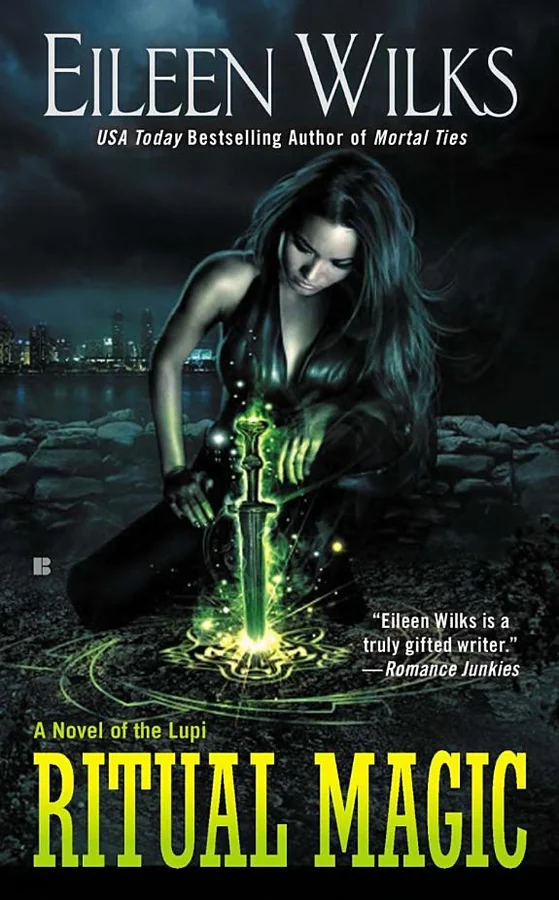
Ritual Magic
 74
74

Ritual Magic
Eileen Wilks’s "Ritual Magic" presents an intriguing premise: an FBI agent, Lily Yu, confronts a magical threat that steals memories. The novel excels in its depiction of the cascading chaos such an event unleashes, particularly on Lily’s mother, whose life regresses. Wilks’s strength lies in grounding these otherworldly phenomena in the visceral reactions of her characters, making the supernatural feel disturbingly personal. However, the narrative occasionally strains under the weight of its own lore, with the introduction of multiple supernatural factions and a sprawling cast sometimes diluting the central mystery. The abrupt re-appearance of a character near the end, while intended to be impactful, feels somewhat underdeveloped within the immediate context. Despite these minor stumbles, the book offers a compelling glimpse into the darker corners of the paranormal world, where ancient forces can manifest through profoundly intimate attacks.
📝 Description
74
Eileen Wilks's 2013 novel, Ritual Magic, investigates supernatural events affecting FBI agent Lily Yu.
Ritual Magic is a contemporary urban fantasy novel that centers on FBI agent Lily Yu. She finds herself investigating a series of inexplicable events that directly impact those close to her. At the core of the narrative is a mysterious affliction causing profound, age-specific memory loss. This condition suggests forces operating far beyond ordinary comprehension, drawing Yu into the hidden supernatural world.
The novel is suited for readers who enjoy a blend of genres, particularly the occult and procedural crime fiction. Those familiar with paranormal romance that leans towards investigation will find recognizable elements. The story also appeals to readers interested in how supernatural threats affect individuals psychologically. It grounds arcane concepts within relatable human struggles, making the extraordinary feel grounded.
Published in 2013, Ritual Magic builds upon the urban fantasy tradition established in the early 2000s. Authors like Jim Butcher and Patricia Briggs had already merged supernatural elements with everyday settings. Wilks's work distinguishes itself by focusing on a specific, ritualistic threat tied to family and memory, moving beyond more generalized magic systems.
This novel positions ritual magic not as simple spellcasting but as a focused manipulation of unseen energies. It suggests these forces have tangible results, particularly in targeting core aspects of identity like memory. The narrative explores the consequences of such psychic or magical attacks on individuals, their families, and society. It examines how these esoteric practices manifest within a modern, urban setting, contrasting with older, more generalized magical systems.
💡 Why Read This Book?
• Gain insight into the nature of memory as a psychic anchor, a concept explored through Lily's mother's affliction, offering a unique perspective on identity. • Understand the mechanics of "ritual magic" as depicted in Wilks's 2013 novel, moving beyond simple spellcasting to examine its targeted, consequence-driven application. • Experience the blend of supernatural investigation and personal stakes, particularly concerning the Lupi community and Lily Yu's role within it, providing a distinct narrative flavor.
⭐ Reader Reviews
Honest opinions from readers who have explored this book.
❓ Frequently Asked Questions
What is the primary conflict in Eileen Wilks's "Ritual Magic"?
The primary conflict revolves around FBI agent Lily Yu investigating a mysterious affliction that causes severe, age-specific memory loss in her mother and others, hinting at a dark, ritualistic magical attack.
What supernatural elements are present in "Ritual Magic"?
The novel features elements of urban fantasy, including magic, supernatural beings (specifically referencing the Lupi community), and psychic or magical attacks that have tangible, detrimental effects on individuals.
Who is Lily Yu, and what is her role in the story?
Lily Yu is an FBI agent and the protagonist of "Ritual Magic." She uses her investigative skills to uncover the source of the magical threat affecting her mother and others, navigating both the mundane and supernatural worlds.
What makes the memory loss described in the book unique?
The memory loss is unique because it appears to be a targeted, supernatural event, causing individuals to lose all memories beyond a specific early age, suggesting a deliberate magical assault rather than a natural cause.
When was Eileen Wilks's "Ritual Magic" first published?
Eileen Wilks's "Ritual Magic" was first published on September 3, 2013.
Does "Ritual Magic" involve traditional spellcasting or ritual instructions?
No, "Ritual Magic" is a novel that explores the *consequences* of ritual magic within a narrative framework, rather than providing instructions for performing rituals or casting spells.
🔮 Key Themes & Symbolism
Memory as a Psychic Target
The novel powerfully illustrates how memory, a fundamental aspect of identity, can be targeted by supernatural forces. The affliction striking Lily's mother, erasing decades of experience, highlights the vulnerability of the self to esoteric attacks. This concept moves beyond physical harm to explore existential damage, questioning who a person is when their past is stolen, a central concern in many occult traditions focused on consciousness and spiritual essence.
The Lupi Community and Lineage
Within the narrative, the Lupi community represents a hidden society with its own rules, hierarchies, and supernatural abilities. The book touches upon themes of inherited traits and the burdens or powers passed down through generations. This exploration of a specific supernatural lineage, with its inherent connections and potential conflicts, reflects traditional esoteric concerns about bloodlines, ancestral spirits, and the manifestation of innate magical potential.
Urban Fantasy and Esoteric Integration
"Ritual Magic" exemplifies the modern urban fantasy genre's capacity to integrate complex esoteric concepts into a contemporary setting. By placing supernatural events within the framework of an FBI investigation, Wilks grounds arcane phenomena in relatable procedural structures. This approach makes abstract occult ideas, such as targeted magical assaults and hidden supernatural societies, accessible to a wider audience, demonstrating the genre's role in popularizing esoteric thought.
The Nature of Dark Magic
The antagonist's power is characterized as 'darker than magic,' suggesting a force that operates with malevolent intent and profound destructive capability. The novel probes the idea that such magic is not merely potent but intrinsically corrupting or violating, targeting essential aspects of life like memory and connection. This aligns with esoteric philosophies that differentiate between constructive, natural magic and destructive, unnatural forces that disrupt cosmic balance.
💬 Memorable Quotes
Direct passages from the work, attributed to the author.
“Lily’s mother suddenly loses all memory beyond the age of twelve.”
— This important event introduces the core supernatural conflict, framing the narrative around a targeted assault on identity and personal history, a common theme in occult fiction exploring the fragility of the psyche.
“Lily knows her mother was attacked by something more than magic. More . . . and darker.”
— This highlights the narrative's intention to explore a threat that transcends conventional understanding of magic, hinting at primordial, malevolent forces and a deeper, more sinister occult power at play.
“When Lily and Rule discover that others suffered the same, mysterious loss—at the same time on the same night—their investigation into the darkness begins.”
— This detail establishes the ritualistic and widespread nature of the attack, suggesting a coordinated magical operation and broadening the scope of the investigation into a larger conspiracy within the supernatural world.
“Joining them is someone Lily never thought she’d see again”
— This foreshadows a significant character re-introduction, hinting at past entanglements and unresolved relationships that will likely intersect with the unfolding supernatural mystery, adding personal drama to the occult elements.
“The novel centers on FBI agent Lily Yu confronting a supernatural threat.”
— This expresses the book's genre blend: the procedural elements of FBI work are directly confronted by paranormal phenomena, creating a unique tension between the rational and the arcane.
🌙 Esoteric Significance
Tradition
While "Ritual Magic" is primarily an urban fantasy novel, its narrative draws loosely from Western esoteric traditions concerning the power of intention, symbolic acts (rituals), and the interconnectedness of consciousness. It doesn't strictly adhere to Hermeticism or Kabbalah but reflects a popular culture interpretation of magic as a force that can manipulate reality, consciousness, and even identity, often through focused will and symbolic actions, a concept explored across various occult philosophies.
Symbolism
The central symbol is the forced regression of memory, representing a profound violation of selfhood and personal history. This act symbolizes the destruction of one's accumulated spiritual and experiential knowledge, a core concern in traditions that view memory and experience as integral to soul development. The Lupi, as a specific supernatural lineage, also function symbolically, representing the hidden, instinctual, and often hereditary aspects of the supernatural world that interact with human society.
Modern Relevance
Contemporary urban fantasy authors and practitioners of modern witchcraft often draw inspiration from works like "Ritual Magic" for their ability to contextualize esoteric concepts within relatable, modern narratives. The novel's exploration of psychic attacks and the manipulation of consciousness can resonate with those interested in modern energy work, psychic self-defense, and the psychological impacts of spiritual practices. It contributes to the ongoing popularization and reinterpretation of occult themes for a contemporary audience.
👥 Who Should Read This Book
• Fans of urban fantasy seeking narratives that blend supernatural mysteries with relatable characters and everyday settings, offering a departure from purely action-focused plots. • Readers interested in the psychological impact of magical or psychic attacks, particularly how such events can affect memory, identity, and familial relationships. • Enthusiasts of paranormal romance who appreciate stories with strong romantic subplots woven into a larger, darker supernatural conflict, featuring complex character dynamics.
📜 Historical Context
Eileen Wilks’s "Ritual Magic," published in 2013, arrived during a mature phase of the urban fantasy boom, a genre that had gained significant traction throughout the 2000s. Authors like Charlaine Harris with her Southern Vampire Mysteries (starting 2001) and Laurell K. Hamilton with her Anita Blake series (starting 1993) had already established a strong market for supernatural narratives set in contemporary cities, often featuring strong female protagonists and romantic subplots. Wilks’s work built upon this established framework by introducing a specific, ritualistic form of magical attack targeting memory, differentiating her approach from the more common vampire or werewolf tropes dominating the period. The novel’s exploration of a hidden supernatural world coexisting with mundane reality, and the introduction of specific factions like the Lupi, aligns with the genre's tendency to create intricate mythologies. While not directly engaging with a specific school of thought in the way earlier occult revival authors might have, Wilks’s work reflects a broader cultural interest in esoteric themes, albeit filtered through a popular fiction lens.
📔 Journal Prompts
The nature of Lily's mother's memory loss and its impact on her identity.
Ritualistic attacks and their potential for causing profound psychological damage.
The dynamics and inherent conflicts within the Lupi community.
The intersection of FBI investigation techniques and supernatural phenomena.
The concept of 'darker than magic' forces and their manifestation.
🗂️ Glossary
Lupi
A specific supernatural community or species featured in Eileen Wilks's novels, often depicted as werewolf-like or possessing related shapeshifting abilities and a distinct social structure.
Ritual Magic
In the context of the novel, this refers to the deliberate use of supernatural forces or energies, often through focused intent and symbolic actions, to effect change in the physical or psychic world, distinct from innate magical abilities.
Memory Loss
A central plot element where characters inexplicably lose significant portions of their memories, particularly those beyond a certain childhood age, presented as a targeted supernatural attack.
Psychic Attack
An act of aggression using supernatural or paranormal means to harm or influence an individual's mind, emotions, or spiritual well-being, as opposed to physical harm.
Supernatural Lineage
The concept that certain supernatural traits, abilities, or curses are passed down through family lines, influencing individuals from birth and shaping their destiny within a hidden world.
Esoteric
Relating to or concerned with the occult or supernatural; intended for or understood by only a small number of people with a specialized knowledge or interest.
Urban Fantasy
A subgenre of fantasy that incorporates supernatural or magical elements into a contemporary urban setting, often featuring protagonists who straddle the line between the mundane and the magical worlds.
This book appears in 1 collection
🔮 Readers Also Liked
Browse all →








From the “Ritual Magic” Collection
View all →





More Free Magic & Ritual Books
View all →