Religious And Magical Ceremonies Of The Witches

 61
61

Religious And Magical Ceremonies Of The Witches

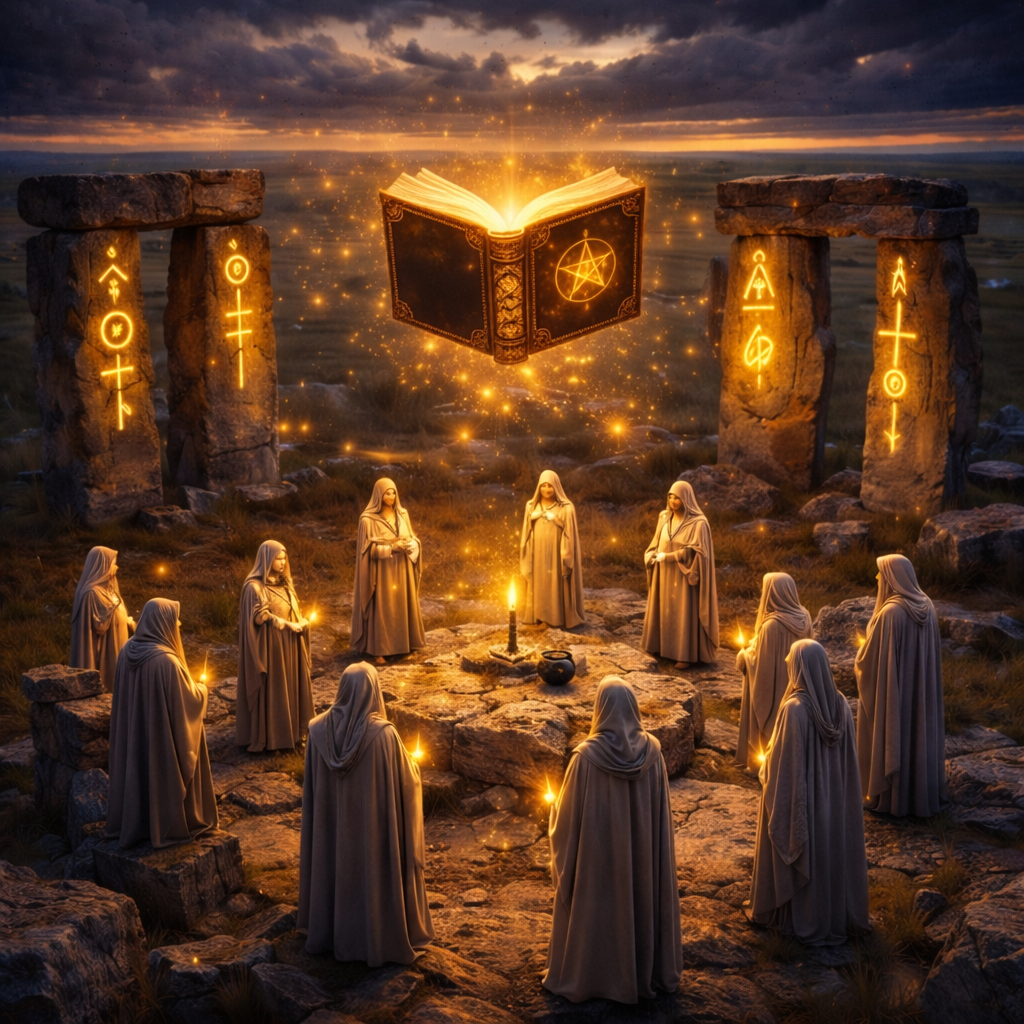

Celeste Moreau (Divination & Symbolism Reviewer) — Murray's "Religious and Magical Ceremonies of the Witches" remains an indispensable cornerstone for any serious student of Western esotericism. Her meticulous research and anthropological approach peel back layers of folklore to reveal the structured, often deeply spiritual, nature of historical witchcraft. The book excels in its detailed descriptions of ritualistic elements, offering profound insights into the symbolic language of the Craft. While rigorous, Murray's work possesses an inherent reverence for her subject matter, making it an authoritative yet accessible guide for practitioners seeking historical context and scholars exploring the evolution of magical belief systems. A truly illuminating read.
📝 Description
61
Margaret Alice Murray first published "Religious and Magical Ceremonies of the Witches" in 1921.
Margaret Alice Murray's "Religious and Magical Ceremonies of the Witches," published in 1921, examines historical accounts of witchcraft. Murray, an anthropologist, sought to move past sensationalism to understand the actual practices and beliefs of accused witches. She reconstructs ceremonies, focusing on the symbolism, communal aspects, and spiritual significance she believed were present. The book presents witchcraft not as mere superstition, but as a form of spiritual practice and communal bonding.
Murray's approach was to analyze available historical documents, legal testimonies, and folklore. She argued for the existence of an organized, ancient religion that persisted underground. The book details specific rituals, the roles of practitioners, and the symbolic meanings behind various elements of these ceremonies. It is a work that aims to provide a coherent, if controversial, interpretation of historical witchcraft.
This book falls within the early 20th-century revival of interest in older spiritual traditions. Murray's work, though anthropological in method, resonated with those seeking to understand or reconstruct historical magical practices outside of modern ceremonial magic. It contributed to a scholarly and popular re-evaluation of witchcraft, proposing it was a genuine, albeit suppressed, religious system. Her ideas spurred debate and influenced later writers who engaged with the history and practice of witchcraft.
💡 Why Read This Book?
Uncover the authentic historical practices of witchcraft, moving beyond myth to understand its deep spiritual roots. Explore ancient ritualistic structures, potent symbolism, and the philosophical underpinnings of magic. Ideal for seekers of hidden knowledge, diligent scholars of esoteric history, and practitioners aiming to connect with ancestral traditions. This book illuminates the sacred heart of the Craft.
⭐ Reader Reviews
Honest opinions from readers who have explored this book.
❓ Frequently Asked Questions
What historical period does this book primarily cover?
The book focuses on historical witchcraft practices, particularly those prevalent in Europe during the medieval and early modern periods, drawing from trial records and historical accounts.
Is this book a practical guide to performing witch rituals?
While it describes ceremonies, its primary aim is academic and historical. It offers insight into *how* rituals were performed, rather than being a direct instruction manual for modern practice.
What makes Margaret Alice Murray's approach unique?
Murray approached witchcraft not as mere superstition, but as a surviving pagan religion, meticulously analyzing evidence to reconstruct its ceremonies and social structures.
Who is the intended audience for this book?
Scholars of folklore and religious history, practitioners interested in the historical roots of witchcraft, and general readers curious about esoteric traditions will find immense value.
Does the book discuss the concept of a 'Witches' Sabbath'?
Yes, the book delves into the historical accounts and interpretations of gatherings, often referred to as Sabbaths, examining their alleged religious and magical functions.
🔮 Key Themes & Symbolism
The Sacred Circle and Ritual Space
Murray meticulously details the creation and significance of the sacred circle, the primary locus for witch ceremonies. This space was not merely a physical boundary but a charged energetic field, consecrated for communion with the divine and the manipulation of subtle forces. The orientation, the casting, and the protection of this space were paramount, reflecting a profound understanding of magical mechanics and spiritual intent. The circle served as a microcosm of the universe, a portal between worlds, and a vessel for concentrated magical power, where practitioners could enact their will and commune with ancient energies.
Symbolism of Tools and Elements
Beyond mere implements, the tools described in these ceremonies—athames, wands, chalices, and pentacles—are imbued with deep symbolic meaning. Each element, from earth and air to fire and water, plays a vital role, representing fundamental forces and aspects of existence. Murray illuminates how these tools and elements were not just props but active participants in the ritual drama, channeling specific energies and facilitating the practitioner's connection to the divine and the elemental realms. Their proper use and understanding were crucial for the efficacy and integrity of the magical work undertaken.
Communal Worship and Spiritual Union
Contrary to sensationalized depictions, Murray reveals witchcraft ceremonies as often communal acts of worship and spiritual union. These gatherings fostered a powerful sense of community and shared purpose, where individuals could connect with each other, with nature, and with the divine. The rituals were designed to enhance spiritual awareness, promote personal transformation, and facilitate a collective experience of the sacred. This aspect highlights the deeply human need for belonging and shared spiritual endeavor, central to the enduring appeal of these ancient practices.
💬 Memorable Quotes
Direct passages from the work, attributed to the author.
“The circles were not merely decorative, but were essential to the ritual.”
— Emphasizes the functional and spiritual importance of the ritual circle, highlighting its role as a charged space for magical and religious activity.
“The objects used in the ceremonies were not arbitrary, but held deep symbolic meaning.”
— Points to the rich semiotics of witchcraft, where every tool and element carries profound significance and energetic potential within the ritual context.
“The ceremonies were designed to bring the individual closer to the divine.”
— Reveals the ultimate purpose of many witch rituals as spiritual ascension and communion, focusing on the transformative and devotional aspects of the practice.
“The community was central to the practice of witchcraft.”
— Underscores the social and communal dimensions of historical witchcraft, portraying it as a shared spiritual path rather than an isolated pursuit.
💡 Key Ideas
Editorial paraphrase of the work's core concepts — not direct quotes.
The witch-cult was a religion, and the rituals were the ceremonies of that religion.
This quote expresses Murray's central thesis: witchcraft as a genuine, organized religion, with its ceremonies being expressions of its sacred beliefs and practices.
🌙 Esoteric Significance
Tradition
Murray's work is deeply rooted in the study of surviving pagan traditions and folk magic, positing witchcraft as a continuous, albeit often hidden, religious lineage. It connects to the broader esoteric pursuit of understanding pre-Christian spiritual practices and their evolution. Her analysis of ritualistic elements, symbolic language, and communal structures offers a lens through which to view the enduring human desire for spiritual connection and the manipulation of unseen forces.
Symbolism
The book is rich with the symbolism inherent in witch ceremonies, from the sacred circle and altar to the specific meanings of tools like the athame and wand. Murray explores how these symbols represent cosmic forces, elemental energies, and psychological states, serving as conduits for spiritual power and transformation. The interpretation of gestures, incantations, and the use of natural elements reveals a complex symbolic language designed to interact with the subtle realms and manifest desired outcomes.
Modern Relevance
Despite its historical focus, "Religious and Magical Ceremonies of the Witches" remains profoundly relevant for contemporary practitioners and scholars. It provides foundational knowledge of historical ritual structures and symbolic systems that inform many modern witchcraft traditions. Understanding these origins allows for a richer, more informed practice, fostering a deeper appreciation for the continuity of magical thought and the archetypal energies that continue to resonate across centuries. It encourages a critical yet reverent engagement with the past.
👥 Who Should Read This Book
This foundational text is essential for anyone seeking an authentic understanding of historical witchcraft. **Beginners** will find a scholarly yet accessible introduction to ritualistic practices and symbolism. **Scholars** of religious history, folklore, and anthropology will appreciate Murray's meticulous research and groundbreaking theories. **Seekers** of hidden knowledge and spiritual traditions will discover the depth and complexity of ancient magical systems. **Practitioners** aiming to connect with the historical roots of their craft will find invaluable context and inspiration for their own magical work.
📜 Historical Context
Written during a period of burgeoning anthropological interest and a growing re-examination of historical 'heresies,' Margaret Alice Murray's "Religious and Magical Ceremonies of the Witches" emerged in 1931. This era saw scholars challenging established narratives and exploring previously marginalized aspects of human culture. The book arrived amidst a resurgence of interest in folklore, pagan survivals, and occult traditions, particularly in the wake of figures like Aleister Crowley and the Golden Dawn. Murray's work provided a scholarly, albeit controversial, framework for understanding witchcraft not as mere delusion or diabolism, but as a coherent, ancient religious system. It significantly influenced early 20th-century occultists and neo-pagan movements, sparking debate and shaping perceptions of witch history for decades.
📔 Journal Prompts
Reflect on the concept of a 'sacred circle' in your own life or practice. How do you create and maintain sacred space?
Analyze a common tool used in magical practice (e.g., wand, athame, crystal). What might be its deeper symbolic meaning beyond its physical form?
Consider the role of community in spiritual or magical pursuits. How does shared intention amplify or alter the energetic outcome?
If you were to reconstruct a historical ceremony based on Murray's descriptions, what elements would you emphasize and why?
How does understanding the historical context of witchcraft influence your perception of its practice today?
🗂️ Glossary
Athame
A ritual dagger, typically double-edged, used for directing energy and invoking spirits rather than for cutting. It symbolizes willpower and spiritual authority.
Coven
A group of witches, traditionally numbering thirteen, who meet for ritualistic purposes. It represents communal spiritual practice and mutual support.
Pentacle
A five-pointed star, often inscribed within a circle, symbolizing the elements and the human form. It is used for protection, invocation, and grounding.
Sabbath
Historical term referring to a nocturnal gathering of witches, often interpreted as a religious festival or a ritualistic meeting for magical purposes.
Consecration
The act of making something sacred through ritual and prayer, dedicating it for a specific spiritual or magical purpose.
This book appears in 3 collections
🔮 Readers Also Liked
Browse all →







More by Margaret Alice Murray
All books →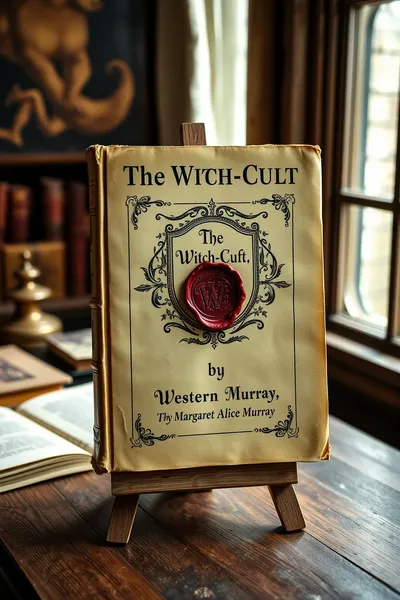





From the “Ritual Magic” Collection
View all →





More Free Magic & Ritual Books
View all →