Ritual Body Art
 72
72

Ritual Body Art
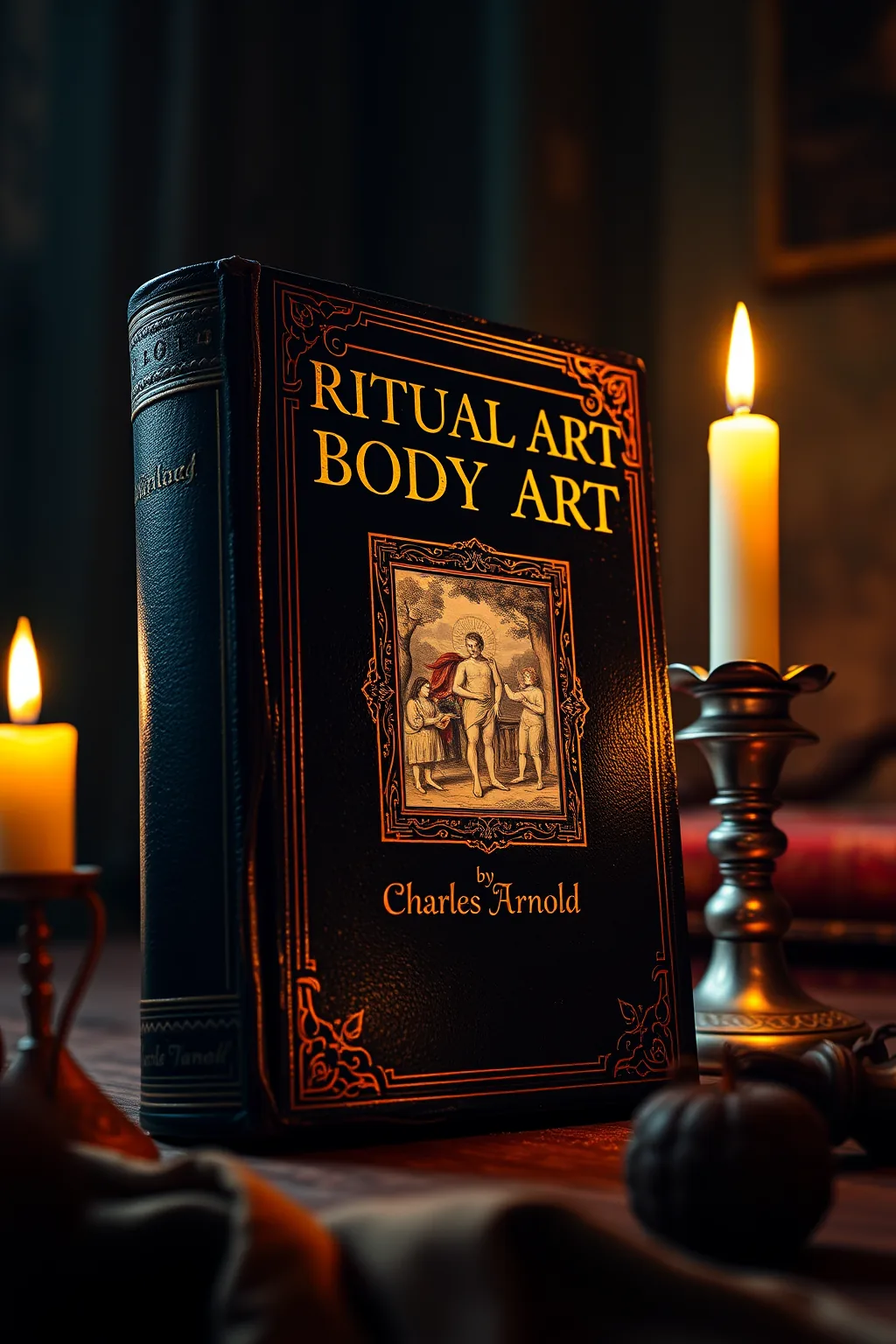
Charles Arnold’s Ritual Body Art offers a scholarly yet accessible exploration into the corporeal manifestations of the sacred. Its strength lies in its comprehensive survey, drawing connections between seemingly disparate cultural practices, from ancient Egyptian scarification to indigenous Australian body painting. Arnold’s detailed examination of the semiotics of specific markings, particularly his discussion of how certain patterns function as cosmograms, provides a solid anchor for understanding the deeper intent behind these acts. However, the book occasionally feels overly academic, with passages that could benefit from more vivid description of the ritual experiences themselves. A notable section delves into the use of cicatrices in West African societies, effectively illustrating the body's role as a living archive of spiritual knowledge. Despite its occasional dryness, the work is an important resource for anyone seeking to understand body art beyond its aesthetic appeal.
📝 Description
72
Charles Arnold's 2001 book, Ritual Body Art, examines the human form as a site for sacred practice.
Published in 2001, Ritual Body Art investigates the deep connections between the human body, symbolic expression, and religious customs across various cultures and time periods. The book argues that the body is not just for appearance but serves as a central place for spiritual engagement and ritual action. Arnold details how societies throughout history have altered and adorned their bodies to show social standing, communicate their understanding of the cosmos, and achieve different states of awareness.
This study is for anyone interested in comparative religion, anthropology, or esoteric studies, along with artists and practitioners who study the history and symbolism of body modification. It speaks to those who view the body as more than just a physical thing, but as a surface for meaning, ritual, and spiritual growth. Readers wanting to grasp the deeper meanings of scarification, tattooing, and other bodily practices within their cultural and religious settings will find substantial information within its pages.
Emerging in 2001, Ritual Body Art appeared during a time of renewed academic and popular interest in the global history and ritualistic importance of body art. Arnold's work fits into a growing scholarly discussion that began to view pre-modern and indigenous body practices not as simple curiosities, but as complex systems of symbolic communication. This perspective was influenced by anthropological theories on performance and embodiment, and it re-evaluated these practices as sophisticated forms of spiritual technology.
💡 Why Read This Book?
• Gain a nuanced understanding of ritual body art's function as a spiritual technology, moving beyond mere decoration to explore its role in facilitating altered states and cultural transmission, as seen in the detailed analysis of scarification practices. • Discover the specific symbolic languages embedded within various forms of body modification, learning how patterns and placement communicate cosmological beliefs and social identities, exemplified by discussions of tattooing traditions. • Appreciate the historical evolution and cultural significance of body art across different societies, understanding its impact on individual transformation and community cohesion, as evidenced by the book's exploration of early 21st-century scholarship.
⭐ Reader Reviews
Honest opinions from readers who have explored this book.
❓ Frequently Asked Questions
What specific types of ritual body art does Charles Arnold's book cover?
The book investigates a wide array, including scarification, tattooing, piercing, and other forms of corporeal inscription and modification, examining their sacred and symbolic functions across various cultures.
When was Ritual Body Art first published, and what was the academic climate like then?
Published in 2001, the book emerged during a period of growing interdisciplinary interest in ritual studies and a re-evaluation of non-Western symbolic practices.
Does the book discuss the psychological effects of ritual body art?
While primarily focusing on symbolic and cultural dimensions, the work implicitly addresses psychological transformations through its exploration of how body art facilitates spiritual connection and altered states of consciousness.
Is Ritual Body Art suitable for beginners in esoteric studies?
Yes, it serves as an excellent introduction, providing a factual and historical basis for understanding the spiritual significance of body art, though some sections are academically rigorous.
What cultures are primarily featured in the examination of ritual body art?
The book draws examples from a global range, including but not limited to indigenous Australian, West African, ancient Egyptian, and various other historical and tribal societies.
Does the book focus on modern tattoo culture or historical practices?
The primary focus is on historical and traditional ritualistic practices of body art, exploring their deeper meanings rather than contemporary aesthetic trends.
🔮 Key Themes & Symbolism
The Body as Sacred Text
Arnold posits the body as a primary medium for spiritual inscription and communication. Ritual Body Art explores how societies have historically utilized markings, piercings, and other corporeal modifications not as mere decoration, but as a language to articulate cosmic order, social status, and personal transformation. This theme examines the profound semiotics of the flesh, where every line, scar, or adornment becomes a glyph carrying potent meaning within its cultural and religious context, functioning as a living repository of belief and identity.
Symbolic Transformation and Identity
A core concept is how ritual body art acts as a catalyst for profound personal and collective metamorphosis. The work details how specific practices are designed to strip away ordinary identity and imbue the individual with new spiritual attributes, social roles, or connections to the divine. This theme investigates the performative aspect of these transformations, where the body, through ritual action, becomes a vessel for embodying mythic narratives and solidifying a new, often sacred, sense of self within the community.
Cosmological Mapping and Ritual Technology
Ritual Body Art presents body markings as intricate maps of the cosmos and the human spirit. This theme examines how ancient and indigenous cultures used corporeal designs to represent celestial bodies, ancestral lines, and spiritual pathways. The book examines these practices as sophisticated ritual technologies, intended to align the individual with universal forces, facilitate communication with other realms, and maintain the energetic balance of the community. It highlights the body's role as a microcosm reflecting the macrocosm.
💬 Memorable Quotes
Direct passages from the work, attributed to the author.
“The inscribed body becomes a palimpsest of spiritual knowledge and social belonging.”
— This interpretation emphasizes how ritual body art layers multiple meanings onto the physical form, creating a complex text that signifies both individual spiritual journeys and one's place within the collective cultural narrative.
“Scarification served not as mutilation, but as the deliberate etching of sacred geometry onto the living canvas.”
— This highlights the intentionality and sacred purpose behind practices often misconstrued as brutal. It frames scarification as a precise art form, akin to architectural design, where patterns hold deep cosmological or spiritual significance.
“Adornment was a language spoken by the skin, articulating genealogies and divine covenants.”
— This suggests that body art functioned as a form of non-verbal communication, a visible means of expressing lineage, spiritual alliances, and solemn agreements between humans and the sacred powers.
“The ritual act of marking the body enacted a profound shift in perceived reality.”
— This interpretation points to the transformative power of ritual body art, suggesting that the physical act of inscription was intrinsically linked to a fundamental alteration in an individual's or group's experience and understanding of the world.
“Through the body, the invisible forces of the universe were made manifest and accessible.”
— This speaks to the function of ritual body art as a conduit, a means by which abstract spiritual energies and cosmic principles could be embodied and interact with the human plane.
🌙 Esoteric Significance
Tradition
Ritual Body Art engages with a broad spectrum of esoteric and indigenous traditions that view the physical body as a sacred vessel and a primary site for spiritual manifestation. While not aligning with a single lineage like Hermeticism or Kabbalah, it draws parallels with Gnostic concepts of the material body as a site for divine imprinting and with shamanistic practices that utilize corporeal alteration to access other realities. The work fits within the broader esoteric interest in 'as above, so below,' demonstrating how cosmic principles are inscribed upon the human form.
Symbolism
Key symbols explored include scarification patterns that function as cosmograms, visually mapping the universe and the individual's place within it. Tattooing motifs are analyzed as mnemonic devices or talismans, encoding protective powers or spiritual lineages. The act of piercing, often through specific energetic points, is discussed in relation to channeling spiritual forces or marking transitions. These symbols collectively represent the body as a sacred text, where divine will and cosmic order are literally written upon the flesh.
Modern Relevance
Contemporary thinkers and practitioners in fields such as somatic psychology, performance art, and neo-shamanism continue to draw inspiration from the principles outlined in Ritual Body Art. Modern practitioners of energy healing and sacred tattooing often reference the historical and symbolic depth of these practices, seeking to imbue their work with the same spiritual efficacy. The book's exploration of the body as a site of profound meaning-making remains relevant to current discourses on identity, spirituality, and the search for authentic self-expression in an increasingly digitized world.
👥 Who Should Read This Book
• Students of comparative religion and anthropology: Those seeking to understand the diverse ways human cultures have historically integrated the sacred with the physical body, offering rich case studies. • Esoteric practitioners and artists: Individuals interested in the symbolic language of the body, ritual transformation, and the historical roots of sacred body art as a spiritual technology. • Researchers of ritual and performance: Scholars examining the performative aspects of cultural practices and how the body functions as a medium for conveying complex social and spiritual information.
📜 Historical Context
First published in 2001, Charles Arnold's Ritual Body Art emerged during a period when the study of global symbolic practices was gaining significant academic and public attention, moving beyond earlier anthropological frameworks. The early 2000s saw a renewed interest in embodiment and the semiotics of ritual, influenced by scholars like Victor Turner, whose work on liminality and performance had already begun to reshape how ritual was understood. Arnold’s book contributed to a burgeoning discourse that sought to re-evaluate indigenous and pre-modern body art not as mere decoration but as sophisticated systems of spiritual technology and cultural expression. This era also witnessed a growing dialogue with postmodern theories of identity and representation, which provided new lenses through which to interpret the profound ways in which individuals and communities used their bodies to construct meaning. The reception of such works often navigated between genuine academic appreciation and popular fascination with the exotic, reflecting broader societal shifts in understanding cultural difference.
📔 Journal Prompts
The body as a sacred text: What personal narratives or beliefs are inscribed upon your own being?
Reflect on the concept of 'sacred geometry' in relation to body markings discussed in the text.
Consider the 'invisible forces' mentioned; how might ritual body art serve to manifest or interact with them?
Analyze the relationship between 'social belonging' and corporeal inscription as presented in the book.
Explore the 'transformative potential' of body art through the lens of personal identity.
🗂️ Glossary
Scarification
The practice of deliberately cutting or burning the skin to create permanent patterns or designs. In ritual contexts, it often signifies status, spiritual achievement, or cultural identity.
Cicatrices
The raised, often patterned, scars that result from scarification practices. These are viewed as significant markings carrying cultural and spiritual meaning.
Cosmogram
A symbolic representation of the cosmos, often depicted in art or ritual objects. In the context of body art, it signifies the body as a microcosm reflecting the macrocosmic order.
Semiotics
The study of signs and symbols and their interpretation. Applied to body art, it examines how markings function as a system of meaning within a specific culture.
Corporeal
Relating to the body, especially as opposed to the spirit or mind. In this context, it emphasizes the physical body as a primary site of spiritual practice and meaning.
Palimpsest
A manuscript or piece of material on which older writing has been erased and replaced by new writing. Metaphorically used to describe the body bearing layers of meaning from various ritual inscriptions.
Liminality
A state of transition or in-betweenness, often experienced during rituals. Body art can be a marker or facilitator of such transformative liminal states.
🔮 Readers Also Liked
Browse all →








More by Charles Arnold
All books →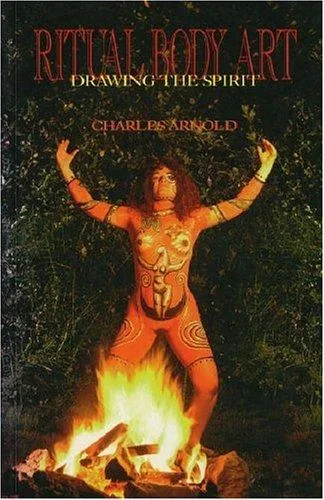

More Free Magic & Ritual Books
View all →