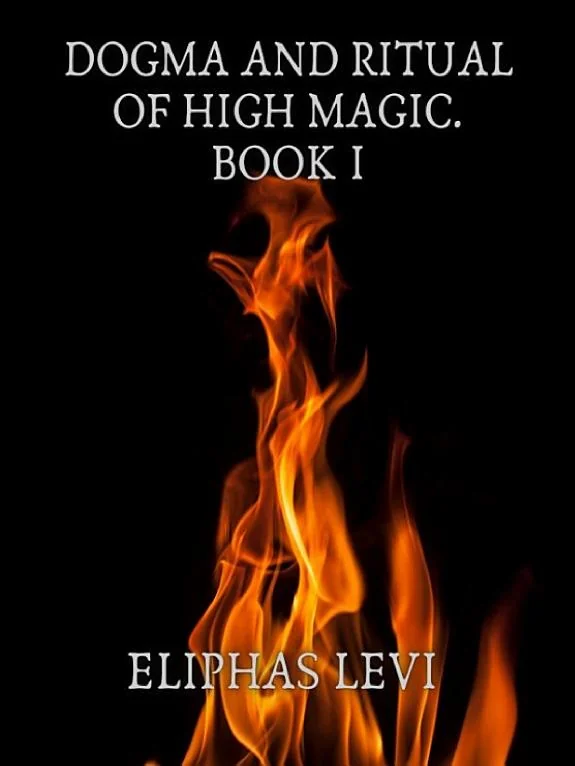
Dogma and Ritual of High Magic. Book I
 79
79

Dogma and Ritual of High Magic. Book I
Eliphas Levi's "Dogma and Ritual of High Magic" is not a gentle introduction; it's an immersion into a meticulously constructed occult worldview. Levi, writing in 1854, positions himself as a synthesizer, attempting to bridge the gap between esoteric traditions and a burgeoning scientific age. His ambition is evident on every page, particularly in his expansive interpretations of Kabbalistic principles and Hermetic axioms. The strength of Book I lies in its intellectual rigor and the sheer breadth of its synthesis, presenting a coherent, albeit complex, magical philosophy. However, Levi's prose can be dense, and his confident assertions, while persuasive to some, may strike others as overly dogmatic. The section detailing the Great Magical Agent, while central to his system, requires significant interpretive effort. Ultimately, "Dogma and Ritual of High Magic" remains a pivotal work for understanding the lineage of modern Western esotericism, demanding patience but rewarding diligent study.
📝 Description
79
Eliphas Levi's 'Dogma and Ritual of High Magic. Book I' was published in 1854.
This volume presents a systematic approach to occult philosophy, aiming to unite magic with religion and science. Levi sought to explain esoteric practices as natural laws and divine principles, achievable through focused study and willpower. The work is known for its detailed philosophical arguments, extensive use of symbols, and its effort to blend Kabbalah, Hermeticism, and other mystical systems.
It is written for students of Western esotericism ready for dense theory and complex symbolism. Readers interested in the philosophical foundations of magic, the history of occult thought, and the links between ancient traditions and modern ideas will find it valuable. Those looking for practical spellcasting techniques will find the book more focused on the underlying principles and dogma of magical operations.
Published in the mid-19th century, "Dogma and Ritual of High Magic" appeared during a surge of interest in spiritualism and occult revival in Europe. Levi intended to elevate magic beyond superstition, presenting it as a philosophical and scientific pursuit. He drew heavily on Kabbalistic and Hermetic sources, engaging with contemporary scientific and theological discussions. His synthesis influenced later occult organizations, such as the Hermetic Order of the Golden Dawn.
💡 Why Read This Book?
• Understand the foundational principles of modern Western magic, as Levi meticulously outlines the dogma behind ritual, drawing from Kabbalah and Hermeticism. • Grasp the concept of the Astral Light, a key element in Levi's cosmology, which he presents as the medium for all magical manifestation. • Engage with Levi's ambitious attempt, published in 1854, to reconcile esoteric traditions with contemporary scientific and religious thought, offering a unique historical perspective.
⭐ Reader Reviews
Honest opinions from readers who have explored this book.
❓ Frequently Asked Questions
What is the significance of the Great Magical Agent in Eliphas Levi's work?
Levi defines the Great Magical Agent as the universal fluid, or Astral Light, that pervades all things. It is the medium through which thought and will can manifest, acting as the prime force for creation and magic. Understanding this concept is crucial to his system of High Magic.
When was "Dogma and Ritual of High Magic" first published?
The original French edition of "Dogma and Ritual of High Magic" (Dogme et Rituel de la Haute Magie) was first published in two volumes in 1854 and 1856. This specific edition is a later publication.
How does Eliphas Levi connect magic with religion?
Levi views magic not as a separate practice but as the underlying science and art of religion. He posits that true magic is the science of the secret laws of nature and the divine, accessible through study and disciplined will, thus harmonizing with religious principles.
What role does the Kabbalah play in "Dogma and Ritual of High Magic"?
The Kabbalah, particularly its interpretation of the Tree of Life, serves as a central framework for Levi's occult philosophy. He uses Kabbalistic concepts and symbolism to explain the structure of the universe, divine emanations, and the path of spiritual ascent.
Is "Dogma and Ritual of High Magic" suitable for beginners in occult studies?
While foundational, "Dogma and Ritual of High Magic" is a dense theoretical work. It is more suitable for serious students prepared for complex philosophical discussions and symbolic analysis rather than those seeking simple practical instructions or introductory material.
What is the primary goal of the "Dogma" section of Levi's work?
The "Dogma" section of "Dogma and Ritual of High Magic" focuses on establishing the theoretical and philosophical underpinnings of High Magic. It explores the nature of God, the universe, and humanity's place within it, laying the groundwork for the practical applications discussed in the "Ritual" part.
🔮 Key Themes & Symbolism
The Great Magical Agent
Levi posits the existence of a universal fluid, the Astral Light, which he terms the Great Magical Agent. This is the primary medium through which all phenomena occur and the force that magic seeks to manipulate. He describes it as a sensitive, mobile, and active force, capable of receiving and transmitting impressions from the will and imagination of the magician. Understanding and working with this agent is central to the practice of High Magic as defined by Levi, influencing everything from divination to spiritual manifestation.
Kabbalistic Synthesis
A core element of "Dogma and Ritual" is Levi's extensive use and reinterpretation of Kabbalistic principles, particularly the Sephiroth on the Tree of Life. He employs the Kabbalah not just as a mystical system but as a universal key to understanding divine emanations, the structure of the cosmos, and the correspondences between the macrocosm and microcosm. His work sought to make Kabbalistic wisdom accessible and integrate it with other esoteric traditions, presenting it as the science behind religious symbolism.
The Union of Magic, Religion, and Science
Levi's overarching project in "Dogma and Ritual" was to demonstrate that magic, when properly understood, is the ultimate science and the true basis of religion. He sought to elevate magic from its perception as mere superstition or trickery, arguing that it operates according to immutable natural laws. By synthesizing ancient esoteric doctrines with contemporary philosophical and nascent scientific ideas, he aimed to present a unified worldview where magic served as the bridge connecting the material and spiritual realms.
Will and Imagination in Magic
Levi places significant emphasis on the power of human will and imagination as essential tools for the magician. He teaches that directed will, combined with a clear visualization (imagination), can influence the Great Magical Agent and effect change in the world. This requires rigorous mental discipline, concentration, and a profound understanding of universal analogies and symbols. The magician's inner state and mental fortitude are presented as paramount to the success of any magical operation.
💬 Memorable Quotes
Direct passages from the work, attributed to the author.
“The dogma of magic is the science of the secrets of nature and the divine.”
— This statement expresses Levi's ambition to legitimize magic as a rigorous field of study, distinct from mere superstition. He defines its scope as encompassing both the observable natural world and the hidden divine order, positioning it as the ultimate synthesis of knowledge.
“The Astral Light is sensitive, mobile, and active.”
— This describes Levi's concept of the Great Magical Agent. It highlights its dynamic nature, suggesting it's not a static force but a responsive medium that can be influenced by the magician's will and imagination, forming the basis of his magical operations.
“The science of the Magi consists in the knowledge of the universal analogies.”
— This emphasizes Levi's belief in a system of correspondences throughout the universe. Understanding these connections between different levels of reality (microcosm/macrocosm) is key to unlocking the secrets of magic and the divine order.
“To know, to will, to dare, and to be silent.”
— Though famously attributed to various sources, this phrase reflects the disciplined approach Levi advocates for the practitioner of High Magic. It speaks to the necessity of knowledge, focused intent, courageous action, and discretion in magical work.
“The universal equilibrium is maintained by the struggle of contraries.”
— Levi interprets dualities not as absolute good versus evil, but as necessary opposing forces that create balance and dynamism within the cosmos. This reflects a sophisticated understanding of universal laws and their interplay, moving beyond simplistic moralistic views.
🌙 Esoteric Significance
Tradition
Levi's work is a central to modern Western esoteric traditions, particularly Hermeticism and Kabbalah. He synthesized these ancient streams, presenting a unified occult philosophy that sought to explain the universe through divine emanations, universal laws, and symbolic correspondences. While drawing heavily on traditional Kabbalistic frameworks like the Tree of Life, Levi's interpretations are distinct, aiming to reconcile them with a more modern, rationalistic worldview, thereby establishing a bridge between ancient mysticism and contemporary thought.
Symbolism
Central to Levi's system is the profound symbolic language he employs. The Caduceus of Hermes, representing the union of opposites and the flow of vital energy (the Astral Light), is a recurring motif. He also extensively utilizes the symbolism of the Tarot, particularly the Major Arcana, interpreting them as keys to understanding divine operations and human spiritual development. The Pentagram, representing the human microcosm and its dominion over the four elements, is another crucial symbol, explained in detail for its protective and invocatory powers.
Modern Relevance
Levi's "Dogma and Ritual" continues to be a foundational text for contemporary occult practitioners and scholars. Modern Hermetic orders, Kabbalistic study groups, and even some ceremonial magicians still reference his interpretations of the Tree of Life, the nature of the Astral Light, and the principles of magical will. His attempts to integrate esoteric philosophy with broader intellectual currents remain relevant for those seeking to understand the evolution of Western esotericism and its ongoing dialogue with science and philosophy.
👥 Who Should Read This Book
• Students of Western Esotericism: Those interested in the historical development and philosophical underpinnings of occultism will find Levi's synthesis of Kabbalah, Hermeticism, and magic essential. • Aspiring Magicians and Occult Philosophers: Individuals seeking to understand the theoretical framework and principles behind magical practice, rather than just rote techniques, will benefit from Levi's detailed dogma. • Comparative Religion Scholars: Researchers interested in the intersection of mystical traditions, symbolism, and religious philosophy will find Levi's unique interpretations and historical context valuable.
📜 Historical Context
Eliphas Levi's "Dogma and Ritual of High Magic," first published in Paris in 1854, emerged from a fertile ground of 19th-century occult revivalism. This era saw renewed interest in spiritualism, mesmerism, and esoteric traditions, fueled by societal changes and a reaction against purely materialistic philosophies. Levi, born Alphonse Louis Constant, sought to synthesize diverse mystical currents—primarily Kabbalah, Hermeticism, and Neoplatonism—into a coherent system he called "High Magic." He aimed to elevate magic from its disreputable image, presenting it as the ultimate science and the true basis of religion, engaging with intellectual debates of his time. His work stood in contrast to more popular spiritualist mediums and ceremonial magicians, offering a deeply philosophical and symbolic framework. Levi's writings were immensely influential, shaping the trajectory of Western esotericism and directly impacting figures like Helena Blavatsky and the founders of the Hermetic Order of the Golden Dawn, despite facing some initial skepticism from both occultists and the broader academic community.
📔 Journal Prompts
The Great Magical Agent as a universal medium: How does Levi's concept align with or diverge from your understanding of subtle energies?
Levi's interpretation of the Caduceus: Reflect on the symbolism of union and balance in your own spiritual or magical practice.
The role of the Pentagram: Consider its significance as presented by Levi and its potential applications in understanding human will and elemental forces.
Kabbalistic correspondences: Explore a specific Sephirah or path on the Tree of Life as detailed by Levi and its personal resonance.
The triad of Know, Will, Dare, and be Silent: How do these four principles inform your approach to personal growth or esoteric study?
🗂️ Glossary
High Magic
Levi's term for the esoteric art and science of universal equilibrium, involving the disciplined use of will and imagination to influence the Great Magical Agent, aiming for spiritual understanding and union with the divine.
Astral Light
The universal, sensitive, and mobile fluid that Levi identifies as the Great Magical Agent. It is the medium through which thought and will manifest, connecting the spiritual and material realms and serving as the basis for all magical operations.
Kabbalah
An esoteric tradition of Jewish mysticism concerning the divine nature and creation of the universe, often represented by the Tree of Life. Levi heavily incorporates and reinterprets Kabbalistic concepts into his magical system.
Great Magical Agent
Synonymous with the Astral Light in Levi's system; the fundamental cosmic force or fluid that is influenced by magical will and imagination to produce effects.
Microcosm and Macrocosm
The principle that the human being (microcosm) reflects the structure and laws of the universe (macrocosm). Understanding this analogy is key to magical practice and spiritual development according to Levi.
Universal Analogies
The principle of correspondences and resemblances that Levi believed exist throughout all levels of creation. Knowledge of these analogies is essential for the magician to understand and manipulate the forces of nature.
Dogma
In Levi's context, refers to the foundational principles, beliefs, and theoretical framework of High Magic, as distinct from its practical application (Ritual).
This book appears in 1 collection
🔮 Readers Also Liked
Browse all →









From the “High Magic” Collection
View all →





More Free Magic & Ritual Books
View all →