Revisioning the Earth
 84
84

Revisioning the Earth
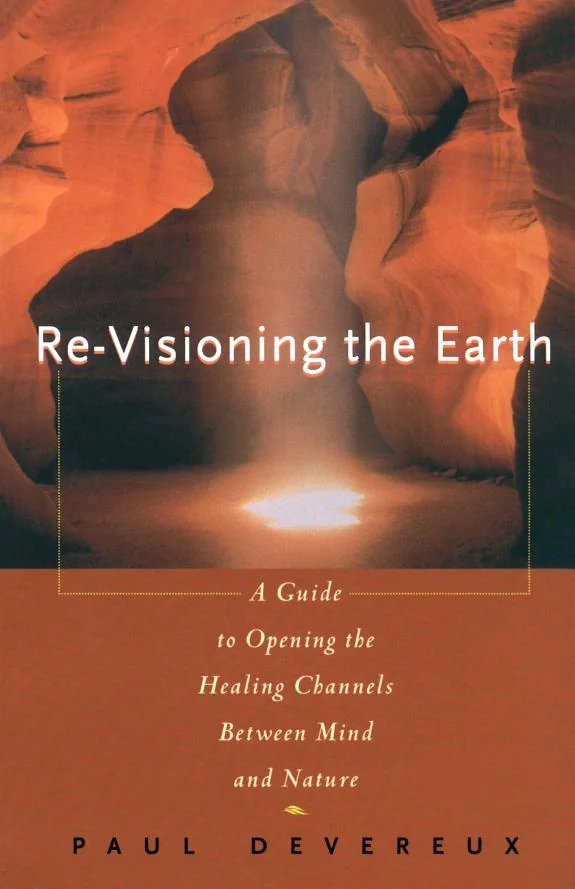
Paul Devereux's Revisioning the Earth tackles a crucial subject: the human psyche's alienation from the natural world. The book’s strength lies in its synthesis of diverse ancient practices, from feng shui to vision questing, illustrating how these traditions fostered a more integrated relationship with the environment. Devereux argues convincingly that our current ecological malaise stems from a distorted perception, a "mind-blindness" to the living Earth. While the exploration of concepts like "ecopsychology" is valuable, the text occasionally feels more like a manifesto for a new worldview than a rigorous academic exploration. The inclusion of personal anecdotes, while adding a human touch, sometimes distracts from the core arguments. Nevertheless, the call to re-establish a more intuitive, spirit-based connection with our planet remains potent. It’s a work that challenges the reader to look beyond conventional ecological solutions.
📝 Description
84
Paul Devereux's 1996 book argues for a radical shift in how humans perceive the natural world.
Revisioning the Earth proposes an ecopsychology, a framework to repair the broken bond between people and the environment. Devereux moves beyond standard environmentalism, suggesting a deeper, more intuitive connection. This connection draws on both ancient understandings and modern psychology.
The book targets readers who feel estranged from nature. It aims to help those who see ecological crises as signs of deeper psychological imbalance, not just political or scientific issues. It will appeal to those interested in different views of consciousness, the healing power of the natural world, and how older knowledge systems can inform today's life.
Devereux's central idea is that our present view of the Earth is flawed, causing ecological harm. He suggests restoring harmony by increasing our awareness of our planetary role. This means acknowledging a spirit or psyche in nature, shifting from control to a kinship of mutual regard.
Emerging in the mid-1990s, Devereux's ecopsychology appeared during a time of rising environmental concern and renewed interest in animistic and shamanic practices. This period saw figures like Terence McKenna examining altered states and indigenous knowledge, alongside James Hillman's work on archetypal psychology and the soul's connection to the world. Revisioning the Earth offered a holistic, soul centered alternative to dominant mechanistic or human centered scientific views.
💡 Why Read This Book?
• Gain practical approaches to reconnecting with nature through explored ancient arts like feng shui, offering actionable methods beyond abstract theory. • Understand the psychological roots of ecological crises, learning how Devereux’s "ecopsychology" framework reframes environmental issues as a crisis of perception. • Discover the significance of practices such as vision questing and lucid dreaming, as presented in the book, for heightening your awareness of your personal place within the Earth's systems.
⭐ Reader Reviews
Honest opinions from readers who have explored this book.
❓ Frequently Asked Questions
What is Paul Devereux's central argument in Revisioning the Earth?
Devereux argues that modern humanity suffers from a 'mind-blindness' to the living Earth, leading to ecological destruction. He calls for an 'ecopsychology' to alter traditional perceptions and re-establish harmony with the natural world through ancient practices.
When was Revisioning the Earth first published?
The book was first published on October 23, 1996, reflecting a growing concern for environmental psychology and alternative spiritualities in the mid-1990s.
What ancient arts does Devereux discuss to foster a connection with nature?
Devereux explores various ancient arts including feng shui, herbal medicine, vision questing, and lucid dreaming as methods to heighten awareness and re-establish harmony with the natural world.
What does Devereux mean by 'ecopsychology'?
Devereux's 'ecopsychology' is not a formal academic discipline but a call for a fundamental shift in how we perceive our relationship with the Earth. It emphasizes psychic and spiritual connection over purely rational or utilitarian approaches.
Are there visual elements in Revisioning the Earth?
Yes, the book is enhanced by photographs and line drawings, which contribute to illustrating the concepts and places discussed, further supporting the reader's engagement with the material.
How does this book differ from standard environmental literature?
Unlike literature focusing solely on policy or science, Revisioning the Earth delves into the psychological and spiritual dimensions of our environmental crisis, proposing a re-enchantment with the natural world.
🔮 Key Themes & Symbolism
Ecopsychology and Perceptual Shift
The central theme is the urgent need for an 'ecopsychology'—a reorientation of human consciousness towards the Earth. Devereux posits that our current perception is 'mind-blind,' detached from the living reality of the planet. This detachment, he argues, is the root cause of ecological destruction. The book encourages a move away from anthropocentrism and towards recognizing the intrinsic value and sentience of the natural world, advocating for a felt sense of belonging rather than mere stewardship.
Ancient Practices for Modern Harmony
Devereux draws upon a spectrum of ancient traditions to illustrate how past cultures maintained a profound connection with nature. He examines practices such as feng shui, traditionally used to harmonize human spaces with natural energies, and herbal medicine, which implies a deep understanding of plant spirits and properties. The inclusion of vision questing and lucid dreaming highlights methods for accessing altered states of consciousness to gain insight into one's relationship with the Earth.
The Psyche of the Planet
A core concept is the idea that the Earth itself possesses a psyche or spirit, which has been ignored or suppressed by modern materialistic worldviews. Devereux advocates for a re-enchantment of nature, suggesting that recognizing this 'Earth psyche' is essential for healing both human consciousness and the planet. This perspective invites readers to perceive natural phenomena not as inert matter but as expressions of a living, responsive world.
Re-establishing Kinship with Nature
The ultimate goal presented is the re-establishment of kinship between humanity and the natural world. This involves moving beyond a relationship of control or exploitation to one of reciprocal respect and understanding. The book suggests that by engaging with the Earth on a deeper, more intuitive level, individuals can find their rightful place within the planetary ecosystem, fostering well-being and ecological balance.
💬 Memorable Quotes
Direct passages from the work, attributed to the author.
“We need an alteration of traditional perceptions of the world around us.”
— This captures Devereux's call for a rethinking. It's not about changing environmental policies alone, but about fundamentally altering how the human mind perceives and relates to the Earth's living systems.
“An 'ecopsychology' will reestablish harmony with the natural world.”
— This highlights the proposed solution. Devereux suggests that addressing ecological imbalance requires a psychological and spiritual transformation, moving towards a state of resonance with nature.
“Explorations of such ancient arts as feng shui, herbal medicine, vision questing, and lucid dreaming heighten awareness of our place on the planet.”
— This points to the practical methods Devereux advocates for achieving the desired perceptual shift, grounding his theoretical framework in tangible, albeit esoteric, practices.
“His work calls for seeing the world as alive, not inert.”
— This interpretation emphasizes the animistic or panpsychist undertones of Devereux's argument, challenging the mechanistic worldview that separates humanity from a perceived soulless nature.
“The current ecological crisis is a symptom of a deeper psychic imbalance.”
— This frames the environmental issue not merely as a scientific or political problem, but as an internal human condition that needs to be understood and healed at its psychic roots.
🌙 Esoteric Significance
Tradition
Revisioning the Earth draws from a broad, eclectic stream of esoteric thought, particularly aligning with animistic, shamanic, and nature-based spiritualities. It departs from the more structured, ritualistic traditions like Western Hermeticism or Kabbalah by emphasizing direct, intuitive experience of the natural world. Its "ecopsychology" can be seen as a modern interpretation of older ideas about the immanence of spirit in nature, akin to certain Neoplatonic or Gnostic concepts, but recontextualized for contemporary ecological concerns.
Symbolism
The book implicitly engages with the symbolism of the Earth as a living, conscious entity. This extends to the symbolism of natural elements themselves – plants, animals, landscapes – not as mere resources, but as active participants in a cosmic dialogue. Practices like vision questing symbolize a journey into the self and the collective unconscious, often facilitated by the potent symbolism of natural settings and archetypal encounters, aiming to reveal hidden connections.
Modern Relevance
Devereux's work is highly relevant to contemporary movements in deep ecology, ecofeminism, and psychedelic-assisted therapy focused on nature connection. Thinkers and practitioners in these fields often cite the need for a perceptual shift akin to Devereux's 'ecopsychology.' His ideas echo in modern animist resurgence and the growing interest in shamanic practices for personal and planetary healing, particularly among younger generations seeking alternatives to consumerism and technological alienation.
👥 Who Should Read This Book
• Individuals experiencing ecological anxiety or a sense of disconnect from the natural world, seeking a framework for deeper emotional and spiritual reconnection. • Students and practitioners of comparative religion and esoteric traditions interested in how ancient wisdom can inform modern ecological thought. • Creatives, artists, and writers looking for inspiration and a philosophical basis to explore themes of nature, consciousness, and humanity's place in the cosmos.
📜 Historical Context
Published in 1996, Paul Devereux's Revisioning the Earth emerged during a period of burgeoning interest in ecopsychology and the integration of indigenous knowledge with Western thought. This era saw the rise of figures like James Hillman, whose work on archetypal psychology emphasized the soul's relationship with the world, and the growing influence of eco-philosophers who questioned anthropocentric biases. Devereux's "ecopsychology" offered a counterpoint to purely scientific or rationalist approaches to environmentalism, which often overlooked the subjective and spiritual dimensions of human-nature connection. While not directly engaging in public debate with specific contemporaries in this particular work, Devereux's ideas aligned with a broader cultural current seeking to re-enchant the world, challenging the dominant mechanistic worldview that had prevailed since the Enlightenment.
📔 Journal Prompts
Reflections on the "mind-blindness" to the living Earth described by Devereux.
Personal interpretations of the symbolism inherent in a favorite natural landscape.
Experiences with practices similar to vision questing or lucid dreaming and their impact on self-perception.
How can feng shui principles be applied to enhance one's immediate living environment's connection to natural energies?
What does re-establishing harmony with the natural world mean for your daily life?
🗂️ Glossary
Ecopsychology
A field, broadly defined by Devereux, that seeks to understand and heal the psychological roots of the ecological crisis by fostering a deeper, more intuitive connection between humans and the natural world.
Mind-blindness
Devereux's term for the modern human condition of being psychologically detached from and unaware of the living, conscious nature of the Earth, leading to exploitation and destruction.
Feng Shui
An ancient Chinese practice concerned with harmonizing individuals with their surrounding environment, often involving the arrangement of space to optimize the flow of natural energies (qi).
Vision Questing
A spiritual practice, common in indigenous cultures, involving solitary fasting and meditation in a natural setting, intended to achieve spiritual insight and guidance.
Lucid Dreaming
The experience of becoming aware that one is dreaming while asleep, allowing for a degree of conscious control and exploration within the dream state.
Animism
The belief that natural objects, phenomena, and the universe itself possess souls or consciousness, a perspective Devereux encourages for understanding our relationship with the Earth.
Panpsychism
The philosophical view that consciousness or mind is a fundamental and ubiquitous feature of reality, extending to all matter, including the Earth itself.
This book appears in 1 collection
🔮 Readers Also Liked
Browse all →









From the “Visualization” Collection
View all →







More Free Occult Philosophy Books
View all →