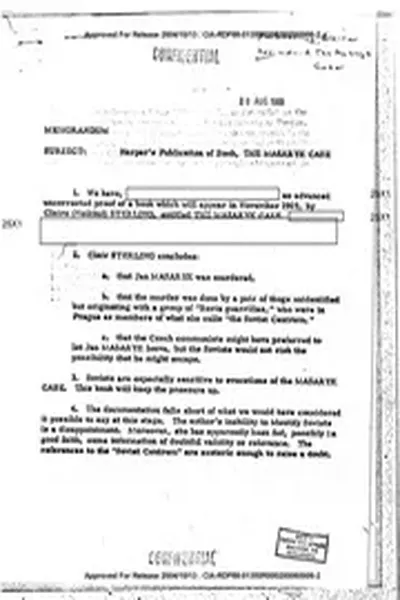
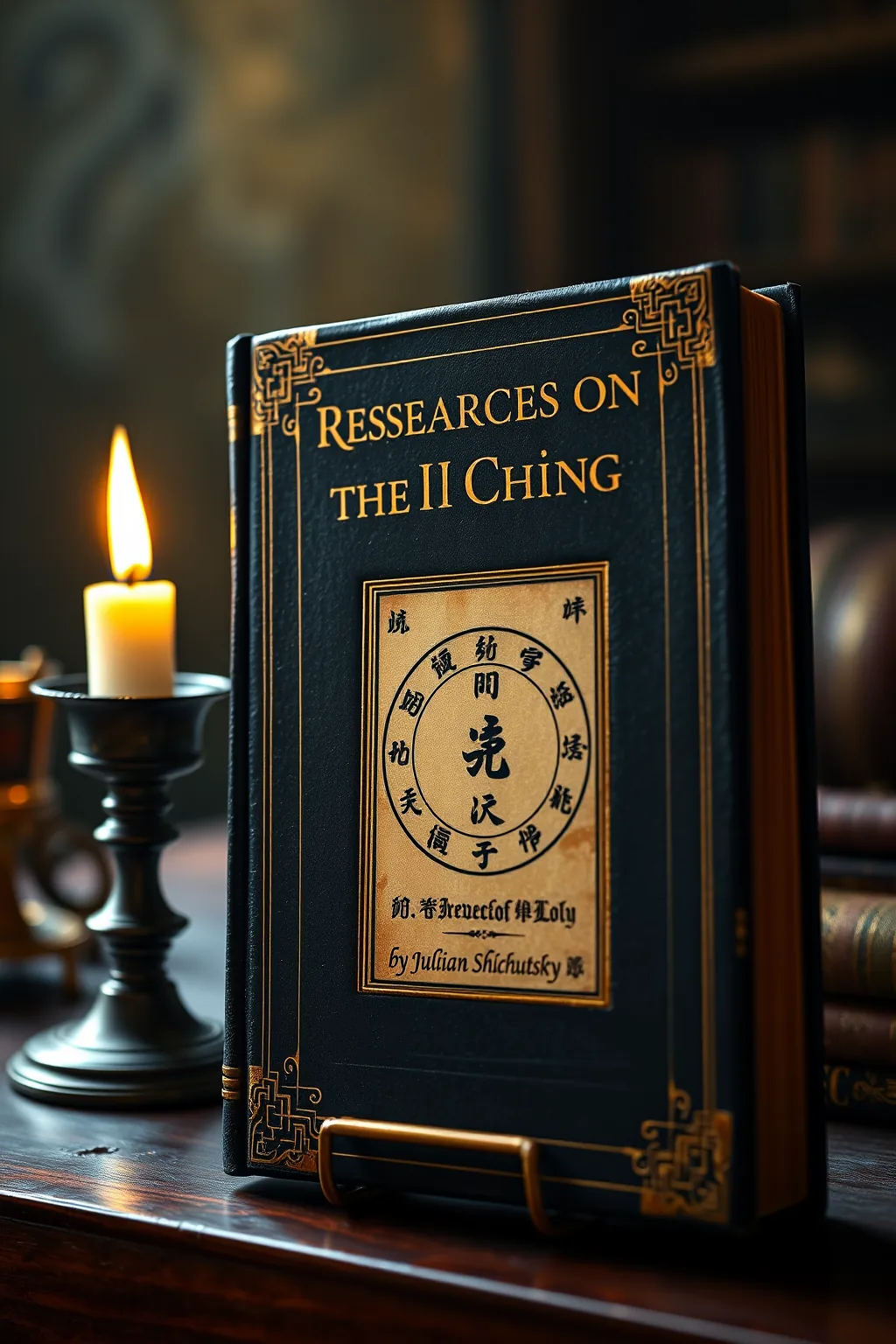
Researches on the I Ching
 78
78

Researches on the I Ching
Julian Shchutsky's *Researches on the I Ching* offers a dense, academic traversal of the classic text, eschewing the more common presentation as a divinatory manual. Its strength lies in its rigorous deconstruction of the hexagrammatic system and its philosophical roots, particularly its engagement with the concept of *Yi* (change). The author meticulously traces the evolution of interpretations, providing a valuable historical perspective that is often overlooked. However, the book’s academic density can be a significant barrier for readers seeking a more accessible entry into the *I Ching*'s symbolic language. The section on the philosophical implications of the trigram relationships, while intellectually stimulating, can become overwhelmingly abstract. Shchutsky's focus remains firmly on the textual and philosophical architecture, making it a resource for scholars rather than casual practitioners. A passage detailing the cosmological implications of the pairing of Heaven and Earth trigrams exemplifies the book's deep, albeit sometimes opaque, analytical style. Ultimately, *Researches on the I Ching* is an indispensable, albeit challenging, academic resource for understanding the *I Ching*'s intellectual heritage.
📝 Description
78
Julian Shchutsky's Researches on the I Ching was first published in 1978.
Originally published in 1978, Julian Shchutsky's Researches on the I Ching offers a detailed academic analysis of the ancient Chinese divination text. The book moves beyond superficial fortune-telling to investigate the philosophical and cosmological foundations of the *I Ching*. Shchutsky dissects the structure of the hexagrams and trigrams, tracing their interpretations through Chinese history. This work is not a manual for practical application, but rather an in depth examination of the intellectual history of this significant text.
This study is intended for readers engaged with comparative philosophy, sinology, and esoteric studies. Those interested in the intellectual development of divination systems, the connections between philosophy and cosmology, and the underlying patterns in symbolic structures will find this book valuable. A background in philosophical thought and textual analysis is beneficial for appreciating its contents.
Published in 1978, this research emerged during a period of heightened Western academic and esoteric engagement with Eastern philosophies. While earlier translations had introduced the *I Ching* to Western audiences, Shchutsky's work adopted a more analytical stance. The book's approach also reflects mid-century academic currents like structuralism and semiotics, which offered frameworks for understanding complex symbolic systems. It situates the *I Ching* not merely as a divinatory tool but as a profound philosophical and cosmological text with a long interpretive history.
💡 Why Read This Book?
• Gain a structured understanding of the *I Ching*'s foundational elements, such as the eighty trigrams and sixty-four hexagrams, which is crucial for grasping the text's internal logic beyond mere divination, as detailed in its early chapters. • Explore the philosophical underpinnings of change (*Yi*) and the interplay of Yin and Yang as presented in Shchutsky's analytical framework, offering a more profound conceptual grasp than superficial interpretations. • Understand the historical development of *I Ching* scholarship, recognizing how interpretations evolved from ancient China to the mid-20th century, providing context for its enduring significance.
⭐ Reader Reviews
Honest opinions from readers who have explored this book.
❓ Frequently Asked Questions
What is the primary focus of Julian Shchutsky's Researches on the I Ching?
The book focuses on a scholarly examination of the *I Ching*'s philosophical and cosmological structure, tracing its historical interpretations rather than serving as a practical guide for divination.
When was Researches on the I Ching first published?
The original publication date for Researches on the I Ching by Julian Shchutsky was 1978.
Who would benefit most from reading this book?
Students of sinology, comparative philosophy, and esoteric traditions who are interested in the intellectual history and structural analysis of symbolic systems will find this book particularly valuable.
Does the book provide instructions on how to perform I Ching readings?
No, the book is primarily an academic study. While it explains the structure and concepts, it does not offer step-by-step instructions for performing divinatory readings.
What is the significance of the trigrams (Ba Gua) discussed in the book?
The trigrams are fundamental symbolic representations of elemental forces and concepts. Shchutsky analyzes their formation and philosophical implications within the broader *I Ching* system.
Is this book suitable for beginners to the I Ching?
Due to its academic rigor and dense analysis, it is generally more suited for readers with some prior knowledge or a strong academic interest in the subject matter.
🔮 Key Themes & Symbolism
Cosmological Framework
The work dissects the *I Ching*'s representation of the cosmos, focusing on the dynamic interplay of Yin and Yang as fundamental forces. Shchutsky explores how the hexagrams and trigrams symbolize not just phenomena but the underlying principles of universal order and transformation. The book examines the concept of *Yi*, or change, as the central tenet of this cosmology, illustrating how the text acts as a map of perpetual flux and cyclical patterns inherent in existence.
Philosophical Evolution
Shchutsky traces the philosophical lineage of the *I Ching*, highlighting its development from ancient divination practices to its integration into Confucianism. The research examines how different historical periods and schools of thought interpreted the text's meanings, particularly concerning ethics, governance, and human nature. This historical perspective reveals how the *I Ching* served as a dynamic philosophical tool, adapting its message across centuries of Chinese intellectual history.
Structural Analysis of Hexagrams
A core component of the research involves the systematic deconstruction of the sixty-four hexagrams and their constituent trigrams (Ba Gua). Shchutsky analyzes the symbolic logic behind their formation and the relationships between them. This structural approach aims to reveal the inherent patterns and meanings embedded within the text, moving beyond surface-level interpretations to understand the deep grammar of the *I Ching*'s symbolic language.
Textual Interpretation
The book engages deeply with the layers of commentary and interpretation that have accumulated around the *I Ching* over millennia. Shchutsky examines the scholarly debates and differing perspectives on the text's meaning, particularly focusing on its philosophical rather than purely divinatory aspects. This critical examination provides a framework for understanding the enduring complexity and many-sided nature of the *I Ching* as a literary and philosophical monument.
💬 Memorable Quotes
Direct passages from the work, attributed to the author.
“The trigrams symbolize the fundamental elements and forces of the universe.”
— This interpretation highlights the building blocks of the *I Ching*'s symbolic system, emphasizing that the eight trigrams are not arbitrary but represent core concepts within a cosmological worldview.
“The hexagrams represent complex states arising from the combination of simpler forces.”
— This highlights the structural logic of the *I Ching*, illustrating how the sixty-four hexagrams are derived from the interactions of the foundational trigrams, symbolizing a wide array of situations.
“Interpretations of the text have evolved significantly throughout Chinese history.”
— This points to the dynamic nature of the *I Ching*'s reception, acknowledging that its meaning has been reshaped by different philosophical schools and historical contexts over centuries.
“The structure reflects an underlying cosmic order.”
— This suggests that the arrangement and symbolism within the *I Ching* are not accidental but are believed to mirror a deeper, inherent order in the universe, providing a framework for understanding reality.
💡 Key Ideas
Editorial paraphrase of the work's core concepts — not direct quotes.
Change (*Yi*) is the fundamental principle governing all phenomena.
This paraphrased concept underscores the central philosophical tenet of the *I Ching*, suggesting that the text is a guide to understanding the constant state of flux and transformation in the universe.
🌙 Esoteric Significance
Tradition
While not strictly aligned with a single Western esoteric lineage like Hermeticism or Kabbalah, Shchutsky's work engages with the universal principles of symbolic systems and cosmology found across many traditions. It approaches the *I Ching* as a profound philosophical text with deep roots in ancient Chinese cosmology, aligning with the broader esoteric interest in finding universal laws and archetypal patterns that transcend cultural boundaries.
Symbolism
The work meticulously examines the symbolism of the Ba Gua (eight trigrams) and the sixty-four hexagrams. The trigrams, such as Qian (Heaven) and Kun (Earth), represent fundamental cosmic forces and archetypes. The hexagrams, formed by combinations of trigrams, symbolize specific states of being and dynamic situations, providing a symbolic language for understanding the processes of change and interaction in the universe.
Modern Relevance
Contemporary scholars and practitioners of comparative philosophy and esoteric studies continue to draw on Shchutsky's rigorous structural and historical analysis. His systematic approach to understanding the *I Ching*'s philosophical framework informs modern interpretations that seek to integrate its wisdom into broader discussions of cosmology, systems thinking, and the nature of change, particularly within academic sinology and esoteric philosophy circles.
👥 Who Should Read This Book
• Students of comparative philosophy and sinology seeking a rigorous, academic exploration of the *I Ching*'s intellectual history and structural complexity. • Esoteric scholars interested in understanding the philosophical underpinnings of ancient Chinese cosmology and its symbolic language, moving beyond simple divinatory applications. • Researchers of textual traditions who wish to examine the evolution of philosophical thought through the lens of a foundational classical text like the *I Ching*.
📜 Historical Context
Published in 1978, Julian Shchutsky's *Researches on the I Ching* emerged during a period of heightened academic interest in Eastern philosophies and comparative studies. While the *I Ching* had been introduced to the West earlier by figures like Richard Wilhelm, Shchutsky's work contributed a more critical, structuralist approach to its analysis. This era also saw the rise of semiotics and structural linguistics, which influenced scholars to examine symbolic systems like the *I Ching* for their underlying patterns and logic. The book's scholarly tone and focus on philosophical depth stood in contrast to more popular, divinatory interpretations prevalent at the time. Its reception was primarily within academic circles and among dedicated students of Eastern thought, contributing to a deeper scholarly understanding of the text's intellectual heritage.
📔 Journal Prompts
The symbolic representation of Qian and Kun trigrams within the *I Ching*.
The concept of *Yi* (change) as explored in Shchutsky's analysis.
The historical layering of interpretations surrounding the *I Ching*.
The structural logic connecting trigrams to hexagrams.
The philosophical implications of Yin and Yang as presented in the text.
🗂️ Glossary
I Ching
An ancient Chinese divination text and one of the oldest of the Chinese classics, profoundly influential on Chinese philosophy and culture. Also known as the Book of Changes.
Hexagram
A figure composed of six stacked horizontal lines, where each line is either Yang (unbroken) or Yin (broken). There are 64 possible hexagrams in the *I Ching*.
Trigram (Ba Gua)
A figure composed of three stacked horizontal lines, each either Yin or Yang. There are eight fundamental trigrams, which are the building blocks for the 64 hexagrams.
Yin
In Chinese philosophy, the passive, dark, feminine, and receptive principle, often represented by broken lines in the *I Ching*.
Yang
In Chinese philosophy, the active, light, masculine, and assertive principle, often represented by unbroken lines in the *I Ching*.
Yi
A core concept in the *I Ching*, often translated as 'change' or 'transformation'. It signifies the dynamic and ceaseless nature of the universe.
Sinology
The academic study of Chinese history, language, literature, and culture.
🔮 Readers Also Liked
Browse all →







More by Julian Shchutsky
All books →
More Free Occult Philosophy Books
View all →