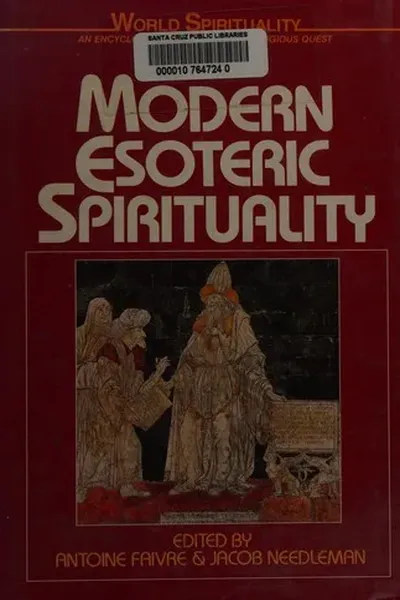
Lieh-Tzu

 75
75

Lieh-Tzu
Eva Wong’s 2001 translation of Lieh-Tzu offers a clear entry point into this elusive Taoist classic. Wong’s introduction anchors the text within its historical milieu, a welcome contrast to purely philosophical dissections. While the prose is accessible, the book’s inherent philosophical challenges remain potent. A particular strength lies in the chapters discussing 'The Master of the Void' (Xu You), which exemplify the text's radical detachment. However, the absence of extensive commentary directly within the translated text might leave some readers yearning for more explicit guidance on navigating its more abstract passages. Ultimately, Wong's edition serves as a solid, unadorned presentation of Lieh-Tzu's radical philosophy.
📝 Description
75
Eva Wong's 2001 translation introduces the Lieh-Tzu, a 4th-century BCE Taoist text.
The Lieh-Tzu is a collection of dialogues and parables attributed to the philosopher Liezi, who lived around the 4th century BCE. This text is a significant work within Taoism. It discusses ideas such as naturalness, acting spontaneously, and letting go of worldly desires. The book emerged during China's Warring States period, a time of varied philosophical thought. Its ideas often stand apart from the more socially focused teachings of Confucius. Instead, the Lieh-Tzu promotes finding inner calm and living in accord with the Tao. Eva Wong's translation and introduction from 2001 make this text accessible to modern readers. It is a good choice for anyone interested in classical Chinese philosophy or Eastern wisdom traditions. The book invites readers to reconsider their views on control and effort.
The Lieh-Tzu belongs to the Taoist tradition, a philosophical and spiritual system originating in ancient China. Taoism centers on living in harmony with the Tao, the fundamental principle or way of the universe. This text, from the Warring States period, reflects an intellectual climate that also produced Confucianism and Mohism. Unlike the Confucian emphasis on social order and ethics, the Lieh-Tzu advocates for a more passive, naturalistic approach. Its teachings on emptiness, non-action, and detachment align with Gnostic ideas of seeking inner liberation from worldly illusions and desires, though its cultural roots are distinctly Chinese.
💡 Why Read This Book?
• You will learn to identify and question the perceived necessity of constant striving, drawing from Lieh-Tzu’s emphasis on 'wu wei' as presented throughout the text. • You will gain an appreciation for the Taoist perspective on the illusory nature of fixed judgments, as explored in dialogues concerning the relativity of opposites. • You will encounter the concept of the 'Empty Man' and understand how this archetype offers a model for achieving inner stillness and freedom from external pressures.
⭐ Reader Reviews
Honest opinions from readers who have explored this book.
❓ Frequently Asked Questions
When was the Lieh-Tzu text originally compiled?
The Lieh-Tzu is traditionally dated to the 4th century BCE, during China's Warring States period, though its final compilation likely occurred later.
Who is Eva Wong and what is her connection to Lieh-Tzu?
Eva Wong is a translator and author specializing in Taoist texts. Her 2001 edition of Lieh-Tzu provides a modern English rendition and contextual introduction to the ancient work.
What is the core philosophical stance of Lieh-Tzu?
The core stance is a radical form of Taoism, emphasizing non-action (wu wei), naturalness, spontaneity, and detachment from desires and societal conventions.
How does Lieh-Tzu differ from Confucianism?
Lieh-Tzu prioritizes inner harmony and alignment with the Tao, often advocating withdrawal from social and political engagement, unlike Confucianism's focus on social order and duty.
What does 'wu wei' mean in the context of Lieh-Tzu?
'Wu wei' signifies effortless action or non-doing, aligning with the natural flow of things rather than forcing outcomes through excessive effort or will.
Are there specific allegories or stories central to Lieh-Tzu's philosophy?
Yes, the text is rich with allegories, such as the story of the frog in the well and the centipede, illustrating limited perspectives and the nature of spontaneous action.
🔮 Key Themes & Symbolism
The Art of Non-Action (Wu Wei)
The text extensively explores 'wu wei,' not as passive idleness, but as a state of effortless action that aligns perfectly with the natural course of events. This concept is demonstrated through parables of sages who achieve great results with minimal apparent effort, suggesting that true efficacy arises from working with, rather than against, the grain of existence. It challenges the modern obsession with constant productivity and overt control, proposing a more fluid and responsive way of being.
Relativity of Opposites
Lieh-Tzu frequently illustrates how conventional dualistic thinking (good/bad, beautiful/ugly, success/failure) is a product of limited perspective. Through dialogues and anecdotes, the text suggests that these distinctions are fluid and interdependent, arising from our own judgments. By recognizing this relativity, one can cultivate a more detached and open-minded approach to life's experiences, reducing the suffering caused by rigid attachments to specific outcomes or valuations.
The Empty Man and Inner Stillness
A recurring ideal is the 'Empty Man' (or 'Void Man'), a sage who has emptied himself of personal biases, desires, and preconceived notions. This state of inner emptiness is not a void of meaning but a space of receptivity, allowing one to perceive reality more clearly and respond spontaneously. This theme underscores the Taoist pursuit of tranquility and freedom from the internal noise that often clouds judgment and obstructs natural living.
Naturalness and Spontaneity
The book champions living in accordance with one's innate nature and the natural order of the universe (the Tao). This involves shedding artificial conventions, societal conditioning, and personal ambitions that deviate from this natural path. Spontaneity, in this context, is not random behavior but a direct and uninhibited expression of one's true essence, unburdened by excessive thought or external expectation.
💬 Memorable Quotes
Direct passages from the work, attributed to the author.
“The perfect man has no self.”
— This aphorism points to the ideal of egolessness in Taoism. The 'perfect man' is not devoid of personal characteristics but has transcended the ego's possessiveness and self-centered concerns, allowing for a more objective and harmonious interaction with the world.
“When the heart is tranquil, the body is light.”
— This highlights the profound connection between mental and physical states. Achieving inner peace and stillness through detachment from anxieties and desires leads to a sense of physical lightness and well-being, a core tenet of Taoist practice.
“To be ignorant of what you know is best.”
— This paradox suggests that true wisdom lies not in accumulating knowledge but in recognizing the limits of one's understanding and being open to new perceptions. It encourages humility and a shedding of intellectual pride.
“The greatest gain is the loss of self.”
— This seemingly contradictory statement emphasizes the Taoist ideal of transcending the limited, ego-driven self. By releasing attachment to personal identity and desires, one can achieve a greater connection to the universal Tao and experience a profound sense of liberation.
“When you are content, you are at peace.”
— This simple statement underscores the role of contentment in achieving inner peace. The text implies that dissatisfaction arises from unmet desires and external comparisons, and that genuine contentment is a state of inner satisfaction independent of external circumstances.
🌙 Esoteric Significance
Tradition
Lieh-Tzu is a foundational text within the Taoist tradition, a major branch of Eastern esoteric philosophy. It complements and expands upon the foundational text of the Tao Te Ching, offering a more detailed exploration of practical application and philosophical nuances. It fits within the broader lineage of Chinese mystical thought that seeks direct experience of the underlying reality, the Tao, through practices of mindfulness, detachment, and naturalness.
Symbolism
Key symbols include the 'Empty Man,' representing a sage who has purged the self of ego and biases to achieve pure receptivity. The 'frog in the well' symbolizes a limited perspective, unaware of the vastness beyond its immediate, confined experience. The centipede and the duck's leg in dialogues represent the arbitrary nature of our judgments and the interconnectedness of all things.
Modern Relevance
Contemporary thinkers and practitioners in fields ranging from mindfulness and meditation to certain branches of psychology and organizational management draw inspiration from Lieh-Tzu. Its principles of wu wei and detachment offer antidotes to the stress and burnout prevalent in modern society, influencing approaches to leadership, conflict resolution, and personal well-being.
👥 Who Should Read This Book
• Students of Eastern philosophy and comparative religion seeking a primary source on Taoist thought beyond the Tao Te Ching. • Individuals interested in practical philosophies for reducing stress and cultivating inner peace through detachment and natural living. • Readers exploring concepts of non-duality, mindfulness, and ego-transcendence from a classical wisdom perspective.
📜 Historical Context
The Lieh-Tzu text emerged during China's tumultuous Warring States period (475-221 BCE), a time of intense philosophical debate alongside the rise of Confucianism and Mohism. While Confucius focused on social ethics and governance, and Mozi advocated for utilitarianism and universal love, Lieh-Tzu presented a more radical, individualistic philosophy centered on detachment and alignment with the Tao. The text's emphasis on wu wei (non-action) and a certain skepticism towards societal structures offered an alternative path to the prevalent intellectual currents. Its philosophical lineage is deeply rooted in earlier Taoist thought, particularly the Lao-Tzu, but it expands upon these ideas with a distinctive focus on the relativity of experience and the cultivation of inner freedom. The work's reception over centuries has varied, often seen as a more esoteric or escapist counterpart to the more socially engaged philosophies.
📔 Journal Prompts
The concept of the 'Empty Man' and its implications for personal bias.
Reflections on the relativity of perceived opposites in daily life.
How can 'wu wei' be applied to a specific challenging task?
The difference between genuine contentment and passive resignation.
Identifying and questioning personal assumptions about success and failure.
🗂️ Glossary
Tao
The fundamental principle and underlying reality of the universe in Taoism. It is often described as the natural order, the way, or the source from which all things arise.
Wu Wei
Literally 'non-action' or 'effortless action.' It signifies acting in accordance with the natural flow of things, without forcing or striving, achieving results with minimal effort.
Ch'i
Vital energy or life force that permeates the universe and all living beings. Harmonizing one's ch'i with the Tao is central to Taoist well-being.
Sage
An enlightened individual who has achieved a high degree of wisdom, understanding, and harmony with the Tao. Often characterized by detachment and effortless action.
Relativity
The philosophical idea, prominent in Lieh-Tzu, that distinctions like good/bad or beautiful/ugly are not absolute but depend on perspective and context.
Detachment
The practice of releasing emotional and mental attachment to outcomes, desires, and personal opinions, leading to greater equanimity and freedom.
Spontaneity
Acting naturally and freely, without artificiality or pretense, in accordance with one's true nature and the flow of the Tao.
🔮 Readers Also Liked
Browse all →









More by Eva Wong
All books →

More Free Occult Philosophy Books
View all →