Replay
 74
74

Replay
Grimwood’s "Replay" presents a fascinating, if sometimes melancholic, exploration of second chances. The novel’s strength lies in its meticulous charting of Jeff Winston’s attempts to navigate his second life with the foreknowledge of his first. His efforts to use his memories to improve his life, find love, and prevent tragedies are rendered with a compelling realism. However, the sheer repetition of certain plot points, while necessary to the premise, occasionally drags the narrative momentum. A particularly resonant aspect is Jeff’s growing detachment from a world he has already experienced, a poignant portrayal of existential weariness. The finality of certain events, despite his repeated interventions, underscores the novel's fatalistic undertones. "Replay" is a notable work for its thoughtful engagement with temporal loops and personal history.
📝 Description
74
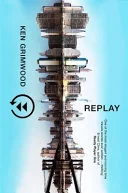
Ken Grimwood's 1986 novel "Replay" asks what happens when a man relives his life with all his memories intact.
Jeff Winston dies and wakes up back in his college dorm room, 18 years old again, with full recall of his previous life. This premise drives Ken Grimwood's 1986 novel "Replay." Each time Winston dies, he restarts his life from the same point, retaining knowledge of everything that will happen. He uses this foreknowledge to seek wealth, love, and meaning, but the seemingly endless cycles of his existence begin to wear on him.
The narrative examines the tension between fate and free will. Can knowing the future truly alter destiny, or are certain events predetermined? Winston grapples with the emotional burden of repeated loss and the potential for genuine change when faced with the same life again and again. The book explores how accumulated experience, even across lifetimes, affects one's perspective and actions.
Published in 1986, "Replay" touches on themes long present in esoteric thought, particularly those concerning the cyclical nature of existence and the potential for spiritual evolution through repeated experience. While not explicitly aligned with a specific metaphysical movement, the novel resonates with ideas found in reincarnation doctrines and concepts of karma, where actions in one life influence subsequent ones. Grimwood taps into a broader cultural fascination with self-discovery and the possibility of altering one's predetermined path, a perennial concern in traditions that view life as a series of lessons or opportunities for growth.
💡 Why Read This Book?
• You will learn how foreknowledge impacts personal choice by following Jeff Winston’s repeated attempts to alter his life after his death in 1988, seeing the consequences of his decisions unfold across different timelines. • You will feel the weight of accumulated experience and regret as Jeff grapples with the emotional burden of remembering past failures and losses, even when presented with opportunities for success. • You will consider the nature of destiny versus free will, as Jeff's efforts to change his fate in the 1970s and 1980s highlight the recurring patterns and inevitable outcomes he encounters.
⭐ Reader Reviews
Honest opinions from readers who have explored this book.
❓ Frequently Asked Questions
What is the central premise of Ken Grimwood's 'Replay'?
The novel's core idea is that its protagonist, Jeff Winston, dies and then relives his life from his 18th birthday onwards, retaining all memories from his previous iterations. This allows him to attempt different choices and outcomes.
When was 'Replay' first published?
'Replay' was originally published in 1986, making it a product of the mid-1980s speculative fiction landscape.
What are the main themes explored in 'Replay'?
The book primarily explores themes of reincarnation, fate versus free will, the impact of memory on identity, and the potential for personal growth or despair when given multiple chances at life.
Does 'Replay' have any connection to esoteric or occult traditions?
While not directly tied to a specific esoteric school, its exploration of reincarnation and the cyclical nature of existence aligns with concepts found in various spiritual and metaphysical philosophies that consider multiple lives.
Is 'Replay' a science fiction book?
Yes, 'Replay' is classified as speculative fiction, often bordering on science fiction due to its premise of temporal looping and altered realities, though it focuses heavily on character and philosophical questions.
What kind of character is Jeff Winston in 'Replay'?
Jeff Winston is portrayed as an ordinary man thrust into an extraordinary situation. He evolves through his repeated lives, from initial excitement and opportunism to a profound, often weary, contemplation of existence.
🔮 Key Themes & Symbolism
The Cycle of Existence
At its heart, 'Replay' examines the idea that life is not a single, linear event but a recurring cycle. The protagonist, Jeff Winston, experiences this literally by reliving his life multiple times after death. This concept echoes ancient philosophical and spiritual ideas about reincarnation and karma, suggesting that each life offers opportunities for learning and growth, or for succumbing to familiar patterns. The novel probes whether true change is possible within such a cyclical framework, or if certain aspects of one's destiny are immutable, regardless of repeated attempts.
Fate vs. Free Will
The narrative is a profound meditation on the age-old debate between determinism and free will. Armed with the knowledge of his past lives and future events, Jeff attempts to alter his trajectory, avoid tragedies, and achieve different outcomes. However, the novel consistently questions whether his actions truly represent free will or if he is merely playing out a predetermined script in a different sequence. This tension creates a compelling exploration of agency and the illusion of control, prompting readers to consider their own perceived choices within the context of their lives.
The Burden of Memory
Grimwood masterfully portrays the psychological toll of remembering countless past experiences. Jeff's accumulated memories become both a tool and a heavy burden. He carries the weight of all his past loves, losses, and failures, leading to a sense of detachment and existential weariness. This theme examines the nature of consciousness and identity, questioning how much of 'self' is tied to singular experiences versus the accumulation of a lifetime (or multiple lifetimes). The novel suggests that infinite chances do not necessarily equate to infinite happiness or peace.
Personal Transformation
While the novel grapples with fatalism, it also implicitly explores the possibility of genuine personal transformation. Each 'replay' offers Jeff a chance to learn, adapt, and perhaps become a better version of himself, even if external circumstances remain stubbornly similar. His attempts to find meaning and connection across different iterations of his life, particularly in his relationships, highlight a persistent human drive for purpose and fulfillment. The novel suggests that even within a repeating life, the internal journey of the individual can lead to profound shifts in perspective.
💬 Memorable Quotes
Direct passages from the work, attributed to the author.
“He died in 1988. He was 43. He woke up in 1963.”
— This stark, declarative opening immediately establishes the central premise of the novel, plunging the reader directly into the extraordinary circumstance of the protagonist's temporal displacement and the beginning of his repeated life.
“The second time around, he knew.”
— This concise statement captures the unique challenge and opportunity faced by the protagonist. Knowledge of the future from past lives fundamentally alters his approach to life's events and decisions.
“He had to choose between living a life he already knew, or trying to create a new one.”
— This highlights the core conflict for the protagonist: the temptation to rely on past successes versus the desire to forge an entirely novel path, underscoring the themes of fate and free will.
“With each replay, the world felt both familiar and alien.”
— This reflects the protagonist's evolving relationship with reality. The comfort of the known clashes with the unsettling awareness of his unique condition and the potential for different outcomes, creating a sense of alienation.
“He learned that some doors, once closed, could never be reopened, no matter how many times he knocked.”
— This interpretation suggests a deterministic element within the narrative. Despite his foreknowledge and repeated attempts, certain events or opportunities remain fixed, implying limitations to his ability to alter destiny.
🌙 Esoteric Significance
Tradition
While "Replay" is not explicitly a text of a specific esoteric tradition like Hermeticism or Gnosticism, its core premise of reincarnation and the cyclical nature of existence aligns closely with concepts found in Eastern philosophies, particularly Hinduism and Buddhism, which posit the soul’s journey through multiple lifetimes. It also speaks to Western esoteric ideas of soul development and spiritual evolution across various incarnations, often explored in Theosophy or Anthroposophy. Grimwood's work uses a secular, fictional framework to explore these ancient metaphysical ideas about repeated lives and the lessons learned through them.
Symbolism
The most potent symbol in "Replay" is the act of the 'replay' itself, representing the potential for rebirth and the opportunity for learning or correction across lifetimes. The recurring motif of specific dates, like Jeff's death in 1988 and waking in 1963, functions as a temporal anchor, symbolizing the inescapable nature of certain anchors in time and fate. The concept of memory, fragmented and cumulative, symbolizes the evolving self and the psychic residue of past experiences that shape present consciousness, echoing ideas of akashic records or imprinted karma.
Modern Relevance
The themes of temporal looping and existential re-evaluation in "Replay" remain highly relevant in contemporary speculative fiction and philosophical discourse. Modern explorations of consciousness, artificial intelligence, and simulated realities often touch upon similar questions of identity, memory, and the nature of experience. Thinkers and creators interested in narrative structures that question linear time and causality, such as those found in shows like 'Black Mirror' or the theoretical work on quantum entanglement and consciousness, can find a foundational narrative exploration in Grimwood's novel. It continues to be a touchstone for discussions on what it means to live, learn, and choose.
👥 Who Should Read This Book
• Readers interested in the philosophical implications of reincarnation and temporal loops, seeking a narrative that examines the psychological effects of reliving one's life. • Speculative fiction enthusiasts who appreciate character-driven stories that blend existential questions with engaging plot devices, moving beyond typical genre tropes. • Individuals contemplating the nature of fate, free will, and personal growth, looking for a fictional exploration of how foreknowledge might impact life choices and the pursuit of happiness.
📜 Historical Context
Ken Grimwood's "Replay," released in 1986, emerged during a vibrant period for speculative fiction, which was increasingly pushing the boundaries of genre by incorporating psychological depth and philosophical inquiry. The mid-1980s saw authors like William Gibson popularizing cyberpunk, while others explored different facets of consciousness and reality. "Replay" offered a more character-driven approach to temporal paradoxes than typical sci-fi fare, focusing on the emotional and existential implications of reliving one's life. While not directly aligned with any specific esoteric movement, its themes of reincarnation and cyclical existence tapped into a broader cultural fascination with self-discovery and the nature of reality that had been gaining traction since the counterculture movements of the 1960s and 70s. The novel was well-received critically, earning the World Fantasy Award for Best Novel in 1988, solidifying its place within the literary speculative fiction canon of its era.
📔 Journal Prompts
Jeff Winston's repeated encounters with the same individuals across different life iterations.
The emotional weight of foreknowledge and its impact on relationships.
The contrast between achieving personal goals and finding existential fulfillment.
The concept of 'doors' that cannot be reopened after being closed.
The evolving perspective of Jeff Winston through his multiple lives.
🗂️ Glossary
Replay
The narrative device and central concept of the novel, where the protagonist, Jeff Winston, dies and relives his life from a younger age, retaining memories of all previous iterations.
Temporal Loop
A narrative structure where a character or event is repeated, often with variations, suggesting a cyclical or non-linear progression of time, a common trope in speculative fiction.
Foreknowledge
The state of knowing events before they happen, a key element for the protagonist that drives his actions and dilemmas throughout the novel.
Determinism
The philosophical idea that all events, including human cognition, behavior, and decisions, are causally determined by an unbroken chain of prior occurrences, often contrasted with free will.
Existential Weariness
A state of profound fatigue or apathy stemming from contemplating the meaning and purpose of existence, particularly relevant to Jeff Winston's experience of repeated lives.
Akashic Records
A hypothetical compendium of all universal events, thoughts, and emotions that have occurred, are occurring, or could occur, conceptually related to Jeff's cumulative memory.
Karma
In various Indian religions, the principle of cause and effect where the sum of a person's actions in this and previous states of existence determines their future fate; a concept echoed in the novel's exploration of consequences.
🔮 Readers Also Liked
Browse all →









More by Ken Grimwood
All books →


More Free Occult Philosophy Books
View all →