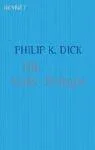
Four novels of the 1960s

 81
81

Four novels of the 1960s
Philip K. Dick's "Four Novels of the 1960s" offers a potent distillation of his most persistent obsessions. The strength lies in the sheer density of ideas packed into each narrative; the way Dick could conjure entire universes built on shaky ontological foundations is unparalleled. One particularly arresting passage, present in variations across these works, concerns the nature of memory – how it can be implanted, manipulated, or even entirely fabricated, leaving characters (and readers) adrift in a sea of manufactured experience. However, the collection's primary limitation is its inherent repetition of thematic concerns. While each novel presents a unique scenario, the underlying philosophical questions often feel like variations on a theme, which can lead to a sense of déjà vu for those already familiar with Dick's catalog. Nevertheless, for its unflinching exploration of reality's slipperiness, this collection remains a significant entry in his bibliography.
📝 Description
81
Philip K. Dick's 1960s novels grapple with fractured realities and the nature of consciousness.
This collection gathers four novels by Philip K. Dick, originating from the 1960s. These works examine characters who confront unstable identities and confusing situations. They are known for their speculative quality, often questioning what reality is and how technology shapes human experience. Readers will encounter protagonists wrestling with the boundaries of their own minds and the world around them.
The narratives are suited for those who enjoy science fiction that challenges standard ideas about existence. The books engage with philosophical questions, particularly concerning artificial intelligence, societies under oppressive control, and how truth is perceived individually. Fans of Dick's wider body of work will recognize his distinctive style and his continued interest in fundamental existential concerns.
Dick's 1960s fiction frequently touches upon Gnostic themes, particularly the idea of a false or illusory reality constructed by a lesser demiurge, which resonates with the simulation hypothesis. His characters often seek a hidden truth or a form of salvation from a world that feels fundamentally unreal or controlled. This pursuit mirrors esoteric traditions that look beyond material appearances for a deeper, often spiritual, understanding of existence, questioning the nature of perception and the self.
💡 Why Read This Book?
• Gain insight into the concept of 'solipsistic paranoia,' a hallmark of Dick's work, as explored through characters questioning their very existence in specific narrative arcs. • Understand the influence of 1960s anxieties on speculative fiction by examining how the novels reflect concerns about technological advancement and societal control. • Experience Dick's unique narrative technique where reality itself is a mutable construct, challenging your perception of truth as seen in the unreliable perceptions of protagonists.
⭐ Reader Reviews
Honest opinions from readers who have explored this book.
❓ Frequently Asked Questions
What is the significance of the 1960s setting for these Philip K. Dick novels?
The 1960s were a period of intense social change, technological acceleration, and geopolitical tension. These novels reflect that era's anxieties about government control, artificiality, and the potential for reality itself to be manipulated, a backdrop crucial to understanding Dick's paranoia-infused narratives.
Are these novels connected by a single overarching plot or characters?
No, these are four distinct novels. While they share thematic concerns and Philip K. Dick's characteristic style, they feature different characters and plotlines, offering varied explorations of his core ideas.
What are some recurring themes in Philip K. Dick's 1960s novels?
Recurring themes include the nature of reality, artificial intelligence, paranoia, the definition of humanity, memory, and the critique of authoritarian systems. The novels often question what is real and who is truly in control.
Who would enjoy reading 'Four Novels of the 1960s'?
Readers who enjoy philosophical science fiction, existentialist literature, and authors like Ursula K. Le Guin or Frank Herbert will find much to appreciate. It's also for those interested in the cultural impact of the 1960s on literature.
When were these novels originally published, and why are they collected?
These novels were first collected and published in 2008. They are brought together to showcase a significant period of Philip K. Dick's writing, highlighting his consistent exploration of complex speculative and philosophical themes.
Does this collection include Philip K. Dick's most famous works?
While 'famous' is subjective, this collection features novels representative of Dick's distinctive voice and thematic preoccupations from a key period. They are highly regarded within his body of work, though perhaps not as widely adapted as some of his other novels.
🔮 Key Themes & Symbolism
The Nature of Perceived Reality
These novels consistently challenge the reader's understanding of what constitutes reality. Dick employs narrative devices that blur the lines between the subjective experience of characters and any objective truth, often leading to situations where characters question their sanity or the very fabric of their existence. Concepts like the simulation hypothesis and the malleability of memory are explored, forcing a re-evaluation of what we accept as real, a core tenet explored by thinkers in Gnostic traditions regarding illusory worlds.
Artificiality and Authenticity
A central concern is the distinction between the artificial and the authentic. This manifests in explorations of androids, advanced AI, and manufactured identities. Characters often struggle to discern genuine emotion or consciousness from programmed responses, mirroring philosophical debates about the soul and consciousness. The quest for an authentic self in a world saturated with synthetic influences is a driving force, reflecting anxieties that resonate with Theosophical ideas about spiritual evolution versus material illusion.
Paranoia and Control
Dick's work is steeped in a pervasive sense of paranoia, often stemming from oppressive governmental or corporate entities. These forces are frequently depicted as omniscient and manipulative, exerting control through surveillance, propaganda, or the manipulation of information. This theme aligns with critiques found in certain esoteric traditions that view earthly powers as illusory or inimical to spiritual liberation, echoing Gnostic Demiurgic concepts.
The Search for Meaning and God
Beneath the speculative elements lies a profound search for meaning and a higher power, or 'God.' Characters often grapple with existential questions about purpose, destiny, and the presence of a benevolent (or malevolent) divine force. This spiritual quest, even when framed through science fiction tropes, connects to perennial philosophical and mystical inquiries into the nature of the cosmos and humanity's place within it.
💬 Memorable Quotes
Direct passages from the work, attributed to the author.
“Is it possible that the entire world is an illusion, a construct designed to deceive us?”
— This question expresses the pervasive doubt that plagues many of Dick's protagonists. It reflects a core philosophical inquiry into solipsism and the nature of objective reality, suggesting that our perceived world might be fundamentally unreliable or artificial.
“They were not alive, not really. They were just sophisticated machines, programmed to mimic life.”
— This concept highlights the theme of artificiality versus authenticity. It raises questions about what truly defines life and consciousness, and whether complex imitation can be mistaken for genuine being.
“Memory is not a record of the past, but a tool to shape the present.”
— This idea challenges the traditional view of memory as a faithful repository of events. It suggests that memory is fluid, subjective, and can be manipulated or even fabricated to influence current perceptions and actions.
“Perhaps there is no 'real' world, only layers of perception, each more convincing than the last.”
— This concept reflects the idea of multiple realities or nested illusions. It implies that our understanding of truth is limited by our perceptual frameworks, and that deeper levels of reality may remain inaccessible or incomprehensible.
💡 Key Ideas
Editorial paraphrase of the work's core concepts — not direct quotes.
The true enemy is not flesh and blood, but the systems that control our thoughts.
This quote points to Dick's critique of authoritarianism and pervasive control mechanisms. It suggests that ideological or systemic oppression, rather than physical force, represents the most insidious threat to individual freedom and consciousness.
🌙 Esoteric Significance
Tradition
Dick's work, particularly from the 1960s, often engages with Gnostic themes of a flawed creator (Demiurge) and a hidden, true God, alongside explorations of altered states that touch upon mystical traditions. His narratives frequently depict protagonists trapped in illusory worlds or under the influence of malevolent forces, mirroring Gnostic cosmology where the material world is a prison. He departs from strict adherence by infusing these concepts with a distinctly modern, technological, and paranoid sensibility.
Symbolism
The concept of the 'schizoid' or fractured self is a potent symbol, representing the breakdown of a unified identity under the pressure of illusory realities or external manipulation. Androids and artificial beings serve as symbols for the inauthentic or the 'other,' forcing a re-examination of what constitutes genuine consciousness. The ubiquitous presence of advanced technology often functions symbolically as a tool of the Demiurge, perpetuating the illusion of the material world.
Modern Relevance
Dick's ideas on simulated realities and the nature of consciousness remain highly relevant in the age of virtual reality, advanced AI, and ubiquitous digital interfaces. Contemporary thinkers in philosophy of mind and transhumanism frequently cite his work when discussing the potential for artificial consciousness and the philosophical implications of immersive digital environments. His critiques of surveillance and control also resonate strongly with current debates about data privacy and algorithmic governance.
👥 Who Should Read This Book
• Readers interested in the philosophical underpinnings of science fiction, particularly those exploring Gnostic themes and existentialism. • Students of 20th-century literature and culture who want to understand the impact of the 1960s on speculative fiction. • Fans of Philip K. Dick seeking a concentrated dose of his signature paranoia, reality-bending narratives, and explorations of artificial consciousness.
📜 Historical Context
The 1960s were a crucible for speculative fiction, a decade marked by the Vietnam War, the Civil Rights Movement, and the burgeoning counterculture. Philip K. Dick’s novels from this period, though collected later, reflect this era’s pervasive anxieties. Thinkers like Marshall McLuhan were theorizing about media's impact on perception, while the space race fueled both technological optimism and existential dread. Dick’s work engaged with these currents, often through a lens of paranoia and ontological uncertainty, contrasting with the more utopian visions found in some science fiction of the time. His explorations of artificial intelligence and altered states of consciousness found a contemporary echo in the psychedelic movement and the growing awareness of psychological manipulation. While not always receiving mainstream critical acclaim during the decade itself, his unique voice influenced authors like William Gibson and continues to be studied for its prescient engagement with themes of reality and control.
📔 Journal Prompts
The concept of the 'schizoid' self and its implications for identity.
The role of technology as a tool of control or liberation in these narratives.
Analysis of the Demiurge figure within these fictional universes.
Reflections on the unreliable narrator and its effect on reader perception.
The portrayal of artificial beings and the definition of consciousness.
🗂️ Glossary
Solipsism
The philosophical idea that only one's own mind is sure to exist. In literature, it's often used to create extreme psychological tension as characters question the reality of the external world and other people.
Gnosticism
An ancient religious and philosophical movement that posited a distinction between a supreme, unknowable God and a lesser, flawed creator (Demiurge) responsible for the material world, which is seen as illusory or evil.
Demiurge
In Gnosticism, the creator of the material universe, often depicted as ignorant, malevolent, or a flawed imitation of the true divine.
Ontological Uncertainty
Doubt or questioning about the fundamental nature of existence and reality. This is a pervasive theme in Dick's work, where characters and readers alike grapple with what is real.
Simulation Hypothesis
The idea that our perceived reality is, in fact, an artificial simulation, possibly created by a more advanced civilization or entity.
Android
A robot or artificial being designed to look and act like a human. In Dick's fiction, the line between androids and humans is often blurred, raising questions about consciousness and identity.
Schizoid
In a psychological context, referring to a personality disorder characterized by detachment from social relationships and a restricted range of emotional expression. In Dick's work, it often relates to fractured or fragmented identities.
🔮 Readers Also Liked
Browse all →![[The English physician] Culpeper's English physician; and complete herbal. To which are now first added, upwards of one hundred additional herbs, with a display of their medicinal and occult properties, physically applied to the cure of all disorders incident to banking. To which are annexed, rules for compounding medicine. 1789](/img/thumb/the-english-physician-culpeper-s-english-physician-and-complete-herbal-to-which-are-now-first-added-upwards-of-one-hundred-additional-herbs-with-a-display-of-their-medicinal-and-occult-properties-phys.webp)









More by Philip K. Dick
All books →




More Free Occult Philosophy Books
View all →