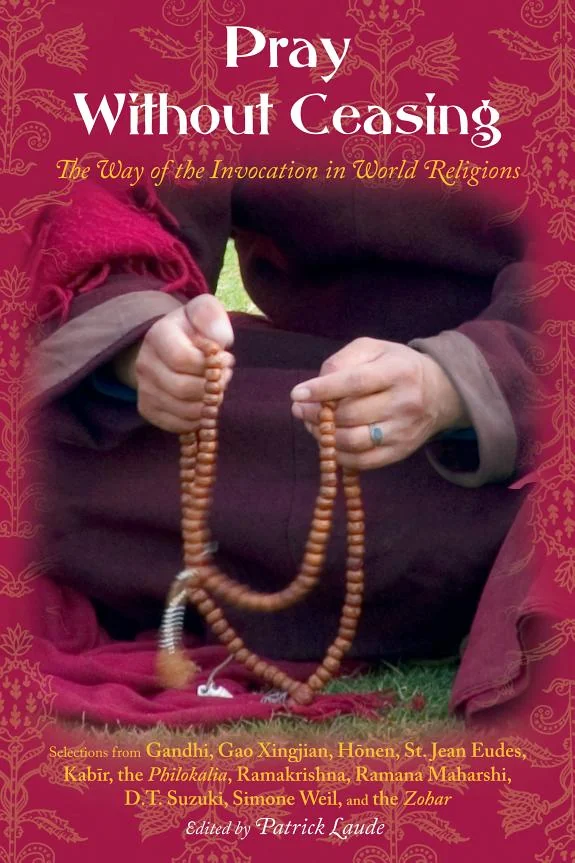
Pray Without Ceasing
 74
74

Pray Without Ceasing
Patrick Laude's "Pray Without Ceptasing" avoids the saccharine platitudes that often characterize popular guides to prayer. Instead, Laude offers a rigorous philosophical examination of the contemplative state. He compellingly argues for prayer as a mode of existence rather than a mere act, a viewpoint that challenges conventional devotional approaches. One notable strength is his adeptness at drawing connections between seemingly disparate philosophical and spiritual traditions, particularly evident when he discusses the "prayer of the heart" as a continuous state of awareness. However, the book's dense philosophical prose can occasionally obscure its practical applications for the average spiritual seeker. A passage exploring the concept of "inner silence" as a prelude to divine apprehension, while intellectually stimulating, might leave some readers yearning for more direct experiential guidance. Despite this, Laude's work stands as a significant contribution to the philosophical literature on prayer.
📝 Description
74
Patrick Laude's 2006 book redefines prayer as a continuous state of consciousness, not just petition.
Published in 2006, Patrick Laude's "Pray Without Ceasing" examines contemplative prayer, arguing it is more than simple supplication. The work posits prayer as a sustained state of awareness, a fundamental aspect of being. Laude challenges the common understanding of prayer as a transactional act, instead presenting it as a continuous spiritual condition.
This book is suitable for those interested in the philosophical dimensions of spiritual practice. It will resonate with students of mysticism and comparative religion who seek to understand contemplative traditions beyond their outward forms. The text engages with thinkers who have grappled with divine presence, connecting contemporary interest in contemplation with historical spiritual inquiry.
Laude's work engages with a long tradition of contemplative spirituality, tracing its roots to early Christian mystics. It finds resonance with figures like Simone Weil, who intensely considered the nature of divine presence. The book also draws parallels with Eastern contemplative practices, suggesting a universal current in the pursuit of inner awareness and direct spiritual experience. This approach situates the book within a broader mystical current that seeks direct experience of the divine beyond creed or ritualistic adherence.
💡 Why Read This Book?
• Gain a philosophical framework for understanding prayer as a sustained state of being, not just an action, as explored through the concept of "prayer as being." • Understand the "prayer of the heart" as a continuous inner awareness, a key concept that distinguishes Laude's approach from conventional devotional practices. • Explore the concept of "inner silence" as a foundational element for divine encounter, a practice discussed in relation to contemplative traditions.
⭐ Reader Reviews
Honest opinions from readers who have explored this book.
❓ Frequently Asked Questions
What is the core philosophical idea behind "Pray Without Ceasing"?
The book posits prayer not as a transactional act of supplication, but as a continuous state of consciousness and being, a fundamental orientation of the soul towards the divine.
When was Patrick Laude's "Pray Without Ceasing" first published?
Patrick Laude's "Pray Without Ceasing" was first published in 2006, reflecting a contemporary interest in philosophical approaches to spiritual practice.
What is the "prayer of the heart" as discussed by Laude?
The "prayer of the heart" refers to a continuous, almost involuntary spiritual awareness or presence, a deep-seated connection with the divine that permeates one's being.
Does the book offer practical prayer techniques?
While it is deeply philosophical, the book's exploration of "inner silence" and sustained prayer consciousness provides a conceptual basis for developing contemplative practices.
What kind of reader would benefit most from "Pray Without Ceasing"?
Individuals interested in the philosophical dimensions of mysticism, contemplative traditions, and those seeking to deepen their understanding of prayer beyond devotional rituals will find this work particularly valuable.
How does Laude's work relate to other contemplative traditions?
Laude's exploration of "inner silence" and "prayer as being" draws parallels with and engages with various contemplative traditions, suggesting universal aspects of spiritual seeking.
🔮 Key Themes & Symbolism
Prayer as Being
This theme redefines prayer from an act of petition to a fundamental state of existence. Laude argues that true prayer is a continuous orientation of the soul, a 'being with' the divine rather than an 'asking from' the divine. This perspective shifts the focus from specific requests to a sustained awareness of presence, impacting one's entire mode of living. The work explores how this state can be cultivated through consistent inner discipline.
The Prayer of the Heart
Central to Laude's thesis is the concept of the "prayer of the heart." This is not merely an emotional state but a deep, abiding consciousness that transcends thought and feeling. It represents an almost innate spiritual awareness, a constant, quiet communion that is the natural state of a soul aligned with the divine. This theme emphasizes an internal, subtle form of prayer accessible through deep inner stillness.
Inner Silence
Laude highlights "inner silence" as a crucial gateway to experiencing prayer as a state of being. This silence is not an absence of sound but a quieting of the incessant chatter of the mind and ego. It is in this profound stillness that the deeper spiritual currents can be perceived and the continuous prayer of the heart can flourish. This concept bridges Western contemplative ideas with principles found in Eastern spiritual disciplines.
Contemplative Consciousness
The overarching theme is the cultivation of a contemplative consciousness. This involves a shift in perception, moving beyond the ordinary sensory and intellectual engagement with the world to a more direct, intuitive apprehension of reality. Laude's work suggests that this form of consciousness is the essence of sustained prayer, a way of living that is perpetually open to the divine.
💬 Memorable Quotes
Direct passages from the work, attributed to the author.
“Prayer is not what we do, but what we are.”
— This concise statement captures Laude's central argument: prayer is a fundamental state of existence and consciousness, not merely an occasional activity or request.
“The prayer of the heart is an ever-present awareness.”
— This highlights the continuous, almost involuntary nature of deep spiritual connection, suggesting a subtle, constant communion that underlies daily life.
“Inner silence is the space where divine encounter occurs.”
— This emphasizes the crucial role of mental and spiritual stillness in facilitating a direct experience of the divine, contrasting with the noise of everyday thought.
“The essence of prayer is a perpetual orientation.”
— This interpretation stresses that prayer is a continuous direction of one's inner life towards the divine, a constant turning of the soul.
💡 Key Ideas
Editorial paraphrase of the work's core concepts — not direct quotes.
We pray by simply being present.
This paraphrased concept suggests that a state of full, conscious presence is itself a form of prayer, aligning with the idea of prayer as a state of being.
🌙 Esoteric Significance
Tradition
Laude's work can be situated within the broad stream of Western Christian mysticism, particularly its contemplative and apophatic branches. It shares affinities with Hesychasm, a tradition emphasizing the Jesus Prayer as a continuous state of consciousness, and with the philosophical explorations of figures like Pseudo-Dionysius the Areopagite, who discussed divine unknowability. While rooted in a Christian context, its emphasis on "inner silence" and "prayer as being" appeals to broader contemplative practices found across various esoteric traditions.
Symbolism
The primary symbolic motif is "silence," representing not an absence of sound but a profound inner stillness that allows for direct spiritual apprehension. "The heart" functions symbolically as the seat of spiritual awareness and divine connection, a locus where prayer becomes a state of being. "Presence" itself is symbolic, indicating a continuous awareness of the divine that permeates existence, transcending ordinary perception.
Modern Relevance
Contemporary practitioners of mindfulness and contemplative meditation, particularly those seeking a philosophical grounding for their practices, find resonance in Laude's work. Thinkers exploring the intersection of consciousness studies and spirituality, as well as those within Christian contemplative communities seeking to articulate the depth of their practice, draw upon his insights into "prayer as being" and "inner silence."
👥 Who Should Read This Book
• Students of Western Christian Mysticism seeking a philosophical exploration of prayer as a state of being. • Individuals interested in comparative religion and spirituality who wish to understand the concept of continuous prayer beyond devotional acts. • Seekers drawn to contemplative practices and inner silence, looking for conceptual frameworks to deepen their experience.
📜 Historical Context
Published in 2006, Patrick Laude's "Pray Without Ceasing" emerged during a period of renewed interest in contemplative spirituality, often viewed as a counterpoint to the more pragmatic or evangelical religious movements of the late 20th and early 21st centuries. Laude's work engages with a long lineage of Christian mysticism, echoing themes found in the Desert Fathers and figures like Meister Eckhart. It also implicitly dialogues with existentialist philosophers who grappled with being and presence. While not a direct engagement, it exists in a similar intellectual climate to thinkers like Simone Weil, who also explored the nature of attention and divine presence. The book's philosophical depth distinguishes it from more accessible guides, positioning it within academic or advanced spiritual inquiry. Its reception was primarily within circles interested in the philosophical underpinnings of mysticism, rather than mainstream religious discourse.
📔 Journal Prompts
Reflect on the concept of "prayer as being" in your daily life.
How does the idea of "inner silence" challenge your current understanding of prayer?
Explore the "prayer of the heart" as a continuous state of awareness.
Consider the implications of "prayer as being" for your relationship with the divine.
What does "sustained prayer consciousness" mean to you after reading this work?
🗂️ Glossary
Prayer as Being
The philosophical concept that prayer is not an action performed, but a fundamental state of existence and consciousness, a continuous orientation of the soul.
Prayer of the Heart
A deep, continuous spiritual awareness or presence that transcends ordinary thought and feeling, representing an innate connection with the divine.
Inner Silence
A profound stillness of the mind and ego, cultivated through spiritual discipline, which serves as a gateway for divine encounter and deeper spiritual perception.
Contemplative Consciousness
A mode of awareness characterized by direct, intuitive apprehension of reality, cultivated through practices that quiet the discursive mind.
Apophatic Prayer
A form of prayer that emphasizes divine unknowability and transcendence, often through negation and silence, rather than positive description.
Petitionary Prayer
The common form of prayer characterized by requests or supplications made to a divine entity.
Spiritual Discipline
Regular practices undertaken to cultivate spiritual awareness, inner stillness, and a closer relationship with the divine.
🔮 Readers Also Liked
Browse all →
![Collected Short Stories [51 stories]](/img/thumb/collected-short-stories-51-stories-roald-dahl-593005.webp)








More by Patrick Laude
All books →
More Free Occult Philosophy Books
View all →