Religion
 82
82

Religion
Rudolf Steiner's "Religion" offers a challenging, though often rewarding, glimpse into his complex spiritual cosmology. Andrew Welburn’s compilation effectively gathers excerpts that speak to the core of Steiner's religious philosophy, moving beyond dogma to the lived experience of the divine. The section on 'rediscovering the festivals and the life of the earth' particularly stands out, presenting a view of nature imbued with spiritual significance. However, the book's inherent density, a common trait in Steiner's extensive output, can make it an arduous read for newcomers. Without Welburn’s extensive commentary, many concepts would remain obscure. It is a valuable resource for those already familiar with Anthroposophy, but less accessible as a standalone introduction to religious thought. The work serves best as a supplementary text, illuminating the spiritual dimensions Steiner perceived in everyday life and traditional religious observances.
📝 Description
82
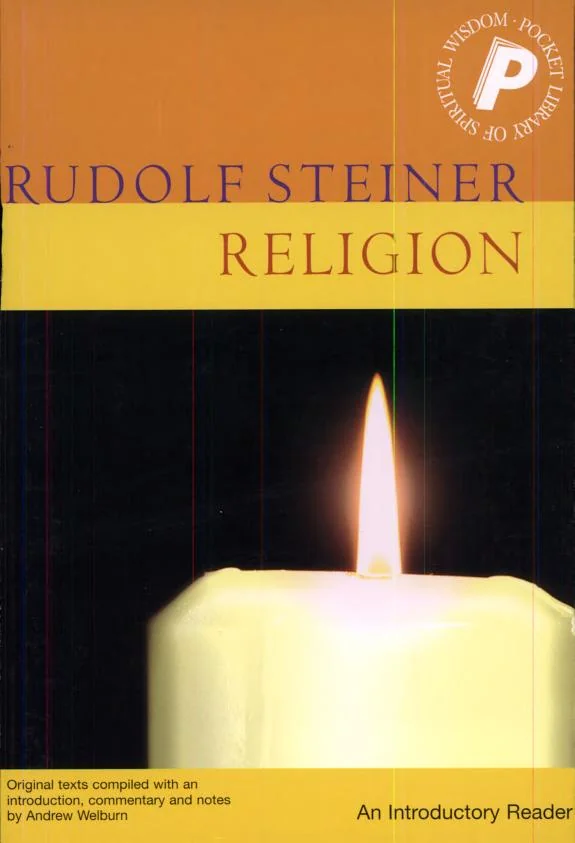
Rudolf Steiner's lectures on religion were collected in this volume, first published in 2003.
This book gathers selected writings and lectures by Rudolf Steiner concerning religion, curated by Andrew Welburn. It serves as an introduction to Steiner's spiritual-scientific view of faith, ritual, and the divine. The collection moves beyond simple theology to discuss the practical and experiential aspects of religious life.
It is intended for students of Anthroposophy, scholars of comparative religion, and those seeking a more personal grasp of religious traditions. The book appeals to readers who find standard religious explanations lacking and are open to examining the spiritual foundations of human existence and cosmic processes. Individuals interested in how religious ideas developed historically will also find value here.
Steiner, active in the early 20th century, created Anthroposophy to connect science and spirituality. He aimed to offer a path to spiritual understanding through inner development, similar to scientific observation. His work built upon the Theosophical movement before he established his own Anthroposophical Society. Steiner's ideas provided an alternative to the materialistic philosophies common at the time.
Rudolf Steiner developed Anthroposophy in the early 20th century, a spiritual philosophy that sought to bridge the perceived gap between science and spirituality. He proposed a path to spiritual knowledge through inner development and disciplined thinking, akin to scientific inquiry. This work engages with core religious concepts, reinterpreting them through his unique spiritual science. It touches upon ideas such as karma, spiritual evolution, and the inner meaning of rituals and festivals, placing them within a broader cosmic framework.
💡 Why Read This Book?
• You will learn about Steiner's perspective on the spiritual nature of festivals, as detailed in the section 'rediscovering the festivals and the life of the earth,' offering a unique way to connect with natural cycles. • You will gain insight into Steiner's concept of 'walking with Christ,' understanding it not as blind faith but as a conscious spiritual endeavor for personal destiny. • You will explore the meaning of sin and grace through an Anthroposophical lens, as presented in the work, providing a different framework for understanding moral and spiritual accountability.
⭐ Reader Reviews
Honest opinions from readers who have explored this book.
❓ Frequently Asked Questions
What is the primary focus of Rudolf Steiner's "Religion"?
The book focuses on Rudolf Steiner's unique spiritual-scientific perspective on religion, exploring concepts like prayer, sin, grace, and the significance of festivals and Christ's role in human evolution.
Who compiled and edited this collection of Steiner's work?
Andrew Welburn compiled and edited this introductory reader, bringing together excerpts from Rudolf Steiner's numerous talks and writings on the subject of religion.
When was Rudolf Steiner's "Religion" first published?
This specific collection, "Religion," was first published in 2003, though the original works by Rudolf Steiner date from the early to mid-20th century.
What are some of the key topics covered in Steiner's "Religion"?
Key topics include mysticism, the importance of prayer, the meaning of sin and grace, rediscovering the Bible, true communion, festivals, destiny, and the significance of Christ.
Is this book suitable for someone new to Rudolf Steiner's ideas?
While intended as an introductory reader, Steiner's dense style and complex concepts can be challenging for absolute beginners. Prior familiarity with Anthroposophy or spiritual science may enhance understanding.
What is Anthroposophy's view on prayer as presented in this book?
Steiner views prayer not as a mere supplication but as a conscious spiritual activity, a means of connecting with higher spiritual beings and realities, thereby fostering inner development.
🔮 Key Themes & Symbolism
The Spiritual Nature of Prayer
Steiner's work emphasizes prayer as a potent spiritual activity, not simply asking for favors, but a conscious engagement with higher spiritual forces. This collection highlights prayer as a means of inner development and a connection to the divine. It suggests that through focused intention and spiritual consciousness, individuals can actively participate in the spiritual world, influencing both their own evolution and the broader cosmic processes.
Sin, Grace, and Karma
The book reinterprets traditional religious concepts of sin and grace within a framework of spiritual evolution and karma. Sin is viewed not as an inherent flaw but as a consequence of spiritual ignorance or misdirection, while grace is understood as divine assistance available to those striving for spiritual knowledge. This perspective connects human actions to cosmic justice, suggesting that understanding these forces is crucial for navigating one's destiny.
The Christ Impulse and Earthly Life
A central theme is the 'Christ impulse,' presented as a central event in Earth's spiritual history that influences human consciousness and evolution. Steiner's interpretation moves beyond historical or doctrinal views, seeing Christ as a cosmic being whose influence permeates life, death, and the spiritual evolution of humanity. The book explores how 'walking with Christ' signifies a conscious alignment with this spiritual force for personal and collective growth.
Rediscovering Festivals and Earthly Rhythms
This aspect of Steiner's thought reframes traditional religious festivals and the natural year as expressions of cosmic spiritual rhythms. The book encourages a deeper perception of the spiritual forces at play in the cycle of seasons and human celebrations. By consciously engaging with these earthly rhythms, individuals can better understand their connection to the cosmos and their place within the grand spiritual-material interplay.
💬 Memorable Quotes
Direct passages from the work, attributed to the author.
“The importance of prayer”
— This refers to Steiner's perspective that prayer is not merely petitionary but a vital spiritual exercise that actively connects the individual to higher realms and fosters inner transformation.
“The meaning of sin and grace”
— This suggests a re-evaluation of traditional concepts, viewing sin as a deviation from spiritual path and grace as divine support for one's spiritual journey and understanding.
“Rediscovering the festivals and the life of the earth”
— This highlights Steiner's view that natural cycles and traditional celebrations hold profound spiritual significance, reflecting cosmic rhythms and offering opportunities for spiritual connection.
“Finding one's destiny: walking with Christ”
— This concept implies that discovering one's life purpose involves consciously aligning oneself with the spiritual influence of Christ, seen as a cosmic force for evolution.
“True communion”
— This phrase points to a deeper, spiritual connection with the divine and with fellow beings, transcending superficial social interaction and engaging on a soul level.
🌙 Esoteric Significance
Tradition
Steiner's work draws from and synthesizes elements of various esoteric traditions, including Hermeticism, Gnosticism, and Kabbalah, yet forms a unique system known as Anthroposophy. It departs from traditional Theosophy by emphasizing a more individualized path of spiritual development and a specific understanding of the Christ impulse. Anthroposophy presents itself as a spiritual-scientific method for perceiving higher worlds.
Symbolism
Key symbols include the 'Christ impulse,' representing a cosmic force for evolution and consciousness, and the earthly festivals, seen as periodic spiritual events reflecting cosmic rhythms. The concept of 'walking with Christ' symbolizes a conscious, ethical, and spiritual engagement with this impulse for personal destiny and spiritual growth.
Modern Relevance
Steiner's ideas on religion continue to influence contemporary spiritual seekers, Waldorf education, biodynamic agriculture, and certain therapeutic practices. Thinkers and practitioners in these fields often draw upon his reinterpretations of religious themes, his emphasis on spiritual perception, and his holistic view of humanity and the cosmos.
👥 Who Should Read This Book
• Students of Anthroposophy seeking to deepen their understanding of Rudolf Steiner's religious philosophy and its practical implications. • Comparative religion scholars interested in esoteric interpretations of faith, myth, and spiritual practice beyond conventional academic study. • Individuals exploring personal spiritual development who are seeking frameworks that connect inner life with cosmic and earthly realities.
📜 Historical Context
Rudolf Steiner developed his spiritual science, Anthroposophy, in the early 20th century, a period of immense scientific materialism and spiritual searching. His ideas emerged in dialogue with movements like Theosophy, though he eventually established his own distinct path. "Religion" reflects his effort to provide a spiritual understanding of religious traditions accessible through inner, rather than solely faith-based, means. This approach stood in contrast to the prevailing scientific worldview and the more traditional religious establishments of his time. Steiner's work sought to reveal the spiritual underpinnings of human existence and the cosmos, offering a 'science of the spirit.' His prolific output, including numerous lectures and writings on religion, aimed to re-enchant a world increasingly perceived as purely material.
📔 Journal Prompts
Reflect on the 'spiritual nature of prayer' as described by Steiner.
Consider the concept of 'finding one's destiny' through 'walking with Christ'.
Analyze the significance of 'rediscovering the festivals and the life of the earth'.
Explore the reinterpretation of 'sin and grace' within a spiritual-scientific context.
Meditate on the idea of 'true communion' beyond social interaction.
🗂️ Glossary
Anthroposophy
A spiritual philosophy founded by Rudolf Steiner, seeking to understand the spiritual in the human being, the cosmos, and their development through a 'science of the spirit'.
Christ Impulse
In Steiner's view, a cosmic event and ongoing spiritual force that entered earthly evolution, influencing human consciousness and spiritual development.
Spiritual Science
Steiner's term for his method of exploring the spiritual world, analogous to natural science but using inner faculties of perception and cognition.
Karma
The principle of cause and effect applied to spiritual and moral realms, where actions in one life influence subsequent existences, a concept Steiner integrated into his work.
Ahriman
A spiritual being in Steiner's cosmology, often representing materialistic tendencies and intellectual hardening, which must be balanced by spiritual understanding.
Lucifer
In Steiner's system, a spiritual being associated with illusion, pride, and premature spiritual development, needing to be met with truth and humility.
Theosophical Society
A global organization founded in 1875 that promotes comparative religion, philosophy, and science, and which Rudolf Steiner was initially a prominent member of before founding Anthroposophy.
This book appears in 1 collection
🔮 Readers Also Liked
Browse all →







From the “Anthroposophy” Collection
View all →







More Free Theosophy & Anthroposophy Books
View all →