Religions of India
 80
80

Religions of India
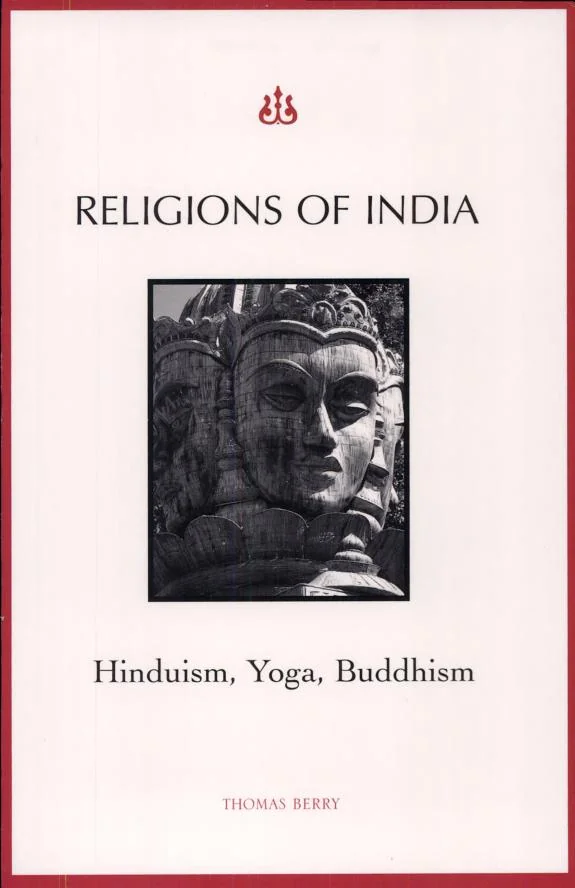
Thomas Berry’s "Religions of India" presents a dense, text-centric view of Indian spiritual traditions. Berry's strength lies in his ability to draw connections between disparate texts and philosophical currents, particularly his emphasis on the Vedic roots and the pursuit of liberation (Moksha) as a unifying thread. The section discussing the concept of Karma, for instance, is meticulously researched, tracing its development from early Vedic thought through later philosophical schools. However, the book's primary limitation is its academic, sometimes dry, prose, which can make it inaccessible to the casual reader. The original blurb accurately states Berry interprets India through spiritual and religious literature, but this focus sometimes overshadows the lived, social, or historical dimensions of these faiths. Ultimately, it's a valuable scholarly resource for those willing to engage with its demanding textual analysis.
📝 Description
80
Thomas Berry's Religions of India, published in 1996, interprets the spiritual core of Indian traditions.
Thomas Berry's "Religions of India" was first published in 1996. It focuses on an interpretation of India's spiritual traditions, drawing from their primary texts and philosophical literature. This is not a broad survey of comparative religion. Instead, Berry applies a specific lens to the spiritual and theological foundations of Hinduism, Buddhism, and Jainism.
The book is for readers seriously interested in India's intellectual and spiritual history. Students of comparative religion, philosophy, and theology will find value in its approach to understanding the development and articulation of core beliefs within these traditions. Those interested in the philosophical basis of Eastern mysticism and scholars of religious texts will appreciate Berry's detailed method.
Published in 1996, Berry's work engaged with a scholarly interest in Eastern philosophies that grew in the late 20th century. It positions Indian religions not merely as social phenomena, but as complex theological and philosophical systems. This approach aligns with traditions that seek to understand the internal logic and textual basis of esoteric thought, rather than just external observation. Berry's focus on foundational texts like the Vedas and Upanishads places his work within a lineage of scholarship that treats these scriptures as vital sources for comprehending spiritual realization.
💡 Why Read This Book?
• Gain an interpretive framework for understanding the core philosophical underpinnings of Indian religions, moving beyond superficial comparisons by examining the concept of Moksha as explored in the text. • Appreciate the historical development of key doctrines like Karma, with Berry tracing its textual evolution from Vedic origins to later philosophical formulations. • Understand the author's specific interpretation of India's spiritual landscape, focusing on the foundational role of texts like the Upanishads in shaping diverse traditions.
⭐ Reader Reviews
Honest opinions from readers who have explored this book.
❓ Frequently Asked Questions
What is the primary focus of Thomas Berry's "Religions of India"?
The book's primary focus is Thomas Berry's interpretation of Indian religious traditions, emphasizing their spiritual and philosophical dimensions through an analysis of foundational texts.
When was "Religions of India" by Thomas Berry first published?
Thomas Berry's "Religions of India" was first published in 1996.
What specific Indian religious traditions does the book explore?
The book primarily explores Hinduism, Buddhism, and Jainism, examining their theological and philosophical underpinnings.
What are some key concepts discussed in "Religions of India"?
Key concepts include Karma, Moksha (liberation), the various Yogas, and the influence of Vedic thought and the Upanishads.
Is "Religions of India" suitable for beginners in comparative religion?
While informative, the book's scholarly and text-centric approach makes it more suitable for those with some prior knowledge or a strong academic interest in religious studies.
What is Thomas Berry's background relevant to this book?
Thomas Berry was an influential cultural historian and eco-philosopher known for his work on the interplay between religion, culture, and the natural world.
🔮 Key Themes & Symbolism
The Pursuit of Moksha
Berry frames the diverse spiritual field of India through the lens of Moksha, the ultimate liberation from the cycle of rebirth (samsara). He meticulously traces how this central aspiration manifests across different traditions, from the Upanishadic quest for self-realization to the devotional fervor of Bhakti movements. The book examines the philosophical arguments and textual evidence supporting various paths toward this ultimate goal, highlighting its pervasive influence on Indian thought and practice.
The Doctrine of Karma
Central to Berry's analysis is the doctrine of Karma, which he explores not merely as a concept of retribution but as a fundamental principle of cosmic order and causality. The work looks at its scriptural origins, particularly within Vedic literature, and its subsequent development into a sophisticated philosophical doctrine. Berry interprets Karma as intrinsically linked to the understanding of dharma and the human condition, shaping ethical frameworks and spiritual aspirations across Hinduism, Buddhism, and Jainism.
Vedic Foundations
Berry consistently returns to the foundational role of Vedic literature, particularly the Upanishads, in shaping the subsequent evolution of Indian religious thought. He interprets these ancient texts as containing the germinal ideas that would blossom into the complex theological and philosophical systems that followed. The book emphasizes how concepts like Brahman (ultimate reality) and Atman (self) from the Upanishads provided a metaphysical bedrock for later explorations of consciousness and liberation.
The Interplay of Traditions
Rather than presenting Indian religions in isolation, Berry's work emphasizes their dynamic interplay and mutual influence. He interprets the historical development of traditions like Buddhism and Jainism as both distinct responses to and extensions of the prevailing Vedic-Brahmanical milieu. The book explores how devotional (Bhakti) movements, in particular, arose as popular expressions that often bridged doctrinal divides, fostering a broader sense of spiritual community.
💬 Memorable Quotes
Direct passages from the work, attributed to the author.
“Moksha is the ultimate concern, the end of the religious quest.”
— This interpretation highlights Berry's central thesis: that the desire for liberation from the cycle of existence is the prime mover behind India's diverse spiritual traditions, uniting them at their deepest level.
“The Upanishads present the foundational concepts of ultimate reality.”
— This interpretation points to Berry's consistent emphasis on the Upanishads as the bedrock of Indian philosophical and religious thought, introducing key ideas about Brahman and the self.
“The Vedic worldview established the context for subsequent religious evolution.”
— This interpretation reflects Berry's argument that the early Vedic period laid the essential groundwork and conceptual framework upon which later, more complex Indian religious systems were built.
💡 Key Ideas
Editorial paraphrase of the work's core concepts — not direct quotes.
Karma functions as the law of cause and effect governing existence.
This paraphrased concept underscores Berry's view of Karma not just as fate, but as a fundamental principle of cosmic order and moral accountability that shapes all life within the Indian religious worldview.
Bhakti movements offered accessible paths to the divine.
This paraphrased concept illustrates Berry's understanding of how devotional traditions provided a more accessible and emotionally resonant approach to spiritual realization for a wider populace.
🌙 Esoteric Significance
Tradition
Berry's work draws heavily from the philosophical and theological currents within Indian traditions, which have long been studied within esoteric circles. While not strictly aligned with Western esoteric lineages like Hermeticism or Kabbalah, his focus on liberation (Moksha), the nature of consciousness, and the interconnectedness of existence aligns with themes explored in various mystical paths. His interpretation can be seen as bridging academic scholarship with the perennial philosophical concerns found in esoteric thought.
Symbolism
The concept of 'Moksha' itself functions as a potent symbol of ultimate spiritual freedom, representing the release from material entanglement and the cycle of rebirth. The 'Upanishads,' as texts, symbolize the transmission of profound, often hidden, wisdom. Furthermore, the very idea of 'Karma' acts as a symbolic representation of cosmic justice and the inherent lawfulness of the universe, a concept that resonates deeply within many esoteric frameworks concerned with causality and spiritual evolution.
Modern Relevance
Contemporary thinkers and practitioners interested in consciousness studies, integral spirituality, and eco-philosophy often find Berry's work relevant. His emphasis on the interconnectedness of existence and the useful insights found within ancient religious traditions continues to inform discussions on sustainable living and holistic worldviews. Those exploring mindfulness, meditation, and the philosophical underpinnings of Eastern practices may find his textual analysis provides valuable context.
👥 Who Should Read This Book
• Students of comparative religion and philosophy seeking a text-centric exploration of Indian spiritual thought, particularly those interested in the concepts of Karma and Moksha. • Scholars and practitioners of esoteric traditions interested in understanding the philosophical foundations of Eastern mysticism and its historical textual development. • Readers interested in the intellectual history of religion and the evolution of theological concepts, especially those who appreciate rigorous textual analysis.
📜 Historical Context
Published in 1996, Thomas Berry's "Religions of India" emerged in an academic climate increasingly interested in the philosophical and theological dimensions of non-Western traditions. Berry himself, a cultural historian and ecologist, brought a unique perspective that sought to understand these religions not just as historical artifacts but as vital sources of wisdom. The era saw a continued scholarly engagement with Indian religions, building on the work of figures like Sarvepalli Radhakrishnan, who had previously established the philosophical depth of Indian thought. Berry's work contributed to a nuanced understanding, moving beyond Orientalist interpretations and engaging directly with the textual traditions. While not facing overt censorship, the scholarly reception often focused on its textual exegesis, with some critics noting its philosophical focus over anthropological detail, a characteristic shared by many academic works of the period.
📔 Journal Prompts
The Upanishads' concept of Brahman and its relation to Atman.
The evolving doctrine of Karma across Indian religious texts.
The meaning and paths toward Moksha as interpreted by Berry.
How Vedic thought influenced later Indian religious traditions.
The role of Bhakti movements in spiritual accessibility.
🗂️ Glossary
Moksha
The ultimate goal in many Indian religions, signifying liberation from the cycle of birth, death, and rebirth (samsara).
Karma
The principle of cause and effect, where actions (karma) influence an individual's present and future existence, shaping their rebirth.
Upanishads
A collection of foundational philosophical texts in Hinduism, considered part of the Vedas, exploring concepts like Brahman and Atman.
Vedas
The oldest scriptures of Hinduism, forming the basis of Vedic religion, encompassing hymns, rituals, and philosophical insights.
Bhakti
A devotional movement within Hinduism emphasizing intense love and devotion to a particular deity as a path to spiritual realization.
Samsara
The continuous cycle of birth, death, and rebirth, driven by karma, from which liberation (Moksha) is sought.
Brahman
In Hinduism, the ultimate reality, the supreme cosmic spirit or consciousness that underlies all existence.
This book appears in 1 collection
🔮 Readers Also Liked
Browse all →









From the “Hatha Yoga” Collection
View all →







More Free Occult Philosophy Books
View all →