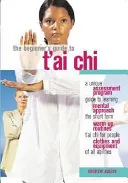
T'Ai Chi Dance
 72
72

T'Ai Chi Dance
Sheila Dickinson’s ‘T’Ai Chi Dance’ offers a more profound look at the venerable art than many superficial introductions. Dickinson moves beyond mere instruction, presenting T'ai Chi as a kinetic philosophy, a moving dialogue with the Tao. The strength of the book lies in its persistent focus on the energetic and spiritual dimensions, particularly how the precise choreography of the forms is designed to cultivate and circulate vital Qi. For instance, her explanation of the ‘Ward Off’ movement, detailing its yielding yet firm energetic posture, provides a tangible example of Yin and Yang principles in action. However, the book's dense philosophical discourse, while valuable, can sometimes overshadow the practical guidance for absolute beginners. Some readers might wish for more explicit visual aids or step-by-step breakdowns of the more intricate transitions between forms. Despite this, Dickinson’s work is a significant contribution for those seeking to imbue their T’ai Chi practice with deeper meaning. It is a thoughtful exploration for the dedicated student.
📝 Description
72
Sheila Dickinson's 'T'Ai Chi Dance' first appeared in November 2001.
Sheila Dickinson's 2001 book, 'T'Ai Chi Dance,' examines the connections between T'ai Chi Ch'uan and its philosophical foundations. Dickinson presents T'ai Chi not simply as a physical exercise but as a moving meditation. The practice, she argues, helps align individuals with natural forces and principles. The book breaks down specific movements, postures, and their symbolic significance, showing how kinetic expression can lead to understanding the link between body, mind, and spirit. It aims to guide readers toward developing inner awareness and outward balance.
This text is best suited for those already practicing T'ai Chi who want a deeper philosophical and esoteric grasp of it. Students of Eastern philosophy, Qigong, or meditation will also find value in its practical, embodied approach to spiritual growth. Anyone interested in how movement, energy work, and metaphysics intersect will find Dickinson's perspective enlightening. The book encourages practitioners to weave the subtle energies and wisdom of T'ai Chi into their daily lives and spiritual journeys.
Published in 2001, 'T'Ai Chi Dance' arrived as Western interest in mind-body practices grew. T'ai Chi was then increasingly viewed beyond its martial origins, with attention turning to its Taoist roots and meditative aspects. Dickinson's work contributed to discussions that integrated these ancient arts with contemporary psychological and spiritual ideas. It positioned T'ai Chi as a system for personal transformation, connecting it to contemplative traditions that value balance and flow, much like earlier explorations of Taoist thought.
💡 Why Read This Book?
• Gain an esoteric understanding of Qi circulation, learning how specific T'ai Chi movements, like those described in the 'Eight Energies' section, are designed to harmonize this vital life force within the body. • Explore the Taoist principle of Wu Wei, understanding how its philosophy of effortless action is embodied through the mindful, flowing sequences presented in the book. • Connect the physical practice of T'ai Chi to its metaphysical roots, appreciating the symbolic depth of postures and movements as detailed in the text’s philosophical interpretations.
⭐ Reader Reviews
Honest opinions from readers who have explored this book.
❓ Frequently Asked Questions
When was Sheila Dickinson's 'T'Ai Chi Dance' first published?
'T'Ai Chi Dance' by Sheila Dickinson was first published on November 1, 2001, marking its entry into the discourse on mind-body practices and Eastern philosophy.
What is the primary focus of 'T'Ai Chi Dance'?
The book focuses on the esoteric and philosophical dimensions of T'ai Chi, viewing it as a dynamic meditation and a method for cultivating vital life force (Qi) and aligning with natural principles.
Does 'T'Ai Chi Dance' explain specific T'ai Chi forms?
Yes, the work details specific T'ai Chi movements and postures, exploring their symbolic meanings and energetic functions, particularly referencing concepts like Yin/Yang and Wu Wei.
Is 'T'Ai Chi Dance' suitable for complete beginners to T'ai Chi?
While it offers valuable insights, the book's deep philosophical exploration might be more accessible to those with some foundational knowledge of T'ai Chi or related contemplative practices.
What key Eastern philosophical concepts are explored in the book?
The book delves into core concepts such as Qi (vital life force), Yin and Yang (complementary forces), and Wu Wei (effortless action), explaining their manifestation within T'ai Chi practice.
Who is Sheila Dickinson, the author of 'T'Ai Chi Dance'?
Sheila Dickinson is recognized for her work in health arts, with 'T'Ai Chi Dance' being a significant contribution to the understanding of T'ai Chi as a profound spiritual and energetic discipline.
🔮 Key Themes & Symbolism
Qi Cultivation and Flow
The book elucidates 'Qi' as the fundamental life force, vital for existence and spiritual development. Dickinson explains how the deliberate, flowing sequences of T'ai Chi are specifically designed to awaken, circulate, and balance this energy within the practitioner's body. It moves beyond mere physical exercise, presenting T'ai Chi as a sophisticated method for energetic hygiene and enhancement, deeply rooted in Taoist principles of internal alchemy and vitality.
The Embodiment of Taoist Principles
'T'Ai Chi Dance' thoroughly explores how the physical practice embodies core Taoist philosophies. Concepts such as Yin and Yang are not abstract ideas but are dynamically represented in the interplay of yielding and asserting movements. The principle of 'Wu Wei,' or effortless action, is shown as the ideal state to achieve through T'ai Chi, where actions arise spontaneously and harmoniously from a state of deep internal alignment with natural rhythms.
Movement as Moving Meditation
Dickinson frames T'ai Chi as a profound form of moving meditation, distinct from static contemplative practices. The continuous, flowing nature of the forms encourages a state of present-moment awareness, quieting the discursive mind. This kinetic meditation serves to integrate the mind, body, and spirit, fostering a sense of unity and inner peace by grounding the practitioner in the physical experience of energy in motion.
Symbolism in Form
Each posture and transition within T'ai Chi is imbued with symbolic meaning, as explored in the text. The book deciphers these symbolic layers, revealing how the 'Eight Energies' and other foundational movements represent fundamental forces and interactions in the cosmos. Understanding this symbolic language transforms the practice from a series of physical steps into a profound dialogue with universal principles and energetic patterns.
💬 Memorable Quotes
Direct passages from the work, attributed to the author.
“The body is a vessel for Qi, and T'ai Chi is the art of its conscious circulation.”
— This statement highlights the book's central thesis: that T'ai Chi is not just about physical form but about the energetic dynamics within. It emphasizes the body's role as a conduit for life force, activated and guided by the practice.
“Wu Wei is not inaction, but action aligned with the natural flow.”
— This interpretation clarifies a common misunderstanding of Wu Wei. It posits that the goal is not passivity but a state of effortless effectiveness, achieved by moving in harmony with universal principles, a state Dickinson suggests T'ai Chi cultivates.
“Yin and Yang are expressed in the yielding embrace and the firm push.”
— This highlights the book's approach to explaining duality. It shows how the abstract concepts of Yin (yielding) and Yang (firmness) are made manifest through specific, contrasting physical actions within the T'ai Chi movements.
“Each movement is a breath, each sequence a cycle of transformation.”
— This poetic description underscores the meditative and dynamic nature of T'ai Chi as presented by Dickinson. It links the micro-level actions (movements) to macro-level processes (cycles of transformation), emphasizing continuous change and energetic respiration.
“To move is to understand the universe unfolding within.”
— This reflects the esoteric perspective that the external practice of T'ai Chi mirrors internal and cosmic processes. It suggests that by engaging in the movements, one gains insight into the fundamental workings of reality.
🌙 Esoteric Significance
Tradition
The work aligns strongly with Taoist esotericism, particularly focusing on the cultivation and circulation of Qi (vital energy) and the application of core Taoist principles like Yin/Yang and Wu Wei. It departs from purely secular interpretations by emphasizing the energetic and spiritual transformation possible through disciplined practice, situating T'ai Chi as a path toward aligning with the Tao, the fundamental principle of the universe.
Symbolism
Key symbols include 'Qi,' representing the vital life force that animates all existence and is manipulated through T'ai Chi. The dynamic interplay of 'Yin and Yang' is central, depicted in the contrasting yet complementary movements of the forms, symbolizing balance and interdependence. 'Wu Wei,' or effortless action, is a conceptual symbol representing a state of being in accord with natural flow, achieved through the practice.
Modern Relevance
Contemporary practitioners of mind-body disciplines, energy healers, and students of somatic psychology find value in Dickinson's work. Modern Qigong lineages and various Western T'ai Chi schools that emphasize internal development and spiritual application often draw upon the principles articulated in 'T'Ai Chi Dance.' It remains relevant for those seeking to understand the profound energetic and philosophical dimensions often overlooked in more superficial treatments of the art.
👥 Who Should Read This Book
• Dedicated T'ai Chi practitioners seeking to deepen their understanding beyond the physical form, particularly those interested in the energetic (Qi) and philosophical (Taoist) underpinnings. • Students of Eastern philosophies and comparative religion looking for embodied practices that illustrate concepts like Yin/Yang and Wu Wei in a tangible, kinetic manner. • Individuals interested in moving meditation and somatic practices who wish to explore how specific, structured movements can facilitate spiritual awareness and energetic balance.
📜 Historical Context
Published in November 2001, 'T'Ai Chi Dance' arrived during a period when Western interest in Eastern contemplative arts was expanding significantly. The late 20th and early 21st centuries saw a growing academic and popular engagement with practices like T'ai Chi, Qigong, and meditation, often viewed through lenses of holistic health, psychology, and comparative spirituality. Dickinson's work contributed to this milieu by offering a deeply philosophical and esoteric interpretation of T'ai Chi, moving beyond its reputation as solely a gentle exercise form. It situated T'ai Chi within a broader Taoist framework, aligning it with practices that seek energetic harmony and alignment with natural principles. This contrasted with more purely martial or purely physical fitness approaches. Contemporary scholars and practitioners like Benjamin Hoff (author of 'The Tao of Pooh') were also popularizing Taoist concepts, creating fertile ground for Dickinson's detailed exploration of embodied Taoism through T'ai Chi.
📔 Journal Prompts
The cultivation of Qi through T'ai Chi movements.
Reflecting on the embodiment of Wu Wei in daily actions.
Analyzing the dynamic interplay of Yin and Yang in a specific T'ai Chi posture.
Exploring the symbolic meaning of the 'Eight Energies' in your personal practice.
The body as a vessel for Qi: initial impressions and ongoing awareness.
🗂️ Glossary
Qi (Chi)
The fundamental vital life force or energy that flows through all living beings and the universe. T'ai Chi practice aims to cultivate, balance, and circulate Qi for health and spiritual development.
Yin and Yang
The complementary, interdependent opposites that constitute all phenomena in the universe according to Taoist philosophy. In T'ai Chi, they are expressed through contrasting movements like yielding/asserting, slow/fast, soft/hard.
Wu Wei
A core Taoist concept often translated as 'non-action' or 'effortless action.' It refers to acting in accordance with the natural flow of the Tao, without striving or forcing, achieving results spontaneously and harmoniously.
Eight Energies
Fundamental T'ai Chi movements or principles that represent basic energetic qualities and actions. These are foundational to understanding the application and energetic intent of the forms.
Tao
The fundamental, ineffable principle of the universe in Taoism. It represents the natural order, the way of things, and the source from which all existence arises and to which it returns.
Moving Meditation
A contemplative practice that involves mindful movement, such as T'ai Chi or certain forms of Yoga, designed to quiet the mind, increase present-moment awareness, and integrate body, mind, and spirit.
Kinaesthetic Awareness
The conscious perception of one's own body's position, movement, and orientation. T'ai Chi cultivates this by focusing on the subtle sensations and precise execution of physical forms.