Reincarnation
 82
82

Reincarnation
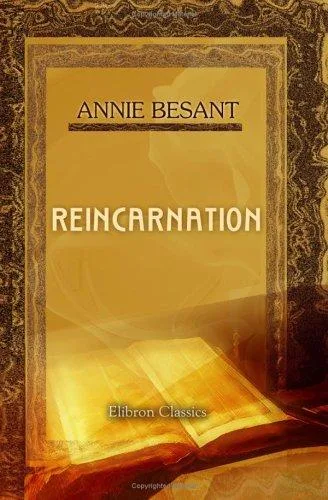
Annie Wood Besant’s "Reincarnation," a product of 1892, presents a lucid, if somewhat dated, case for the doctrine of rebirth. Its strength lies in its systematic approach, attempting to frame reincarnation as a logical, almost scientific, principle governing spiritual evolution. Besant marshals arguments that, for her time, effectively countered prevailing Western skepticism. She particularly excels in connecting the individual's journey with a larger cosmic scheme, a concept that distinguishes it from simpler notions of transmigration. The limitation, however, is the inherent reliance on Theosophical frameworks that may not resonate universally today without significant interpretive effort. The discussion on the 'monad' and its successive incarnations, while central, requires a deep immersion in esoteric terminology. For instance, her explanation of how the "human family" progresses through distinct 'root races' and 'planetary chains' feels particularly tied to a specific esoteric cosmology. Despite its historical specificity, the book offers a solid historical exposition of a concept that continues to fascinate.
Verdict: A valuable historical document for understanding the Theosophical popularization of reincarnation.
📝 Description
82
Annie Wood Besant published "Reincarnation" in 1892, arguing rebirth is a universal law.
Annie Wood Besant's "Reincarnation", first published in 1892, presents a systematic defense of the concept of rebirth. Besant, a key figure in the Theosophical Society, draws on philosophical reasoning and natural observation to frame reincarnation not as a simple belief, but as a fundamental cosmic principle. She posits that this principle is integral to the development of consciousness and the broader process of spiritual evolution. The book seeks to clarify the ethical and practical consequences of this doctrine, both for individual lives and for humanity.
This work is suitable for those interested in the historical presentation of reincarnation within Western esoteric thought. It will particularly engage students of Theosophy, comparative religion, and philosophical examinations of life and consciousness. Readers curious about the intellectual currents of late 19th century spiritual movements will find it relevant. It also serves those seeking to understand how Eastern spiritual ideas were adapted and circulated in the West.
Published in 1892, "Reincarnation" appeared during a period when Theosophy, co-founded by Helena Blavatsky, was popularizing Eastern concepts like karma and rebirth in the West. Besant, a leading Theosophist, became a prominent voice explaining these ideas. This era saw a renewed interest in Eastern religions and philosophies, often interpreted through Western esoteric frameworks. Theosophy offered an alternative worldview challenging prevailing religious and materialist views, with reincarnation at its core.
💡 Why Read This Book?
• Understand the Theosophical perspective on reincarnation, a key doctrine popularized by Annie Wood Besant and Helena Blavatsky in the late 19th century, offering a specific historical lens. • Grasp the concept of the 'monad' as the enduring spiritual unit undergoing cycles of birth and death, as detailed in Besant's work, providing a unique metaphysical framework. • Explore the connection between reincarnation and karma as presented in Besant's 1892 text, illustrating how actions in one life are posited to influence future existences within a cosmic law.
⭐ Reader Reviews
Honest opinions from readers who have explored this book.
❓ Frequently Asked Questions
When was Annie Wood Besant's "Reincarnation" first published?
Annie Wood Besant's "Reincarnation" was first published in 1892, a period when Theosophical ideas were gaining significant traction in the West.
What is the central argument of Besant's "Reincarnation"?
The central argument is that reincarnation is a fundamental, natural law governing the spiritual evolution of the human soul, supported by philosophical reasoning and observations of the universe.
How does Besant connect reincarnation to karma?
Besant explains karma as the universal law of cause and effect, which determines the circumstances of an individual's future lives based on their actions and intentions in past lives.
What role does Theosophy play in this book?
Theosophy provides the overarching framework for Besant's arguments, presenting reincarnation as a core tenet within its broader philosophy of spiritual evolution and cosmic principles.
Is "Reincarnation" by Annie Wood Besant available online for free?
Yes, due to its age and public domain status, Annie Wood Besant's "Reincarnation" is widely available for free online through various digital archives and libraries.
Who was Annie Wood Besant?
Annie Wood Besant (1847-1933) was a prominent British socialist, theosophist, and advocate for Indian self-rule. She was a leading figure in the Theosophical Society after Helena Blavatsky's death.
🔮 Key Themes & Symbolism
The Monad's Journey
Besant elaborates on the concept of the 'monad' as the essential, immortal spark of consciousness that undergoes a series of physical incarnations. This journey is not random but a divinely orchestrated process of learning and evolution. Each life provides necessary experiences and challenges for the monad to overcome ignorance and develop spiritual understanding, ultimately moving towards self-realization. The book posits that the monad carries forward karmic imprints, shaping the conditions of subsequent rebirths and guiding its path through the grand cycles of existence.
Karma as Cosmic Justice
The work presents karma not as fatalistic punishment but as a precise, impersonal law of cause and effect that governs all existence. Every action, thought, and intention generates a corresponding effect, which must eventually manifest. Besant explains that karma is the mechanism through which souls learn balance and responsibility, ensuring that justice prevails across multiple lifetimes. Understanding karma, according to the book, is crucial for working through the spiritual path and consciously influencing the unfolding of one's destiny.
Evolutionary Cycles
Besant situates individual reincarnation within vast cosmic cycles, often referred to as 'rounds' and 'races' within Theosophical literature. This perspective suggests that humanity, and indeed all life, progresses through successive stages of development across immense geological and cosmic timescales. The book implies that Earth itself is a planetary body undergoing its own evolutionary journey, and each human life is a microcosm of this grander, universal unfolding process.
The Purpose of Earthly Life
Earthly existence, within Besant's framework, is viewed as a school for the soul. The trials, joys, and sorrows encountered in a single lifetime are integral to the monad's education. The book suggests that the physical plane offers unique opportunities for the development of certain spiritual qualities, such as compassion, willpower, and understanding, which cannot be as effectively cultivated elsewhere. Each incarnation serves a specific purpose in the soul's long-term development and eventual liberation.
💬 Memorable Quotes
Direct passages from the work, attributed to the author.
“Karma is the law of causation, the unerring law of retribution.”
— This highlights Besant's view of karma as an absolute principle of universal justice, where every action inevitably leads to a corresponding consequence, shaping an individual's destiny across lifetimes.
“The monad is the immortal ego, the true self that passes from life to life.”
— This defines the central concept of the 'monad' as the enduring spiritual identity that persists through successive physical lives, carrying the lessons and karmic imprints of each incarnation.
“Each life is a lesson, and the sum total of these lessons leads to spiritual perfection.”
— This interpretation frames earthly existence as a pedagogical process, emphasizing that the cumulative experiences of multiple lives are designed to facilitate the soul's ultimate spiritual development and completion.
“The universe moves in cycles, and humanity is part of this grand cosmic rhythm.”
— This suggests that individual reincarnation is not an isolated phenomenon but is integrated into larger, cyclical patterns of cosmic evolution, linking personal destiny to universal processes.
💡 Key Ideas
Editorial paraphrase of the work's core concepts — not direct quotes.
Reincarnation is the doctrine that the divine spirit, embodied in man, is reborn again and again on this earth.
This quote expresses the core thesis of the book, defining reincarnation as a continuous process of spiritual embodiment and learning across multiple earthly existences for the divine spark within humanity.
🌙 Esoteric Significance
Tradition
This work is firmly rooted in the Theosophical tradition, which itself synthesized elements from Eastern religions (Hinduism, Buddhism) and Western esoteric philosophies (Neoplatonism, Hermeticism, Kabbalah). Besant's "Reincarnation" serves as a key text for understanding how Theosophy adapted and reinterpreted the ancient Indian concept of rebirth for a modern, Western audience, presenting it as a scientific and ethical law governing spiritual evolution.
Symbolism
The concept of the 'monad' functions as a central symbol, representing the divine spark or individualized consciousness that journeys through existence. The 'wheel of rebirth' is another implicit symbol, signifying the cyclical nature of life, death, and reincarnation driven by karma. Besant also alludes to broader cosmic symbolism, such as 'planetary chains' and 'root races,' representing grand evolutionary stages within a vast, unfolding universe.
Modern Relevance
Besant's exposition of reincarnation and karma continues to influence contemporary esoteric thought and New Age spirituality. Many modern spiritual teachers and practitioners draw upon Theosophical concepts, including those articulated by Besant, to explain personal growth, spiritual development, and the interconnectedness of all beings. The framework she provided remains a foundational element for understanding reincarnation within many Western esoteric and metaphysical systems.
👥 Who Should Read This Book
• Students of Theosophy: Individuals seeking to understand the foundational doctrines of Theosophy, particularly its explanation of rebirth and its role in spiritual evolution, will find this text essential. • Comparative Religion Scholars: Researchers interested in how Eastern spiritual concepts were adopted, adapted, and disseminated in the West during the late 19th and early 20th centuries will gain valuable historical context. • Metaphysical Inquirers: Those exploring alternative philosophies of life, death, and consciousness, and seeking a structured argument for reincarnation beyond popular or simplistic interpretations, will benefit from Besant's systematic approach.
📜 Historical Context
Annie Wood Besant's "Reincarnation," published in 1892, arrived during a fervent period of spiritual exploration in the West. The late 19th century witnessed a growing dissatisfaction with orthodox religious dogma and the perceived limitations of scientific materialism, leading many to seek alternative explanations for life's mysteries. The Theosophical Society, co-founded by Helena Blavatsky in 1875, was instrumental in popularizing Eastern concepts, including karma and reincarnation, within Western esoteric circles. Besant, a powerful orator and writer, became one of Theosophy's most influential figures following Blavatsky's death in 1891. Her work "Reincarnation" presented these complex ideas in a structured, accessible manner, aiming to provide a rational and ethical framework for understanding existence. It engaged with a spiritual landscape also influenced by movements like Spiritualism and New Thought, offering a distinct, cosmologically ambitious perspective that contrasted with both traditional religions and the prevailing scientific worldview.
📔 Journal Prompts
The monad's progression through successive lives: what spiritual lessons might each incarnation aim to impart?
Karmic cause and effect: how might past actions, even unintentional ones, shape present circumstances?
The purpose of earthly trials: reflecting on challenges as opportunities for the monad's development.
Theosophical cycles: considering the concept of humanity's evolution within grander cosmic rhythms.
Personal evolution: how does the doctrine of reincarnation inform one's perspective on personal growth?
🗂️ Glossary
Monad
In Theosophical terms, the immortal, divine spark or essential spiritual self that reincarnates through successive physical lives, carrying forward its evolutionary journey.
Karma
The universal law of cause and effect, where actions, thoughts, and intentions in one life determine the circumstances and experiences of future lives.
Reincarnation
The doctrine or belief that the spirit or soul, after the death of the physical body, begins a new life in a new body, continuing its evolutionary process.
Spiritual Evolution
The ongoing process by which the soul or monad progresses through various stages of development and experience across multiple lifetimes, aiming towards greater wisdom and consciousness.
Root Race
Within Theosophical cosmology, a major stage in the evolution of humanity on Earth, characterized by distinct physical and spiritual attributes, with each root race further subdividing.
Planetary Chain
A series of globes or worlds through which a particular evolutionary stream, such as humanity, passes during its cyclic journey of manifestation and evolution.
Ego
Often used interchangeably with 'monad' in this context, referring to the enduring spiritual or psychic principle that transmigrates from one physical life to another.
🔮 Readers Also Liked
Browse all →








More by Annie Wood Besant
All books →




More Free Occult Philosophy Books
View all →