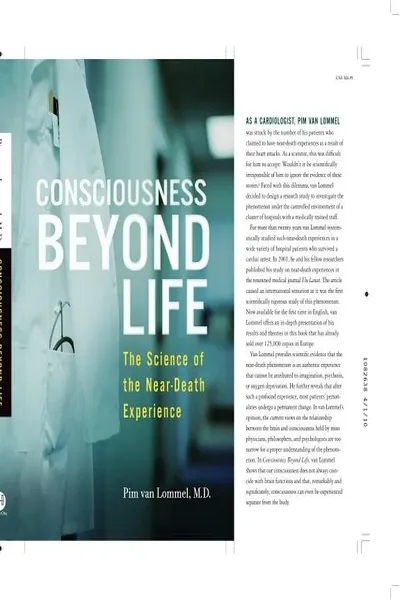
Consciousness Beyond Life

 84
84

Consciousness Beyond Life
Pim van Lommel's 'Consciousness Beyond Life' presents a formidable body of research into Near-Death Experiences, moving the discussion from anecdotal accounts to rigorous scientific inquiry. The strength of the book lies in its 20-year prospective study, which provides a robust dataset challenging purely materialistic explanations for consciousness. Van Lommel avoids sensationalism, focusing instead on the consistent patterns observed across hundreds of patients. However, the sheer volume of data and the detailed methodology, while commendable, can occasionally lead to a dense reading experience. The discussion of the 'core self' concept, while central to the argument, could benefit from clearer distinctions from established psychological frameworks. Despite this, the book offers compelling evidence that consciousness may not be solely a product of the physical brain, leaving the reader with significant questions about the ultimate nature of existence. It is a vital contribution for anyone concerned with the hard problem of consciousness.
📝 Description
84
Pim van Lommel's 2011 book details a 20-year study on Near-Death Experiences.
Consciousness Beyond Life presents the findings of a long-term Dutch study that investigated Near-Death Experiences (NDEs) in over 344 cardiac arrest patients. Van Lommel, a cardiologist, meticulously gathered and analyzed data over two decades, aiming to scientifically examine the nature of consciousness, particularly its potential independence from brain activity during clinical death. The research offers empirical evidence that challenges purely materialistic views of the mind. The book details specific phenomena reported during NDEs, such as out-of-body sensations, life reviews, and encounters with light or deceased individuals. It also introduces the concept of a 'core self,' a hypothesized element of consciousness that might endure even when brain function ceases. This work is intended for a wide audience, including medical professionals, psychologists, philosophers, and theologians, as well as individuals who have had NDEs or know someone who has. It seeks to provide a rational yet open-minded perspective on these complex experiences.
The book emerged during a period when neuroscience was the dominant model for understanding the mind. Van Lommel's prospective, multi-center study provided a significant counterpoint, suggesting that consciousness might involve aspects not readily explained by current brain-based theories. It builds upon earlier popularizations of NDEs but distinguishes itself through its rigorous scientific methodology. The detailed case studies and statistical analysis aim to support the idea that consciousness may not be solely a product of the physical brain.
This book engages with the perennial philosophical and spiritual questions surrounding consciousness, particularly in the context of death. It stands in a tradition that posits a non-physical aspect of being, exploring phenomena that suggest consciousness can exist apart from the brain. While grounded in scientific methodology, the subject matter aligns with esoteric interests in the survival of consciousness after bodily death, a theme found in spiritualism, mediumship, and various mystical traditions. Van Lommel's work attempts to bridge the gap between empirical investigation and experiences often relegated to the realm of faith or subjective interpretation, seeking to validate these accounts through systematic research.
💡 Why Read This Book?
• Gain understanding of the 20-year Dutch study on Near-Death Experiences, learning how a large-scale, prospective scientific methodology can challenge established views on consciousness. • Explore the concept of the 'core self,' a potential indicator of consciousness independent of brain function, as presented in the book's detailed case analyses. • Examine the specific phases of Near-Death Experiences, such as the 'tunnel experience' and life review, and their implications for understanding life and death, as documented across 344 cardiac arrest patients.
⭐ Reader Reviews
Honest opinions from readers who have explored this book.
❓ Frequently Asked Questions
What is the primary scientific contribution of Pim van Lommel's 'Consciousness Beyond Life'?
The book's primary contribution is its presentation of a 20-year prospective, multi-center study on Near-Death Experiences (NDEs) involving 344 cardiac arrest patients. This rigorous methodology provides empirical data suggesting consciousness may persist beyond brain function.
Does 'Consciousness Beyond Life' claim consciousness survives death?
The book does not make a definitive claim of survival after death but presents extensive evidence from NDEs that consciousness may exist independently of a functioning brain, challenging current materialistic models.
What is the 'core self' as discussed in the book?
The 'core self' is a concept explored by van Lommel to describe the fundamental aspect of consciousness that appears to remain intact and functional even during clinical death, as reported by NDE experiencers.
How does van Lommel's research differ from earlier NDE studies?
Unlike earlier, often retrospective studies, van Lommel's work employed a prospective design conducted from 1975 to 1995, collecting data systematically from patients as they entered cardiac arrest and recovered.
Is 'Consciousness Beyond Life' accessible to a non-scientific audience?
While based on scientific research, the book is written to be understood by a general audience interested in the topic. It explains complex concepts and findings clearly, making the research accessible.
What is the significance of the 2011 publication date for this book?
The 2011 publication date signifies its emergence in an era where consciousness studies were gaining traction but often faced skepticism. It provided a substantial scientific backing to the exploration of NDEs.
🔮 Key Themes & Symbolism
Consciousness and Brain Function
The central theme is the dissociation between consciousness and brain activity during Near-Death Experiences (NDEs). Van Lommel meticulously documents cases where patients, clinically dead with no brain function, report vivid, coherent experiences. This challenges the neuroscientific view that consciousness is solely an emergent property of the physical brain, proposing instead that consciousness might be fundamental and the brain acts more as a receiver or filter.
The Nature of Reality
The book compels a re-evaluation of our understanding of reality, particularly the demarcation between life and death. By presenting empirical data on NDEs, it suggests that the perceived reality during these episodes is not merely a hallucination but potentially a glimpse into a non-physical dimension or state of being. This raises profound questions about the continuity of self and the potential for existence beyond corporeal limitations.
Empirical Study of the Transcendent
Van Lommel's work is significant for its rigorous, long-term empirical approach to phenomena often relegated to the mystical or spiritual. The 20-year study, involving 344 patients, systematically collected data on subjective experiences, physiological states, and psychological impacts of NDEs. This scientific framework aims to legitimize the study of transcendent experiences, bringing them into the field of observable and analyzable phenomena.
Transformation and Meaning
A recurring aspect of NDEs discussed is the profound and lasting transformation experienced by individuals. These experiences often lead to a decreased fear of death, increased appreciation for life, a sense of interconnectedness, and a re-evaluation of priorities. The book explores how these shifts in perspective, stemming from encounters with the 'beyond,' can lead to a more meaningful and altruistic existence.
💬 Memorable Quotes
Direct passages from the work, attributed to the author.
“NDEs show that consciousness is not dependent on the brain.”
— This represents a core thesis of the book, derived from the study's findings that patients report clear experiences while brain activity is severely compromised or absent, indicating consciousness might have a source independent of neural processes.
“The tunnel experience is a common feature of NDEs.”
— This refers to a frequently reported element of Near-Death Experiences where individuals perceive themselves moving through a dark passage towards a light, illustrating a consistent phenomenological pattern across diverse patient groups.
“Life review provides insight into past actions.”
— This concept captures the phenomenon where NDE experiencers report reliving their lives, often from an objective or even the perspective of others, gaining profound understanding of the consequences of their actions and relationships.
“The body-ego state is different from the core self.”
— This interpretation points to van Lommel's distinction between the self tied to the physical body and ego identity, and a more fundamental, potentially non-local consciousness that can operate independently during NDEs.
💡 Key Ideas
Editorial paraphrase of the work's core concepts — not direct quotes.
The core self is the essence of our consciousness.
This paraphrased concept highlights van Lommel's exploration of a fundamental aspect of self that appears to remain active even when the physical brain is non-functional, suggesting a deeper layer of being.
🌙 Esoteric Significance
Tradition
While not explicitly rooted in a single esoteric tradition like Kabbalah or Theosophy, van Lommel's work significantly intersects with Hermetic and Gnostic inquiries into the nature of consciousness and the soul's journey beyond the physical. It provides empirical validation for concepts long explored in esoteric literature: the existence of a non-physical self, the possibility of altered states of consciousness independent of the brain, and the idea that death is not an end but a transition. It aligns with the Hermetic principle 'As above, so below,' suggesting the inner, non-physical reality mirrors and influences the outer, physical one.
Symbolism
The book frequently discusses the 'tunnel experience' as a symbolic passage from the physical realm to a transcendent state, echoing ancient initiatory journeys. The 'light' encountered is often described as pure love or intelligence, representing divine consciousness or ultimate reality. The 'life review' can be seen as a form of karmic accounting, a concept present in various esoteric systems, where one confronts the totality of one's actions and their impact, facilitating spiritual growth.
Modern Relevance
Van Lommel's research has become a reference for contemporary discussions on consciousness, parapsychology, and the philosophy of mind. It is frequently cited by thinkers exploring non-local consciousness, quantum consciousness theories, and the potential for spiritual healing. Modern practitioners of mindfulness, transpersonal psychology, and even certain contemplative traditions find resonance in its findings, using the scientific validation of NDEs to support their own explorations of inner states and the nature of existence.
👥 Who Should Read This Book
• Individuals curious about the scientific investigation of consciousness beyond the physical brain: You will learn about a 20-year prospective study and its findings on Near-Death Experiences (NDEs). • Medical professionals and therapists: You can gain insights into phenomena that challenge current neurobiological models, potentially informing patient care and understanding of subjective experiences. • Philosophers of mind and students of metaphysics: You will encounter substantial empirical data that fuels debates on the mind-body problem and the nature of reality, offering a scientific counterpoint to purely materialistic views.
📜 Historical Context
Published in 2011, 'Consciousness Beyond Life' emerged during a period of intense scientific focus on neuroscience, where the brain was widely considered the sole seat of consciousness. This era saw a resurgence of interest in mind-body problems, influenced by earlier popularizations of Near-Death Experiences (NDEs) by figures like Raymond Moody in the 1970s and the work of Elisabeth Kübler-Ross. Van Lommel's contribution was distinguished by its rigorous, multi-center, prospective design, spanning two decades (1975-1995) and involving 344 cardiac arrest patients. This methodology offered a significant counterpoint to reductionist materialism, which dominated fields like cognitive science. While philosophers like David Chalmers had articulated the 'hard problem of consciousness,' van Lommel's work provided substantial empirical data from a medical context, directly engaging with the medical establishment and challenging purely materialistic explanations for subjective experience.
📔 Journal Prompts
The 'core self' concept and its persistence during clinical death.
Reflecting on the life review experience as a process of understanding.
The symbolic journey through the 'tunnel experience' to the light.
The impact of Near-Death Experiences on long-term life perspective.
Comparing the book's findings on consciousness with personal beliefs about life after death.
🗂️ Glossary
Near-Death Experience (NDE)
A profound personal experience associated with being close to death, often involving altered perceptions, emotional states, and a sense of transcendence.
Clinical Death
The cessation of heartbeat and breathing. In the context of NDEs, it refers to the state where standard medical resuscitation efforts are typically initiated.
Core Self
A term used by van Lommel to describe the essential aspect of consciousness that appears to be independent of brain function and persists during NDEs.
Prospective Study
A research design where subjects are observed over time, and data is collected as events occur, allowing for the study of cause-and-effect relationships.
Tunnel Experience
A common element reported in NDEs, characterized by the sensation of moving rapidly through a dark passage towards a bright light.
Life Review
A frequently reported NDE phenomenon where the individual experiences a rapid, panoramic playback of their life events, often with profound emotional and cognitive impact.
Out-of-Body Experience (OBE)
A sensation where one feels their consciousness has separated from their physical body, allowing them to perceive their surroundings from an external viewpoint.
🔮 Readers Also Liked
Browse all →







![Essential Tales and Poems of Edgar Allan Poe [34 stories, 17 poems]](/img/thumb/essential-tales-and-poems-of-edgar-allan-poe-34-stories-17-poems-edgar-allan-poe-080648.webp)
More by Pim van Lommel
All books →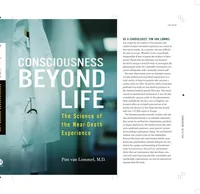
More Free Occult Philosophy Books
View all →