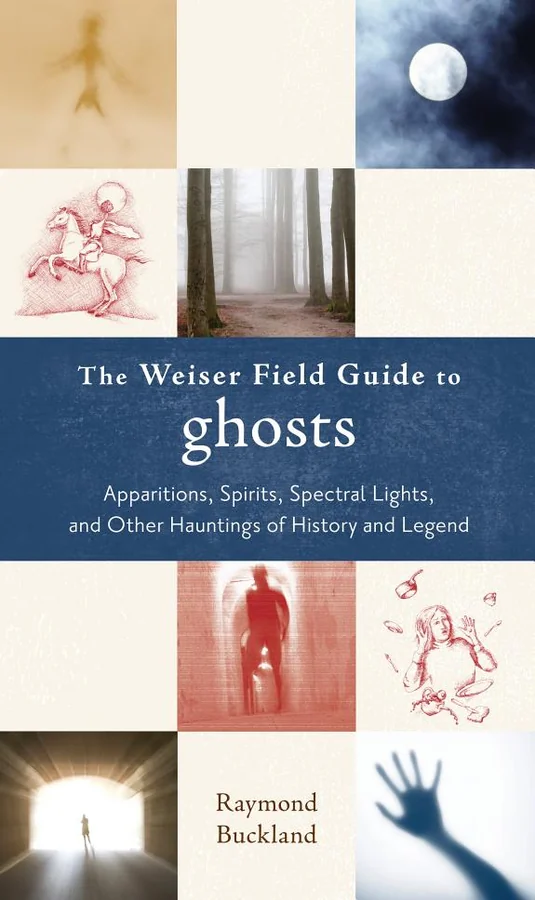
The Weiser Field Guide to Ghosts
 79
79

The Weiser Field Guide to Ghosts
Raymond Buckland's "The Weiser Field Guide to Ghosts" presents a systematic approach to a subject often mired in anecdote. Its strength lies in its encyclopedic ambition, attempting an A-Z of the spectral world. Buckland effectively categorizes phenomena, differentiating between, for instance, residual hauntings and intelligent hauntings, a crucial distinction for anyone seriously investigating. However, the sheer breadth can sometimes lead to a lack of depth on individual topics; the section on orbs, for example, feels somewhat brief given their prevalence in modern ghost hunting. The inclusion of practical tips for ghost hunting is a valuable addition, grounding the more theoretical classifications. While not groundbreaking in its philosophical arguments, it stands as a solid, accessible reference for understanding the varied landscape of ghost lore.
📝 Description
79
Raymond Buckland's 2009 Field Guide to Ghosts catalogs spectral phenomena globally.
Published in 2009, Raymond Buckland's The Weiser Field Guide to Ghosts offers a detailed catalog of spectral apparitions. The book organizes various ghost types, from historical and biblical figures to modern poltergeists and orbs. Buckland examines these manifestations across different time periods and cultures, noting common traits and widespread misconceptions. This guide is suitable for paranormal investigators, folklore students, or anyone interested in understanding personal encounters with the unexplained. It provides clear information for both newcomers to ghost lore and those already familiar with the subject.
Buckland places ghost stories within a broad historical and cultural context. He recognizes humanity's enduring interest in the afterlife and spirits, charting accounts from ancient tales to contemporary paranormal research. The book addresses how perceptions and documentation of ghosts have changed over centuries. Readers will find descriptions of numerous ghost classifications, distinguishing between residual hauntings, intelligent hauntings, and poltergeists. Common misunderstandings are addressed, presenting a systematic way to comprehend the various phenomena attributed to spirits.
This work fits within the tradition of spiritualism and parapsychology, acknowledging a long human history of belief in spirits and an afterlife. It connects contemporary paranormal investigation with older traditions of ghost lore found in folklore and religious texts. The book treats ghost sightings not as mere superstition, but as phenomena worthy of classification and study, similar to early 20th-century spiritualist literature that sought to systematically document and understand communication with the departed.
💡 Why Read This Book?
• You will learn to differentiate between at least five distinct types of spectral manifestations, such as the 'biblical ghost' and 'poltergeist', as presented in Buckland's classification system. • Gain practical advice on 'ghost hunting' techniques, including methods for recording and analyzing potential evidence, directly applicable to personal investigations. • Understand the historical evolution of ghost beliefs, recognizing how concepts like 'orbs' fit into the broader timeline of paranormal documentation since the book's 2009 publication.
⭐ Reader Reviews
Honest opinions from readers who have explored this book.
❓ Frequently Asked Questions
What are the main categories of ghosts discussed in The Weiser Field Guide to Ghosts?
The guide categorizes ghosts broadly, including battlefield apparitions, biblical figures, poltergeists, and phenomena like orbs. It examines subcategories across cultures and time periods, distinguishing between residual, intelligent, and other forms of hauntings.
Does the book offer practical advice for ghost hunting?
Yes, Raymond Buckland includes practical tips on ghost hunting. These suggestions cover methods for investigation, observation, and potential evidence gathering, making the book useful for active researchers.
What is the historical perspective on ghosts presented in the book?
The book traces ghost lore through time and cultures, examining how beliefs and accounts have evolved. It acknowledges ancient narratives and biblical references alongside more modern interpretations and documentation.
Are common misconceptions about ghosts addressed?
Absolutely. The Weiser Field Guide to Ghosts dedicates attention to common misconceptions surrounding various spectral phenomena, aiming to provide clarity and a more informed understanding for the reader.
Who is the author, Raymond Buckland?
Raymond Buckland was a prominent author and lecturer in the fields of witchcraft, paganism, and the paranormal. He authored numerous books, including extensive works on Tarot, runes, and various occult subjects.
When was The Weiser Field Guide to Ghosts first published?
The Weiser Field Guide to Ghosts was first published on September 1, 2009. This edition serves as a comprehensive overview of ghost lore and investigation.
🔮 Key Themes & Symbolism
Categorization of Apparitions
Buckland systematically breaks down the vast subject of ghosts into digestible categories. He moves beyond simple classifications to explore subcategories, examining phenomena like residual hauntings (imprints of past events) versus intelligent hauntings (conscious entities). This structured approach allows readers to understand the nuanced differences between various spectral manifestations, from the spectral traces of battlefields to the disruptive energy of poltergeists, providing a framework for interpreting reported experiences.
Cross-Cultural Ghost Lore
The guide emphasizes that fascination with the spectral is a global phenomenon. Buckland draws examples and comparisons from diverse cultures and historical periods, illustrating commonalities in how societies perceive and interact with spirits. This perspective broadens the understanding beyond Western-centric views, acknowledging that while manifestations may differ, the underlying human curiosity about life after death and the presence of unseen entities is remarkably consistent across traditions.
Investigative Frameworks
Beyond cataloging, the book offers practical guidance for those interested in paranormal investigation. It touches upon methods and considerations for approaching haunted locations or unexplained phenomena. This aspect grounds the esoteric subject matter in actionable advice, encouraging a more methodical approach to gathering information and interpreting potential evidence, moving from pure speculation to structured inquiry.
Misconceptions vs. Reality
A significant portion of the guide is dedicated to debunking common myths and misunderstandings surrounding ghosts and hauntings. By presenting factual information and historical context, Buckland aims to equip readers with the knowledge to critically evaluate paranormal claims. This includes addressing the nature of phenomena like 'orbs', which are often misinterpreted, providing a more discerning perspective.
💬 Memorable Quotes
Direct passages from the work, attributed to the author.
“From battlefield and biblical ghosts to poltergeists and orbs, this guide examines categories and subcategories.”
— This highlights the comprehensive scope of the work, promising an exhaustive survey of spectral phenomena, from historically significant accounts to contemporary popular manifestations.
“It covers commonalities and misconceptions across time and cultures.”
— This suggests the book aims for a balanced perspective, acknowledging universal aspects of ghost belief while also correcting widespread misunderstandings based on diverse global traditions.
“Stories of encounters, legendary ghosts, and haunted places are all covered.”
— This indicates the inclusion of narrative elements and case studies, making the information engaging and illustrating the concepts with real-world (or legendary) examples.
“The work is a beautifully illustrated compendium, a veritable A-Z of the otherworld.”
— This emphasizes the visual appeal and the encyclopedic nature of the guide, positioning it as a definitive, organized reference for understanding the paranormal realm.
“The book is concise and comprehensive, complete with practical tips on ghost hunting.”
— This promises a dual benefit: thorough information presented efficiently, coupled with actionable advice for those who wish to actively investigate paranormal occurrences.
🌙 Esoteric Significance
Tradition
While not explicitly tied to a single esoteric lineage like Hermeticism or Gnosticism, Buckland's work draws from the broader tradition of Western occultism and spiritualism. It acknowledges a worldview where non-physical consciousness persists after death, a foundational concept in many esoteric paths. The categorization of spirits and hauntings aligns with historical spiritualist literature and parapsychological inquiry, aiming to provide a rational framework for phenomena often relegated to folklore or superstition.
Symbolism
The concept of the 'ghost' itself functions as a powerful symbol of unresolved issues, lingering energies, and the boundary between the physical and non-physical realms. 'Orbs,' while often explained physically, have become symbolic of spiritual presence in modern paranormal investigations, representing an ethereal form of manifestation. 'Haunted places' symbolize the imprint of intense emotional or historical events on the physical environment, acting as conduits for residual energies.
Modern Relevance
Buckland's guide remains relevant for contemporary paranormal investigators and those interested in mediumship or spiritualist practices. It provides a foundational understanding of classifications and terminology used in modern ghost hunting communities. Thinkers exploring the nature of consciousness, subjective experience, and the intersection of psychology and the supernatural can find value in its systematic cataloging of reported phenomena.
👥 Who Should Read This Book
['• Aspiring paranormal investigators seeking a structured framework for understanding different types of hauntings and spectral entities.', '• Students of folklore and comparative religion interested in the cross-cultural manifestations and historical evolution of ghost beliefs.', '• Individuals who have had personal experiences they wish to contextualize within established lore and investigative methodologies.']
📜 Historical Context
Published in 2009, The Weiser Field Guide to Ghosts emerged during a period of heightened popular interest in the paranormal, fueled by television shows and online communities dedicated to ghost hunting. Raymond Buckland's work entered a field already populated by numerous investigators and authors, but distinguished itself through its structured, catalog-like approach. While figures like Hans Holzer had pioneered serious paranormal investigation decades prior, Buckland offered a more contemporary, accessible compendium. The book's reception likely benefited from the ongoing fascination with spectral phenomena, positioning it as a go-to reference for enthusiasts seeking organized information. It arrived at a time when paranormal investigation was becoming increasingly democratized, moving from academic or fringe circles into mainstream popular culture.
📔 Journal Prompts
The classification of 'battlefield ghosts' and their distinction from other hauntings.
The role of 'orbs' as a modern visual indicator of spectral activity.
The commonalities found in ghost lore across disparate cultures.
Practical ghost hunting techniques and their ethical considerations.
The concept of a 'veritable A-Z of the otherworld' and its implications.
🗂️ Glossary
Apparition
A visible manifestation of a ghost or spirit. The term encompasses a wide range of spectral sightings, from full human forms to fleeting shadows.
Poltergeist
A type of ghost or supernatural being reputed to cause physical disturbances, such as loud noises, objects being moved, or physical attacks.
Orb
A circular artifact, often appearing in photographs or videos, frequently interpreted by paranormal investigators as a type of spirit or energy manifestation.
Residual Haunting
A type of haunting where past events are replayed as if on a loop, without conscious interaction. It's considered an energetic imprint rather than an interactive entity.
Intelligent Haunting
A haunting involving a conscious spirit or entity that interacts with its environment and living beings, often responding to questions or showing awareness.
Compendium
A collection of concise but comprehensive information about a particular subject. In this context, it refers to the book's encyclopedic nature regarding ghosts.
Biblical Ghosts
Spectral phenomena or references to spirits mentioned within the texts of the Bible, often involving divine or demonic manifestations.
This book appears in 1 collection
🔮 Readers Also Liked
Browse all →









From the “Apparitions” Collection
View all →
More Free Occult Philosophy Books
View all →