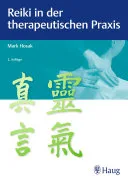
Reiki in der therapeutischen Praxis
 84
84

Reiki in der therapeutischen Praxis
Mark Hosak's "Reiki in der therapeutischen Praxis" attempts to ground the practice of Reiki in a more structured, therapeutic framework. The book succeeds in providing a practical manual for those who have moved beyond introductory knowledge. Its strength lies in its detailed exploration of specific techniques for particular ailments, a welcome departure from generalized Reiki literature. However, the section on "proving" effectiveness feels somewhat underdeveloped, relying more on assertion than empirical discussion, which may frustrate readers seeking robust scientific validation. The exploration of the "spiritual plane" for activating self-healing, while core to Reiki, could have benefited from clearer articulation within a therapeutic context, rather than remaining somewhat abstract. Despite these points, the text offers valuable, immediately applicable advice for dedicated practitioners aiming to refine their approach.
📝 Description
84
Mark Hosak's 2018 book details practical ways Reiki practitioners can improve their therapeutic results.
This text provides a practical guide for Reiki practitioners who want to improve their therapeutic effectiveness. It moves past general principles to discuss specific techniques and how they apply to different conditions. The author wants to give therapists concrete strategies for making Reiki energy flow and its impact better. The book looks at ways to make Reiki treatments work harder. It discusses how practitioners can intentionally use energy to get better outcomes for patients. This includes methods for directing energy flow and increasing its healing capacity. A main point is showing Reiki's impact. The work discusses how practitioners can approach demonstrating Reiki's effectiveness, especially when combining it with standard medical care. This part offers a way to understand and explain Reiki's role in a larger healthcare setting. Beyond physical use, the book touches on Reiki's spiritual side. It discusses how to awaken a patient's natural self-healing abilities through a stronger link to the spiritual, suggesting real healing is more than just moving energy.
Reiki, originating in early 20th century Japan with Mikao Usui, is a practice rooted in spiritual development and energy work. It is often placed within broader traditions of Eastern healing arts and spiritual disciplines that emphasize cultivating internal energy (ki or chi) for well-being. This book engages with that lineage by focusing on the practical, therapeutic application of Reiki, bridging the gap between its spiritual origins and its use in contemporary healing practices.
💡 Why Read This Book?
• Gain specific techniques for various health indications, directly from Mark Hosak's "Reiki in der therapeutischen Praxis," allowing for targeted patient care. • Learn methods to amplify the potency of Reiki energy, as detailed in the book's practical advice sections, leading to potentially deeper healing outcomes. • Understand how to integrate Reiki with conventional medicine, drawing insights from the work's focus on complementary therapy within a medical setting.
⭐ Reader Reviews
Honest opinions from readers who have explored this book.
❓ Frequently Asked Questions
What specific indications does "Reiki in der therapeutischen Praxis" address?
The book addresses a range of indications, exploring which Reiki techniques are best suited for specific conditions to maximize therapeutic benefit for patients.
How does Mark Hosak suggest increasing Reiki's effectiveness?
Hosak outlines methods for boosting the power of Reiki, focusing on practical tips and new therapeutic impulses to enhance the energy's impact.
Can this book help prove Reiki's efficacy?
It provides insights into demonstrating Reiki's effectiveness and discusses its role as a complement to conventional medical treatments.
What is the role of the spiritual level in the book's approach to healing?
The work explores how to activate a patient's self-healing capabilities by engaging with the spiritual dimension, enhancing the overall therapeutic process.
Is "Reiki in der therapeutischen Praxis" suitable for beginners?
This book is primarily aimed at Reiki therapists and practitioners who already have foundational knowledge and are looking to deepen their therapeutic application.
When was "Reiki in der therapeutischen Praxis" first published?
The book was first published on August 4, 2021, by Mark Hosak.
🔮 Key Themes & Symbolism
Targeted Technique Application
This work moves beyond generalized Reiki principles to focus on the strategic application of specific techniques for distinct therapeutic goals. It examines which methods are most effective for particular indications, offering practitioners a refined approach to energy healing. The emphasis is on precision, ensuring that the Reiki energy is directed in a way that best supports the patient's condition, moving from broad application to a more specialized, condition-aware practice.
Amplifying Healing Energy
A core theme is the intentional enhancement of Reiki's inherent power. The book provides practical methods and new conceptual impulses for practitioners to increase the intensity and effectiveness of the energy they channel. This involves understanding how to work with subtle energetic shifts and attunements to facilitate a more wide impact on the patient's self-healing mechanisms.
Evidence and Complementary Practice
The text engages with the question of demonstrating Reiki's efficacy, offering insights into how its effects can be observed and understood. It specifically addresses the integration of Reiki as a complementary therapy alongside conventional Western medicine. This theme highlights Reiki's potential role within a broader healthcare landscape, providing a framework for therapists to position their practice effectively.
Spiritual Activation of Self-Healing
Beyond the energetic mechanics, the book explores the deeper spiritual dimension of Reiki. It details how practitioners can facilitate the activation of a patient's innate capacity for self-healing. This involves tapping into the spiritual plane, suggesting that true therapeutic progress is deeply connected to a patient's inner spiritual resources and their alignment with natural healing forces.
💬 Memorable Quotes
Direct passages from the work, attributed to the author.
“Welche Techniken haben sich bei welchen Indikationen bewährt?”
— This question, central to the book's premise, highlights the shift from general Reiki practice to a specialized therapeutic approach, seeking to match specific energy techniques with specific patient needs.
“Wie lässt sich die Reiki-Kraft steigern?”
— This query points to the book's practical focus on enhancing the potency of Reiki, offering methods and insights to amplify the energy for more impactful therapeutic results.
“Wie lässt sich die Wirksamkeit nachweisen?”
— This question addresses the book's engagement with validating Reiki's effects, exploring how practitioners can articulate and potentially demonstrate the tangible benefits of their work.
“So aktivieren Sie die Selbstheilungskräfte Ihres Patienten”
— This directive emphasizes the book's aim to empower practitioners with techniques that not only channel external energy but also stimulate the patient's internal healing mechanisms.
“Reiki zur Ergänzung der schulmedizinischen Behandlung”
— This phrase underscores the book's pragmatic approach to integrating Reiki into contemporary healthcare, positioning it as a valuable adjunct to established medical practices.
🌙 Esoteric Significance
Tradition
While Reiki itself has roots in Japanese spiritual practices and was influenced by Theosophy and Eastern philosophies upon its introduction to the West, Hosak's "Reiki in der therapeutischen Praxis" anchors it firmly within a modern therapeutic, rather than purely spiritual, lineage. It adapts the core principles of Usui Reiki, which contains elements of Buddhist and Shinto practices, to a framework more aligned with Western holistic health and energy medicine paradigms. The work engages with the esoteric concept of universal life force (Ki/Qi/Prana) but reframes its application through a lens of clinical utility and measurable effect.
Symbolism
The book implicitly draws on the esoteric significance of Reiki symbols, though it focuses on their practical application rather than deep symbolic interpretation. These symbols, like Cho Ku Rei (power symbol) or Sei Hei Ki (harmony symbol), are traditionally understood as energetic keys or catalysts. Their use in Hosak's context is less about mystical revelation and more about directing and modulating the flow of universal life force for specific therapeutic purposes, such as enhancing energy transmission or fostering emotional balance.
Modern Relevance
Contemporary holistic health practitioners, particularly those in fields like energy medicine, therapeutic touch, and integrative bodywork, find resonance with Hosak's approach. His emphasis on practical application and potential integration with conventional medicine aligns with modern trends seeking to bridge the gap between esoteric practices and evidence-informed healthcare. Thinkers and practitioners exploring somatic therapies, mindfulness-based interventions, and the psycho-spiritual aspects of healing may also draw on the structured approach presented in this work.
👥 Who Should Read This Book
• Existing Reiki practitioners seeking to elevate their practice from general healing to targeted therapeutic intervention. • Therapists in complementary and alternative medicine who wish to incorporate or refine their use of energy work for specific patient conditions. • Healthcare professionals interested in understanding the practical application and potential integration of Reiki within conventional medical settings.
📜 Historical Context
Published in 2021, Mark Hosak's "Reiki in der therapeutischen Praxis" emerged during a period of significant growth and diversification within complementary and alternative medicine (CAM). The early 21st century saw increased public interest in holistic health, alongside a growing, albeit often contentious, academic scrutiny of energy healing modalities. While Reiki, originating in Japan with Mikao Usui in the early 20th century, had already gained widespread international recognition, much of the available literature focused on foundational principles and personal spiritual development. Hosak's work positioned itself against this backdrop by offering a more clinically oriented perspective, directly addressing practitioners who sought to refine their methods for therapeutic outcomes. This contrasted with earlier, more spiritual or philosophical explorations of Reiki. The book's emphasis on practical application and efficacy also reflects a broader trend in CAM towards seeking greater integration with, and validation from, conventional medical systems, moving away from purely esoteric frameworks.
📔 Journal Prompts
The application of specific Reiki techniques for particular indications: What is one technique you've used, and how could it be more precisely applied?
Methods for amplifying Reiki's healing energy: How can you consciously increase the intensity of the energy you channel in your next session?
Activating a patient's self-healing capabilities: Reflect on the spiritual dimension of your practice and how it supports innate healing.
Integrating Reiki with conventional medical treatment: Consider a patient scenario where Reiki could be a complementary therapy. What are the key benefits?
The concept of 'Reiki-Kraft steigern': Explore personal methods or beliefs about how to enhance the power of Reiki energy.
🗂️ Glossary
Reiki
A Japanese form of alternative medicine, developed in the early 20th century by Mikao Usui, involving 'palm healing' or 'hands-on healing' where a practitioner transfers 'universal energy' to a recipient.
Indikationen
In a medical context, indications refer to the specific conditions or symptoms for which a particular treatment or therapy, such as Reiki, is deemed appropriate or beneficial.
Schulmedizinische Behandlung
Conventional Western medicine, often contrasted with alternative or complementary therapies, focusing on scientifically validated treatments, pharmaceuticals, and surgical procedures.
Selbstheilungskräfte
The innate capacity of an organism to restore itself to health, a concept central to many holistic healing practices, including Reiki, which aims to stimulate these internal healing mechanisms.
Geistige Ebene
The spiritual or mental dimension, considered in this context as a level of consciousness or energetic field that influences physical well-being and can be accessed to promote healing.
Therapeutische Praxis
The practical application of therapeutic knowledge and techniques in a clinical or healing setting, focusing on achieving positive health outcomes for individuals.
Reiki-Kraft
Literally 'Reiki power' or 'Reiki force,' referring to the perceived energy channeled during a Reiki session and the potential effectiveness or intensity of that energy transfer.