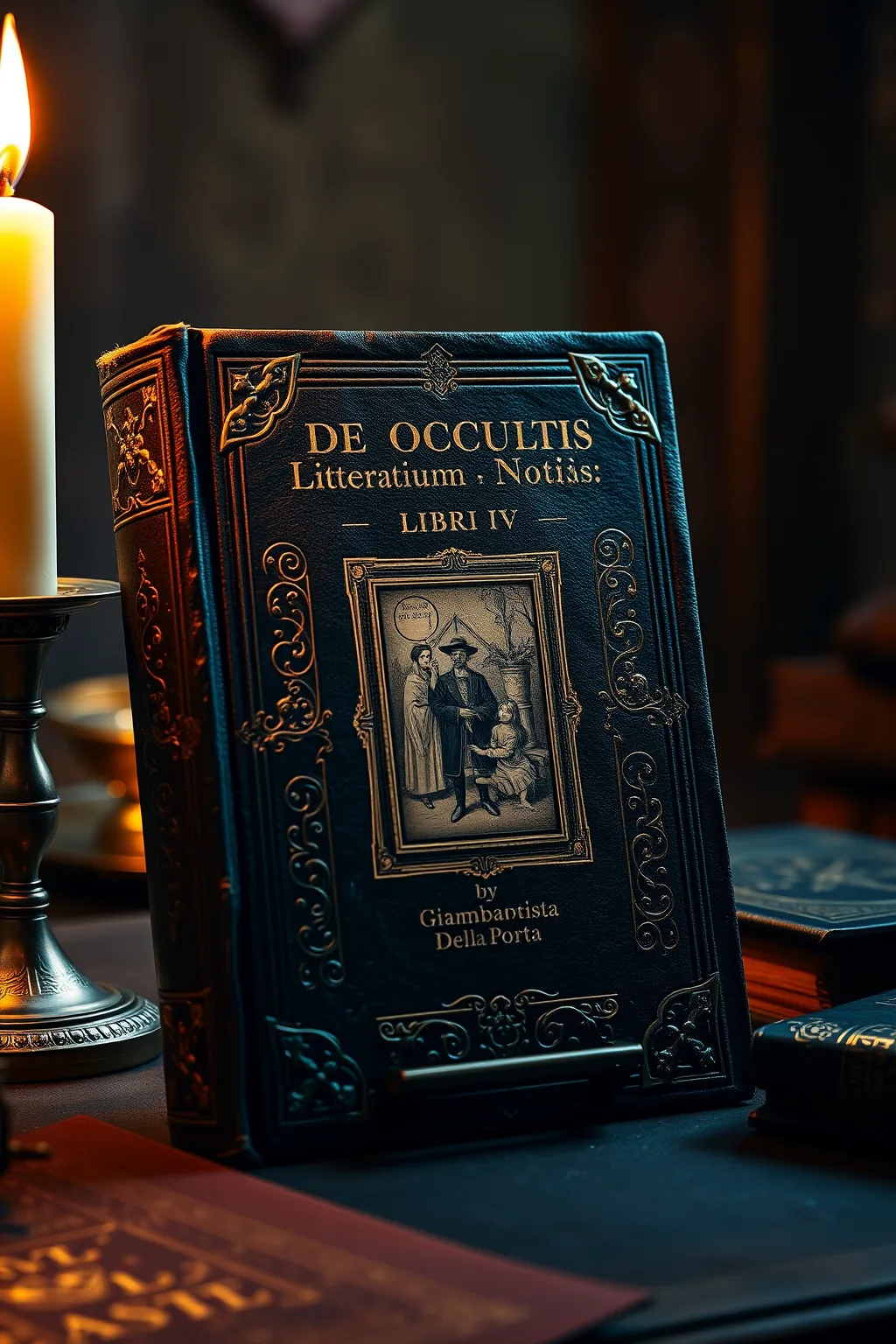
De occultis literarum notis ... Libri IV.
 82
82

De occultis literarum notis ... Libri IV.



Giambattista Della Porta's 'De occultis literarum notis ... Libri IV.' is a treasure trove for modern esoteric seekers, offering a rich exploration of the mystical properties of letters. The book's detailed analysis of letter magic and its applications in various occult practices makes it an invaluable resource for those interested in the deeper meanings behind language and symbolism. Della Porta's scholarship is evident throughout, as he weaves together historical context, philosophical insights, and practical examples to create a compelling narrative. The text is particularly valuable for its historical perspective, providing a window into the Renaissance mindset where science and magic were often seen as intertwined. For contemporary readers, this book serves as both an educational tool and a source of inspiration, encouraging a deeper appreciation for the esoteric dimensions of language. The meticulous research and clear presentation make it accessible to both academic scholars and casual readers. Overall, 'De occultis literarum notis' is a 5-star addition to any esoteric library.
📝 Description
82
In 1589, Giambattista Della Porta published 'De occultis literarum notis ... Libri IV,' examining the hidden power of letters.
This 1589 work by Giambattista Della Porta focuses on the secret properties and mystical connections of letters. Della Porta, a Neapolitan scholar, sought to understand how alphabetic characters held symbolic weight and influenced the world.
The book examines these ideas through the lens of Renaissance esotericism, a period where magic, alchemy, and natural philosophy were often intertwined. It is not a simple treatise on cryptography, but rather a deeper inquiry into the occult philosophy that believed in a hidden order connecting all things. Della Porta's text aims to reveal this order through the study of script and its inherent energies.
Readers will find an attempt to bridge the material and spiritual through the manipulation and understanding of symbols. The work invites contemplation on how language itself might be a key to unlocking deeper truths about existence.
Giambattista Della Porta's work belongs to the tradition of Renaissance hermeticism and natural magic. This period saw a resurgence of interest in ancient texts, including those attributed to Hermes Trismegistus, which proposed a universe governed by sympathies and hidden connections. Della Porta, influenced by figures like Agrippa and Ficino, believed that understanding these connections, even through something as seemingly mundane as the alphabet, could unlock deeper knowledge of the cosmos and its workings. His approach integrated Neoplatonic ideas with a practical, observational bent, characteristic of natural magic.
✍️ Author
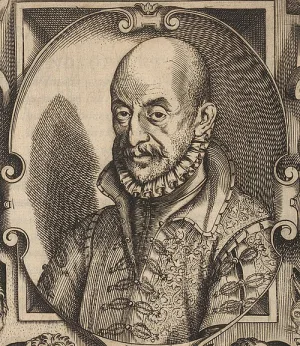
Giambattista Della Porta
Giambattista della Porta (Italian: [dʒambatˈtista della ˈpɔrta]; 1535 – 4 February 1615), also known as Giovanni Battista Della Porta, was an Italian scholar, polymath and playwright who lived in Naples at the time of the Renaissance, Scientific Revolution …
💡 Why Read This Book?
Reading 'De occultis literarum notis ... Libri IV.' today offers a unique opportunity to explore the historical roots of occult philosophy and its relevance to modern esoteric practices. By delving into the mystical properties of letters, readers gain a deeper understanding of how language and symbolism can influence magical and divinatory practices. This book is particularly valuable for those interested in the intersection of science and mysticism, providing insights into the Renaissance mindset. It encourages a broader appreciation for the esoteric dimensions of language and the enduring fascination with hidden meanings.
⭐ Reader Reviews
Honest opinions from readers who have explored this book.
❓ Frequently Asked Questions
What is the main focus of 'De occultis literarum notis'?
The main focus of this book is the esoteric significance of letters and symbols, exploring how they can influence magic, divination, and the natural world.
Who is Giambattista Della Porta?
Giambattista Della Porta was an Italian polymath known for his wide-ranging interests, including natural magic, cryptography, and optics.
Why is this book important for modern esoteric seekers?
This book provides valuable insights into the historical context of magical practices and the enduring fascination with the hidden meanings embedded in language.
🔮 Key Themes & Symbolism
Symbolism and Correspondences
The book delves deeply into the symbolism and correspondences of letters and symbols, exploring the hidden meanings that lie beneath the surface of everyday language. This theme is central to the occult philosophy of the Renaissance, where symbols were believed to hold the key to unlocking the mysteries of the universe.
Esoteric Traditions
De occultis literarum notis ties together various esoteric traditions, providing a comprehensive overview of the mystical currents that flowed through the Renaissance. This theme highlights the interconnectedness of different occult practices and their shared quest for hidden knowledge.
Spiritual Enlightenment
The ultimate goal of this book is to guide readers on a journey towards spiritual enlightenment through the mastery of esoteric symbols and their meanings. This theme underscores the transformative power of occult knowledge and its potential to elevate the soul.
💡 Key Ideas
Editorial paraphrase of the work's core concepts — not direct quotes.
The letters are the keys to the mysteries of the universe.
This passage emphasizes the belief in the occult philosophy that letters hold hidden meanings and correspondences, revealing the deeper truths of existence.
Symbolism is the language of the divine.
This quote underscores the importance of symbols in occult practices, where they are seen as a means of communicating with higher spiritual realms.
To understand the occult is to unlock the doors of perception.
This line highlights the transformative power of esoteric knowledge, which can expand one's awareness and lead to spiritual enlightenment.
The seeker of truth must look at the hidden realms.
This passage encourages readers to explore the mysteries of the occult, suggesting that the path to enlightenment lies in uncovering hidden knowledge.
The mysteries of the letters are the path to divine wisdom.
This quote emphasizes the belief that the study of esoteric symbols can lead to a deeper understanding of the divine and the mysteries of the universe.
🌙 Esoteric Significance
Tradition
This book belongs to the Hermetic tradition, which emphasizes the study of symbols and their correspondences as a means of uncovering hidden knowledge. The Hermetic tradition draws on ancient Egyptian, Greek, and Jewish mystical teachings, seeking to bridge the gap between the material and spiritual realms.
Symbolism
Key symbols in this text include letters and their mystical correspondences, which are seen as the keys to unlocking the mysteries of the universe. Other symbols include astrological signs, alchemical emblems, and magical sigils, all of which are explored in depth to reveal their esoteric meanings.
Modern Relevance
This book remains relevant today, as modern practitioners of the occult continue to study and apply its teachings. Many contemporary mystics and occultists draw on Della Porta's insights to deepen their understanding of esoteric symbols and their meanings, using this knowledge to enhance their spiritual practices.
👥 Who Should Read This Book
Beginners in the field of occult philosophy will find this book to be an enriching introduction to the mystical correspondences of letters and symbols. Scholars of esoteric studies will appreciate the comprehensive exploration of various occult traditions and their interconnectedness. Spiritual seekers will be drawn to the transformative power of esoteric knowledge, which can elevate the soul and expand one's awareness. Practitioners of the mystical arts will find valuable insights and techniques for enhancing their spiritual practices, drawing on the ancient wisdom of the Renaissance.
📜 Historical Context
Published in the 16th century, 'De occultis literarum notis ... Libri IV' reflects the intellectual and spiritual ferment of the Renaissance, a time when the boundaries between science, magic, and religion were fluid. This era saw a resurgence of interest in ancient esoteric traditions, as scholars and mystics sought to uncover the hidden knowledge of the past. Giambattista Della Porta's work was influential in shaping the occult philosophy of the time, providing a comprehensive exploration of the mystical correspondences between letters and symbols. His insights continue to resonate with modern practitioners of the occult, who find in his writings a rich source of esoteric wisdom.
📔 Journal Prompts
Reflect on a symbol that holds personal significance and explore its esoteric meanings.
Consider how the study of occult philosophy has transformed your perception of the world.
Journal about a time when you felt a deep connection to the divine through symbols or correspondences.
Write about the challenges and rewards of examining the hidden areas of esoteric knowledge.
Explore the ways in which ancient mystical traditions continue to influence modern spiritual practices.
🗂️ Glossary
Hermetic Tradition
A mystical tradition that draws on ancient Egyptian, Greek, and Jewish teachings, emphasizing the study of symbols and their correspondences to uncover hidden knowledge.
Symbolism
The use of symbols to represent abstract ideas or concepts, often in the context of spiritual or esoteric practices.
Occult Philosophy
The study of hidden knowledge and mystical correspondences, often involving the exploration of symbols, astrology, and alchemy.
Esoteric Knowledge
Knowledge that is hidden or concealed, often requiring initiation or specialized study to access.
Mystical Correspondences
The belief that symbols and objects in the material world correspond to higher spiritual realities, revealing the mysteries of the universe.
This book appears in 3 collections
🔮 Readers Also Liked
Browse all →









From the “Occultism” Collection
View all →





More Free Occult Philosophy Books
View all →