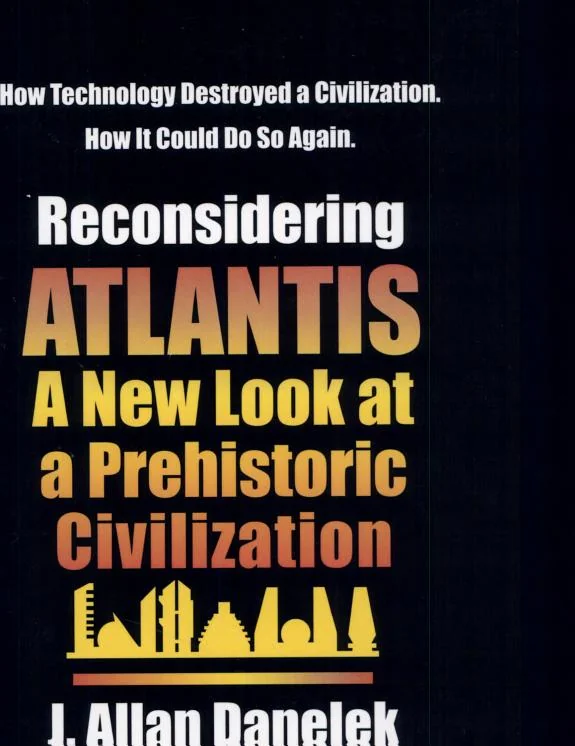
Reconsidering Atlantis
 71
71

Reconsidering Atlantis
Danelek’s "Reconsidering Atlantis" eschews the familiar hunt for sunken continents, a refreshing departure from the genre's usual tropes. Instead, he pivots to a thought experiment: if Atlantis existed and possessed capabilities Plato only hinted at, how might such a society have engineered its own oblivion? The strength lies in this analytical, almost sociological approach, dissecting potential self-destruction pathways for a hyper-advanced, yet ultimately flawed, civilization. A notable passage discusses the potential for advanced energy sources to become the very agents of total annihilation, a concept explored with speculative rigor. However, the book’s primary limitation is its reliance on extensive hypothetical scenarios, which, while internally consistent, can feel somewhat detached from tangible historical or archaeological anchors. The prose, while clear, occasionally lacks the evocative power one might expect from such a grand subject. Ultimately, Danelek offers a compelling intellectual exercise for those who view Atlantis not as a lost city, but as a thought experiment in civilizational hubris and collapse.
📝 Description
71
Published in 2003, J. Allan Danelek's Reconsidering Atlantis questions the literal existence of the island to examine its potential societal implications.
J. Allan Danelek's 2003 book, Reconsidering Atlantis, moves past debates on the physical location of the legendary island. Instead, Danelek constructs a theoretical model for a civilization possessing advanced capabilities, examining the logical outcomes of its existence. The work suggests that if Atlantis were real, its scale and impact could have been greater than Plato originally described. Danelek focuses on the internal dynamics and self-destruction mechanisms of such a society, rather than its geographical spread or cultural influence.
This book is for serious students of esoteric history and speculative archaeology. Readers interested in the philosophical questions and theoretical possibilities of advanced ancient cultures will find it engaging. It appeals to those who construct reasoned speculative narratives, analyze societal collapse, and consider the limits of historical possibility. The work is aimed at readers who question common accounts and seek to understand the reasons behind historical myths.
Emerging in the early 21st century, Danelek's work engages with a long tradition of Atlantean scholarship. This tradition dates back to Plato's dialogues, Timaeus and Critias, around 360 BCE. Ignatius Donnelly popularized the concept in the late 19th century with "Atlantis: The Antediluvian World" (1882). Danelek's approach in 2003 differs by concentrating on the internal workings and destructive forces within a hypothetical advanced civilization, rather than solely on its geographic presence or outward cultural effects.
💡 Why Read This Book?
• Learn how advanced civilizations might engineer their own demise, moving beyond simple external catastrophe scenarios, as explored through Danelek's analysis of internal societal collapse mechanisms. • Understand the speculative framework Danelek proposes for a civilization far exceeding Plato's descriptions, offering a unique perspective on the scale and potential impact of precursor societies. • Gain insight into the philosophical implications of advanced technology and societal structures, particularly how they could lead to complete disappearance, as detailed in Danelek's exploration of catastrophic self-destruction.
⭐ Reader Reviews
Honest opinions from readers who have explored this book.
❓ Frequently Asked Questions
Does "Reconsidering Atlantis" argue for the physical existence of Atlantis?
No, J. Allan Danelek's work focuses on the theoretical implications and potential self-destruction of a hypothetical Atlantean civilization, rather than proving its historical existence or locating it geographically.
What makes Danelek's theory about Atlantis different from other books?
Unlike many works that seek Atlantis's location, Danelek constructs a detailed scenario for how such an advanced civilization could have completely destroyed itself, leaving no trace, as outlined in his 2003 publication.
What kind of advanced civilization does Danelek envision?
He envisions a civilization with capabilities potentially far exceeding those described by Plato, exploring how advanced technologies and societal structures could paradoxically lead to total annihilation.
Is "Reconsidering Atlantis" based on archaeological evidence?
The book is primarily a theoretical and speculative exploration, using hypothetical scenarios to explain the absence of evidence for an advanced civilization, rather than presenting new archaeological findings.
What is the main theme regarding Atlantis's disappearance?
The central theme is that internal factors, such as the unforeseen consequences of advanced technology and societal dynamics, could be the primary cause of a civilization's complete self-destruction and subsequent disappearance from the historical record.
Who is J. Allan Danelek?
J. Allan Danelek is the author of "Reconsidering Atlantis," a book first published in 2003 that offers a speculative analysis of the legendary civilization's potential scope and demise.
🔮 Key Themes & Symbolism
Civilizational Self-Destruction
Danelek posits that a civilization as advanced as the hypothetical Atlantis might possess the means for its own complete annihilation. This theme moves beyond external cataclysms, focusing on internal societal dynamics, technological hubris, and the potential for advanced systems to generate unforeseen destructive consequences. The work explores how such a society could engineer its own disappearance, leaving behind no discernible trace, a concept central to understanding mythic collapses.
Hypothetical Advanced Capabilities
The book looks at the theoretical capabilities of a civilization potentially far exceeding Plato's descriptions. It considers what forms advanced technology, societal organization, and perhaps even consciousness might take in such a context. This theme encourages readers to think expansively about the potential of precursor civilizations and the limitations of our current understanding of history and human potential.
Absence of Evidence as Evidence
A core concept is how the complete lack of physical evidence for Atlantis, despite its hypothesized scale, can itself be interpreted. Danelek suggests that a civilization capable of total self-destruction might also be capable of erasing its own existence, thereby explaining the silence in the archaeological record. This challenges conventional interpretations of historical absence.
Reinterpreting Mythic Narratives
Danelek's work encourages a re-evaluation of myths like Atlantis not merely as allegories or historical fragments, but as potential conduits for understanding profound truths about civilization, progress, and decline. By applying logical speculation to the myth, the book aims to unlock deeper meanings concerning human nature and the cyclical patterns of history.
💬 Memorable Quotes
Direct passages from the work, attributed to the author.
“The author demonstrates that, if such a civilization did exist, it would have been far more extensive than even Plato imagined.”
— This core statement frames Danelek's approach: the focus is on the scale and implication of Atlantis, suggesting Plato's account might be an understatement of its true potential grandeur and influence.
“Danelek presents a scenario that attempts to explain how such a fantastic place could so thoroughly destroy itself that no trace if it remains today.”
— This highlights the book's central analytical task—constructing a plausible narrative for the complete erasure of an advanced civilization, thereby addressing the paradox of Atlantis's legendary status versus its physical absence.
“This book is not merely about whether Atlantis existed or uncovering its most likely geographic locale.”
— This sets the stage for the work's departure from typical Atlantean scholarship, emphasizing that the inquiry is conceptual and theoretical rather than archaeological or geographical.
“The author constructs a hypothetical framework for a civilization possessing advanced capabilities.”
— This interpretation underscores the book's speculative nature, focusing on building a logical model for a highly advanced society as a precursor to examining its potential fate.
💡 Key Ideas
Editorial paraphrase of the work's core concepts — not direct quotes.
The work explores the concept of 'unforeseen consequences' of advanced technology and societal structures.
This paraphrased concept points to a key driver of the hypothesized destruction: that the very advancements leading to Atlantis's greatness could also contain the seeds of its ultimate downfall.
🌙 Esoteric Significance
Tradition
While not strictly adhering to a single esoteric lineage, "Reconsidering Atlantis" engages with themes common in Theosophy and speculative ancient history, traditions that often explore precursor civilizations possessing advanced spiritual and technological knowledge. It departs from Blavatsky's racial hierarchies but shares the speculative ambition of positing advanced ancient cultures beyond conventional historical understanding. The work functions as a modern exploration within the broader esoteric interest in lost golden ages and forgotten wisdom.
Symbolism
The primary symbol is Atlantis itself, representing not just a lost continent but the archetype of a highly advanced civilization. Its complete disappearance symbolizes the potential for even the greatest achievements to be undone by hubris or unforeseen consequences. The concept of 'no trace' serves as a potent symbol for the limitations of material evidence in understanding profound historical or metaphysical truths, urging a deeper, more interpretive approach to myth and legend.
Modern Relevance
Danelek's work speaks to contemporary discussions surrounding civilizational risk, the ethics of advanced technology, and the potential for societal collapse due to internal factors. Thinkers in fields like transhumanism, futurism, and even some branches of systems theory may find his hypothetical scenarios relevant for contemplating the long-term trajectory of human civilization and the potential pitfalls of unchecked progress.
👥 Who Should Read This Book
• Students of speculative history and ancient mysteries interested in theoretical models of civilization, particularly those who prioritize analytical frameworks over archaeological evidence. • Readers drawn to philosophical explorations of advanced technology and societal fragility, seeking to understand potential mechanisms of catastrophic self-destruction. • Individuals intrigued by the concept of Atlantis beyond its geographical location, who wish to engage with the 'what if' scenarios concerning the scale and ultimate fate of precursor cultures.
📜 Historical Context
J. Allan Danelek's "Reconsidering Atlantis" (2003) emerged in an era where interest in ancient mysteries and alternative histories remained robust, building upon a tradition that gained significant traction with Ignatius Donnelly's "Atlantis: The Antediluvian World" in 1882. Donnelly's work, heavily influenced by geological and evolutionary theories of the late 19th century, presented Atlantis as a literal place whose inhabitants seeded global civilizations. Danelek's approach, however, shifts the focus from geographical discovery and cultural diffusion to a more analytical, almost sociological, examination of how such a civilization might have engineered its own demise. While Donnelly drew heavily on contemporary scientific paradigms, Danelek engages with the philosophical implications of advanced societies and the paradox of their potential disappearance. The 2003 publication occurred well after the Theosophical interpretations popularized by Helena Blavatsky in the late 19th century, and during a time when pseudoarchaeology continued to thrive, yet Danelek's specific focus on the internal mechanics of catastrophic collapse offered a distinct angle within this ongoing discourse.
📔 Journal Prompts
The hypothetical scenario of Atlantis's self-destruction, and its implications for modern technological development.
The concept of 'no trace' and its significance when interpreting historical absence.
How advanced capabilities, as envisioned by Danelek, might paradoxically lead to total societal collapse.
The distinction between Plato's Atlantis and Danelek's expanded hypothetical civilization.
Reflecting on the role of internal factors versus external forces in the demise of complex societies.
🗂️ Glossary
Plato's Dialogues
Ancient Greek philosophical texts, primarily the Timaeus and Critias, which first introduced the narrative of Atlantis as an advanced island civilization that predated Athens.
Speculative Archaeology
An approach that explores historical possibilities and ancient mysteries using imaginative reasoning and theoretical frameworks, often extending beyond conventional archaeological evidence.
Precursor Civilization
A hypothetical ancient society believed to have existed before recorded history, possessing advanced knowledge or technology that may have influenced later cultures.
Civilizational Collapse
The disintegration of a complex society into a simpler form of social organization, often characterized by loss of political control, economic decline, and cultural change.
Archetypal Symbolism
The use of symbols that represent universal concepts or human experiences, often drawn from mythology and folklore, to convey deeper meanings.
Unforeseen Consequences
Unexpected outcomes or effects resulting from a particular action, policy, or technology, particularly relevant in the context of advanced systems.
Hypothetical Framework
A theoretical structure or model built on assumptions and reasoned speculation, used to explore possibilities or explain phenomena that lack direct empirical evidence.
This book appears in 1 collection
🔮 Readers Also Liked
Browse all →









From the “Atlantis” Collection
View all →








More Free Occult Philosophy Books
View all →