Mount Shasta
 75
75

Mount Shasta
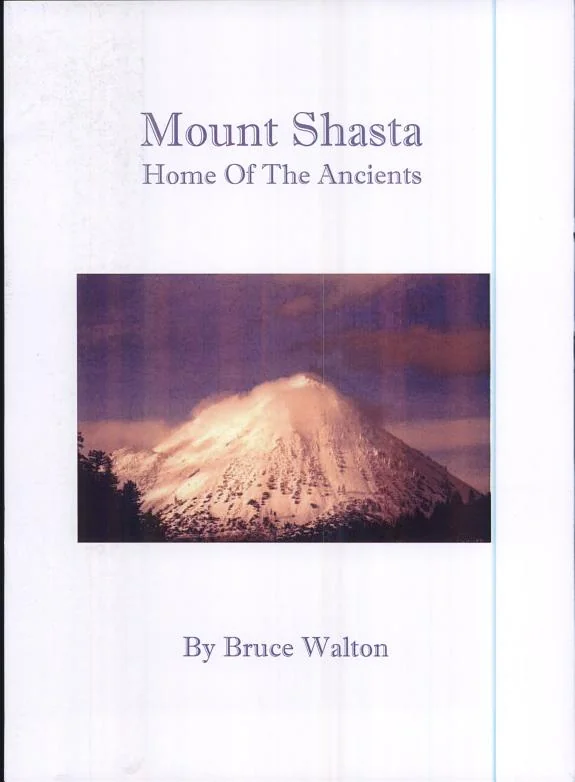
Bruce Walton's "Mount Shasta" presents a compelling, if speculative, narrative rooted in the legend of a Lemurian refuge. The author navigates the lore with a certain charm, particularly in detailing the alleged customs of the hidden inhabitants. A notable strength is its detailed portrayal of the mountain as a mystical center, drawing readers into its alleged energetic significance. However, the work's primary limitation lies in its lack of empirical evidence, relying heavily on anecdotal accounts and interpretations of ancient myths. The descriptions of Lemurian society, while imaginative, remain firmly in the realm of legend. Walton's wit, as noted in the original blurb, adds a lightness that prevents the text from becoming overly dense, but it doesn't substitute for verifiable data. Ultimately, "Mount Shasta" functions as an engaging piece of esoteric folklore rather than historical documentation.
📝 Description
75
Bruce Walton's 1985 book explores the esoteric lore surrounding Mount Shasta and its connection to Lemuria.
Bruce Walton's "Mount Shasta," published in 1985, examines the esoteric legends associated with the Northern California peak. The central idea is that Mount Shasta served as the final refuge for survivors of the lost continent of Lemuria. According to the narrative, these Lemurians established a hidden community, carefully maintaining their ancient traditions and knowledge.
This work will appeal to readers interested in comparative mythology, tales of lost civilizations, and the intersection of geography and spiritual beliefs. It is suitable for those who read esoteric texts with an open mind, ready to consider speculative history and the psychology of myth. Those looking for strictly factual historical accounts might find its speculative nature challenging.
The book draws on a period of significant interest in esoteric traditions and ancient mysteries, particularly those influenced by Theosophy. Figures from the early 20th century, like Helena Blavatsky, helped popularize ideas of root races and lost continents, a fascination that extended into the late 20th century. Walton's work engages with this ongoing interest in hidden histories.
The book is situated within Theosophical and Anthroposophical traditions. These movements, particularly prominent in the late 19th and early 20th centuries, often involved concepts of ancient lost continents like Lemuria and Atlantis, as well as ideas of hidden masters and advanced spiritual civilizations. Helena Blavatsky's work was a major influence, popularizing notions of root races and pre-historic advanced societies. Walton's book continues this lineage by focusing on a specific geographical location tied to these esoteric narratives.
💡 Why Read This Book?
• You will gain an understanding of the specific lore surrounding Mount Shasta as a Lemurian refuge, a concept popularized in esoteric circles since the early 20th century. • You can explore the purported societal structure and spiritual practices of the alleged Lemurians, as detailed in Walton's narrative, offering a unique perspective on lost civilizations. • The book provides insight into the geographical and geological interpretations within esoteric traditions, presenting Mount Shasta as a significant spiritual nexus.
⭐ Reader Reviews
Honest opinions from readers who have explored this book.
❓ Frequently Asked Questions
What is the primary legend surrounding Mount Shasta discussed in Bruce Walton's book?
The book centers on the legend that Mount Shasta in Northern California was the last refuge for survivors of the lost continent of Lemuria, who established a secret colony.
When was Bruce Walton's book 'Mount Shasta' first published?
Bruce Walton's book 'Mount Shasta' was first published in 1985.
What is Lemuria as described in esoteric traditions and in this book?
Lemuria is a hypothesized ancient continent, often depicted as a pre-Atlantean civilization whose survivors sought refuge on Earth, with Mount Shasta being a key location.
Does the book offer historical proof of Lemurian inhabitants?
No, the book presents legends and esoteric interpretations rather than verifiable historical or archaeological proof of Lemurian inhabitants.
Who would find the content of 'Mount Shasta' by Bruce Walton most interesting?
Readers interested in esoteric lore, comparative mythology, lost civilizations, and the spiritual significance of geographical locations will find this book compelling.
What is the alleged secret city associated with Lemurians on Mount Shasta?
The book discusses the alleged subterranean city of Telos, believed to be inhabited by the Lemurians who preserved their ancient customs and knowledge.
🔮 Key Themes & Symbolism
Lemurian Legacy
The enduring myth of Lemuria, a lost continent predating Atlantis, forms the core of this work. Walton explores the belief that its inhabitants, the Lemurians, survived a global cataclysm by migrating to Earth's interior and establishing hidden sanctuaries. Mount Shasta is presented as the primary terrestrial nexus for this ancient civilization, a place where their wisdom and traditions are purportedly preserved, offering a unique perspective on humanity's deep past and potential future evolution.
Geographical Spirituality
This theme examines Mount Shasta not just as a physical mountain but as a potent spiritual center and gateway. The text looks at interpretations of the mountain as a 'sacred mountain' in various esoteric traditions, imbued with unique energetic properties. It explores the concept of sacred geography, where specific locations are believed to act as conduits for higher consciousness or repositories of ancient knowledge, influencing spiritual seekers for generations.
Subterranean Civilizations
Central to the Mount Shasta legend is the idea of a hidden, advanced civilization residing beneath the Earth's surface. The book discusses the purported city of Telos and its Lemurian inhabitants, who are said to live in harmony, possessing advanced spiritual and technological understanding far beyond that of surface dwellers. This theme taps into archetypal narratives of hidden worlds and utopian societies existing beyond ordinary perception.
Preservation of Ancient Wisdom
The narrative emphasizes the Lemurians' role as custodians of ancient wisdom, safeguarding knowledge lost to the surface world. This wisdom encompasses spiritual teachings, advanced healing techniques, and a profound understanding of cosmic laws. The book suggests that this preserved knowledge holds keys to humanity's spiritual development and the potential for a more enlightened future, positioning the Lemurians as guides from a forgotten era.
💬 Memorable Quotes
Direct passages from the work, attributed to the author.
“The tales relate, the Lumurians established a secret colony preserving their ancient customs.”
— This core tenet highlights the book's central premise: that Mount Shasta is not merely a mountain but a hidden sanctuary for a lost civilization, preserving a lineage of ancient practices and beliefs.
“Here, the tales relate, the Lumurians established a secret colony...”
— This phrase underscores the narrative's reliance on legend and reported accounts, framing the discussion of Lemurian existence on Mount Shasta as a matter of folklore rather than documented history.
“The author shows wit.”
— This observation suggests that despite the esoteric and speculative nature of the subject matter, Walton's prose is engaging and perhaps possesses a degree of lightheartedness or cleverness in its presentation.
“Mount Shasta in Northern California was the last refuge of the survivors of the lost continent of Lemuria.”
— This foundational statement expresses the primary legend explored in the book, positioning the specific geographical location as the final sanctuary for a mythical ancient civilization.
“Preserving their ancient customs.”
— This phrase emphasizes the continuity and dedication of the supposed Lemurian inhabitants, suggesting their survival was focused on maintaining their unique cultural and spiritual heritage in secrecy.
🌙 Esoteric Significance
Tradition
This work aligns with the broader tradition of esoteric geography and the concept of 'sacred mountains,' finding roots in Theosophical thought and later New Age interpretations. It departs from strictly traditional Hermetic or Kabbalistic lineages by focusing on a specific geographical location as a nexus for a lost, non-terrestrial (or pre-terrestrial) civilization, blending geological speculation with spiritual lore.
Symbolism
Mount Shasta itself functions as a primary symbol, representing spiritual aspiration, a gateway to higher consciousness, and a hidden sanctuary. The concept of Lemuria symbolizes an idealized, ancient past and a potential future evolutionary path for humanity. The alleged subterranean city of Telos represents hidden knowledge, utopian ideals, and the preservation of wisdom beyond the mundane world.
Modern Relevance
Contemporary New Age and spiritual growth movements frequently reference Mount Shasta as a powerful energy vortex and a place of Lemurian connection. Thinkers and practitioners in fields like ascension studies, crystal healing, and conscious evolution often draw upon the lore popularized by works like Walton's, integrating the idea of Lemurian wisdom into their modern spiritual frameworks.
👥 Who Should Read This Book
• Students of esoteric geography and sacred sites: They will find detailed lore connecting a specific mountain to ancient civilizations and spiritual energies. • Enthusiasts of lost continent myths: Readers fascinated by Lemuria, Atlantis, and other legendary lands will appreciate the exploration of this particular legend. • Comparative mythology researchers: Those interested in how ancient myths and speculative histories intersect with geography will find this book a unique case study.
📜 Historical Context
Published in 1985, Bruce Walton's "Mount Shasta" emerged during a period when esoteric ideas, particularly those concerning lost continents and ancient wisdom traditions, experienced a resurgence. This era saw continued interest in the concepts popularized by Theosophists like Helena Blavatsky, who wrote extensively about root races and mythical homelands. The book tapped into a broader cultural fascination with mysteries, UFOs, and alternative histories that characterized much of the late 20th century. While not directly engaging with academic scholarship, it resonated with a public seeking spiritual or historical narratives beyond mainstream understanding. The work implicitly builds upon earlier writings about Lemuria, such as those by James Churchward, contributing to a continuous stream of speculative literature on pre-diluvian civilizations.
📔 Journal Prompts
The alleged Lemurian colony on Mount Shasta: what enduring human needs does this myth fulfill?
Reflect on the symbolism of Mount Shasta as a sacred mountain within esoteric traditions.
Consider the concept of Telos and its representation of an ideal society.
How does the preservation of 'ancient customs' by the Lemurians speak to contemporary cultural anxieties?
Explore the author's witty approach to presenting speculative lore.
🗂️ Glossary
Lemuria
A hypothesized lost continent, often described as predating Atlantis, whose survivors are believed by some to have established hidden colonies, notably on Mount Shasta.
Lemurians
The purported inhabitants of the lost continent of Lemuria, believed by adherents of the legend to have survived cataclysms and preserved ancient wisdom.
Telos
An alleged subterranean city beneath Mount Shasta, said to be inhabited by advanced Lemurians who maintain their ancient culture and spiritual practices.
Esoteric Lore
Body of knowledge or teachings concerning mystical, spiritual, or occult truths, often transmitted through hidden or secret traditions.
Sacred Mountain
A mountain considered holy or spiritually significant in religious or esoteric traditions, often believed to possess unique energies or act as a conduit to the divine.
Lost Continent
A mythical or hypothetical landmass, such as Lemuria or Atlantis, that is believed to have existed in the past and subsequently disappeared beneath the sea or through other cataclysms.
Spiritual Nexus
A central point or connection through which spiritual energies or influences are believed to flow or converge.
This book appears in 1 collection
🔮 Readers Also Liked
Browse all →









From the “Lemuria” Collection
View all →







More Free Occult Philosophy Books
View all →