Realms of the Human Unconscious
 82
82

Realms of the Human Unconscious
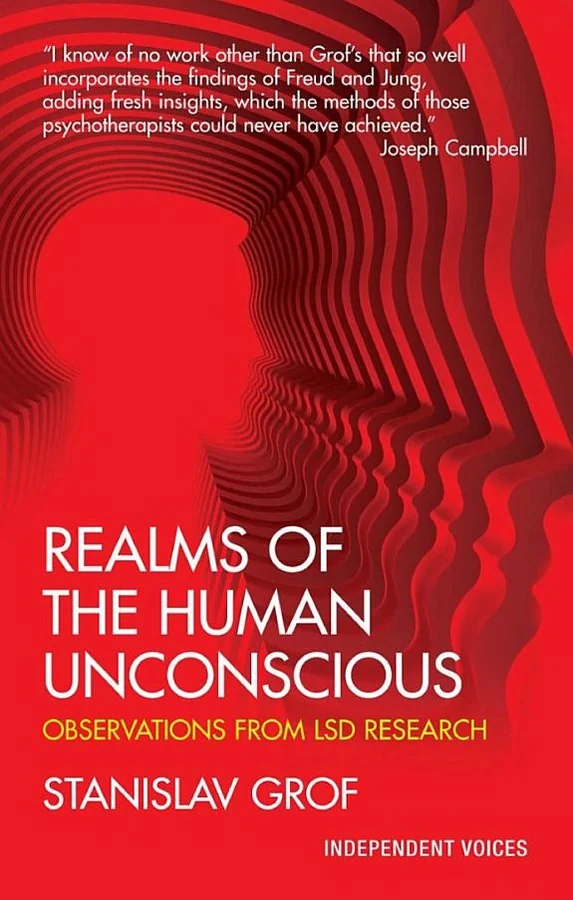
Stanislav Grof’s *Realms of the Human Unconscious* offers a dense, clinical yet expansive account of his decades spent charting the non-ordinary states of consciousness, primarily through LSD-assisted psychotherapy. The strength of the book lies in its systematic approach; Grof meticulously categorizes the vast terrain he uncovered, moving beyond classical Freudian and Jungian archetypes to delineate perinatal matrices and profound transpersonal phenomena. His concept of COEX systems provides a compelling framework for understanding how deeply buried emotional complexes manifest. However, the book's clinical tone, while rigorous, can sometimes feel detached from the raw, often overwhelming subjective nature of the experiences it describes. A limitation is the reliance on a specific pharmacological catalyst, which may alienate readers unfamiliar with or opposed to such methods. The detailed descriptions of the four perinatal matrices, particularly the 'bardo'-like quality of the second, remain a powerful illustration of Grof's unique insights into the death-rebirth cycle. It’s a vital, albeit demanding, study for serious explorers of the psyche.
📝 Description
82
Stanislav Grof's 2016 book maps the inner dimensions of consciousness, detailing experiences unlocked by altered states.
Stanislav Grof's *Realms of the Human Unconscious* details his systematic charting of subjective experiences encountered during altered states of consciousness. First published in 2016, the book posits that substances like LSD can act as amplifiers, granting access to psychic territories beyond ordinary perception. Grof correlates these inner landscapes with existing psychological frameworks, identifying recurring patterns within these states. The work examines the psychotherapeutic potential inherent in these experiences, moving beyond conventional psychological models.
The book is aimed at psychotherapists, psychologists, and researchers studying consciousness and psychopathology. It also speaks to individuals pursuing spiritual growth, those seeking self understanding, and anyone interested in the nature of reality. Students of transpersonal psychology and consciousness studies will find it a significant text for understanding the field's origins and development. Grof's research, conducted during the 1960s and 70s, focused on systematic mapping and integration within a psychodynamic context.
Grof's work emerged from the humanistic and transpersonal psychology movements of the mid-20th century, a period marked by significant exploration into altered states of consciousness. While figures like Timothy Leary were also investigating psychedelics, Grof's contribution was distinct in its systematic mapping and integration within a psychodynamic framework. His research aimed to create a comprehensive atlas of the psyche, incorporating perinatal and transpersonal dimensions that extended beyond traditional Freudian and Jungian models. This approach positioned his work within a lineage of inquiry seeking to understand consciousness through direct experience, often facilitated by non-ordinary states.
💡 Why Read This Book?
• Understand the systemic mapping of the unconscious beyond Freudian and Jungian models, specifically Grof's distinction between Freudian, Rankian, and perinatal domains. • Gain insight into the COEX (condensed experience system) concept, learning how emotional charges link diverse memories and fantasies in the psyche. • Explore the therapeutic potential of non-ordinary states of consciousness, as detailed in Grof's systematic studies conducted at the Maryland Psychiatric Research Center.
⭐ Reader Reviews
Honest opinions from readers who have explored this book.
❓ Frequently Asked Questions
What is Stanislav Grof's main contribution to psychology?
Stanislav Grof is a pioneer in transpersonal psychology, co-founding the field and developing LSD-assisted psychotherapy. His key contribution is the systematic cartography of the human unconscious, including perinatal and transpersonal realms.
What are COEX systems according to Grof?
COEX systems, or condensed experience systems, are complexes of memories and fantasies from different periods of an individual's life that share a common emotional tone or theme. Grof uses this concept to explain the organization of the unconscious.
What are the perinatal matrices in Grof's work?
The perinatal matrices are four stages of the dying and rebirth process associated with the biological birth trauma. Grof describes them as crucial domains within the unconscious that profoundly influence psychological and spiritual experiences.
How did the historical context influence Grof's research?
Grof's research flourished during the 1960s and 70s when psychedelics were being explored for therapeutic potential. However, later legal restrictions, particularly in the 1970s, significantly impacted and curtailed such research in the United States.
What is the role of LSD in Grof's methodology?
Grof viewed LSD not as a direct cause of specific experiences but as a powerful, non-specific amplifier of the unconscious. It facilitated access to the deep psychological and spiritual material he systematically studied and categorized.
What distinguishes Grof's model from traditional psychoanalysis?
Grof's model expands significantly on Freudian and Jungian psychoanalysis by incorporating perinatal experiences (related to birth) and transpersonal phenomena (spiritual, mystical, archetypal experiences beyond the personal biography).
🔮 Key Themes & Symbolism
Mapping the Unconscious
Grof's primary contribution is a detailed cartography of the human unconscious, extending far beyond Freudian topographical models. He delineates distinct realms: the Freudian biographical level, the Rankian perinatal level associated with birth trauma, and the transpersonal level encompassing archetypal, mystical, and cosmic experiences. This systematic approach allows for a more comprehensive understanding of the psyche's vast potential and the origins of psychological distress, viewing non-ordinary states as windows into these deeper layers.
Perinatal Matrices and Birth Trauma
A central concept is the profound influence of the biological birth process on psychological development. Grof identified four Basic Perinatal Matrices (BPMs) corresponding to stages of labor and delivery. These matrices are not merely memories but dynamic experiential fields that can be reactivated in altered states, leading to intense experiences of suffering, struggle, death-rebirth, and eventual liberation. Understanding BPMs offers a new perspective on existential anxieties and developmental challenges.
Transpersonal Experiences
Beyond personal history and birth, Grof documents extensive transpersonal dimensions of the psyche. These include encounters with archetypal figures, ancestral memories, past-life experiences, and states of cosmic consciousness. He posits that these experiences are not necessarily pathological but represent access to a collective or universal dimension of awareness. The work explores the healing and transformative potential inherent in these profound states, reframing spiritual and mystical experiences within a psychological framework.
Therapeutic Applications
Grof's research, initially conducted with LSD and later with Holotropic Breathwork, emphasizes the therapeutic utility of induced non-ordinary states. He details how accessing and processing material from the biographical, perinatal, and transpersonal realms can lead to significant emotional release (catharsis) and personality transformation. The book outlines principles for guiding these intense experiences safely, facilitating healing from trauma, addiction, and existential crises by integrating unconscious material.
💬 Memorable Quotes
Direct passages from the work, attributed to the author.
“LSD acts as a non-specific psychic amplifier.”
— This highlights Grof's view that LSD doesn't dictate specific content but rather intensifies and broadens access to the individual's entire unconscious, making latent material more accessible for exploration.
“The COEX system provides a new framework for understanding the dynamics of the unconscious.”
— This points to Grof's innovation in identifying 'condensed experience systems' – thematic clusters of memories and fantasies – as organizing principles within the psyche, offering a bridge between biographical and deeper layers.
“Experiences of death and rebirth are central to the perinatal matrices.”
— This expresses the core of Grof's BPM theory, suggesting that the trauma and process of birth involve profound existential confrontations with mortality and renewal that shape personality.
“Transpersonal experiences offer access to dimensions beyond the individual ego.”
— This emphasizes Grof's recognition of mystical, archetypal, and collective unconscious phenomena, positioning them not as mere delusions but as valid and potentially healing aspects of human consciousness.
💡 Key Ideas
Editorial paraphrase of the work's core concepts — not direct quotes.
The therapeutic value of non-ordinary states lies in the integration of unconscious material.
This summarizes Grof's psychotherapeutic orientation, stressing that the insights and emotional releases experienced in altered states are crucial for lasting psychological healing when properly processed and integrated.
🌙 Esoteric Significance
Tradition
Grof's work bridges depth psychology with esoteric traditions, particularly Gnosticism and certain forms of mysticism, by validating and systematically mapping experiences often considered 'spiritual' or 'transcendent.' While not adhering strictly to any single lineage, his exploration of death-rebirth cycles, archetypal realms, and cosmic consciousness echoes themes found in Hermeticism and Eastern philosophies. He provides a psychological lens through which to understand phenomena traditionally relegated to mysticism, grounding esoteric concepts in observable (albeit induced) subjective experiences.
Symbolism
Key symbolic motifs in Grof's work revolve around the archetypes of the serpent (often associated with Kundalini energy and primal transformation), the abyss or void (representing the pre-egoic state or the unmanifest), and the mandala (symbolizing wholeness and the integration of the psyche). The intense imagery of the birth process itself, with its struggles, confinement, and eventual emergence, functions as a powerful, universal symbol for psychological transformation and overcoming existential barriers.
Modern Relevance
Contemporary interest in mindfulness, psychedelic-assisted therapy (especially post-2010 research), and integral psychology owes much to Grof's foundational work. Thinkers like Ken Wilber have integrated Grof's maps of consciousness into their own integral theories. Practices like Holotropic Breathwork continue to be widely used, demonstrating the enduring relevance of his non-pharmacological methods for self-exploration and healing. His detailed cataloging of subjective states remains a vital reference for researchers and practitioners exploring the frontiers of human potential.
👥 Who Should Read This Book
['• Psychotherapists and counselors exploring advanced models of the psyche and therapeutic techniques for accessing deep-seated material.', '• Students of transpersonal psychology and consciousness studies seeking foundational texts on the nature of non-ordinary states and their implications.', '• Individuals engaged in personal growth and spiritual exploration who wish to understand the psychological underpinnings of profound inner experiences.']
📜 Historical Context
Stanislav Grof's work on the human unconscious, particularly his research conducted in the 1960s and 1970s, emerged during a fertile but controversial period for consciousness studies. The cultural milieu was ripe with exploration into altered states, fueled by counter-cultural movements and early psychedelic research. Grof, alongside colleagues at the Maryland Psychiatric Research Center, meticulously documented experiences induced by LSD, developing a sophisticated theoretical framework that expanded upon Freudian and Jungian psychology. This period saw parallel explorations by figures like Timothy Leary, though Grof's approach was notably more clinical and systematic. While his findings gained traction within emerging fields like transpersonal psychology, the subsequent "War on Drugs" and increasing legal restrictions on psychedelic research, especially after 1970, led to a significant curtailment of such investigations in the West, pushing Grof's methods toward breathwork and non-pharmacological approaches.
📔 Journal Prompts
The concept of COEX systems: Identify a recurring emotional pattern in your life and trace potential connections to disparate memories.
Reflect on the perinatal matrices: Consider the symbolic journey through the stages of birth and its potential resonance with current life challenges.
Transpersonal experiences: Explore the significance of any encounters with archetypal imagery or feelings of cosmic unity in your own inner explorations.
The role of amplification: How might a non-specific amplifier, like Grof's LSD model, reveal hidden aspects of your own psyche?
Integration of non-ordinary states: Consider the process of bringing insights from profound inner experiences into daily life.
🗂️ Glossary
Basic Perinatal Matrices (BPMs)
Four stages of the biological birth process that Grof identified as crucial experiential domains within the unconscious, significantly influencing psychological patterns and crises.
COEX System (Condensed Experience System)
A constellation of memories and fantasies from different biographical periods that share a common emotional charge or theme, acting as an organizing principle in the unconscious.
Transpersonal Realm
Dimensions of consciousness that extend beyond the individual ego and personal history, including archetypal, mystical, ancestral, and cosmic experiences.
Non-ordinary States of Consciousness
States of awareness that differ significantly from the usual waking state, often induced by psychedelics, breathwork, meditation, or other methods, revealing deeper layers of the psyche.
Abreaction
The process of releasing repressed emotions associated with traumatic experiences, often through intense physical or emotional expression, leading to catharsis.
Holotropic Breathwork
A powerful non-pharmacological technique developed by Stanislav and Christina Grof to access non-ordinary states of consciousness for healing and self-exploration.
Psychodynamic Cartography
Grof's systematic mapping and categorization of the various levels and contents of the human unconscious, extending beyond traditional psychoanalytic models.
This book appears in 1 collection
🔮 Readers Also Liked
Browse all →









From the “Ego Death” Collection
View all →







More Free Occult Philosophy Books
View all →