Pictures from the Heart
 77
77

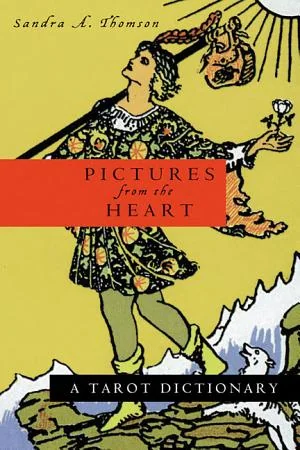
Pictures from the Heart
Sandra A. Thomson’s "Pictures from the Heart" attempts to corral the sprawling visual lexicon of the Tarot into a single, accessible volume. Its strength lies in its sheer breadth; the cataloging of themes and decks is genuinely impressive, offering a useful point of reference for the uninitiated and the experienced alike. The section on specific card imagery, for instance, detailing the myriad ways a "Knight of Cups" has been depicted from the Marseille decks to more modern interpretations, is particularly strong. However, the book occasionally falters in its interpretive depth. While it lists symbols exhaustively, the analysis can sometimes feel more like a descriptive inventory than a deep dive into their esoteric implications. For example, the discussion on the astrological correspondences, while present, feels somewhat superficial. Despite this limitation, it remains a foundational resource for anyone serious about understanding the visual language of the Tarot across its many forms. It is a solid, if not revolutionary, contribution to Tarot scholarship.
📝 Description
77
Sandra A. Thomson's 2003 book is a dictionary for Tarot enthusiasts.
Published in 2003, Pictures from the Heart functions as a comprehensive dictionary for those interested in Tarot. It systematically lists the varied themes, common imagery, conceptual structures, and a wide array of popular and historically important Tarot decks. The book aims to be a useful tool for grasping the visual language and symbolic depth of the Tarot.
This volume suits a broad range of Tarot practitioners, from newcomers to experienced readers. Its thorough nature makes it a valuable resource for anyone wanting to gain a deeper understanding of individual card meanings, deck symbolism, or how Tarot imagery and its interpretation have evolved historically. Thomson's work arrived as a needed compilation during a time of considerable expansion in Tarot studies and practice.
Thomson's work places Tarot within a tradition of symbolic interpretation, where images and patterns hold deeper significance. The book suggests that Tarot cards are not isolated elements but connect within a larger symbolic system. Understanding the historical and cultural roots of specific images is presented as key to unlocking their meanings. This approach treats the Tarot as a structured language for the psyche and spirit, aligning with esoteric traditions that use symbolic systems for self-understanding and divination.
💡 Why Read This Book?
• Gain a structured understanding of how core Tarot themes and symbols are visually represented across a vast array of decks, moving beyond single-deck interpretations. • Develop a more nuanced appreciation for the historical evolution of Tarot imagery, recognizing how artistic styles and cultural contexts from the 15th century onward influence card meanings. • Acquire a practical reference tool that demystifies complex symbolism, enabling quicker identification and comprehension of recurring motifs in both classic and contemporary Tarot decks.
⭐ Reader Reviews
Honest opinions from readers who have explored this book.
❓ Frequently Asked Questions
What is the primary focus of 'Pictures from the Heart'?
The book serves as an extensive dictionary cataloging the themes, images, concepts, and popular decks within Tarot. It aims to be an exhaustive resource for understanding the symbolic language of Tarot cards.
Who would benefit most from reading 'Pictures from the Heart'?
Both novice and experienced Tarot users will find value. Beginners can use it to build foundational knowledge, while advanced practitioners can use it as a comprehensive reference for deck comparisons and symbolic research.
When was 'Pictures from the Heart' first published?
The book was first published on August 2, 2003, positioning it as a comprehensive guide during a period of increased interest and diversification in Tarot studies.
Does the book cover specific Tarot deck creators or historical periods?
Yes, it discusses numerous important and popular decks, implicitly covering various historical periods and artistic approaches to Tarot design, providing context for their symbolism.
Is 'Pictures from the Heart' suitable for academic study of Tarot?
Its exhaustive nature and focus on visual elements and historical decks make it a valuable supplementary text for academic research into Tarot iconography and its development.
Can this book help me understand the symbolism in less common or modern Tarot decks?
Absolutely. By providing a framework of common themes and symbols, it equips readers to analyze and interpret the unique imagery found in a wide range of contemporary and obscure decks.
🔮 Key Themes & Symbolism
Archetypal Imagery
The work meticulously dissects recurring archetypal figures and scenes found across various Tarot decks. It examines how the 'Fool's Journey,' the 'Hero's Quest,' and various divine or earthly representations are depicted, offering insights into universal human experiences and the collective unconscious as expressed through symbolic art.
Deck Variations
A significant portion of the book is dedicated to cataloging and comparing different Tarot decks. It highlights how the same core concepts, such as the Major Arcana or the Minor Arcana suits, are translated visually by different artists and traditions, from the classic Tarot de Marseille to 20th-century creations.
Symbolic Language
Thomson frames Tarot as a rich symbolic language. The book breaks down the components of this language, explaining the significance of colors, numbers, gestures, and objects within the cards. It emphasizes that understanding these symbols is key to unlocking the predictive and introspective potential of the cards.
Thematic Concepts
Beyond individual images, the book explores broader thematic concepts that tie through the Tarot. It addresses ideas like destiny vs. free will, spiritual ascent, material challenges, and interpersonal dynamics as they are represented visually, providing a framework for interpreting readings contextually.
💬 Memorable Quotes
Direct passages from the work, attributed to the author.
“Understanding the lineage of a deck informs its symbolic vocabulary.”
— This interpretation underscores the importance of historical context. Knowledge of a deck's origins, creator, and era can unlock deeper layers of meaning in its specific imagery.
“Each image is a key, unlocking potential interpretations when placed in sequence.”
— This points to the dynamic nature of Tarot readings, suggesting that individual card symbols gain amplified significance when considered within the narrative flow of a spread.
“From Rider-Waite to Marseille, the symbols echo, albeit with different voices.”
— This emphasizes the comparative aspect of the book, showing how fundamental Tarot archetypes persist across different influential decks, even when artistic interpretations vary.
“The neophyte and the adept both require a map for the symbolic landscape.”
— This highlights the book's universal appeal, presenting it as an essential guide for anyone, regardless of their experience level, seeking to read through the complex world of Tarot symbolism.
💡 Key Ideas
Editorial paraphrase of the work's core concepts — not direct quotes.
The Tarot is an expansive visual dictionary, a mirror reflecting our inner and outer worlds.
This paraphrased concept highlights the book's core premise: that Tarot cards are not just random pictures but a structured system of symbols with profound meaning.
🌙 Esoteric Significance
Tradition
While not strictly adhering to a single esoteric lineage, "Pictures from the Heart" draws heavily from the Western Esoteric tradition, particularly its Hermetic and occult branches that have historically influenced Tarot interpretation. It functions as a bridge, connecting the visual language of decks like the Rider-Waite-Smith (influenced by the Hermetic Order of the Golden Dawn) with more contemporary artistic expressions.
Symbolism
The book emphasizes the symbolic richness of core Tarot motifs. For instance, it explores the complex meaning of the 'Star' card, often linked to hope and divine guidance across traditions, and the 'Tower,' representing sudden upheaval or spiritual awakening. It also examines the symbolism of elemental suits (Wands, Cups, Swords, Pentacles) and their representation of creative energy, emotions, intellect, and the material world, respectively.
Modern Relevance
Contemporary Tarot readers, deck creators, and occult scholars continue to reference "Pictures from the Heart" for its comprehensive cataloging. Its structured approach to symbolism is particularly relevant for artists designing new decks and for practitioners seeking to understand the historical echoes within modern interpretations, bridging traditional symbolism with current spiritual discourse.
👥 Who Should Read This Book
• Beginner Tarot students seeking a foundational dictionary to understand the visual language and common themes across various decks. • Experienced Tarot readers and collectors looking for a comprehensive reference to compare deck imagery and deepen their knowledge of symbolic variations. • Occult historians and comparative religion scholars interested in the iconography and evolution of Tarot as a symbolic system within Western esotericism.
📜 Historical Context
Published in 2003, "Pictures from the Heart" emerged in the burgeoning field of late 20th and early 21st-century esoteric studies. This era witnessed a significant popularization and diversification of Tarot, moving beyond traditional divination circles into mainstream New Age and spiritual practices. The early 2000s were characterized by an explosion of new deck creations and a corresponding surge in literature aimed at interpreting their complex symbolism. Key figures like Rachel Pollack and Mary K. Greer were already influential, offering deep dives into Tarot's history and psychology. Thomson's work arrived as a crucial reference point, attempting to synthesize the vast visual information and thematic threads that had proliferated. It provided a much-needed structured lexicon for a field that was rapidly expanding, offering a systematic approach to understanding the visual language that defined so many esoteric practices.
📔 Journal Prompts
How does the depiction of the 'Empress' card differ across three distinct decks discussed in the book?
Reflect on a personal interpretation of a Major Arcana card and compare it to the thematic explanations provided.
Consider the role of color symbolism in the Tarot; which colors appear most frequently and what might they signify?
Choose a Minor Arcana suit and trace its thematic development through a sequence of cards.
How does the historical context of a specific deck influence its symbolic presentation?
🗂️ Glossary
Major Arcana
The trump cards of the Tarot deck, typically numbered 0 to 21, representing significant life lessons, archetypal figures, and major spiritual or transformative events.
Minor Arcana
The four suits (Wands, Cups, Swords, Pentacles/Coins) of the Tarot deck, each containing cards numbered Ace through 10, plus four court cards, representing everyday events and circumstances.
Tarot de Marseille
A traditional style of Tarot deck, originating in France, known for its distinctive artwork and symbolic interpretations, influential since the 17th century.
Rider-Waite-Smith Deck
A highly influential Tarot deck first published in 1909, featuring artwork by Pamela Colman Smith, renowned for its detailed scenes on the Minor Arcana and its occult symbolism.
Archetype
In Tarot, universal patterns of behavior or symbolic figures (e.g., The Magician, The Hermit) that represent fundamental human experiences and psychological states.
Iconography
The visual images and symbols used in a work of art or the study or interpretation of these.
Esoteric
Intended for or likely to be understood by only a small number of people with a specialized knowledge or interest; relating to hidden or secret knowledge.
This book appears in 1 collection
🔮 Readers Also Liked
Browse all →

From the “Tarot” Collection
View all →
More Free Occult Philosophy Books
View all →