Easy Homeopathy
 78
78

Easy Homeopathy
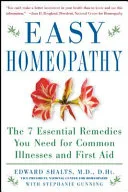
Edward Shalts's "Easy Homeopathy" attempts a commendable feat: to distill the vast world of homeopathic materia medica into a manageable guide for beginners. The author's selection of seven core remedies is a pragmatic approach, sidestepping the labyrinthine detail that often deters newcomers. I found the explanations for how each remedy works to be particularly clear, focusing on the symptom picture rather than obscure historical uses. The limitation, however, lies in its very simplicity. While excellent for initiating the uninitiated, practitioners seeking deeper nuance or remedies for less common ailments will find it insufficient. Shalts highlights the efficacy of *Arnica montana* for trauma, a solid, well-documented cornerstone of homeopathic first aid, but the book doesn't significantly expand beyond such fundamental applications. It's a useful starting point, but not an exhaustive reference.
📝 Description
78
Edward Shalts's Easy Homeopathy, published March 27, 2006, simplifies homeopathic remedies for practical home use.
Edward Shalts published Easy Homeopathy on March 27, 2006, with the goal of making homeopathic treatment accessible. The book focuses on a limited number of effective remedies, avoiding the extensive materia medica found in other texts. Shalts prioritizes practical application and ease of use, aiming to equip readers with a usable understanding of homeopathy.
This guide is written for those new to homeopathy or overwhelmed by the breadth of natural healing. It provides an introduction to the subject, offering readers a basic understanding and a toolkit for common ailments. The remedies discussed are presented as simple and inexpensive, suitable for home practitioners.
The book explains how to identify and use a small selection of potent homeopathic remedies. It covers their fundamental principles, specific uses for various conditions, and methods for dosage and administration. The emphasis throughout is on clarity and straightforward instruction, rendering complex homeopathic ideas understandable.
Published in 2006, Easy Homeopathy addresses a resurgence of interest in complementary and alternative medicine. While homeopathy's principles date to Samuel Hahnemann in the late 18th century, Shalts's work represents a modern attempt to present its core ideas to a general audience. It stands apart from more comprehensive homeopathic manuals, which can seem intimidating to beginners, offering instead a focused guide to a select set of treatments.
💡 Why Read This Book?
• You will learn to identify and confidently use seven essential homeopathic remedies for hundreds of common conditions, a practical skill often obscured by overly complex texts. • You will gain a clear understanding of how specific homeopathic principles apply to everyday ailments, directly referencing Shalts's focus on symptom-based prescribing. • You will feel empowered to manage minor health issues naturally with inexpensive remedies, drawing from the book's emphasis on accessibility and cost-effectiveness, as demonstrated in its 2006 publication.
⭐ Reader Reviews
Honest opinions from readers who have explored this book.
❓ Frequently Asked Questions
What are the seven most useful homeopathic remedies covered in "Easy Homeopathy"?
While the book's specific list of seven remedies is central to its teaching, it focuses on highly effective, commonly indicated remedies for a broad range of ailments. Readers will learn about remedies like Arnica for trauma and Belladonna for acute inflammation.
Is "Easy Homeopathy" suitable for someone with no prior knowledge of homeopathy?
Yes, the book is explicitly designed for beginners. Edward Shalts aims to simplify homeopathic principles and remedy selection, making it accessible even if you've never encountered homeopathy before, as indicated by its 2006 publication date.
How does "Easy Homeopathy" differ from more comprehensive homeopathic guides?
Unlike exhaustive materia medica texts, "Easy Homeopathy" focuses on a curated selection of the most effective remedies. It prioritizes ease of use and practical application over extensive detail, making it less intimidating for new users.
What kind of common conditions can be addressed with the remedies in this book?
The book covers remedies for hundreds of common ailments. These typically include issues like minor injuries, fevers, digestive upset, headaches, and sleep disturbances, providing practical solutions for everyday health concerns.
What is the cost-effectiveness of using homeopathy as described in the book?
A key benefit highlighted is the inexpensive nature of homeopathic remedies. The book emphasizes that these natural remedies offer an affordable alternative for managing a wide array of common health issues.
When was "Easy Homeopathy" first published?
Edward Shalts's "Easy Homeopathy" was first published on March 27, 2006, positioning it as a contemporary guide for individuals interested in natural health practices during that era.
🔮 Key Themes & Symbolism
Core Remedy Efficacy
The central tenet of "Easy Homeopathy" is the identification and application of a select group of highly potent remedies. Shalts argues that a concentrated knowledge of a few key remedies, such as *Arnica montana* for trauma or *Nux vomica* for digestive distress, can address a vast majority of common ailments. This approach explains homeopathy, moving away from the overwhelming materia medica found in more extensive texts. The book emphasizes understanding the specific symptom picture each remedy covers, making it practical for everyday use.
Accessibility and Simplicity
Edward Shalts's primary goal is to make homeopathy approachable. The book is structured to be user-friendly, eschewing complex jargon and historical anecdotes in favor of clear explanations and direct instructions. This focus on simplicity is crucial for newcomers, who might otherwise be deterred by the perceived complexity of homeopathic prescribing. The inexpensive nature of the remedies themselves also contributes to this theme of accessibility, offering a cost-effective natural health option.
Symptom-Based Prescribing
A fundamental concept explored is the principle of 'like cures like,' applied through meticulous symptom matching. "Easy Homeopathy" guides the reader to observe and articulate specific symptoms – physical, mental, and emotional – that a remedy can address. This method, central to classical homeopathy since Samuel Hahnemann's work, is presented here in a simplified manner. By focusing on the totality of symptoms, the book empowers readers to select the most appropriate remedy from its core selection.
Natural Healing Toolkit
The book positions homeopathy as an essential component of a natural home medicine cabinet. It provides practical, actionable advice for managing everyday health issues without resorting to synthetic pharmaceuticals. The emphasis on simple, natural remedies for common conditions like colds, fevers, minor injuries, and digestive upset promotes self-care and a proactive approach to well-being. This perspective aligns with broader movements towards holistic health and natural living.
💬 Memorable Quotes
Direct passages from the work, attributed to the author.
“The seven most useful and effective homeopathic remedies.”
— This phrase highlights the book's core strategy: to present a concentrated, actionable selection of remedies, rather than an exhaustive list, making homeopathy less intimidating for beginners.
“Simple and inexpensive natural remedies every medicine cabinet should have.”
— This emphasizes the practical, accessible, and cost-effective nature of the homeopathic solutions offered, positioning them as essential additions to any home health kit.
“Explaining to you exactly what they are, how they work, and how to use them.”
— This outlines the book's pedagogical approach, promising clear, direct instruction on the chosen remedies, covering their identity, mechanism, and practical application for the reader.
“Designed for those just getting started in homeopathy.”
— This clearly defines the target audience, indicating that the content is tailored for individuals new to the subject, assuming little to no prior knowledge of homeopathic principles.
“Confused by the thousands of elixirs, herbs, and other healing methods on the market.”
— This acknowledges a common problem for health-conscious consumers and positions the book as a solution, offering clarity and focus amidst a sea of overwhelming natural health options.
🌙 Esoteric Significance
Tradition
While not strictly within a defined esoteric lineage like Hermeticism or Kabbalah, "Easy Homeopathy" draws from vitalist philosophies that underpin many esoteric traditions. Homeopathy operates on the principle of a vital force or life energy, a concept shared with vitalist branches of alchemy and Theosophy. Shalts's work, by focusing on subtle energy and energetic remedies, taps into this broader interest in non-material healing modalities that are often explored within esoteric circles.
Symbolism
The primary symbolism in "Easy Homeopathy" resides in the remedies themselves, each representing a specific energetic signature or pattern of imbalance. For instance, *Arnica montana*, a flower associated with healing and resilience, symbolizes the remedy's capacity to address physical trauma and shock. The concept of dilution and succussion (shaking) symbolizes the energetic potentization, suggesting that the essence or information of the substance is amplified, a process that can be seen as analogous to alchemical transmutation or the energetic imprinting found in other metaphysical practices.
Modern Relevance
Contemporary interest in holistic health, personalized medicine, and the patient's role in their own healing journey keeps works like "Easy Homeopathy" relevant. Thinkers and practitioners in the wellness industry, as well as those exploring biocentrism or quantum healing concepts, may find resonance in homeopathy's focus on energetic medicine and individualized treatment. The book's accessible approach also appeals to a modern audience seeking practical, naturalistic health solutions.
👥 Who Should Read This Book
• Newcomers to natural health seeking a simple entry point into homeopathic principles, wanting to understand how basic remedies work for common issues. • Individuals feeling overwhelmed by the sheer volume of available health information and looking for a curated, practical guide to essential remedies. • Home educators or parents interested in establishing a natural, cost-effective home medicine cabinet for minor ailments and everyday concerns.
📜 Historical Context
Published in 2006, Edward Shalts's "Easy Homeopathy" arrived during a resurgence of interest in complementary and alternative medicine (CAM) in Western countries. The early 21st century saw increased skepticism towards conventional pharmaceuticals and a growing demand for naturalistic approaches to health. Homeopathy, with its roots in the work of Samuel Hahnemann in the late 18th and early 19th centuries, was a prominent, albeit controversial, part of this movement. Shalts's book aimed to simplify a system often perceived as complex and arcane. It offered a counterpoint to the comprehensive, multi-volume materia medica that had long been the standard for practitioners, such as those by William Boericke. While not facing direct censorship, homeopathy in this era was subject to ongoing scientific debate and criticism from the medical establishment, particularly regarding its efficacy beyond the placebo effect.
📔 Journal Prompts
Observation of the *Arnica montana* symptom picture for minor injuries.
Application of Belladonna's fever indications to personal experience.
Comparison of the book's simplified approach to other natural healing methods.
Reflecting on the concept of 'least amount of force' in remedy selection.
Documenting personal experiments with the seven core remedies discussed.
🗂️ Glossary
Homeopathy
A system of alternative medicine based on the principle that a substance that causes symptoms of a disease in healthy people can cure similar symptoms in sick people. It uses highly diluted preparations.
Materia Medica
A comprehensive body of knowledge describing the effects of substances (drugs, remedies) on the human body, central to homeopathic practice.
Remedy
In homeopathy, a substance prepared according to specific homeopathic principles, used to stimulate the body's self-healing abilities.
Symptom Picture
The unique combination of physical, mental, and emotional symptoms that characterize a person's illness and guide the selection of the appropriate homeopathic remedy.
Dilution
The process of reducing the concentration of a homeopathic substance, often through serial dilution with water or alcohol, typically accompanied by succussion.
Succussion
The vigorous shaking or striking of a homeopathic dilution during the preparation process, believed to increase its potency.
Vital Force
A concept in homeopathy and vitalist philosophies referring to the inherent life energy or animating principle of an organism, which disease is believed to disrupt.